
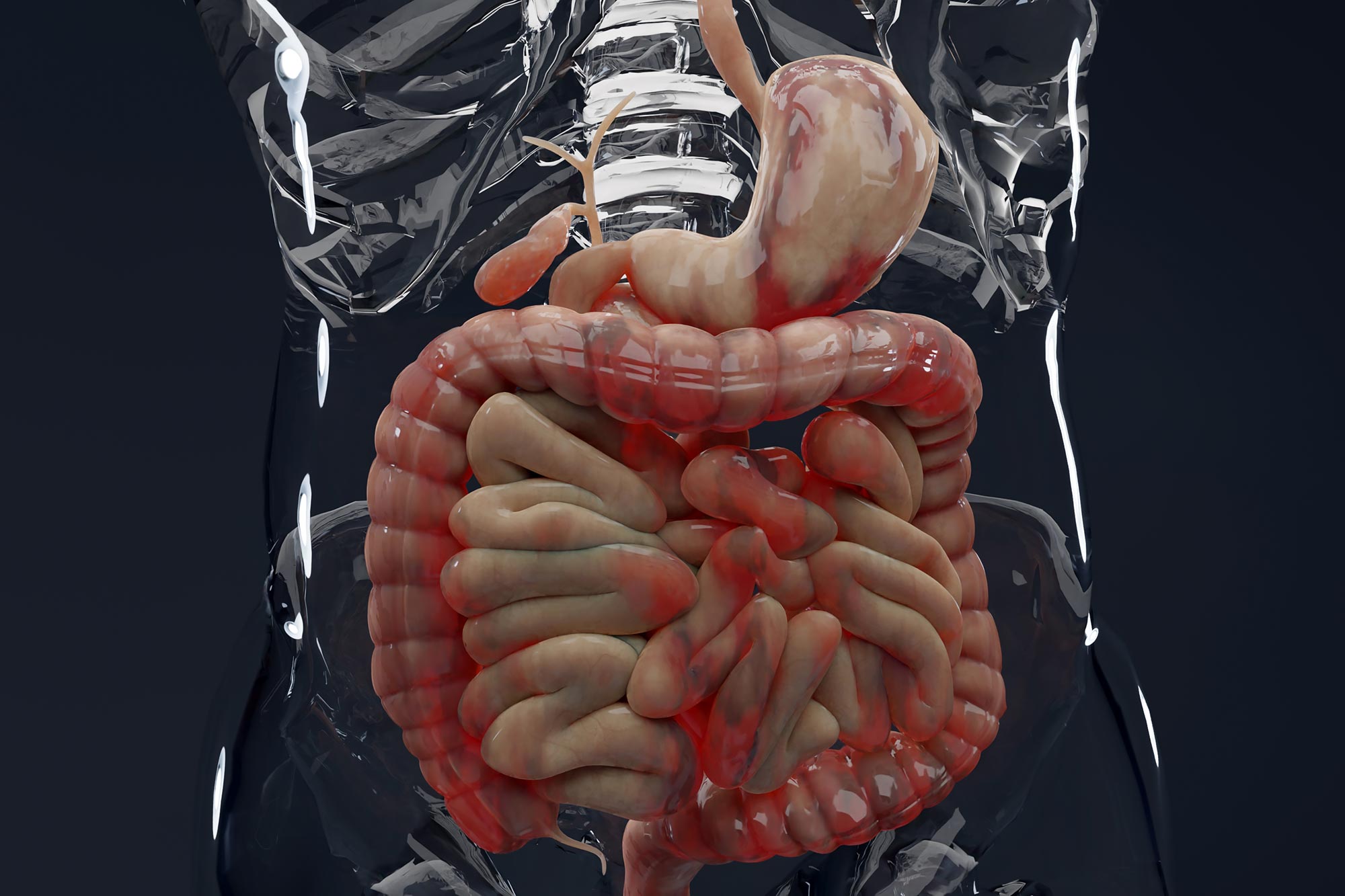
A clinical trial found that a brief, calorie-restricted diet improved symptoms and reduced inflammation in people with Crohn’s disease.
“What should I eat?” may be the question doctors hear most often from people living with inflammatory bowel disease.
Finding a clear answer has been notoriously challenging. IBD is an umbrella term that includes ulcerative colitis and Crohn’s disease, yet there have been only a small number of large studies testing specific dietary approaches for these conditions.
A new study from Stanford Medicine researchers and collaborators offers one possible path forward. In a national, randomized controlled clinical trial, investigators found that a short-term, calorie-restrictive eating plan led to significant improvements in both symptoms and biological measures of disease in people with mild-to-moderate Crohn’s disease. The results were recently published in Nature Medicine.
Diet studies can be hard to run because people may not accurately report what they eat, and participants typically know which diet they are following, which makes placebo effects difficult to rule out. Even so, the new findings stood out because participants on the intervention showed meaningful drops in objective inflammation markers measured in biologic samples, along with better clinical symptoms. The researchers said the results could help physicians offer more evidence-based dietary guidance to patients seeking relief.
“We have been very limited in what kind of dietary information we can provide patients,” said Sidhartha R. Sinha, MD, an assistant professor of gastroenterology and hepatology and the senior author on the paper. “This study will give physicians evidence to support recommendations in an area that patients are very curious about.”
A common condition, few treatments
Crohn’s disease is a long-lasting illness that affects about a million Americans. It triggers inflammation in the digestive tract and can cause diarrhea, cramping, abdominal pain, and weight loss. For mild Crohn’s, steroids are the only approved therapy, but their use is constrained by significant side effects, especially when taken long term.
In the trial, researchers tracked symptoms and biological indicators in people with mild-to-moderate Crohn’s disease who either followed a fasting mimicking diet or continued eating as usual for three straight months. A total of 97 patients enrolled nationwide, including 65 assigned to the fasting mimicking group and 32 to the control group.
Those in the fasting mimicking group sharply reduced calories for five consecutive days each month, consuming roughly 700 to 1,100 calories per day, Sinha said. Plant-based meals were provided during the fasting period. For the rest of each month, participants returned to their normal diet.
At the end of the study, about two-thirds of the fasting mimicking group experienced improvement in their symptoms. “We were very pleasantly surprised that the majority of patients seemed to benefit from this diet,” Sinha said. “We noticed that even after just one FMD cycle, there were clinical benefits.”
In the control group, less than half experienced improvements in their symptoms. The improvement was likely a result of natural symptom fluctuations in Crohn’s disease and because patients continued to follow their standard care regimens, such as taking medications.
Some participants in the fasting mimicking group experienced fatigue and headache, Sinha said, but no serious side effects were reported.
Biological indicators get a boost
Sinha was inspired to study the fasting mimicking diet in patients with Crohn’s disease after earlier research indicated the diet could reduce levels of C-reactive protein, a common marker of systemic inflammation in patients who had high baseline C-reactive protein levels. “The effects seen on inflammatory markers made this an appealing diet to study in Crohn’s disease since many patients with this disease also have elevated inflammatory markers,” he said.
Along with tracking participants’ clinical response and remission, the researchers also explored changes in biological specimens, such as shifts in common markers of inflammation in both stool and blood. “Our goal in collecting these and other biospecimens was to dig deeper into why there’s this differential response,” Sinha said. “Can we find mechanisms to explain the findings and signatures that might help predict patients who will respond to the diet?”
The researchers found a significant decline in fecal calprotectin, a protein in the stool that indicates gut inflammation, in the fasting mimicking group compared with the control group. Some inflammation-promoting lipid mediators derived from fatty acids also declined in fasting-mimicking group participants. Similarly, the immune cells of fasting-mimicking group participants produced fewer of several types of inflammatory molecules. The researchers are now exploring whether changes in the gut microbiome may also help explain some of the benefits of the fasting mimicking diet.
“There’s still a lot more to be done to understand the biology behind how this and other diets work in patients with Crohn’s disease,” Sinha said.
Reference: “A fasting-mimicking diet in patients with mild-to-moderate Crohn’s disease: a randomized controlled trial” by C. Kulkarni, T. Fardeen, J. Gubatan, J. Ye, K. Jarr, E. Dickson, H. Jang, M. Temby, A. Patel, Y. Jiang, G. Singh, K. Keyashian, S. Streett, E. Ho, G. Barber, S. Singh, D. Limsui, N. Anaizi, L. Becker, S. P. Spencer, D. Mehrish, D. Perelman, V. D. Longo, V. Charu, J. F. Ashouri, M. M. Davis, A. Habtezion, J. L. Sonnenburg, C. Gardner and S. R. Sinha, 13 January 2026, Nature Medicine.
DOI: 10.1038/s41591-025-04173-w
The study’s first authors are Stanford Medicine’s Chiraag Kulkarni, MD, an instructor in gastroenterology and hepatology, and assistant clinical research coordinator Touran Fardeen.
Researchers from the University of Southern California and the University of California, San Francisco, contributed to the work.
Author Valter Longo, PhD, has equity interest in L-Nutra, the company from which the fasting mimicking meals were purchased and has filed patents related to the diet.
This work was supported by a grant from The Leona M. and Harry B. Helmsley Charitable Trust, the National Institutes of Health (grants UM1TR004921, 2L30 DK126220, T32DK007056, K08DK134856 and NIDDK R01DK085025), the Plant Based Diet Initiative at Stanford University, the Kenneth Rainin Foundation, the Doris Duke Foundation Physician Scientist Fellowship Award, a CZ Biohub Physician Scientist Scholar Award, the Colleen and Robert D. Hass fund, and the Chan-Zuckerberg Biohub Investigator Program.
Never miss a breakthrough: Join the SciTechDaily newsletter.
Follow us on Google and Google News.
3 Comments
Interesting research if anyone doing studies is looking for theories to research try the following treatment with placebo control group.
Daily intermittent fasting, with occasional 3-5 day water fasts in combination with Carnivore diet with 25% wild caught fish.
Separate control group on a low FODMAP diet.
Both with supplementation with Dandelion root, Olive leaf extract, Myo-Inositol, Ginseng, Nattokinase, Serrapeptase, Bromelain, Curcumin, Vitamin E, and N-Acetyl-L-Cysteine.
A 72 (or greater) hour water fast followed by a low FODMAP diet is something they should be trying.
Then slowly introduce things to see what triggers their gut.
IBD and IBS are just your body and immune system acting on external triggers, usually from ingesting things we were not designed to be eating in the first place.
Not everyone’s immune system tolerates all the chemicals, preservatives, and man made things we are taught to consume these days.
Most western diets consists largely of “edible” poison and not actual food.
It’s a simple gluten intollorence. Strict(not 1 molecule) gluten free diet. It takes 3 months for symptoms to START improving. Keep going.. 12 years gluten free and chrones free. This has also worked for my cousin, and a friend. Cause: a bacteria mimics wheat protein molecule, body identifies wheat protein as bacteria, responds accordingly.. simple