
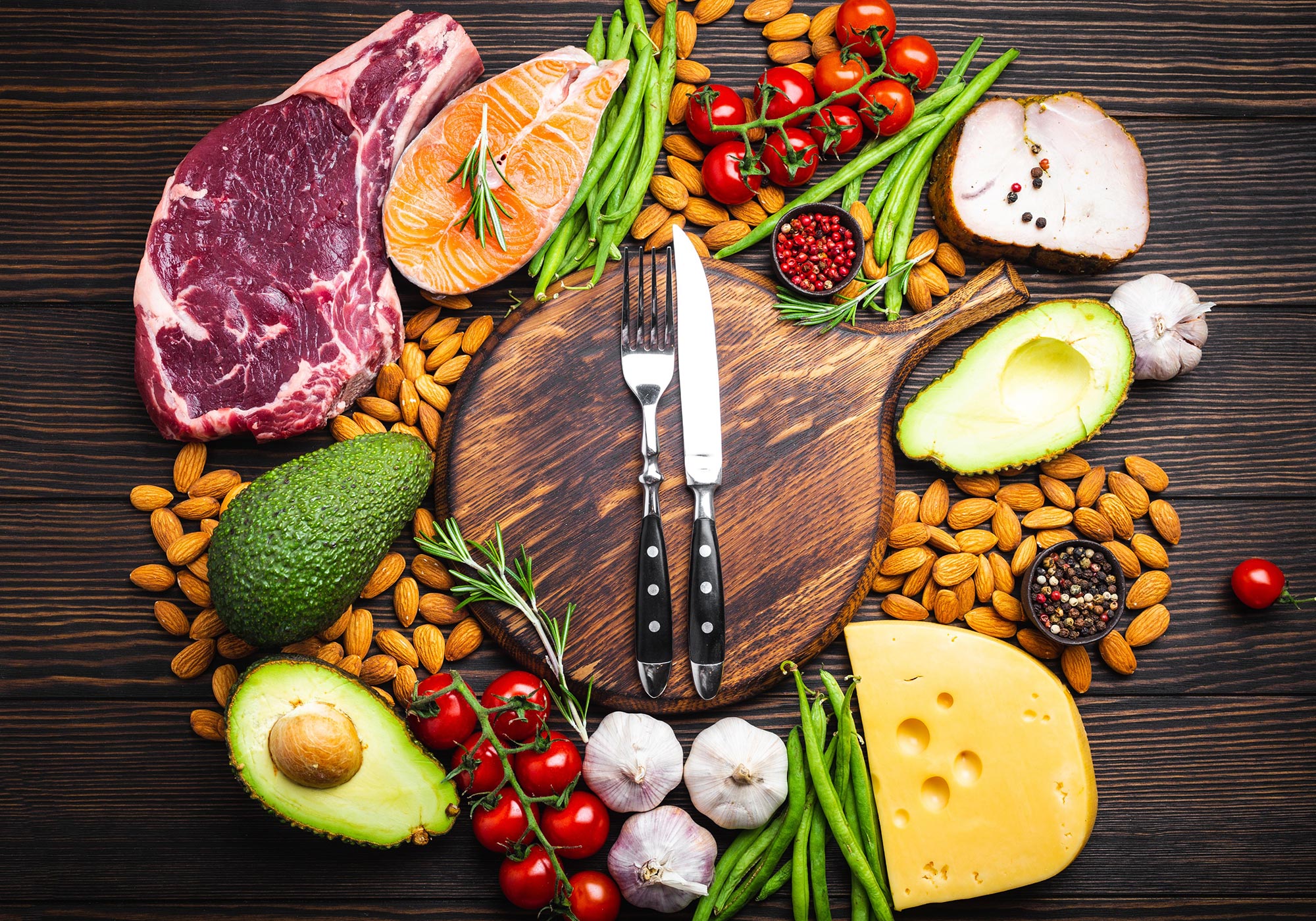
A low-carb diet can worsen the cancer-causing effects of certain gut bacteria by weakening the gut barrier and altering the microbiome. This increases colorectal cancer risk, especially in individuals with genetic mutations affecting DNA repair. However, soluble fiber may help counteract these effects.
Researchers at the University of Toronto have demonstrated that a low-carbohydrate diet can amplify the DNA-damaging effects of certain gut microbes, increasing the risk of colorectal cancer.
The study, published in Nature Microbiology, examined how three different diets—normal, low-carbohydrate, and Western-style (high in fat and sugar)—interacted with specific gut bacteria to influence colorectal cancer development in mice.
The findings revealed that a particular strain of E. coli, when combined with a diet low in carbohydrates and soluble fiber, promotes the growth of polyps in the colon, a potential precursor to cancer.
“Colorectal cancer has always been thought of as being caused by a number of different factors including diet, gut microbiome, environment, and genetics,” says senior author Alberto Martin, a professor of immunology at U of T’s Temerty Faculty of Medicine.
“Our question was, does diet influence the ability of specific bacteria to cause cancer?”
How a Low-Carb Diet Increases Cancer Risk
To answer this question, the researchers, led by postdoctoral fellow Bhupesh Thakur, examined mice that were colonized with one of three bacterial species that had been previously linked to colorectal cancer and fed either a normal, low-carb, or Western-style diet.
Only one combination — a low-carb diet paired with a strain of E. coli that produces the DNA-damaging compound colibactin — led to the development of colorectal cancer.
The researchers found that a diet deficient in fiber increased inflammation in the gut and altered the community of microbes that typically reside there, creating an environment that allowed the colibactin-producing E. coli to thrive.
They also showed that the mice fed a low-carb diet had a thinner layer of mucus separating the gut microbes from the colon epithelial cells. The mucus layer acts as a protective shield between the bacteria in the gut and the cells underneath. With a weakened barrier, more colibactin could reach the colon cells to cause genetic damage and drive tumor growth. These effects were especially strong in mice with genetic mutations in the mismatch repair pathway that hindered their ability to fix damaged DNA.
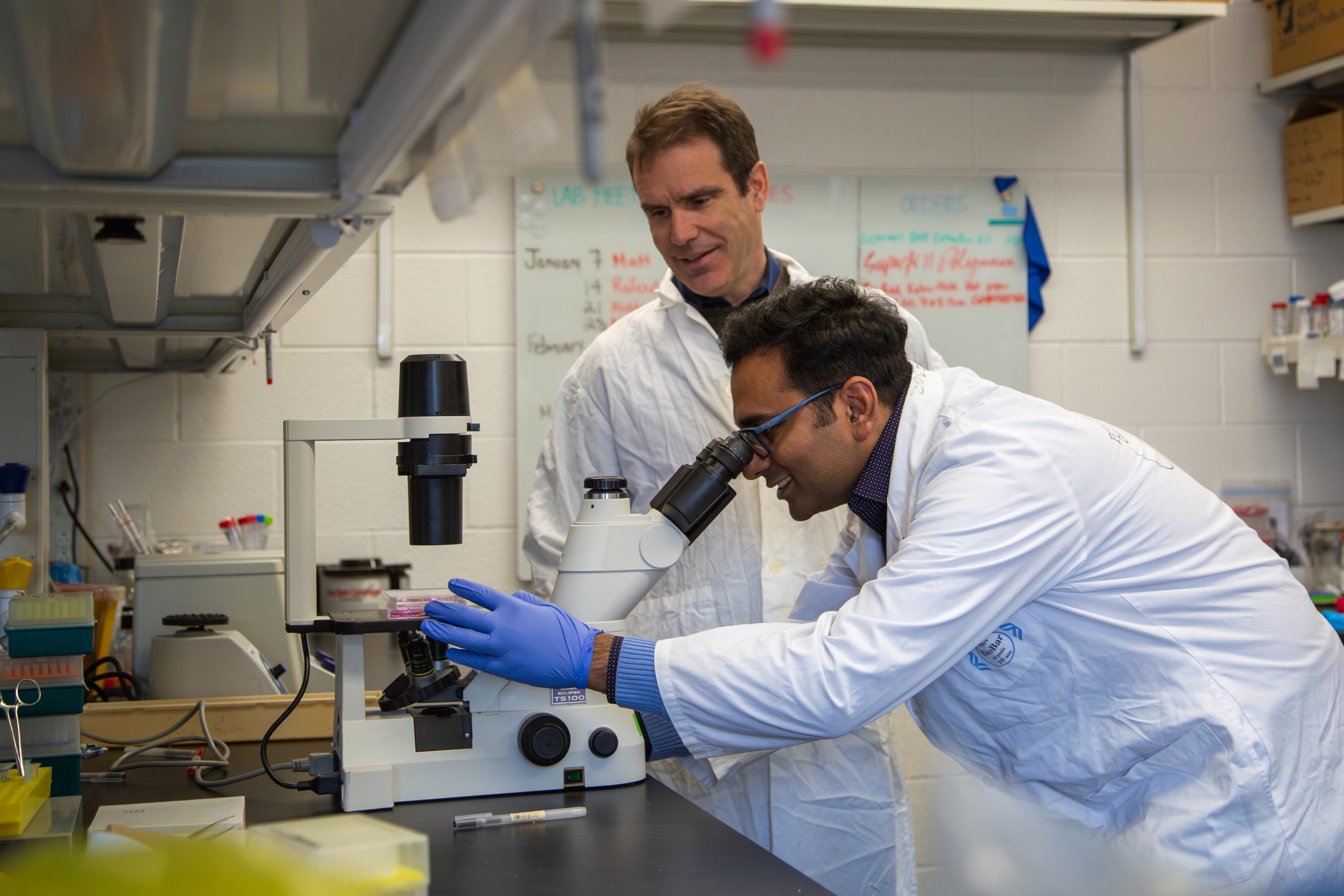
While both Thakur and Martin emphasize the need to confirm these findings in humans, they are also excited about the numerous ways in which their research can be applied to prevent cancer.
Defects in DNA mismatch repair are frequently found in colorectal cancer, which is the fourth most commonly diagnosed cancer in Canada. An estimated 15 percent of these tumors have mutations in mismatch repair genes. Mutations in these genes also underlie Lynch syndrome, a genetic condition that significantly increases a person’s risk of developing certain cancers, including colorectal cancer.
“Can we identify which Lynch syndrome patients harbor these colibactin-producing microbes?” asks Martin. He notes that for these individuals, their findings suggest that avoiding a low-carb diet or taking a specific antibiotic treatment to get rid of the colibactin-producing bacteria could help reduce their risk of colorectal cancer.
Probiotics and Dietary Modifications
Martin points out that a strain of E. coli called Nissle, which is commonly found in probiotics, also produces colibactin. Ongoing work in his lab is exploring whether long-term use of this probiotic is safe for people with Lynch syndrome or those who are on a low-carb diet.
Thakur is keen to follow up on an interesting result from their study showing that the addition of soluble fiber to the low-carb diet led to lower levels of the cancer-causing E. coli, less DNA damage, and fewer tumors.
“We supplemented fiber and saw that it reduced the effects of the low-carb diet,” he says. “Now we are trying to find out which fibre sources are more beneficial, and which are less beneficial.”
To do this, Thakur and Martin are teaming up with Heather Armstrong, a researcher at the University of Alberta, to test whether supplementation with a soluble fiber called inulin can reduce colibactin-producing E. coli and improve gut health in high-risk individuals, like people with inflammatory bowel disease.
“Our study highlights the potential dangers associated with long-term use of a low-carb, low-fiber diet, which is a common weight-reducing diet,” says Martin.
“More work is needed but we hope that it at least raises awareness.”
Reference: “Dietary fibre counters the oncogenic potential of colibactin-producing Escherichia coli in colorectal cancer” by Bhupesh Kumar Thakur, Yann Malaise, Saurav Roy Choudhury, Anna Neustaeter, Williams Turpin, Catherine Streutker, Julia Copeland, Erin O. Y. Wong, William W. Navarre, David S. Guttman, Christian Jobin, Kenneth Croitoru and Alberto Martin, 3 March 2025, Nature Microbiology.
DOI: 10.1038/s41564-025-01938-4
Never miss a breakthrough: Join the SciTechDaily newsletter.
Follow us on Google and Google News.
19 Comments
Whole grains in moderate quantity may prevent colorectal cancer, but excessive consumption is not recommended.
Low carb is not the same as low fiber! On the contrary, people eating low carb are eating more fiber than “normal” diet, since almost all low carb veggies and fruits are high fiber by definition (otherwise what would they be made of?).
Also couldn’t help but notice the association of the word “cancer” with the picture of a beef steak, which suggests vegan propaganda (again) and an actual lack of scientific discourse.
UofT, I expected more from you.
Ah, the comment I wanted to see. I was thinking the same. I disagree with how they reference low- carb as a weight loss diet when really it’s a way of life.
Mmmm! Eat more Glyphosate soaked grains!
Talk about a propaganda study, more than likely funded by big food companies that make all these processed carb laden foods.
Notice repeatedly throughout the article when they mention “low carb” its preceded or followed by FIBER.
Carbs have little to do with this and are not directly linked to preventing cancer.
You can get your fiber from many vegetables and fruit.
Isn’t this conflating low carb with low fiber? Those are not the same thing.
You did a test on mice not on humans .try doing a randomized control study on humans anf see if you get ..carbs of any kind converts to sugar.its no good for yiu.including veggues and frutis
Please see previous study lol
Published: July 18, 2014
Researchers at the University of Toronto have found that gut bacteria drive a common form of colon cancer, and that a low-carbohydrate diet can prevent the disease.
😂😂😂😂 perfect
Ty.
Definitely funded by bread processing plants
Funded by? Peer reviewed?
Low-carb diets are generally quite high in fiber to keep those “net carbs” down to 30 or less/day. Ever since going low-carb, the amount of fiber in my diet has literally quadrupled. And I’m the norm, not the exception.
This , this study has zero relevance to the vast majority of ketogenic diets.
As someone with a degree in science, it’s downright depressing to see the scientific community pushing misleading headlines and abject scare-baiting.
This study has obviously been fabricated in bias of the low carb diet. If a low carb diet is done right, it will NOT contribute to the risk of colorectal cancer.
Just click bait!
Nope
Nonsense.
As a carnivore who isn’t a mouse, I am not concerned by this study obviously funded by big ag. Don’t call yourself science unless you show citations, and contradicting studies with peer review all around with funding transparency.
I went down the rabbit hole with this topic on X using Grok3.
You won’t be surprised to find a direct link to the the research lab and a top tier pharmaceutical organization. One that specializes in drugs for diabetics and is considering to enter the weight loss game…
Now I’m going to look into the ties that company may have with the marketing and article presentation here.
We’re constantly being manipulated. From all fronts and angles except, Grok3 and X.
If you haven’t tried using it, you should.
This study claims that low-carb diets may fuel colorectal cancer, but let’s break it down critically.
1. Association Does Not Equal Causation
This is a correlation-based study, not a controlled clinical trial proving causation. Many epidemiological studies draw loose connections between diet and disease without accounting for confounding variables (e.g., processed food consumption, lifestyle factors, pre-existing conditions).
Were the participants eating a clean, nose-to-tail Carnivore Diet or a processed, nutrient-deficient low-carb diet?
Were they consuming seed oils, artificial sweeteners, or processed meats?
What was their gut health prior to the diet change?
Without addressing these, any conclusion is premature.
2. The Study Likely Uses the “Fiber Deficiency” Myth
Many studies assume that fiber is essential for gut health and cancer prevention. This is not supported by actual evidence. In fact:
Studies show that reducing fiber can alleviate digestive distress【JAMA, 2012】.
No mechanistic pathway proves fiber prevents colorectal cancer—it’s just a mainstream assumption.
Meanwhile, the Carnivore Diet nourishes the gut microbiome with: ✅ Butyrate precursors (from animal fats, not fiber).
✅ Glutamine & collagen (healing leaky gut).
✅ Zero inflammatory plant toxins that damage the gut lining.
3. Low-Carb ≠ Carnivore
Many so-called “low-carb” diets in studies are still filled with processed junk, artificial sweeteners, and poor-quality meats. The Primalivore Carnivore Diet, in contrast, is:
Anti-inflammatory
Rich in Omega-3s & heme iron
Loaded with bioavailable micronutrients
Ketogenic, which starves cancer cells (cancer thrives on glucose, not ketones)
4. Where’s the Data on Carnivorous Populations?
If low-carb eating causes colorectal cancer, why do we see:
Zero colorectal cancer in Inuit tribes who eat near-zero fiber?
No elevated cancer risk in the Maasai, who thrive on animal-based diets?
If fiber was essential and meat caused cancer, these populations would be riddled with disease—they’re not.
5. The Real Cause of Colorectal Cancer?
Modern cancer rates skyrocketed in the same period where:
❌ Processed foods & seed oils became dominant.
❌ Sugar and refined carbs became dietary staples.
❌ Antibiotics & medications disrupted gut microbiomes.
❌ People stopped consuming nutrient-dense organ meats and animal fats.
The real issue isn’t “low-carb.” It’s industrial food poisoning combined with metabolic dysfunction.
—
🔴 Bottom Line
This study is speculative at best and does not apply to a properly executed Carnivore Diet. It likely: ✔️ Uses epidemiological guesswork, not rigorous trials.
✔️ Assumes fiber is essential (it isn’t).
✔️ Fails to distinguish between processed low-carb and ancestral Carnivore.
Carnivore is evolutionarily consistent, anti-inflammatory, and metabolically superior. Cancer thrives on sugar, not steak.
Want a real solution? Ditch the plants, embrace nose-to-tail Carnivore, and reclaim ancestral health.