
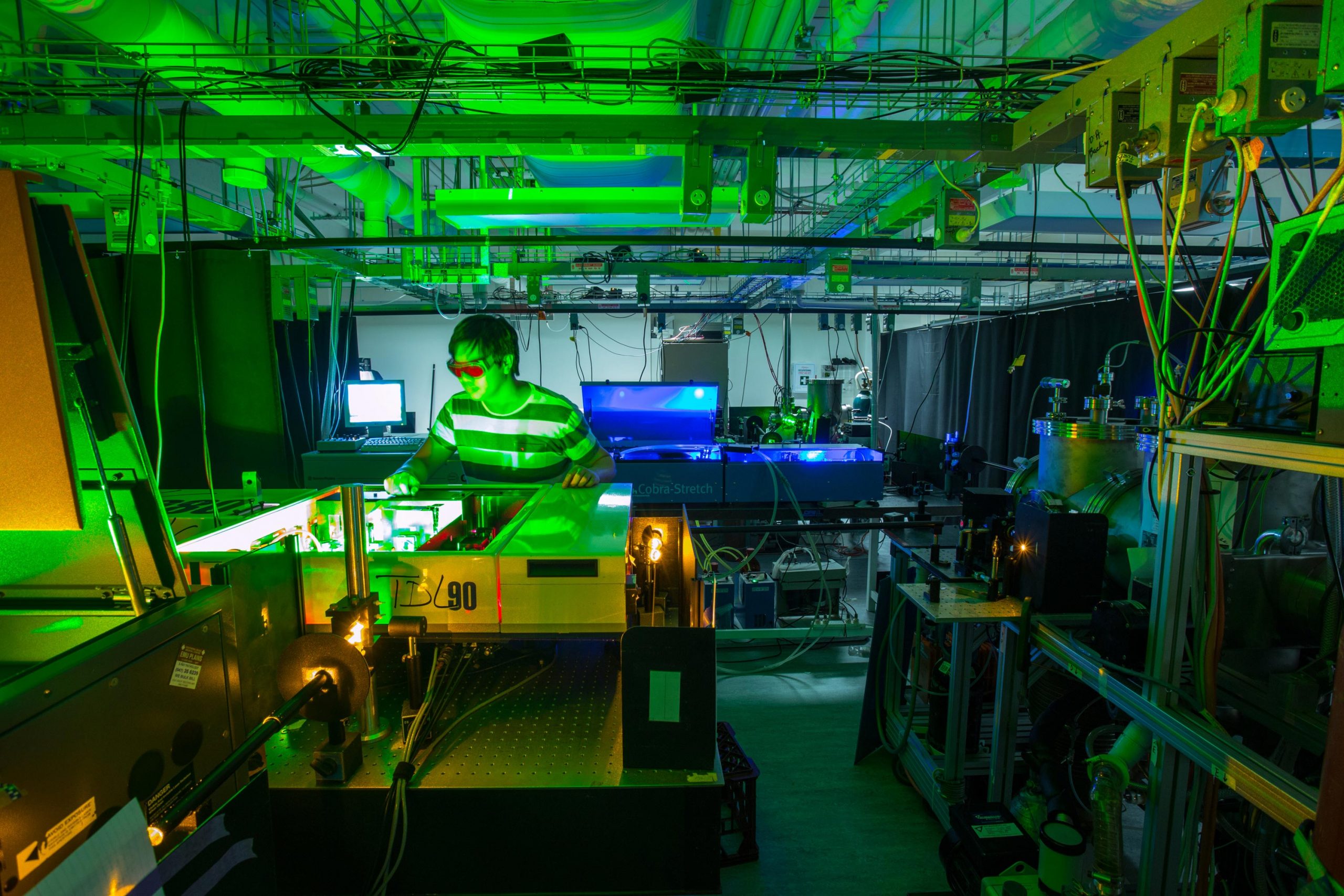
A world-first in light conversion has potential future implications for solar photovoltaics, biomedical imaging, drug delivery and photocatalysis.
Scientists in Australia and the United States have been able to ‘upconvert’ low energy light into high energy light, which can be captured by solar cells, in a new way, with oxygen the surprise secret ingredient. The results are published in Nature Photonics on July 20, 2020.
While the approach’s efficiencies are relatively low and more work is needed to achieve commercialization, the research is an exciting development, according to senior author Professor Tim Schmidt from the ARC Centre of Excellence in Exciton Science and UNSW Sydney.

“The energy from the sun is not just visible light,” Prof. Schmidt explains. “The spectrum is broad, including infrared light which gives us heat, and ultraviolet which can burn our skin.
“Most solar cells, charge-coupled device (CCD) cameras, and photodiodes (a semiconductor that converts light into electrical current) are made from silicon, which cannot respond to light less energetic than the near infrared.
“This means that some parts of the light spectrum are going unused by many of our current devices and technologies.”
To extend the range of sensitivity of these devices, and potentially increase the efficiency of solar cells, one strategy is to ‘upconvert light’, turning low energy light into more energetic, visible light which can excite silicon.
“One way of doing this is to capture multiple smaller energy photons of light and glue them together,” Prof. Schmidt says.
“This can be done by interacting the excitons (bound states of electrons and electron holes that can transport energy without transporting net electric charge) in organic molecules.”
Until now, this had never been achieved beyond the silicon band gap, which is the minimum energy that is required to excite an electron in silicon up to a state where it can participate in conduction. However, Exciton Science researchers, based at UNSW Sydney, have resolved this challenge. And they transformed a familiar foe – oxygen – into an unlikely friend to achieve their goal.
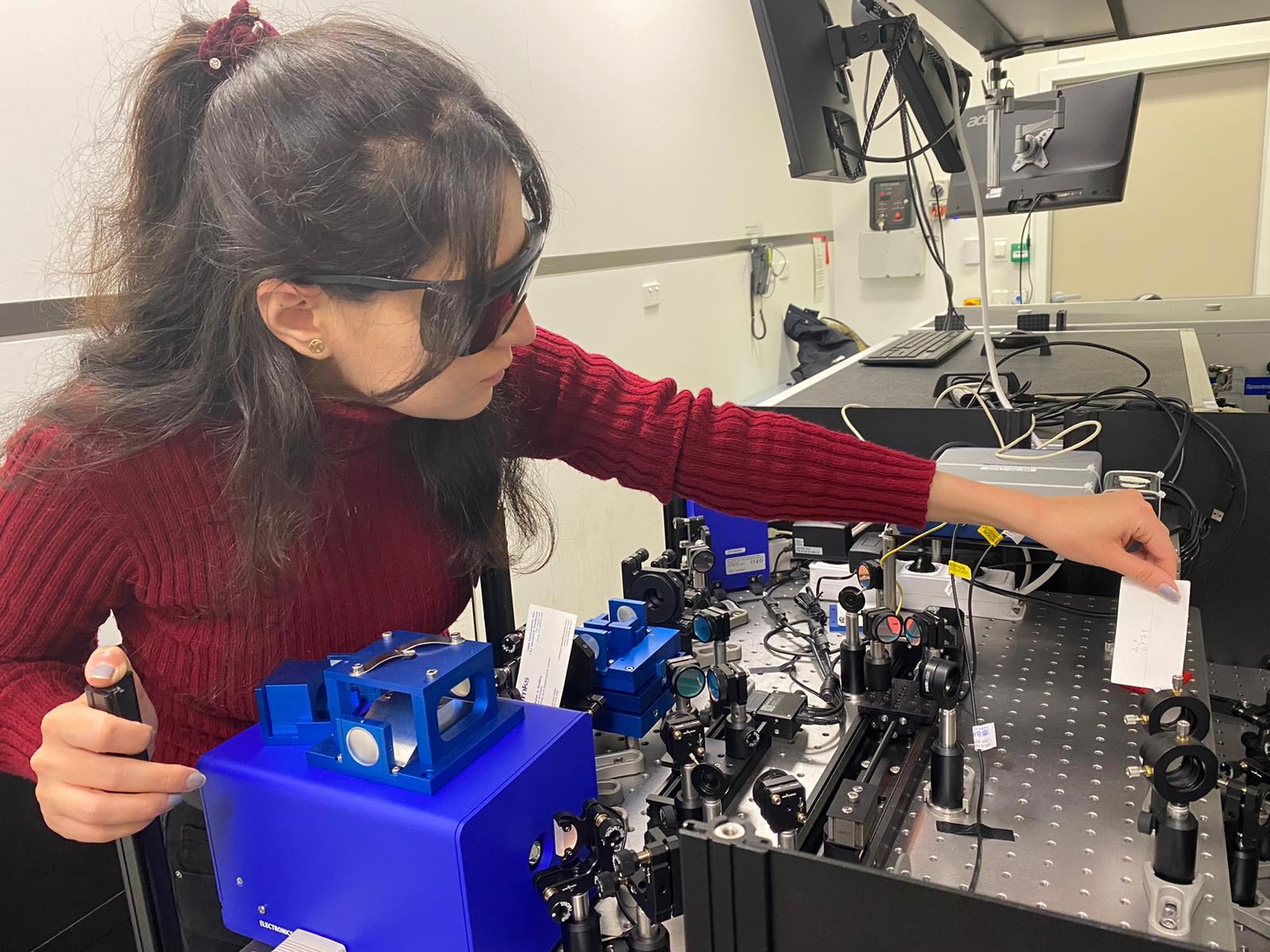
Together with collaborators at RMIT University and the University of Kentucky, the researchers used semiconductor quantum dots (nanoscale man-made crystals) to absorb the low-energy light, and molecular oxygen to transfer light to organic molecules.
Usually, oxygen is detrimental to molecular excitons, but at such low energies its role changes and it can mediate energy transfer, allowing the organic molecules to emit visible light, above the silicon band gap.
Contributing author Professor Jared Cole of RMIT University says: “What’s interesting is that often without oxygen, lots of things work well. And as soon as you allow oxygen in, they stop working.
“It was the Achilles heel that ruined all our plans but now, not only have we found a way around it, suddenly it helps us.”
The efficiencies are still low, but the scientists have strategies to improve this in the near future. “This is only an early demonstration, and there’s quite a lot of materials development needed to make commercial solar cells, but this shows us it’s possible,” Prof. Schmidt says.
And lead author Elham Gholizadeh, also of UNSW Sydney, is optimistic about the potential of the work to make a rapid positive impact on the research field. “As this is the first time we’ve been successful with this method, we will face some challenges,” she says.
“But I’m very hopeful and think that we can improve the efficiency quickly. I think it’s quite exciting for everyone. It’s a good method to use oxygen to transfer energy.
“Violanthrone doesn’t have the perfect photoluminescence quantum yield so the next step will be to look for an even better molecule.”
Reference: “Photochemical upconversion of near-infrared light from below the silicon bandgap” by Elham M. Gholizadeh, Shyamal K. K. Prasad, Zhi Li Teh, Thilini Ishwara, Sarah Norman, Anthony J. Petty II, Jared H. Cole, Soshan Cheong, Richard D. Tilley, John E. Anthony, Shujuan Huang and Timothy W. Schmidt, 20 July 2020, Nature Photonics.
DOI: 10.1038/s41566-020-0664-3
Never miss a breakthrough: Join the SciTechDaily newsletter.
Follow us on Google and Google News.