
Close Menu
    Facebook X (Twitter) Instagram
    SciTechDaily
    • Biology
    • Chemistry
    • Earth
    • Health
    • Physics
    • Science
    • Space
    • Technology
    Facebook X (Twitter) Pinterest YouTube RSS
    SciTechDaily
    Home»Science»According to Scientists, Zoning Out Could Actually Help You Learn
    Science

    According to Scientists, Zoning Out Could Actually Help You Learn

    By Society for NeuroscienceApril 10, 20253 Comments2 Mins Read
    Facebook Twitter Pinterest Telegram LinkedIn WhatsApp Email Reddit
    Share
    Facebook Twitter LinkedIn Pinterest Telegram Email Reddit
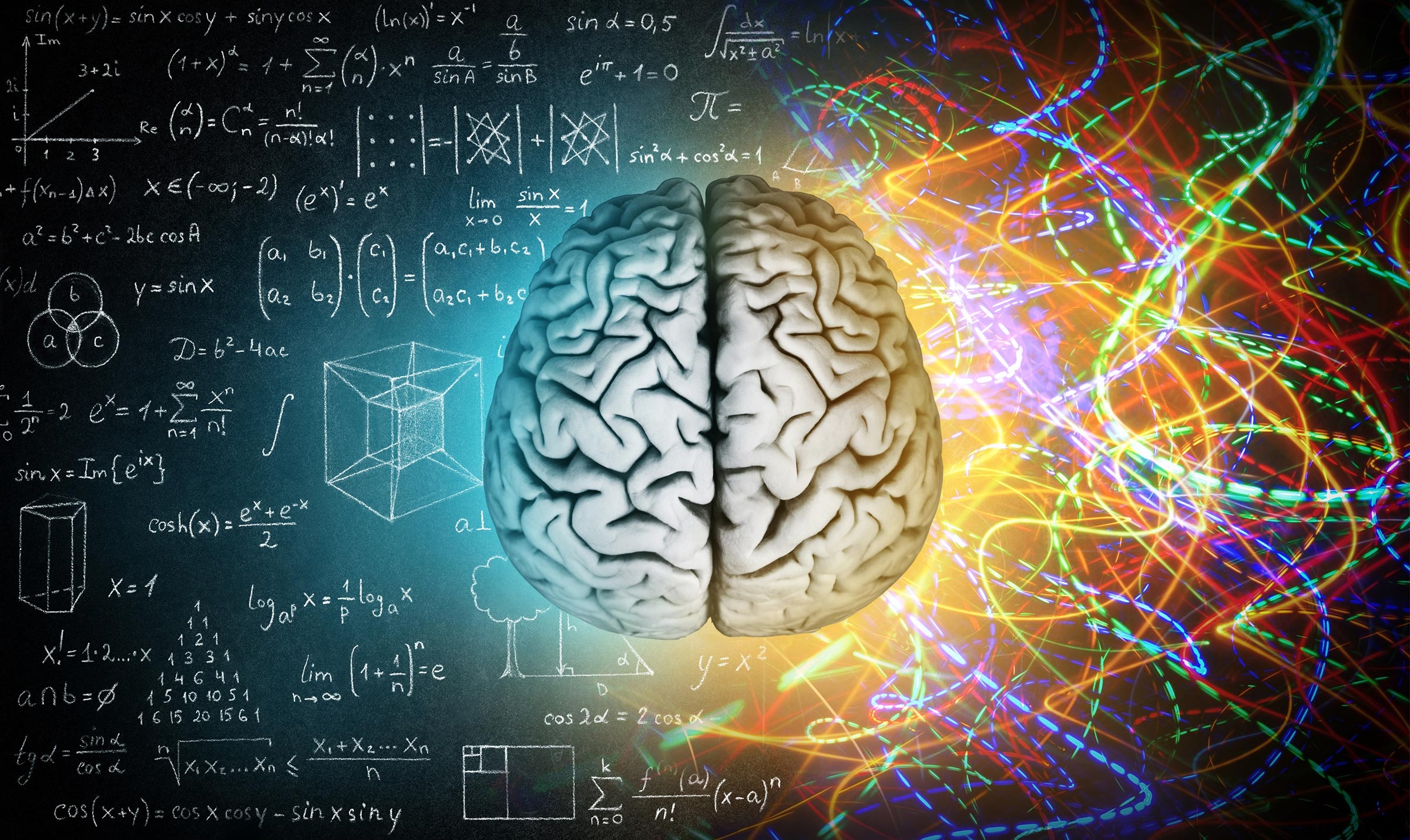
    Brain Intelligence Math Creativity Concept
    Spontaneous mind wandering can enhance learning in low-attention tasks by triggering brain activity similar to that seen during sleep.

    When doing tasks that require little attention, people who let their minds wander show brain activity similar to sleep. This sleep-like activity has been linked to improved performance.

    When people let their minds wander during tasks that require focus and active thinking, their learning and performance can suffer. However, some types of learning are more passive and demand less attention. In a study published in JNeurosci, Péter Simor and colleagues from Eötvös Loránd University investigated how mind wandering affects learning during low-attention tasks.

    Nearly 40 participants took part in the study, completing a simple learning task while their brain activity was monitored. The task was intentionally designed to be easy and required no conscious effort to learn, allowing participants to pick up on patterns and probabilities without being fully aware of it.

    Mind wandering while doing the task did not worsen performance, and in some cases even enhanced learning. Spontaneous mind wandering was more beneficial to learning than deliberate mind wandering.

    Brain Activity and Passive Learning

    During mind wandering and improvements in task learning, oscillatory neural activity in the cortex, resembling the brain activity that occurs during sleep or sleep-like states, occurred. Thus, sleep-like neural activity linked to spontaneous mind wandering promotes learning in tasks that require minimal attention.

    “Most cognitive work looks at learning when you are fully engaged. But in real life, we spend so much time passively learning! As our brain needs sleep, maybe we also need passive ways of learning, or ‘wakeful rest,’ to recover from tasks that require your brain to be online and engaged,” says Simor.

    Reference: “Mind wandering during implicit learning is associated with increased periodic EEG activity and improved extraction of hidden probabilistic patterns” by Péter Simor, Teodóra Vékony, Bence C. Farkas, Orsolya Szalárdy, Tamás Bogdány, Bianka Brezóczki, Gábor Csifcsák and Dezső Németh, 7 April 2025, Journal of Neuroscience.
    DOI: 10.1523/JNEUROSCI.1421-24.2025

    Funding: Nemzeti Kutatási, Fejlesztési és Innovaciós Alap, Institut National de la Santé et de la Recherche Médicale, National Brain Research Program

    Never miss a breakthrough: Join the SciTechDaily newsletter.
    Follow us on Google and Google News.

    Learning Neuroscience Psychology Society for Neuroscience
    Share. Facebook Twitter Pinterest LinkedIn Email Reddit

    Related Articles

    Your Brain Can Be Tricked Into Enjoying Artificial Sweeteners

    Study Reveals Why People Believe Lies, Especially From Friends

    More Accurate Than Test Scores: Scientists Discover a New Way To Measure Learning

    Nostalgia Can Relieve Pain: Viewing Images From Childhood Reduces Pain Perception

    Your Brain Pays Attention to Unfamiliar Voices During Sleep

    Practice Makes Perfect, but Sleep Helps, Too: Reactivating Memories During Sleep Improves Motor Skills

    White Matter Reorganization: How Learning Braille Changes Brain Structure Over Time

    Listening to Mozart Can Make You Smarter but No More Than Justin Bieber

    Be Like Neo and Learn New Skills Matrix-Style

    3 Comments

    1. WmTrekker on April 15, 2025 7:51 am

      This is because cognition has the exapted property of a key evolutionary mechanism: variation (mind wandering, zoning out, awe, wonder, scanning the problem vs. possibility space, considering differentials, etc.); and then, selection (focus, attention, relevance realization, and other recursive functions in the opponent processing of the cognizing, cognizant mind-brain apparatus, & so forth). [Vervaeke, et al; Levin, et al; and many others whom are converging upon this theory]

      Reply
    2. Steve Nordquist on April 16, 2025 4:12 pm

      https://www.biorxiv.org/content/10.1101/2024.07.30.605743v1 may be of relevance, being the preprint from Jul. 2024. (And the author links do something.)

      Reply
    3. Robin C on April 19, 2025 5:44 am

      Works for me.

      Reply
    Leave A Reply Cancel Reply

    • Facebook
    • Twitter
    • Pinterest
    • YouTube

    Don't Miss a Discovery

    Subscribe for the Latest in Science & Tech!

    Trending News

    AI Could Detect Early Signs of Alzheimer’s in Under a Minute – Far Before Traditional Tests

    What if Dark Matter Has Two Forms? Bold New Hypothesis Could Explain a Cosmic Mystery

    This Metal Melts in Your Hand – and Scientists Just Discovered Something Strange

    Beef vs. Chicken: Surprising Results From New Prediabetes Study

    Alzheimer’s Breakthrough: Scientists Discover Key Protein May Prevent Toxic Protein Clumps in the Brain

    Quantum Reality Gets Stranger: Physicists Put a Lump of Metal in Two Places at Once

    Scientists May Have Found the Key to Jupiter and Saturn’s Moon Mystery

    Scientists Uncover Brain Changes That Link Pain to Depression

    Follow SciTechDaily
    • Facebook
    • Twitter
    • YouTube
    • Pinterest
    • Newsletter
    • RSS
    SciTech News
    • Biology News
    • Chemistry News
    • Earth News
    • Health News
    • Physics News
    • Science News
    • Space News
    • Technology News
    Recent Posts
    • Living With Roommates Might Be Changing Your Gut Microbiome Without You Knowing
    • Simple and Cheap Blood Test Could Detect Cancer and Other Diseases Before Symptoms Appear
    • Century-Old Cleaning Chemical Linked to 500% Increased Risk of Parkinson’s Disease
    • What if Your Memories Never Happened? Physicists Take a New Look at the Boltzmann Brain Paradox
    • Students Found an Ancient Star That Shouldn’t Be in the Milky Way
    Copyright © 1998 - 2026 SciTechDaily. All Rights Reserved.
    • Science News
    • About
    • Contact
    • Editorial Board
    • Privacy Policy
    • Terms of Use

    Type above and press Enter to search. Press Esc to cancel.