

Can your expectations change how sweet something tastes or how much you enjoy it?
A nutrition label can shape your experience before you take the first sip. In a study in JNeurosci, Elena Mainetto (Radboud University), Margaret Westwater (University of Oxford), and researchers at the University of Cambridge tested whether expectations alone could change how enjoyable a sweet drink feels, even when the recipe stays the same.
How Expectations Shape Taste
The team recruited 99 healthy adults with an average age of 24. They selected participants who had similar views about sugar and artificial sweeteners to create a balanced comparison group.
Overall, participants reported that they liked artificial sweeteners about as much as sugar. However, the researchers discovered that enjoyment was not fixed. By changing what participants thought they were drinking, they were able to shift how pleasant the beverages seemed.
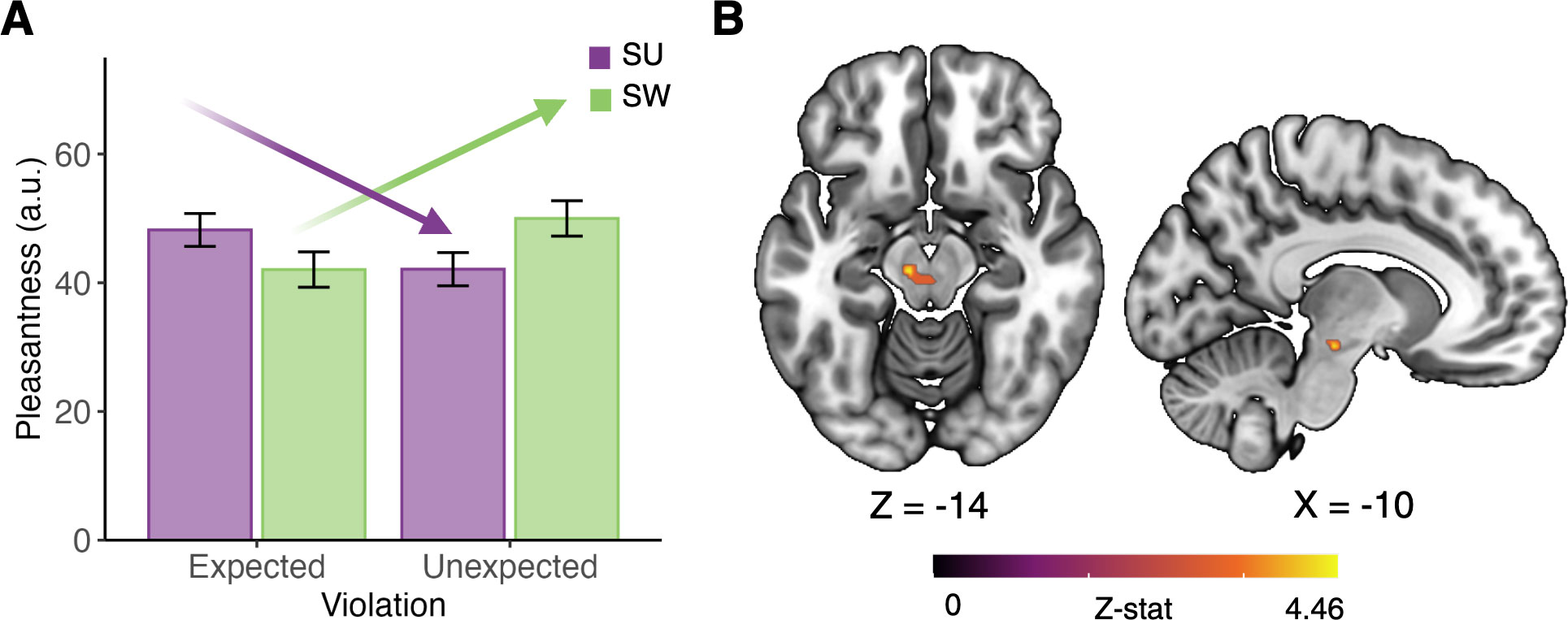
When volunteers were misled into believing a beverage was made with artificial sweeteners, they rated sugar-sweetened drinks as less pleasant. The pattern flipped in the other direction too. If participants expected sugar, they enjoyed artificially sweetened drinks more, and that boost lined up with stronger activity in a reward-related brain region.
Westwater says, “This could mean that this brain area, the dopaminergic midbrain, processes increased nutrients or calories of sweet flavors, which supports rodent work showing that this brain region is important for sugar seeking.”
Brain Mechanisms and Dietary Implications
The researchers say their results highlight how expectations shape both behavior and brain responses to sweet tastes. In other words, what people think they are consuming can influence not only their experience of flavor but also the neural systems involved in reward.
Westwater pointed to possible applications for nutrition and public health. She explains, “If we emphasize that healthier food alternatives are ‘nutrient-rich,’ or have ‘minimal added sugars,’ this may create more positive expectations than using terms like ‘diet’ or ‘low calories.’ This may help people align their food choices with the brain’s preference for calories while supporting behavior change.”
Although she notes that the broader concept is not entirely new in clinical settings, Westwater hopes the study encourages neuroscientists to take a closer look at how beliefs and expectations interact with eating behavior and dietary choices.
Reference: “Expectation modulates the hedonic experiences of and midbrain responses to sweet flavour” by Elena Mainetto, Margaret L. Westwater, Hisham Ziauddeen, Kelly M.J. Diederen and Paul C. Fletcher, 1 March 2026, Journal of Neuroscience.
DOI: 10.1523/JNEUROSCI.1121-25.2026
Never miss a breakthrough: Join the SciTechDaily newsletter.
Follow us on Google and Google News.
1 Comment
Let me see here. We seem to be trying to move people away from sugar to artificial sweeteners. But, at the same time I am told to avoid ultra-processed food. Sugar gets less processing so shouldn’t I go for the real deal rather than the chemistry set mashup?
{O.O}