
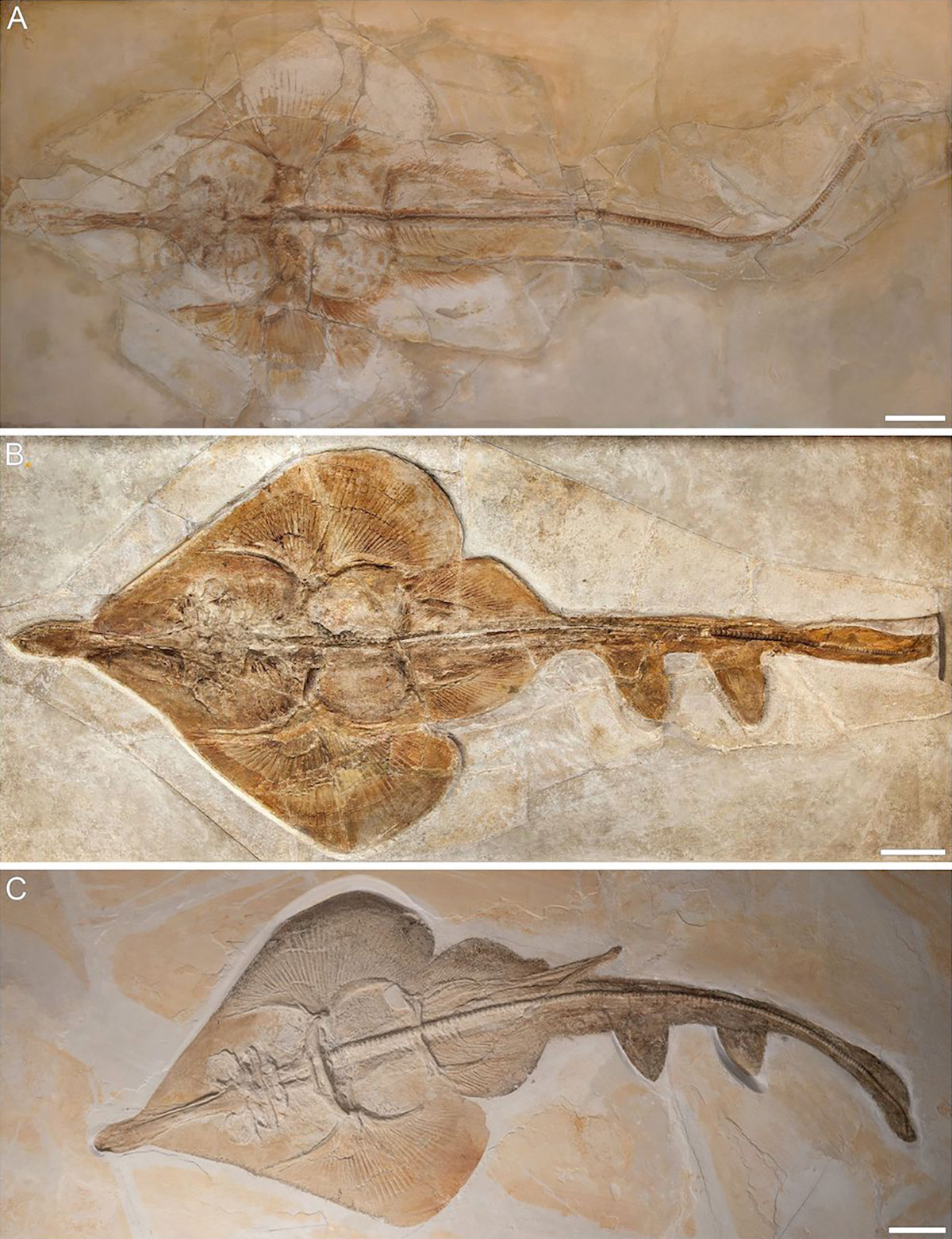
A new species of fossil ray, Aellopobatis bavarica, has been discovered in Bavarica, Germany, dating back to the Late Jurassic period.
In a new study recently published in the journal Papers in Palaeontology, an international team of scientists led by palaeobiologist Julia Türtscher from the University of Vienna has explored the puzzling world of rays that lived 150 million years ago and discovered a previously hidden diversity – including a new ray species.
This study significantly expands the understanding of these ancient cartilaginous fish and provides further insights into a past marine ecosystem.
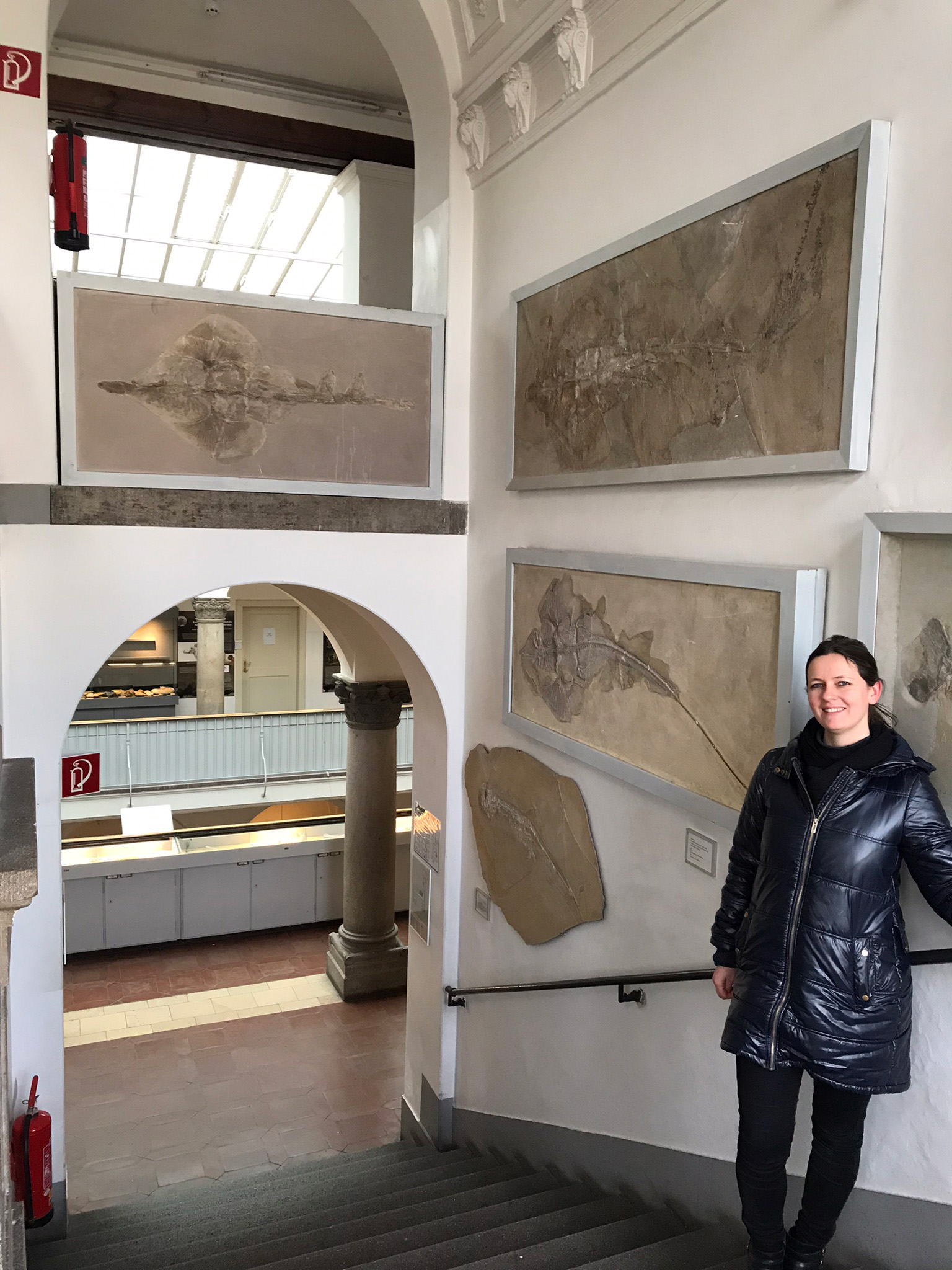
In her new study, palaeobiologist Julia Türtscher from the Institute of Palaeontology at the University of Vienna examined 52 fossil rays from the Late Jurassic period. These rays are 150 million years old, from a time when Europe was largely covered by the sea, except for a few islands, comparable to today’s Caribbean. The Late Jurassic specimens are particularly valuable to scientists because they are among the oldest known fully preserved ray specimens.
As only the teeth of fossilized rays are usually preserved, such rare skeletal finds provide exciting insights into the early evolution of this group. Although the exceptionally well-preserved fossils (from Germany, France, and the UK) have been known for some time, they have been largely unexplored. Türtscher’s study is the first comprehensive analysis of the variation in body shape in these rays.
The results show a greater diversity of holomorphic (fully preserved) rays in the Late Jurassic than previously thought. “Until now, only three holomorphic ray species have been confirmed from the Late Jurassic, but thanks to this study, a total of five species have now been identified,” says Türtscher.
Based on their analyses, the researchers were able to confirm a fourth species that had been discussed for some time, as well as documenting and introducing a new, previously undiscovered ray species: Aellopobatis bavarica. This species, which can grow up to 170 cm long, was previously thought to be a large form of the much smaller French Spathobatis bugesiacus, which is 60 cm long. However, by analyzing the skeletal structures and body shapes in detail, the scientists were able to show that Aellopobatis bavarica is a separate species.
The new results also suggest that the five species occurred in very restricted areas, but the authors are reluctant to jump to conclusions about possible endemisms: “Further studies on the tooth morphology of the specimens and subsequent comparisons with isolated teeth from other sites may help to reconstruct the palaeogeographic distribution of Late Jurassic rays,” explains Türtscher.
Insight into past marine ecosystems
The results of this new study not only contribute to the understanding of the biodiversity and evolution of rays in the Upper Jurassic, but also have direct implications on the identification of fossil ray species that are known from isolated teeth solely. Continual new discoveries about these fascinating animals provide insights into the dynamics of past marine ecosystems and highlight the importance of well-preserved fossils in the reconstruction of our geological past. “We can only draw accurate conclusions about living species if we also understand the past of a group, including its evolution, its adaptations to changing environmental factors over time, and the extinction this group has faced during its evolutionary history. Palaeobiological knowledge enables us to better understand the dynamics behind evolution and extinction of species and thus aids to develop more effective conservation measures for today’s endangered species” says second author Patrick L. Jambura from the Institute of Palaeontology at the University of Vienna.
Reference: “Rostral and body shape analyses reveal cryptic diversity of Late Jurassic batomorphs (Chondrichthyes, Elasmobranchii) from Europe” by Julia Türtscher, Patrick L. Jambura, Eduardo Villalobos-Segura, Faviel A. López-Romero, Charlie J. Underwood, Detlev Thies, Bruce Lauer, René Lauer and Jürgen Kriwet, 19 March 2024, Papers in Palaeontology.
DOI: 10.1002/spp2.1552
Never miss a breakthrough: Join the SciTechDaily newsletter.
Follow us on Google and Google News.