

Bacterial vaginosis has been declared a sexually transmitted infection and can be treated easily with a simple treatment.
A landmark study has confirmed that bacterial vaginosis (BV), a condition affecting nearly one in three women globally and linked to infertility, premature birth, and infant mortality, is a sexually transmitted infection (STI). This breakthrough has the potential to transform how BV is diagnosed, treated, and prevented.
Researchers from Monash University and Alfred Health, based at the Melbourne Sexual Health Centre, published their findings in the New England Journal of Medicine. They believe the study could significantly reduce the high rates of BV recurrence, which have remained a major challenge.
Lead authors Professor Catriona Bradshaw and Dr. Lenka Vodstrcil explain that BV has long been treated as a simple disruption of the vaginal microbiome. However, this approach has led to disappointing outcomes: more than half of women experience a recurrence within three months of completing the standard seven-day course of oral antibiotics.
In their trial of 164 couples with BV in monogamous relationships, they found that treating BV as an STI, with both sexual partners treated simultaneously, achieves significantly higher cure rates than the current practice of only treating women.
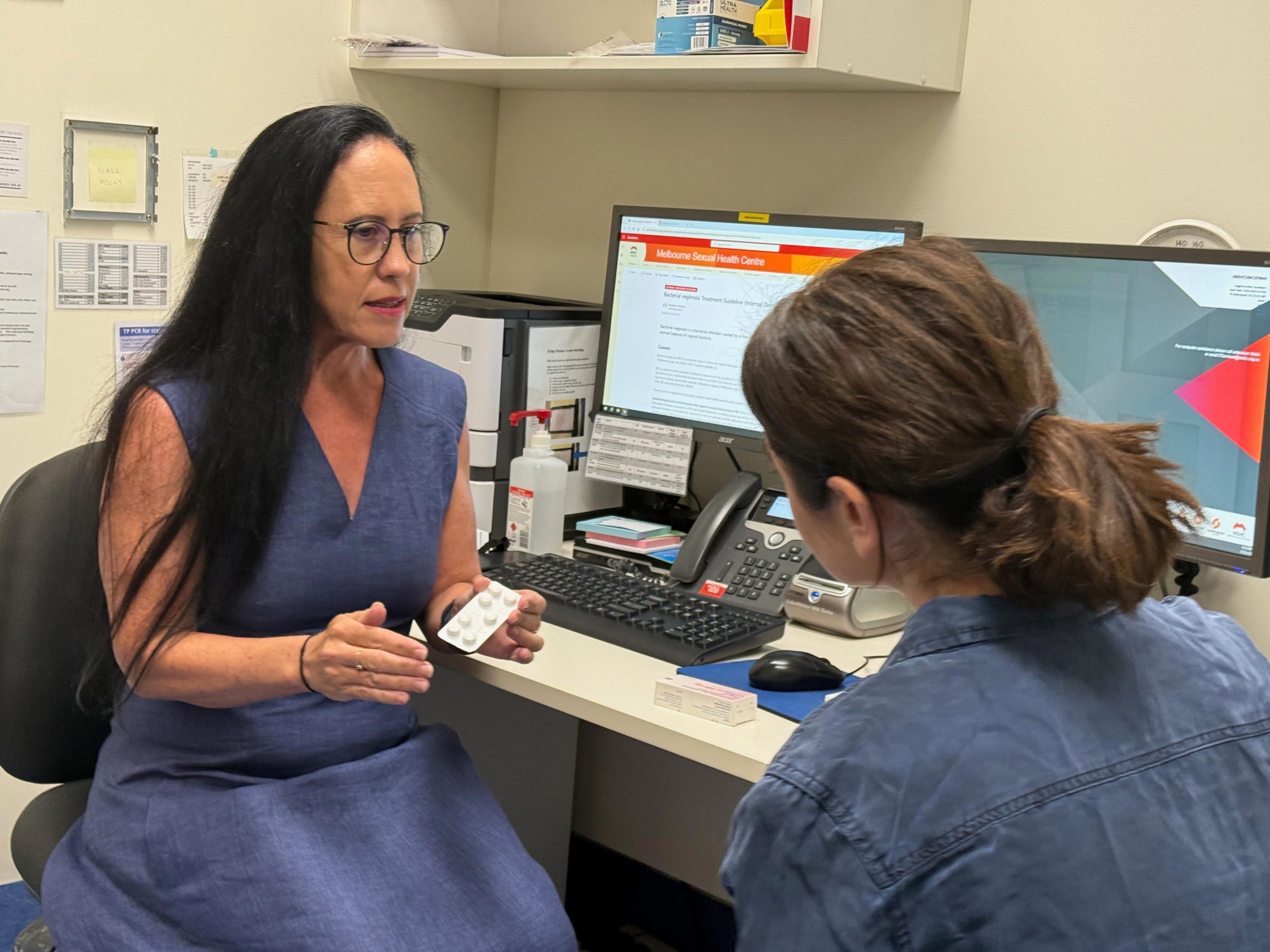
In fact, they stopped the trial early when it became clear that BV recurrence was halved in the partner treatment group compared to treating women alone.
Effective and Affordable Treatment Approach
“This successful intervention is relatively cheap and short and has the potential for the first time to not only improve BV cure for women, but opens up exciting new opportunities for BV prevention, and prevention of the serious complications associated with BV,” Professor Bradshaw said.
In the multicentre randomised trial, all women received first-line recommended antibiotics. Male partners were randomly assigned to either partner-treatment, where they received both an oral antibiotic and a topical antibiotic cream for one week, or to a control group. The control group for this trial received female antibiotic treatment only and no partner-treatment, which is the global recommended practice. Couples only took antibiotics for one week but were then followed up for 12 weeks to establish how effective this intervention was in curing BV over 3 months.
Strong Evidence of Sexual Transmission
Dr. Vodstrcil said having BV was already known to increase the risk of contracting other STIs. “We’ve suspected for a long time that it’s a sexually transmitted infection (STI), because it has a similar incubation period (after sex) to most STIs and is associated with the same risk factors as STIs like chlamydia, such as change in sexual partner and not using condoms.”

Professor Bradshaw said while studies have shown that men may harbor bacterial species associated with bacterial vaginosis on the penile skin and inside the penis, previous trials that included male partners did not show improved cure rates in their female partners.
“This was interpreted as evidence against sexual transmission,” Professor Bradshaw said. “However, these studies had design limitations, and none used a combination of oral and topical antibiotics to adequately clear BV bacteria in men, especially from the penile-skin site. Our trial has shown that reinfection from partners is causing a lot of the BV recurrence women experience, and provides evidence that BV is in fact an STI.”
New Insights and Clinical Changes
“Part of the difficulty in establishing whether BV is sexually transmitted has been that we still don’t know precisely which bacteria are the cause, but advances in genomic sequencing are helping us close in on that mystery,” Professor Bradshaw said.
The results have already led to the Melbourne Sexual Health Centre changing its clinical practice to treat couples. A new website for health professionals and consumers provides all the information needed to prescribe and access partner treatment.
“This information has been co-designed with consumers and participants in the trial and health professionals to make it accessible to all,” Professor Bradshaw said. “Changes in national and international treatment guidelines always take time, so we felt an obligation to provide accurate online and downloadable information at the time that the results of the trial are published.”
Reference: “Male-Partner Treatment to Prevent Recurrence of Bacterial Vaginosis” by Lenka A. Vodstrcil, Erica L. Plummer, Christopher K. Fairley, Jane S. Hocking, Matthew G. Law, Kathy Petoumenos, Deborah Bateson, Gerald L. Murray, Basil Donovan, Eric P. F. Chow, Marcus Y. Chen, John Kaldor and Catriona S. Bradshaw, 5 March 2025, New England Journal of Medicine.
DOI: 10.1056/NEJMoa2405404
Never miss a breakthrough: Join the SciTechDaily newsletter.
Follow us on Google and Google News.