
Ancient diets in Poland reveal how food, identity, and inequality shaped prehistoric life.
An international team of archaeologists and scientists has pieced together the diets of prehistoric populations in north-central Poland, offering new insight into how communities responded to environmental change and evolving social conditions over a span of three thousand years from the Neolithic to the Bronze Age.
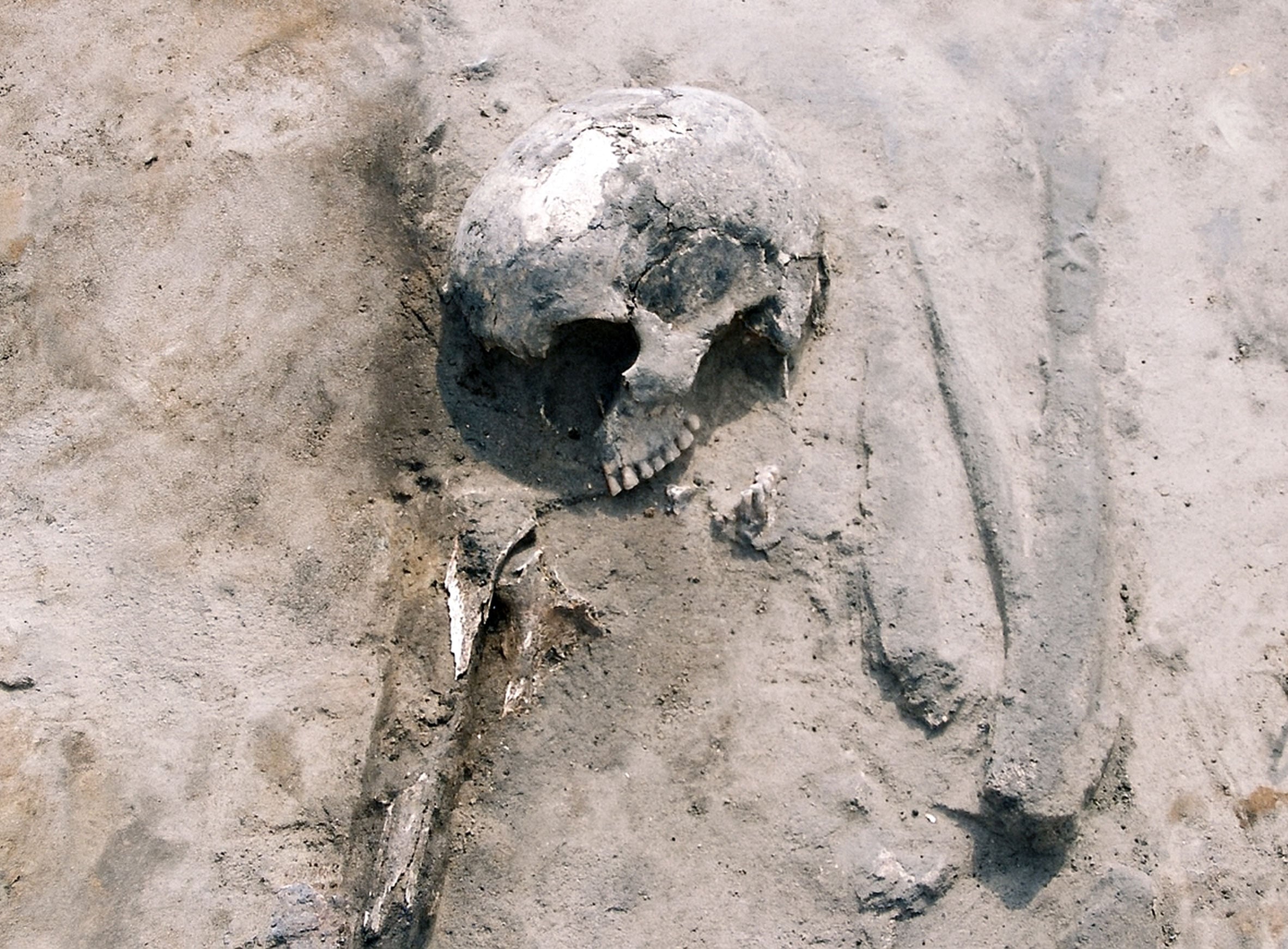
The study focused on human remains from 60 individuals dated to between about 4100 and 1230 BC. This period covers major transitions in Central European prehistory, including the arrival of people with steppe ancestry from the East and the spread of millet as a cultivated crop.
Physical evidence from these societies is limited, as their lightly built homes did not endure, graves often contained few objects, and local soil conditions rarely preserved organic material. As a result, earlier interpretations based solely on traditional archaeology have provided only a partial understanding of daily life.
Scientific methods reveal hidden lifeways
To address these limitations, the researchers combined archaeological and anthropological approaches with advanced scientific techniques. They used radiocarbon dating, ancient DNA sequencing, and stable isotope analysis of carbon and nitrogen to study the remains.
This combination made it possible not only to establish timelines but also to reconstruct diets, identify farming practices, and detect aspects of social organization that would otherwise remain hidden.
One of the clearest findings involves the Corded Ware communities, who reached north-central Poland in the late Neolithic around 2800 BC. Rather than settling in open grasslands as expected, isotopic data show that these early groups grazed animals in forests or along wet river valleys, areas considered less suitable compared to the fertile lands already used by local farmers. Over time, their diet gradually came to resemble that of nearby agricultural populations, suggesting they may have adopted or adapted existing herding strategies.
Diet differences reflect cultural identity
Another key result relates to the spread of millet. Across much of Eurasia, broomcorn millet quickly became a staple food. In north-central Poland, however, isotope analysis of bone collagen reveals a more varied pattern. From around 1200 BC, some communities relied heavily on millet, while others made little use of it. These dietary differences were accompanied by distinct burial practices.
Some groups returned to older traditions of communal tombs used across generations, while others buried individuals in paired arrangements within elongated pits, placing the bodies foot-to-foot. This pattern indicates that food choices were not only shaped by availability or environment but were also closely linked to cultural identity and group distinctions.
The data also reveals early signs of social inequality. Differences in nitrogen isotope values in bone collagen indicate variation in access to animal protein, which reflects an individual’s position within the food web. Certain individuals, particularly during the Early Bronze Age, appear to have consumed more animal-based foods than others. This suggests the emergence of social hierarchies that are not evident from the relatively simple grave goods found at these sites.
The findings further demonstrate that communities in this region were not simply copying cultural developments from central parts of Europe. Instead, they followed their own paths, developing distinct practices and strategies. Taken together, the results highlight both the adaptability and the independence of prehistoric groups as they navigated environmental and social change.
“Isotopic insights into long-term socio-economic transformations in prehistoric Kuyavia, Poland” by Łukasz Pospieszny, Jamie Lewis, Isabel L. Wiltshire, Lucy Cramp, Julia Giblin, Marta Krenz-Niedbała, Sylwia Łukasik, Beata Borowska, Daniel Makowiecki, Joanna Rennwanz, Anna Juras, Maciej Chyleński, Tomasz Goslar, Tim Knowles, Kristian Kristiansen, Karl-Göran Sjögren, Michał Jakubczak, Józef Bednarczyk, Krzysztof Błaszczyk, Piotr Chachlikowski, Janusz Czebreszuk, Anna Grossman, Marcin Ignaczak, Emilia Karczewska-Kaczmarek, Aleksander Kośko, Przemysław Makarowicz, Szymon Nowaczyk, Jessica Pearson, Adriana Romańska, Łukasz Maurycy Stanaszek, Marzenna Szmyt, Krzysztof Starzyński, Mélanie Roffet-Salque, 25 February 2026, Royal Society Open Science.
DOI: 10.1098/rsos.250968
This research was funded by the Polish Ministry of Science and Higher Education grant for J.C. (no. N N109 287137), the European Research Council Advanced Grant for K.K. (no. 269442, The Rise), the National Science Centre (Polish Narodowe Centrum Nauki) grants for Ł.P. (nos. 2014/15/D/HS3/01304 and 2021/43/B/HS3/01995, SubTrans) and Marie Skłodowska-Curie Actions Individual Fellowship for Ł.P. (no. 798894, ISOPATH).
Never miss a breakthrough: Join the SciTechDaily newsletter.
Follow us on Google and Google News.