
Close Menu
    Facebook X (Twitter) Instagram
    SciTechDaily
    • Biology
    • Chemistry
    • Earth
    • Health
    • Physics
    • Science
    • Space
    • Technology
    Facebook X (Twitter) Pinterest YouTube RSS
    SciTechDaily
    Home»Health»Cracking the Code for Hookworm Infestation – Providing New Hope for a Vaccine
    Health

    Cracking the Code for Hookworm Infestation – Providing New Hope for a Vaccine

    By Monash UniversityFebruary 12, 2020No Comments2 Mins Read
    Facebook Twitter Pinterest Telegram LinkedIn WhatsApp Email Reddit
    Share
    Facebook Twitter LinkedIn Pinterest Telegram Email Reddit
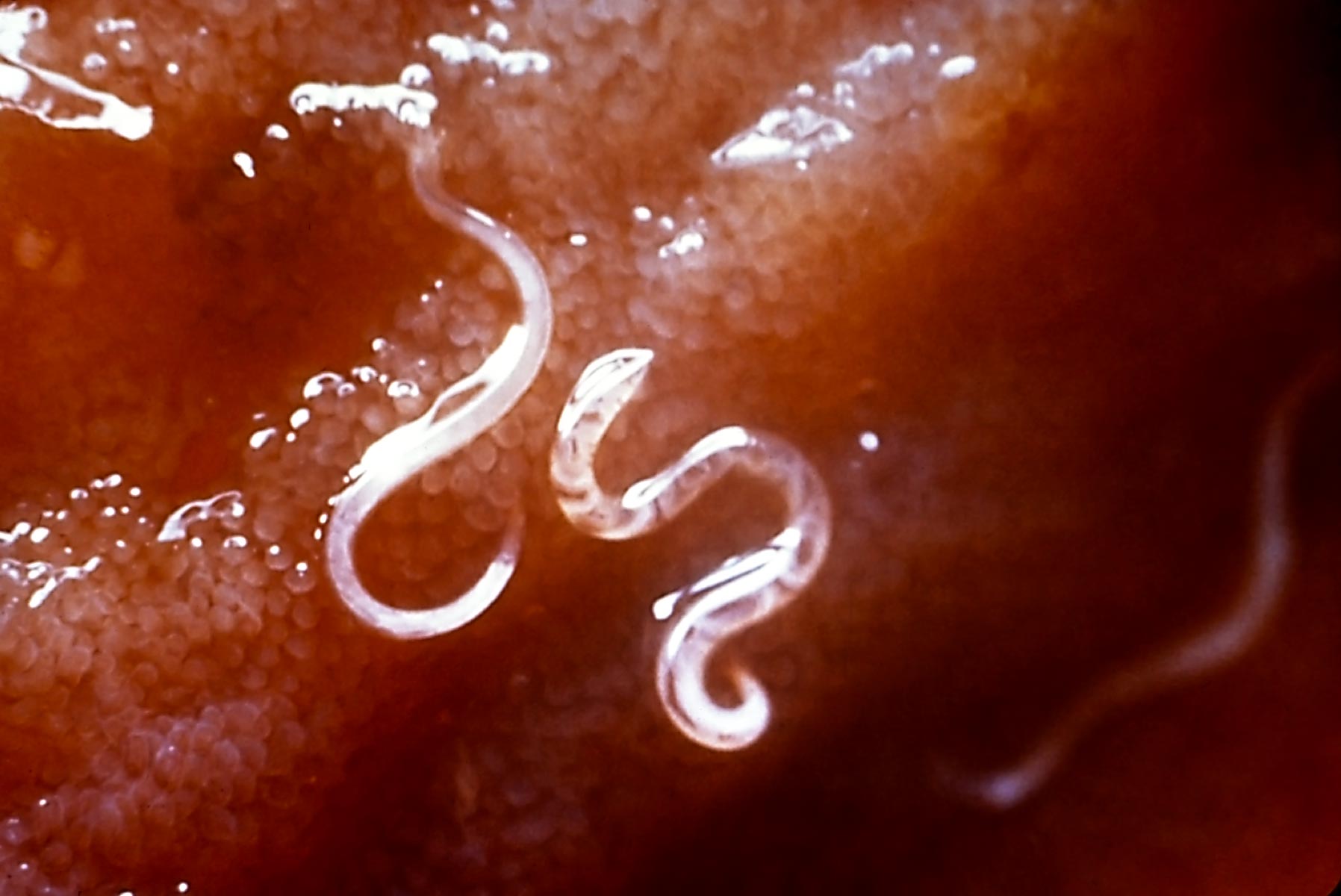
    Ancylostoma Caninum Hookworms
    Ancylostoma caninum hookworms, atop intestinal villi. Credit: CDC

    Hookworms infect nearly around 700 million people in the world, mostly in countries where sanitation is poor, and people often walk barefoot.

    The body’s immune system is critical to attacking the hookworm, but these parasites are masters of escape and individuals typically remain infected throughout their lifetime, often resulting in death or complications stemming from anemia.

    Monash University researchers have uncovered a key way that hookworms evade the immune system — providing new hope in the search for a vaccine.

    Importantly, the researchers, led by Professor Nicola Harris from Monash University’s Central Clinical School, may have discovered why people are unable to kill hookworms.

    The research, published today in the leading journal, Cell Host and Microbe, shows that a type of immune cell in the blood, called neutrophils, can kill hookworms by releasing neutrophil extracellular traps (NETs) made up of toxin-coated DNA.

    However, the hookworm has developed a way to sense what the neutrophil is doing, releasing an enzyme that degrades the DNA backbone of the trap, allowing the hookworm to remain and continue infecting its host.

    Professor Harris and her colleagues suggest the NETS created by the neutrophils could kill the worm providing people living in hookworm prone areas by boosting much-needed immunity.

    Professor Harris says that the discovery could form the basis of a vaccine to achieve this goal.

    “No protective vaccines currently exist, and their successful development requires an improved understanding of both the body’s immune response and the biology of these worm-like pests known as nematodes,” Professor Harris said.

    “We have found that hookworms have evolved a previously unrecognized evasion mechanism to degrade the immune system’s response, thus persistently infecting their hosts.

    “We may now be able to look at new vaccination approaches that target the enzyme secreted by the hookworm parasite to alleviate infestation and to decrease the likelihood of reinfection.”

    Reference: “Hookworms Evade Host Immunity by Secreting a Deoxyribonuclease to Degrade Neutrophil Extracellular Traps” by Tiffany Bouchery, Mati Moyat, Javier Sotillo, Solomon Silverstein, Beatrice Volpe, Gillian Coakley, Theodora-Dorita Tsourouktsoglou, Luke Becker, Kathleen Shah, Manuel Kulagin, Romain Guiet, Mali Camberis, Alfonso Schmidt, Arne Seitz, Paul Giacomin, Graham Le Gros, Venizelos Papayannopoulos Alex Loukas and
    Nicola L. Harris, 12 February 2020, Cell Host and Microbe.
    DOI: 10.1016/j.chom.2020.01.011

    Never miss a breakthrough: Join the SciTechDaily newsletter.
    Follow us on Google and Google News.

    Monash University Public Health Vaccine
    Share. Facebook Twitter Pinterest LinkedIn Email Reddit

    Related Articles

    Eternal Shield: Science Breakthrough for Long-Lasting Vaccines

    Scientists Rewrite the Genesis of Mosquito-Borne Viruses – Discovery Enables Better Designed Vaccines

    Real Hope for Vaccine Longevity: New Data Reveals COVID Immunity Lasts Up to 8 Months

    New Universal Ebola Vaccine May Fight All Species of Deadly Virus That Infect Humans

    Research Offers Hope as World Struggles With COVID-19 Ventilator Shortage

    Where Are We on a Coronavirus Vaccine: And What’s Next? [Video]

    Promise for COVID-19 Vaccine After Engineered Virus Protects Against MERS in Mice

    Coronavirus Fight: Scientists Identify COVID-19 Drug That “Kills” the Virus Within 48 Hours

    Study Finds Most Young Women Unhappy & Stressed About Their Sex Lives

    Leave A Reply Cancel Reply

    • Facebook
    • Twitter
    • Pinterest
    • YouTube

    Don't Miss a Discovery

    Subscribe for the Latest in Science & Tech!

    Trending News

    AI Could Detect Early Signs of Alzheimer’s in Under a Minute – Far Before Traditional Tests

    What if Dark Matter Has Two Forms? Bold New Hypothesis Could Explain a Cosmic Mystery

    This Metal Melts in Your Hand – and Scientists Just Discovered Something Strange

    Beef vs. Chicken: Surprising Results From New Prediabetes Study

    Alzheimer’s Breakthrough: Scientists Discover Key Protein May Prevent Toxic Protein Clumps in the Brain

    Quantum Reality Gets Stranger: Physicists Put a Lump of Metal in Two Places at Once

    Scientists May Have Found the Key to Jupiter and Saturn’s Moon Mystery

    Scientists Uncover Brain Changes That Link Pain to Depression

    Follow SciTechDaily
    • Facebook
    • Twitter
    • YouTube
    • Pinterest
    • Newsletter
    • RSS
    SciTech News
    • Biology News
    • Chemistry News
    • Earth News
    • Health News
    • Physics News
    • Science News
    • Space News
    • Technology News
    Recent Posts
    • Century-Old Cleaning Chemical Linked to 500% Increased Risk of Parkinson’s Disease
    • What if Your Memories Never Happened? Physicists Take a New Look at the Boltzmann Brain Paradox
    • Students Found an Ancient Star That Shouldn’t Be in the Milky Way
    • Astronomers Solve 50-Year Mystery and Reveal Hidden Culprit Behind Strange X-Ray Emissions
    • One of the Universe’s Largest Stars May Be Getting Ready To Explode
    Copyright © 1998 - 2026 SciTechDaily. All Rights Reserved.
    • Science News
    • About
    • Contact
    • Editorial Board
    • Privacy Policy
    • Terms of Use

    Type above and press Enter to search. Press Esc to cancel.