
Close Menu
    Facebook X (Twitter) Instagram
    SciTechDaily
    • Biology
    • Chemistry
    • Earth
    • Health
    • Physics
    • Science
    • Space
    • Technology
    Facebook X (Twitter) Pinterest YouTube RSS
    SciTechDaily
    Home»Health»New Antibiotics Discovered With Unique Way to Kill Bacteria
    Health

    New Antibiotics Discovered With Unique Way to Kill Bacteria

    By McMaster UniversityFebruary 12, 2020No Comments3 Mins Read
    Facebook Twitter Pinterest Telegram LinkedIn WhatsApp Email Reddit
    Share
    Facebook Twitter LinkedIn Pinterest Telegram Email Reddit
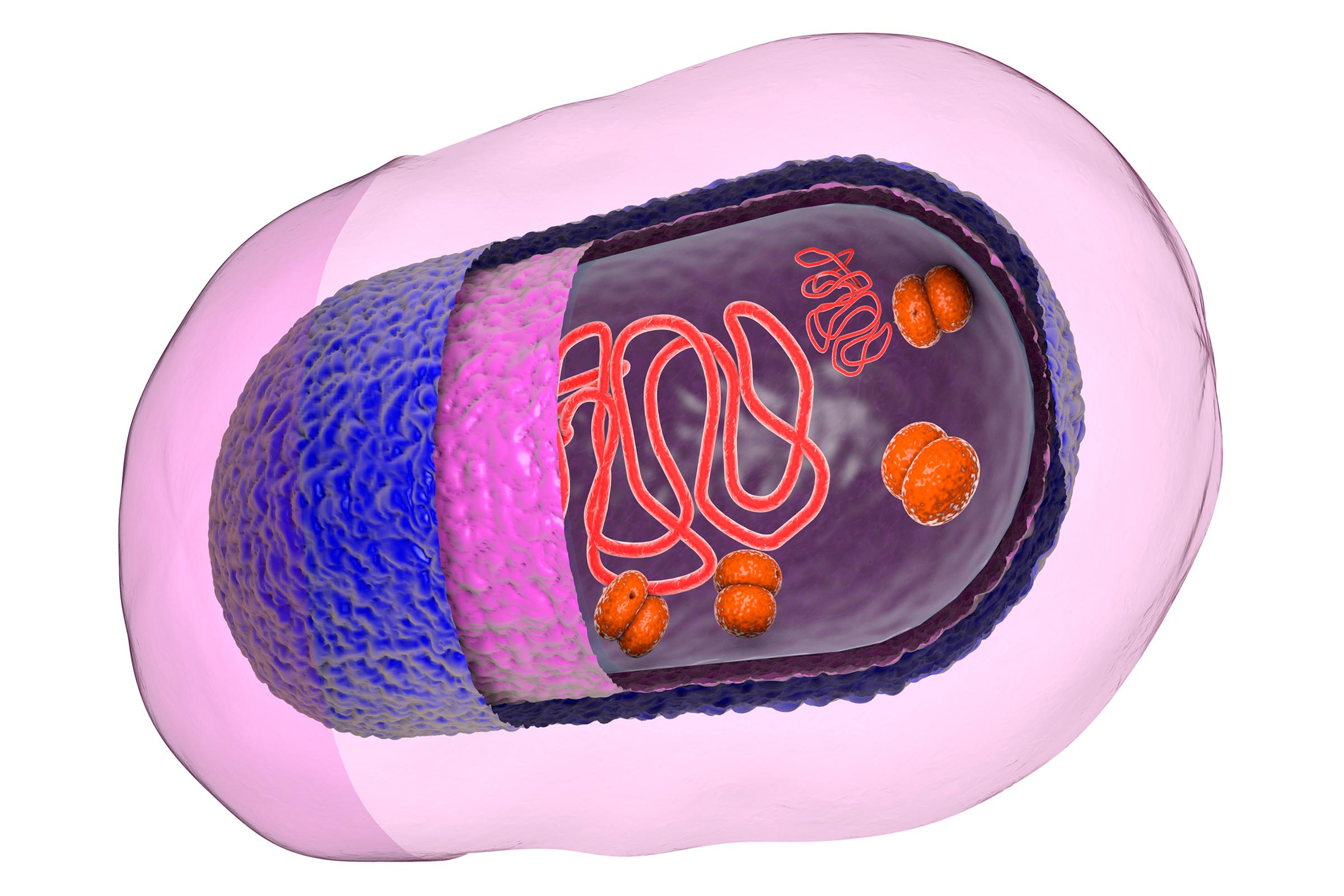
    Bateria Cell Structure
    A newly-found group of antibiotics has a never-before-seen way to kill bacteria, which is achieved by blocking the function of the bacterial cell wall.

    A promising clinical candidate in the fight against antimicrobial resistance.

    A new group of antibiotics with a unique approach to attacking bacteria has been discovered, making it a promising clinical candidate in the fight against antimicrobial resistance.

    The newly-found corbomycin and the lesser-known complestatin have a never-before-seen way to kill bacteria, which is achieved by blocking the function of the bacterial cell wall. The discovery comes from a family of antibiotics called glycopeptides that are produced by soil bacteria.

    The researchers also demonstrated in mice that these new antibiotics can block infections caused by the drug-resistant Staphylococcus aureus which is a group of bacteria that can cause many serious infections.

    The findings were published in Nature today.

    “Bacteria have a wall around the outside of their cells that gives them shape and is a source of strength,” said study first author Beth Culp, a Ph.D. candidate in biochemistry and biomedical sciences at McMaster.

    “Antibiotics like penicillin kill bacteria by preventing the building of the wall, but the antibiotics that we found actually work by doing the opposite — they prevent the wall from being broken down. This is critical for cells to divide.
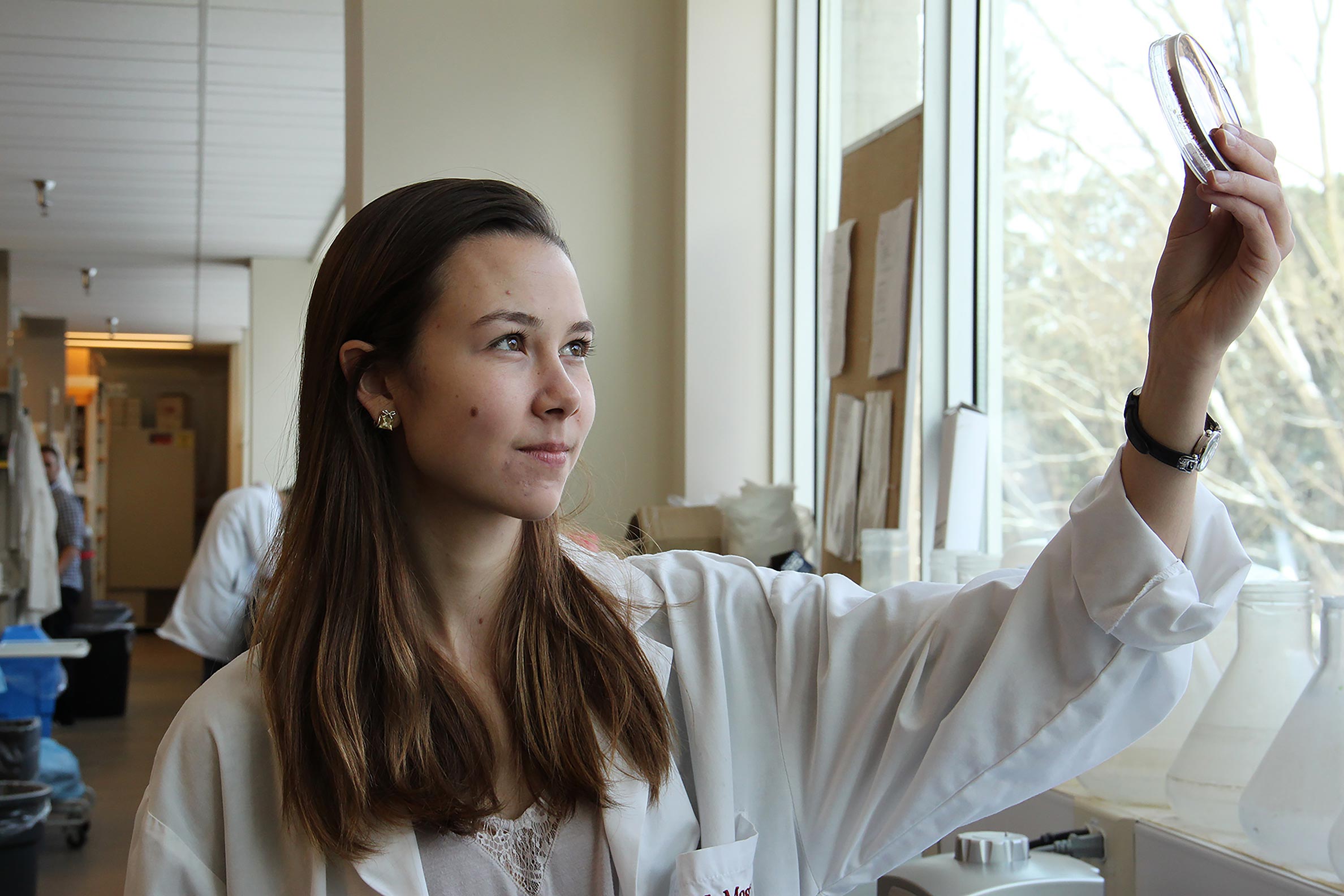
    Beth Culp, McMaster University
    Beth Culp is a Ph.D. candidate in biochemistry and biomedical sciences at McMaster University. Credit: McMaster University

    “In order for a cell to grow, it has to divide and expand. If you completely block the breakdown of the wall, it is like it is trapped in a prison, and can’t expand or grow.”

    Looking at the family tree of known members of the glycopeptides, researchers studied the genes of those lacking known resistance mechanisms, with the idea they might be an antibiotic demonstrating a different way to attack bacteria.

    “We hypothesized that if the genes that made these antibiotics were different, maybe the way they killed the bacteria was also different,” said Culp.

    The group confirmed that the bacterial wall was the site of action of these new antibiotics using cell imaging techniques in collaboration with Yves Brun and his team from the Université de Montréal.

    Culp said: “This approach can be applied to other antibiotics and help us discover new ones with different mechanisms of action. We found one completely new antibiotic in this study, but since then, we’ve found a few others in the same family that have this same new mechanism.”

    Reference: “Evolution-guided discovery of antibiotics that inhibit peptidoglycan remodelling” by Elizabeth J. Culp, Nicholas Waglechner, Wenliang Wang, Aline A. Fiebig-Comyn, Yen-Pang Hsu, Kalinka Koteva, David Sychantha, Brian K. Coombes, Michael S. Van Nieuwenhze, Yves V. Brun and Gerard D. Wright, 12 February 2020, Nature.
    DOI: 10.1038/s41586-020-1990-9

    The team is led by professor Gerry Wright of the David Braley Centre for Antibiotic Discovery within the Michael G. DeGroote Institute for Infectious Disease Research at McMaster.

    The research was funded by the Canadian Institutes of Health Research and the Ontario Research Fund.

    Never miss a breakthrough: Join the SciTechDaily newsletter.
    Follow us on Google and Google News.

    Antibiotics Bacteria McMaster University
    Share. Facebook Twitter Pinterest LinkedIn Email Reddit

    Related Articles

    Improving Antibiotic Treatment: Scientists Test “Smart” Red Blood Cells

    Warning: Antibiotic-Resistant Bacteria Spread by Washing Machines

    Researchers Use ‘Trojan Horse’ to Kill Deadly Antibiotic-Resistant Bacteria

    Alternative Therapeutics Provide an Indirect Approach to Beating Superbugs

    New Strategy Makes Bacteria More Vulnerable to Antibiotics

    New Research Shows Antibiotics Work Differently Than Thought

    Biologists Reverse Bacterial Resistance to Antibiotics

    Engineered Liposomes: A Possible Alternative to Antibiotics

    UCSD Biologists Develop New Method for Identifying Antibiotics

    Leave A Reply Cancel Reply

    • Facebook
    • Twitter
    • Pinterest
    • YouTube

    Don't Miss a Discovery

    Subscribe for the Latest in Science & Tech!

    Trending News

    Researchers Have Found a Dietary Compound That Increases Longevity

    Scientists Baffled by Bizarre “Living Fossil” From 275 Million Years Ago

    Your IQ at 23 Could Predict Your Wealth at 27, Study Finds

    320 Light-Years Away, a Planet Confirms a Fundamental Cosmic Assumption

    The Crown Jewel of Dentistry? Breakthrough Tech Could Transform Tooth Repair

    Python Blood Could Hold the Secret to Weight Loss Without Side Effects

    Naturally Occurring Bacteria Completely Eradicate Tumors in Mice With a Single Dose

    New “Nanozyme Hypothesis” Could Rewrite the Story of Life’s Origins

    Follow SciTechDaily
    • Facebook
    • Twitter
    • YouTube
    • Pinterest
    • Newsletter
    • RSS
    SciTech News
    • Biology News
    • Chemistry News
    • Earth News
    • Health News
    • Physics News
    • Science News
    • Space News
    • Technology News
    Recent Posts
    • Scientists May Have Found the Key to Jupiter and Saturn’s Moon Mystery
    • Scientists Uncover Hidden Clues to the Origin of the Genetic Code
    • Scientists Discover Unexpected Role of Alzheimer’s Protein in Cell Division
    • Scientists Uncover Brain Changes That Link Pain to Depression
    • A New Chapter in Chemistry? Scientists Uncover New Way Metals Bind Oxygen
    Copyright © 1998 - 2026 SciTechDaily. All Rights Reserved.
    • Science News
    • About
    • Contact
    • Editorial Board
    • Privacy Policy
    • Terms of Use

    Type above and press Enter to search. Press Esc to cancel.