
Close Menu
    Facebook X (Twitter) Instagram
    SciTechDaily
    • Biology
    • Chemistry
    • Earth
    • Health
    • Physics
    • Science
    • Space
    • Technology
    Facebook X (Twitter) Pinterest YouTube RSS
    SciTechDaily
    Home»Health»Improving Antibiotic Treatment: Scientists Test “Smart” Red Blood Cells
    Health

    Improving Antibiotic Treatment: Scientists Test “Smart” Red Blood Cells

    By McMaster UniversityDecember 6, 2022No Comments3 Mins Read
    Facebook Twitter Pinterest Telegram LinkedIn WhatsApp Email Reddit
    Share
    Facebook Twitter LinkedIn Pinterest Telegram Email Reddit
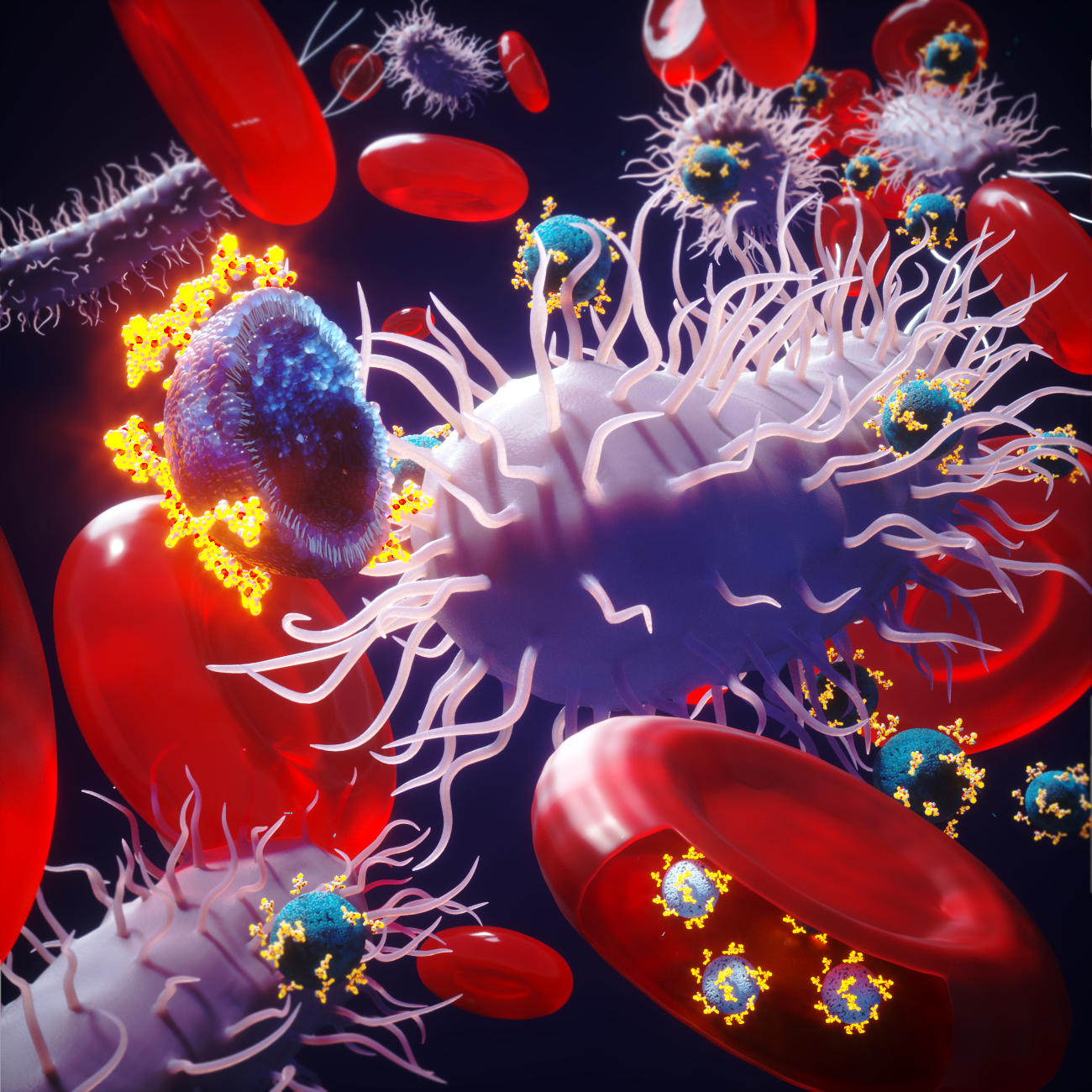
    Testing a New Drug Delivery System
    An illustration of the new drug delivery system. Credit: Ella Marushchenko

    The “Smart” Red Blood Cells Deliver Antibiotics That Target Specific Bacteria

    A natural delivery system that uses red blood cells as a vehicle to transport powerful antibiotics throughout the body safely has been developed by physicists at McMaster University. This method allows for the targeting and killing of specific bacteria.

    According to the scientists, the platform, which is presented in a recent study published in the journal ACS Infectious Diseases, might help in tackling the ongoing crisis of antibiotic resistance. They modified and tested red blood cells as a carrier for one of the world’s few remaining resistance-proof antibiotics, Polymyxin B (PmB), which is typically regarded as a last-resort treatment owing to its toxicity and devastating side effects, which include kidney damage.

    It is used to combat bacteria that are particularly harmful and often drug-resistant, such as E. coli, which may cause a number of severe illnesses including pneumonia, gastroenteritis, and bloodstream infections.

    Researchers have devised a method for opening red blood cells and removing the inner components, leaving just a membrane known as a liposome that can be loaded with drug molecules and put back into the body.
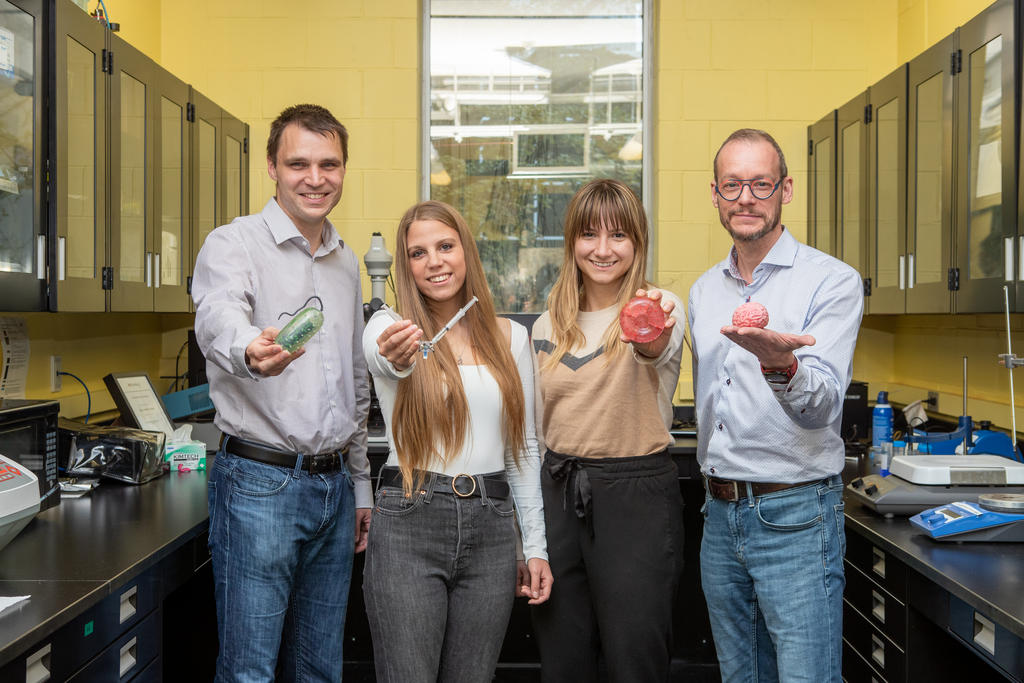
    Sebastian Himbert, Michal Feigis, Hannah Krivic and Maikel Rheinstädter
    From left to right: Thode postdoctoral fellow Sebastian Himbert, based in the Department of Physics & Astronomy, Michal Feigis, an undergrad student also in the Department of Physics & Astronomy, Hannah Krivic, a graduate student of biophysics at McMaster and lead author of the study and team supervisor Maikel Rheinstädter, a professor in the Department of Physics & Astronomy. Credit: Georgia Kirkos, McMaster University

    The process also involves coating the outside of the membrane with antibodies, allowing it to stick to bacteria and deliver the antibody safely.

    A Safer Way to Deliver Polymyxin B

    “Essentially, we are using red blood cells to conceal this antibiotic within so it can no longer interact or harm healthy cells as it passes through the body,” explains Hannah Krivic, a graduate student of biophysics at McMaster and lead author of the study. She conducted the work with undergraduate students Ruthie Sun and Michal Feigis, and Thode postdoctoral fellow Sebastian Himbert, all based in the Department of Physics & Astronomy.

    “We designed these red blood cells so they could only target bacteria we want them to target,” says Krivic.

    The team, supervised by Maikel Rheinstädter, a professor in the McMaster University Department of Physics & Astronomy, had also focused on red blood cells in previous work (hyperlink) because they are stable, sturdy, and have a naturally long lifespan, approximately 120 days, giving them ample time to reach different target sites.

    Addressing the Side Effects of Antibiotics

    “With many traditional drug therapies there are challenges. They tend to degrade rapidly when they enter our circulation system and are randomly distributed throughout our bodies,” Rheinstädter explains. “We often have to take higher doses or repeated doses, which increases exposure to the drug and heightens the risk of side effects.”

    Scientists are working on additional applications of the technology, including its potential as a platform to deliver drugs across the blood-brain barrier and directly to the brain, helping patients who suffer from Alzheimer’s or depression, for example, to receive treatment much more quickly and directly.

    Reference: “Erythro-PmBs: A Selective Polymyxin B Delivery System Using Antibody-Conjugated Hybrid Erythrocyte Liposomes” by Hannah Krivić, Sebastian Himbert, Ruthie Sun, Michal Feigis and Maikel C. Rheinstädter, 29 September 2022, ACS Infectious Diseases.
    DOI: 10.1021/acsinfecdis.2c00017

    The study was funded by the Natural Sciences and Engineering Research Council of Canada and the Canada Foundation for Innovation. 

    Never miss a breakthrough: Join the SciTechDaily newsletter.
    Follow us on Google and Google News.

    Antibiotics Bacteria Blood McMaster University
    Share. Facebook Twitter Pinterest LinkedIn Email Reddit

    Related Articles

    Killing Even Antibiotic-Resistant Bacteria: A New Infection-Fighting Wound Spray

    New Antibiotics Discovered With Unique Way to Kill Bacteria

    Researchers Use ‘Trojan Horse’ to Kill Deadly Antibiotic-Resistant Bacteria

    Alternative Therapeutics Provide an Indirect Approach to Beating Superbugs

    New Strategy Makes Bacteria More Vulnerable to Antibiotics

    New Research Shows Antibiotics Work Differently Than Thought

    Biologists Reverse Bacterial Resistance to Antibiotics

    Engineered Liposomes: A Possible Alternative to Antibiotics

    UCSD Biologists Develop New Method for Identifying Antibiotics

    Leave A Reply Cancel Reply

    • Facebook
    • Twitter
    • Pinterest
    • YouTube

    Don't Miss a Discovery

    Subscribe for the Latest in Science & Tech!

    Trending News

    Scientists Discover How Coffee Impacts Memory, Mood, and Gut Health

    Why Did the Neanderthals Disappear? Scientists Reveal Humans Had a Hidden Advantage

    Physicists Propose Strange Experiment Where Time Goes Quantum

    Magnesium Magic: New Drug Melts Fat Even on a High-Fat, High-Sugar Diet

    Weight-Loss Drugs Like Ozempic May Come With an Unexpected Cost

    Mezcal “Worm” in a Bottle Mystery: DNA Testing Reveals a Surprise

    New Research Reveals That Your Morning Coffee Activates an Ancient Longevity Switch

    This Is What Makes You Irresistible to Mosquitoes

    Follow SciTechDaily
    • Facebook
    • Twitter
    • YouTube
    • Pinterest
    • Newsletter
    • RSS
    SciTech News
    • Biology News
    • Chemistry News
    • Earth News
    • Health News
    • Physics News
    • Science News
    • Space News
    • Technology News
    Recent Posts
    • This New Memory Technology Could Make Devices Last Months on One Charge
    • Scientists Turn Cancer’s Own Bacteria Against It in Breakthrough Therapy
    • Cannabis Can Make You Remember Things That Never Happened
    • Doctors Are Surprised by What This Vaccine Is Doing to the Heart
    • Quantum Breakthrough Turns Simple Forces Into Powerful New Interactions
    Copyright © 1998 - 2026 SciTechDaily. All Rights Reserved.
    • Science News
    • About
    • Contact
    • Editorial Board
    • Privacy Policy
    • Terms of Use

    Type above and press Enter to search. Press Esc to cancel.