
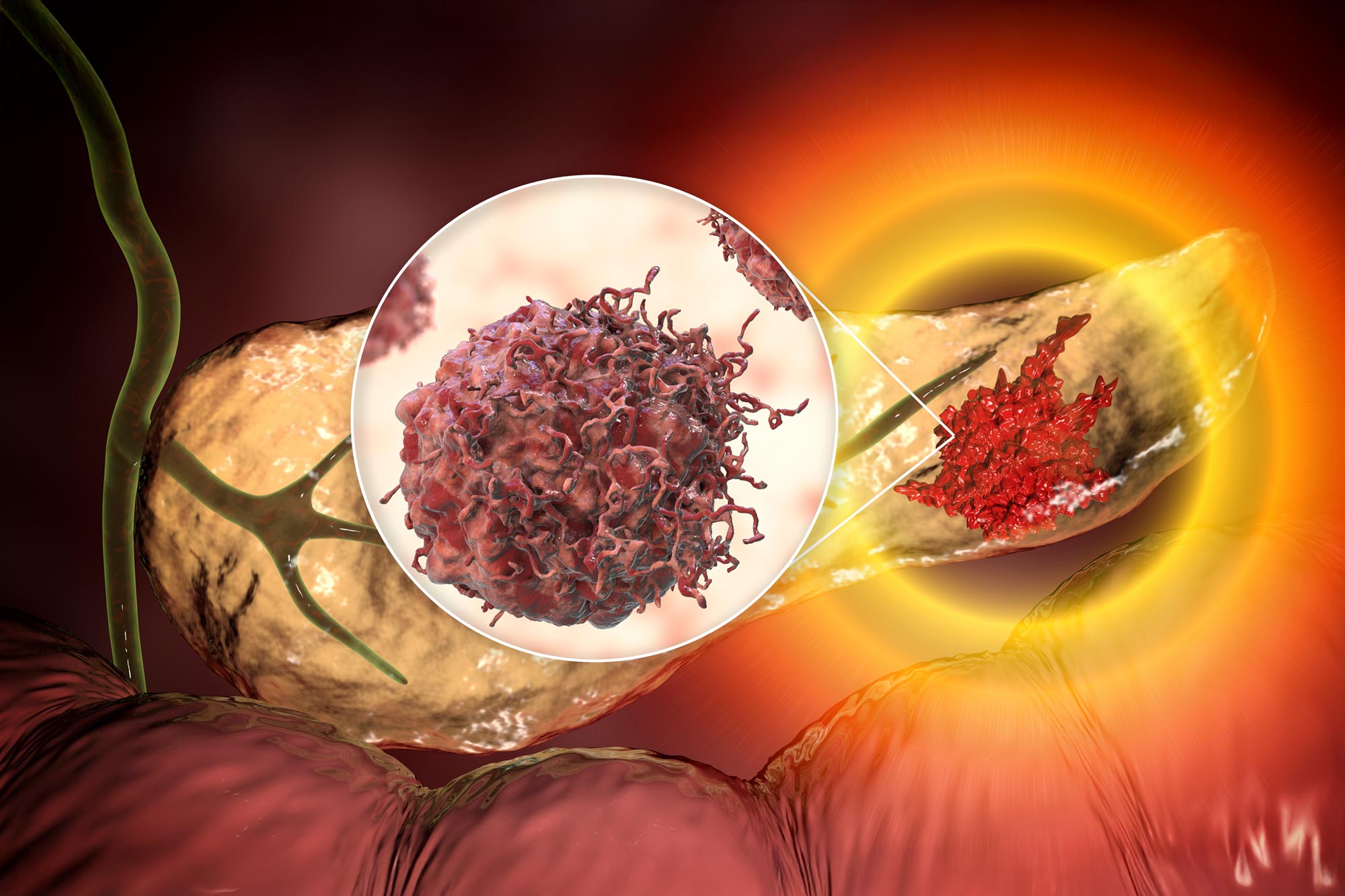
An AI system may spot pancreatic cancer long before it becomes visible.
A new artificial intelligence system called REDMOD may be able to spot pancreatic cancer long before doctors can see it. The model identifies faint tissue changes linked to pancreatic ductal adenocarcinoma, the most common and deadliest form of the disease, according to research published in Gut.
These early warning signs are typically invisible on routine scans and easily missed by even highly trained specialists.
The researchers say this approach could help shift diagnoses away from the typical late-stage, often terminal discovery toward much earlier detection at stage 0, when treatment is more likely to succeed.
Although REDMOD outperformed experienced radiologists, the team notes that it still needs further testing in high risk patients, including those with unexplained weight loss and newly diagnosed diabetes, before it can be used widely in clinical settings.
The Challenge of Early Detection
Pancreatic ductal adenocarcinoma has a very low survival rate. It is usually found at an advanced stage because early disease rarely causes symptoms or visible tissue changes, and it progresses quickly, the researchers explain.
To address this, the team developed the Radiomics-based Early Detection Model (REDMOD). This AI system is designed to identify subtle patterns in tissue texture, known as radiomics, that signal very early pancreatic cancer but are not visible on standard computed tomography (CT) scans.
The system also includes automated pancreatic segmentation, which precisely outlines the pancreas and separates it from surrounding tissues and organs. This removes the need for manual outlining, which can vary in accuracy.
To evaluate its performance, REDMOD was tested on abdominal CT scans from 219 patients across multiple hospitals. These individuals were initially considered disease-free based on radiologist reviews but were later diagnosed with pancreatic cancer.
For 87 patients (40%), scans were taken 3-12 months before diagnosis. For 76 (35%), scans were taken 12–24 months prior, and for 56 (25%), scans were obtained more than 24 months before diagnosis, up to about 3 years. In nearly two-thirds (64%) of cases, the cancer was located in the head of the pancreas.
The results were compared with scans from 1,243 individuals who did not develop pancreatic cancer within 3 years. These participants were matched by age, sex, and scan date.
The average age of patients later diagnosed with pancreatic cancer was 69, with a range of 34 to 88. The comparison group had an average age of 64, with the same age range.
Detection Performance and Accuracy
REDMOD identified the “invisible” signs of preclinical pancreatic ductal adenocarcinoma an average of 475 days before a clinical diagnosis was made.
“This temporal window holds profound significance, as attaining such early detection would substantially augment the probability of cure and improved survival,” highlight the researchers.
“In fact, modelling studies indicate that increasing the proportion of localised [pancreatic ductal carcinomas] from 10% to 50% would more than double survival rates, thereby underscoring that the timing of diagnosis is the single most critical determinant of survival outcomes,” they add.
The model also outperformed radiologists. It showed nearly double the sensitivity, meaning it was better at correctly identifying true positive cases, achieving 73% compared with 39%. For cases detected more than 2 years before diagnosis, REDMOD was nearly three times as accurate, with 68% compared with 23%.
Validation and Consistency
In additional testing, REDMOD correctly classified just over 81% of scans from an independent group of 539 patients as cancer-free. It also achieved 87.5% accuracy in the US National Institutes of Health NIH-PCT dataset, which included 80 patients.
The early changes identified by the model were consistent indicators of future disease. When patients were scanned again months earlier, REDMOD produced the same result in 90–92% of cases.
The researchers note some limitations, including a lack of ethnic diversity among participants.
Still, they conclude: “This study validates REDMOD as a fully automated AI framework capable of identifying the imaging signatures of stage 0 [pancreatic ductal adenocarcinoma] in normal pancreas, achieving this with substantial lead times and performance superior to expert radiologists.”
They add: “While prospective validation is paramount to confirm clinical utility, the REDMOD framework represents a significant advance towards shifting the paradigm for sporadic [pancreatic ductal adenocarcinoma] from a late-stage symptomatic diagnosis to proactive pre-clinical interception, offering tangible hope for improving outcomes in this challenging disease.”
Reference: “Next-generation AI for visually occult pancreatic cancer detection in a low-prevalence setting with longitudinal stability and multi-institutional generalisability” by Sovanlal Mukherjee, Ajith Antony, Nandakumar G Patnam, Kamaxi H Trivedi, Aashna Karbhari, Khurram Khaliq Bhinder, Armin Zarrintan, Joel G Fletcher, Mark Truty, Matthew P Johnson, Suresh T Chari and Ajit Harishkumar Goenka, 28 April 2026, Gut.
DOI: 10.1136/gutjnl-2025-337266
Funding: National Institutes of Health; Funk Zitiello Foundation; Centene Charitable Foundation; Hoveida Family Foundation
Never miss a breakthrough: Join the SciTechDaily newsletter.
Follow us on Google and Google News.
4 Comments
Good job
This will be such a break through. Exactly what we need, I feel so proud of the people who come up with these ideas. Early detection is such a must.
I have had breast cancer and a nephrectomy due to a large carcinoma. Now I have a IPMN cyst on pancreas. What type of test should I have to get AI to help determine if this will turn into cancer also. WHO would I contact for more information. Thank you
You mean “hallucinates”.