
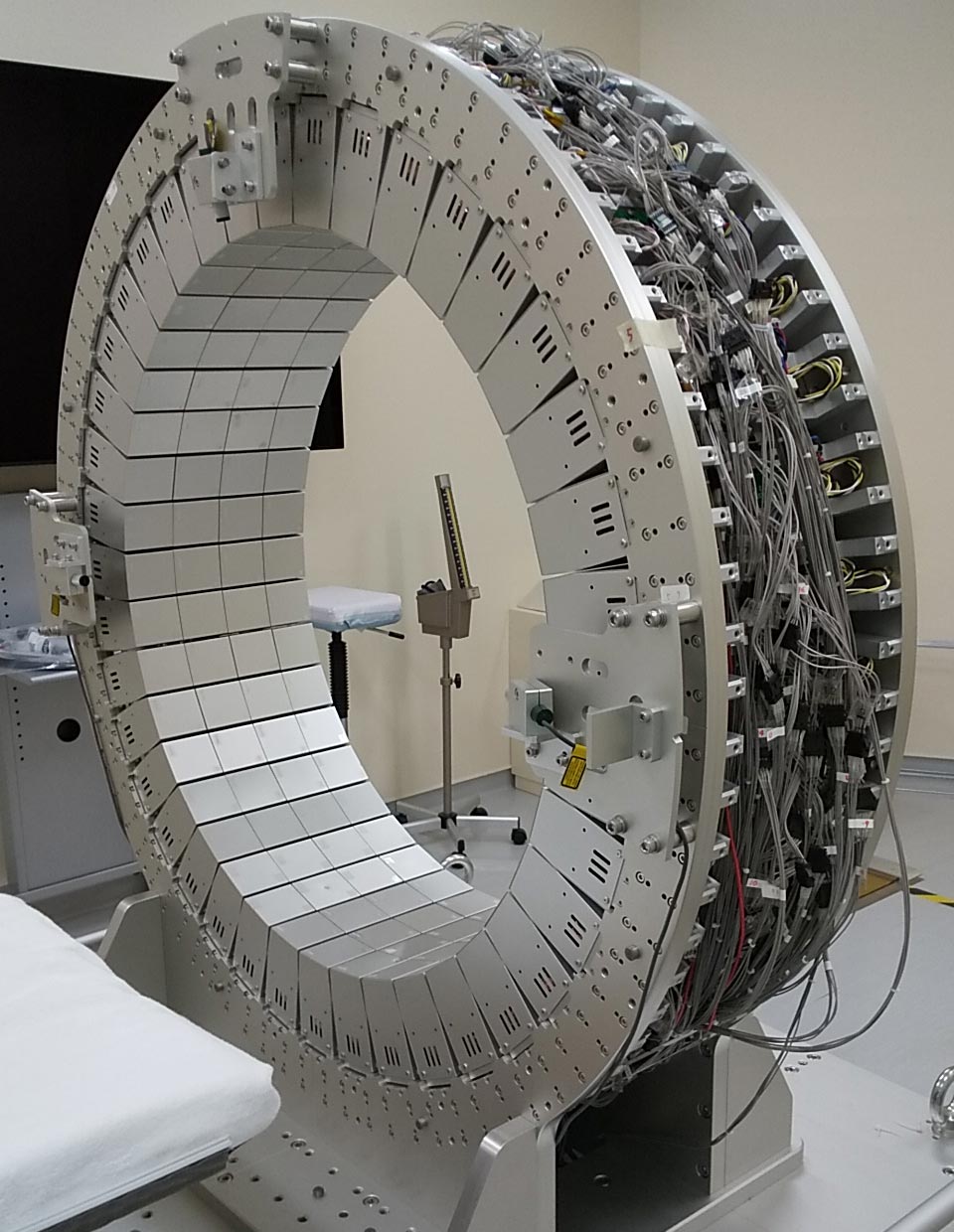
Japanese team aims to detect oxygen concentration in tumors using upgraded medical imaging scan.
Experts in Japan have devised a simple way to glean more detailed information out of standard medical imaging scans. A research team made up of atomic physicists and nuclear medicine experts at the University of Tokyo and the National Institute of Radiological Sciences (NIRS) has designed a timer that can enable positron emission tomography (PET) scanners to detect the oxygen concentration of tissues throughout patients’ bodies. This upgrade to PET scanners may lead to a future of better cancer treatment by quickly identifying parts of tumors with more aggressive cell growth.
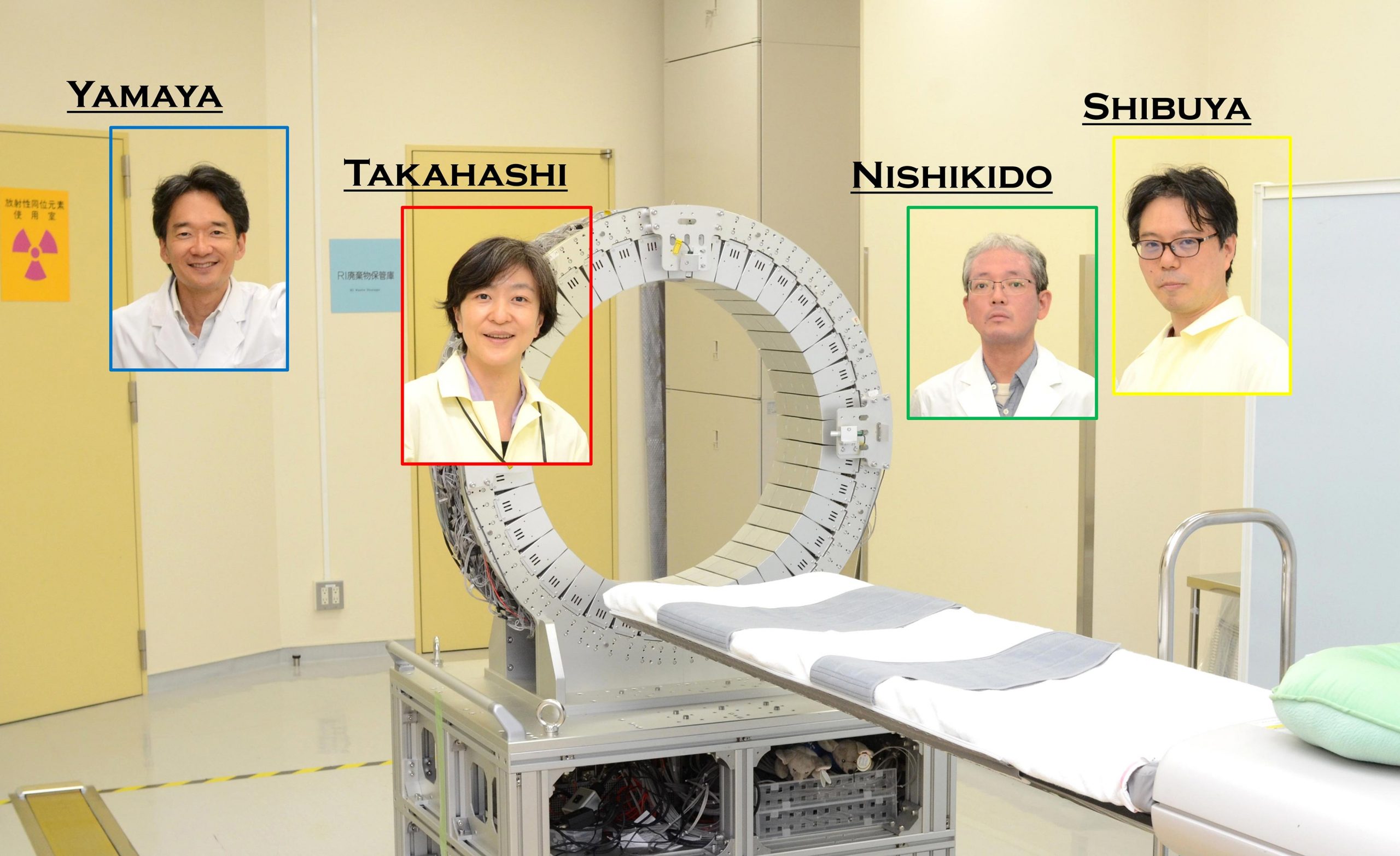
“Patients’ experience in this future PET scan will be the same as now. Medical teams’ experience of conducting the scan will also be the same, just with more useful information at the end,” said nuclear medicine physician Dr. Miwako Takahashi from the NIRS, a co-author of the research publication in Communication Physics.
“This was a quick project for us, and I think it should also become a very fast medical advance for real patients within the next decade. Medical device companies can apply this method very economically, I hope,” said Assistant Professor Kengo Shibuya from the University of Tokyo Graduate School of Arts and Sciences, first author of the publication.
PET scans
The positrons that PET scans are named for are the positively charged antimatter forms of electrons. Due to their tiny size and extremely low mass, positrons pose no danger in medical applications. Positrons produce gamma rays, which are electromagnetic waves similar to X-rays, but with shorter wavelengths.
When receiving a PET scan, a patient receives a small amount of very weakly radioactive liquid, often composed of modified sugar molecules, usually injected into their blood. The liquid circulates for a short period of time. Differences in blood flow or metabolism affect how the radioactivity is distributed. The patient then lies in a large, tube-shaped PET scanner. As the radioactive liquid emits positrons that then decay into gamma rays, rings of gamma-ray detectors map the locations of gamma rays emitted from the patient’s body.
Doctors already request PET scans when they need information about not just the structure, but also the metabolic function of tissues inside the body. Detecting oxygen concentration using the same PET scan would add another layer of useful information about the body’s function.
Oxygen concentration measured in nanoseconds
The life of a positron is a choice of two very short paths, both of which begin when a positron is “born” as it is released from the radioactive PET scan liquid. On the shorter path, the positron immediately collides with an electron and produces gamma rays. On the slightly longer path, the positron initially transforms into another type of particle called a positronium, which then decays into gamma rays. Either way, the lifetime of a positron inside a human body is not longer than 20 nanoseconds, or one fifty millionth of a second (1/50,000,000 second).
“The outcome is the same, but the lifetime is not. Our proposal is to distinguish the lifetimes of positrons using a PET scan with a timer so that we can map oxygen concentrations inside patients’ bodies,” said Shibuya.
Shibuya and his colleagues developed a life expectancy chart for positrons using a miniaturized PET scanner to time the formation and decay of positrons in liquids with known concentrations of oxygen.
The research team’s new results reveal that when oxygen concentration is high, the shorter path is more likely. Researchers predict that their technique will be able to detect the absolute oxygen concentration in any tissue of a patient’s body based on the lifetime of positrons during a PET scan.
Detecting the lifetime of positrons is possible using the same gamma-ray detectors that PET scans already use. The research team predicts that the majority of work to transfer this research from the lab to the bedside will be on upgrading gamma-ray detectors and software so that the gamma-ray detectors can record not just location, but accurate time data as well.
“It should not be much of a cost increase for development of instruments,” said Professor Taiga Yamaya, a co-author of the research publication and leader of the Imaging Physics Group at the NIRS.
Enhanced PET scans for more effective cancer treatment
Medical experts have long understood that low oxygen concentrations in tumors can impede cancer treatment for two reasons: First, a low oxygen level in a tumor is often caused by insufficient blood flow, which is more common in fast-growing, aggressive tumors that are harder to treat. Second, low oxygen levels make radiation less effective because the desired cancer cell-killing effects of radiation treatment are achieved in part by the radiation energy converting oxygen present in the cells into DNA-damaging free radicals.
Thus, detecting the concentration of oxygen in body tissues would inform medical experts how to more effectively attack tumors inside patients.
“We imagine targeting more intense radiation treatment to the aggressive, low-oxygen concentration areas of a tumor and targeting lower-intensity treatment to other areas of the same tumor to give patients better outcomes and less side effects,” said Takahashi.
Shibuya says that the team of researchers was inspired to put into practice a theoretical model about the ability for positrons to reveal oxygen concentration published last year by researchers in Poland. The project went from concept to publication in just a few months even with COVID-19 pandemic-related restrictions.
Shibuya and colleagues are now aiming to expand their work to find any other medical details that may be revealed by the lifetime of a positron.
Reference: “Oxygen sensing ability of positronium atom for tumor hypoxia imaging” by Kengo Shibuya, Haruo Saito, Fumihiko Nishikido, Miwako Takahashi, and Taiga Yamaya, 1 October 2020, Communication Physics.
DOI: 10.1038/s42005-020-00440-z
Never miss a breakthrough: Join the SciTechDaily newsletter.
Follow us on Google and Google News.
2 Comments
It is such great research… <3
… good research, but it seems like the cancer is still out of our hands…