
Close Menu
    Facebook X (Twitter) Instagram
    SciTechDaily
    • Biology
    • Chemistry
    • Earth
    • Health
    • Physics
    • Science
    • Space
    • Technology
    Facebook X (Twitter) Pinterest YouTube RSS
    SciTechDaily
    Home»Science»New Research Shows Skin Treatments Could Be Tested With Flatworms to Avoid Rabbit Skin Testing
    Science

    New Research Shows Skin Treatments Could Be Tested With Flatworms to Avoid Rabbit Skin Testing

    By University of ReadingOctober 1, 2020No Comments3 Mins Read
    Facebook Twitter Pinterest Telegram LinkedIn WhatsApp Email Reddit
    Share
    Facebook Twitter LinkedIn Pinterest Telegram Email Reddit
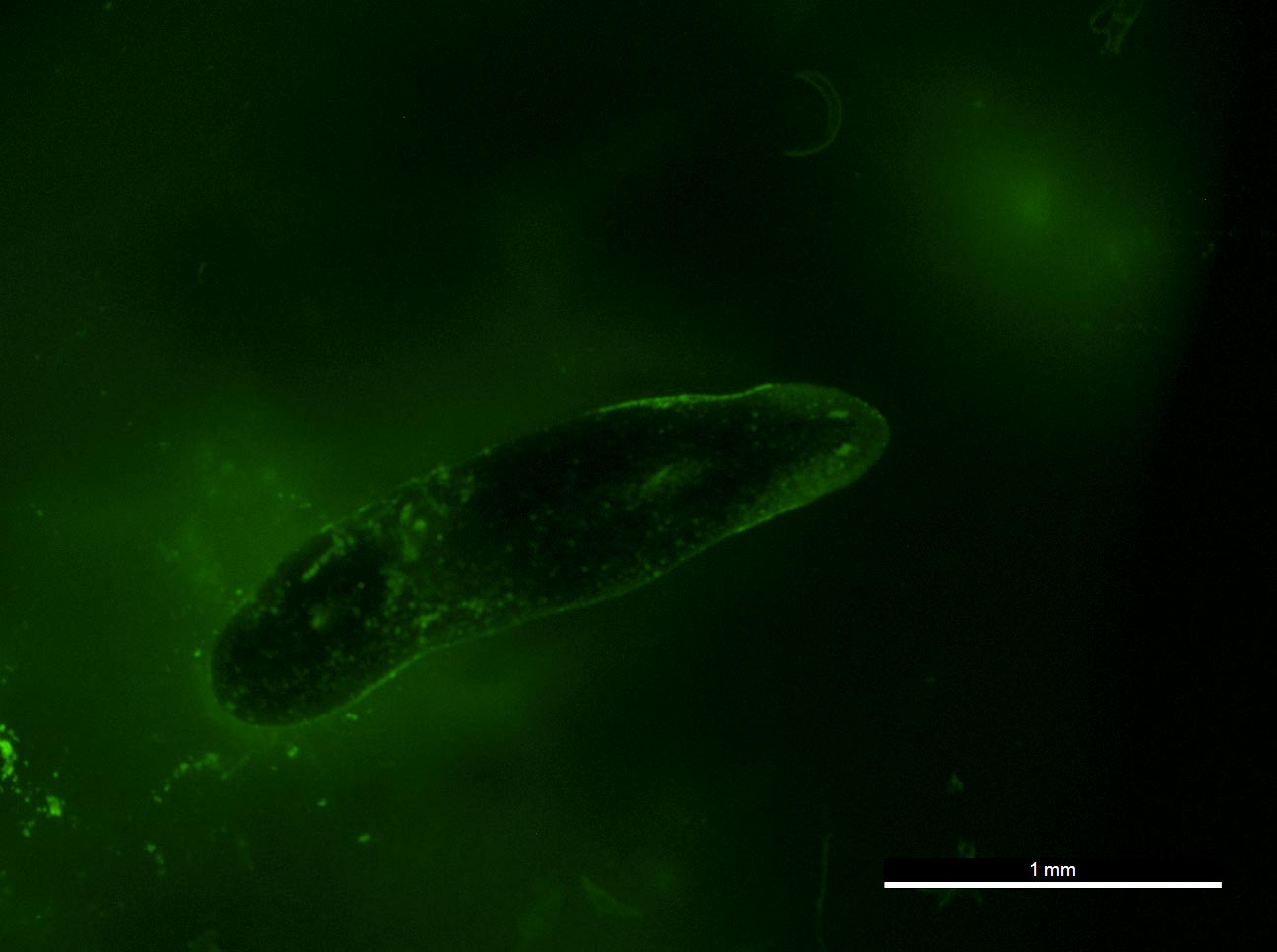
    Planaria Flatworm
    A picture of a planaria flatworm under a microscope that has been treated with a known skin irritant mixed with a fluorescent dye. Credit: University of Reading, 2020

    Tests for skin treatments could be screened using flatworms rather than other animals such as rabbits, according to new research.

    A team at the University of Reading and Newcastle University have found that planaria, a type of flatworm, can be used as a reliable alternative for testing topical skin products used to treat human tissues such as the eyes, nose, or vagina to ensure that they are not harmful.

    The paper, published in Toxicology in Vitro, shows how the use of a fluorescent dye mixed with a potential skin product is absorbed through the outer layers of skin in the planaria.

    The tests are cheaper and more ethical than existing animal tests, because planaria are readily available and easily cultured in a laboratory — and don’t experience suffering. While other tests are carried out on human skin cells in a petri dish, the new screening method would provide a more accurate test of how the potential skin product would interact with living tissue.

    Professor Vitaliy Khutoryanskiy, a Professor of Formulation Science at the University of Reading said:

    “Developing more ethical alternatives to tests that others do on rabbits, known as the Draize test, has been a major challenge, especially in relation to evaluating products for sensitive human tissue. Our tests with flatworms show that there are potential ways to screen skin irritants in a more ethically responsible way.

    “While the vast majority of cosmetic skin products are no longer tested on animals, it remains critical that new developments for clinical treatments are tested robustly and we hope that we can find solutions that consign the Draize test to history. We also hope to continue planaria research and develop further tests for probe irritation potential of chemicals to other human tissues.”

    A series of tests with the flatworms looked at whether they can be used to screen for products that are irritants to human skin. Two of the methods, which involved observing the movement of the worms when exposed to known irritants and measuring acute toxicity were not useful.

    However, there was a positive result in tests that used the common fluorescent dye alongside short-term and low concentration exposure to various chemicals. The planaria which were exposed to known human skin irritants had significant levels of the fluorescent dye under their skin.

    Reference: “Planarian toxicity fluorescent assay: A rapid and cheap pre-screening tool for potential skin irritants” by Syed Ibrahim Shah, Adrian C. Williams, Wing Man Lau and Vitaliy V. Khutoryanskiy, 1 October 2020, Toxicology in Vitro.
    DOI: 10.1016/j.tiv.2020.105004

    About Planaria:

    Planaria are freshwater-living flatworms that are already widely used in scientific research. They are advanced invertebrates with a primitive brain and share similar features with the vertebrate nervous system found in animals including mammals, examples of the ways that planaria are used include testing the neurotoxicity of potentially hazardous substances. Planaria have a simple but well-characterized epidermal membrane similar to skin that acts as the first point of contact between the worm and a foreign substance.

    Never miss a breakthrough: Join the SciTechDaily newsletter.
    Follow us on Google and Google News.

    Dermatology Pharmaceuticals Toxicology University of Reading
    Share. Facebook Twitter Pinterest LinkedIn Email Reddit

    Related Articles

    Treating Hair Loss Could Be As Simple as Flipping a Molecular “Switch”

    AI-Designed Proteins – Unlike Any Found in Nature – Revolutionize Snakebite Treatment

    AI Triumphs Over Venom: Revolutionary Snakebite Antidotes Unveiled

    How “Desert Roses” May Change Drug Delivery Forever

    New Research Reveals That Your Couch Could Be Emitting Toxic Vapors

    New Protein-Based Gel Could Improve Skincare Product Performance

    Millions Left Without Pharmacies As Closures Surge

    New Method Reveals the Chirality of Molecules With Atomic Precision

    Ancient Mystery Deepens With Discovery of Denisovan Remains in Tibetan Cave

    Leave A Reply Cancel Reply

    • Facebook
    • Twitter
    • Pinterest
    • YouTube

    Don't Miss a Discovery

    Subscribe for the Latest in Science & Tech!

    Trending News

    Largest-Ever Study Finds Medicinal Cannabis Ineffective for Anxiety, Depression, PTSD

    250-Million-Year-Old Egg Solves One of Evolution’s Biggest Mysteries

    Living With Roommates Might Be Changing Your Gut Microbiome Without You Knowing

    Century-Old Cleaning Chemical Linked to 500% Increased Risk of Parkinson’s Disease

    What if Your Memories Never Happened? Physicists Take a New Look at the Boltzmann Brain Paradox

    One of the Universe’s Largest Stars May Be Getting Ready To Explode

    Scientists Discover Enzyme That Could Supercharge Ozempic-Like Weight Loss Drugs

    Popular Sweetener Linked to DNA Damage – “It’s Something You Should Not Be Eating”

    Follow SciTechDaily
    • Facebook
    • Twitter
    • YouTube
    • Pinterest
    • Newsletter
    • RSS
    SciTech News
    • Biology News
    • Chemistry News
    • Earth News
    • Health News
    • Physics News
    • Science News
    • Space News
    • Technology News
    Recent Posts
    • Want Less Stress? Landmark Study Points to a Simple Habit
    • Scientists Reveal Eating Fruits and Vegetables May Increase Your Risk of Lung Cancer
    • AI Reveals Explosive Growth of Floating Algae Across the World’s Oceans
    • 5.5 Million Bees Discovered Living Beneath a New York Cemetery
    • Scientists Reverse Brain Aging With Simple Nasal Spray
    Copyright © 1998 - 2026 SciTechDaily. All Rights Reserved.
    • Science News
    • About
    • Contact
    • Editorial Board
    • Privacy Policy
    • Terms of Use

    Type above and press Enter to search. Press Esc to cancel.