
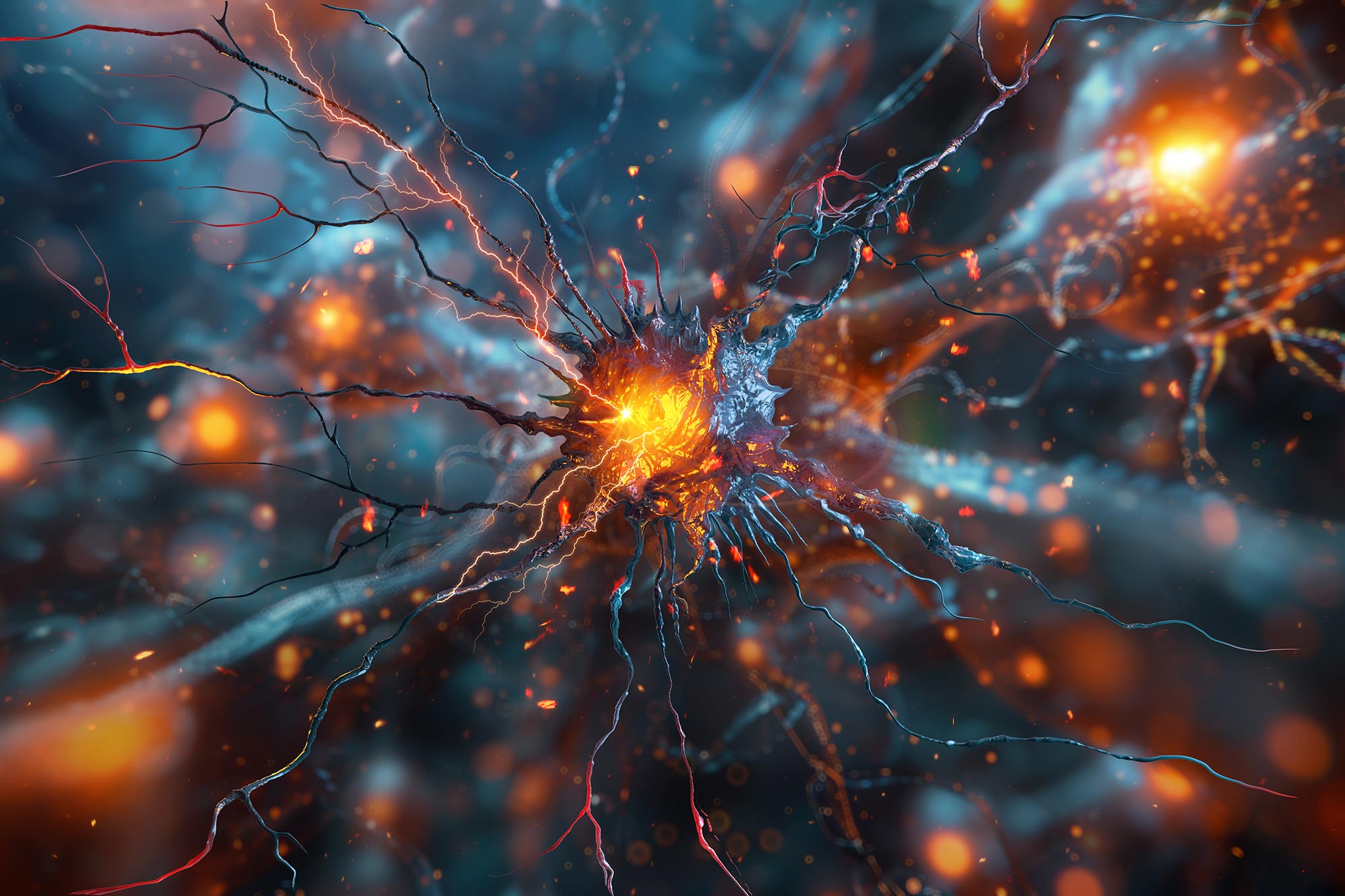
AI-powered gene maps reveal the hidden control centers driving Alzheimer’s disease — and point to new hope for treatment.
A research team led by Min Zhang and Dabao Zhang at the University of California, Irvine’s Joe C. Wen School of Population & Public Health has produced the most comprehensive maps yet of how genes directly control one another in brain cells affected by Alzheimer’s disease. These maps go beyond showing which genes are linked. They identify which genes are actually driving changes inside different types of brain cells.
To build them, the scientists created a machine learning system called SIGNET. Unlike traditional approaches that only detect patterns or correlations, SIGNET is designed to uncover cause-and-effect relationships between genes. Using this method, the team identified critical biological pathways that may contribute to memory loss and the progressive damage seen in Alzheimer’s.
The findings were published in Alzheimer’s & Dementia: The Journal of the Alzheimer’s Association. The study also highlights newly identified genes that could become promising targets for future therapies. Funding support came in part from the National Institute on Aging and the National Cancer Institute.
Why Gene Interactions Matter in Alzheimer’s
Alzheimer’s disease is the most common cause of dementia and is expected to affect nearly 14 million Americans by 2060. While researchers have already connected several genes to the disease, including APOE and APP, it has remained unclear exactly how these genes interfere with normal brain function.
“Different types of brain cells play distinct roles in Alzheimer’s disease, but how they interact at the molecular level has remained unclear,” said Min Zhang, co-corresponding author and professor of epidemiology and biostatistics. “Our work provides cell type-specific maps of gene regulation in the Alzheimer’s brain, shifting the field from observing correlations to uncovering the causal mechanisms that actively drive disease progression.”
How SIGNET Reveals Cause and Effect
The team analyzed single-cell molecular data from brain tissue donated by 272 participants enrolled in long-term aging studies known as the Religious Orders Study and the Rush Memory and Aging Project. SIGNET was developed as a scalable, high-performance computing framework that combines single-cell RNA sequencing with whole-genome sequencing data. This integration allowed the researchers to trace cause-and-effect relationships across the entire genome.
Using this approach, they constructed causal gene regulatory networks for six major brain cell types. This made it possible to pinpoint which genes are likely directing the activity of others, something correlation-based tools cannot reliably determine.
“Most gene-mapping tools can show which genes move together, but they can’t tell which genes are actually driving the changes,” said Dabao Zhang, co-corresponding author and professor of epidemiology and biostatistics. “Some methods also make unrealistic assumptions, such as ignoring feedback loops between genes. Our approach takes advantage of information encoded in DNA to enable the identification of true cause-and-effect relationships between genes in the brain.”
Major Genetic Rewiring in Key Brain Cells
The most striking disruptions were found in excitatory neurons, the nerve cells that send activating signals. An analysis of nearly 6,000 cause-and-effect gene interactions showed that these neurons undergo widespread genetic rewiring as Alzheimer’s advances.
The researchers also identified hundreds of influential “hub genes” that function as central regulators, affecting many other genes. Because of their broad influence, these hub genes may play an outsized role in driving disease-related damage and could become valuable targets for early detection or treatment. The study further uncovered previously unrecognized regulatory roles for familiar genes such as APP, which was shown to strongly influence other genes in inhibitory neurons.
To strengthen their conclusions, the team replicated their results using an independent collection of human brain samples. This validation increases confidence that the identified gene relationships reflect real biological processes involved in Alzheimer’s.
Beyond Alzheimer’s, SIGNET may be useful for studying other complex conditions, including cancer, autoimmune disorders, and mental health conditions.
Reference: “From correlation to causation: cell-type-specific gene regulatory networks in Alzheimer’s disease” by Danni Liu, Zhongli Jiang, Hyunjin Kim, Anke M. Tukker, Ashish Dalvi, Junkai Xie, Yan Li, Chongli Yuan, Aaron B. Bowman, Dabao Zhang and Min Zhang, 12 February 2026, Alzheimer’s & Dementia.
DOI: 10.1002/alz.71053
Danni Liu, Zhongli Jiang, Hyunjin Kim, Anke M. Tukker, Ashish Dalvi, Junkai Xie, Yan Li, Chongli Yuan, Aaron B. Bowman, Dabao Zhang and Min Zhang from UC Irvine contributed to the study.
Never miss a breakthrough: Join the SciTechDaily newsletter.
Follow us on Google and Google News.