
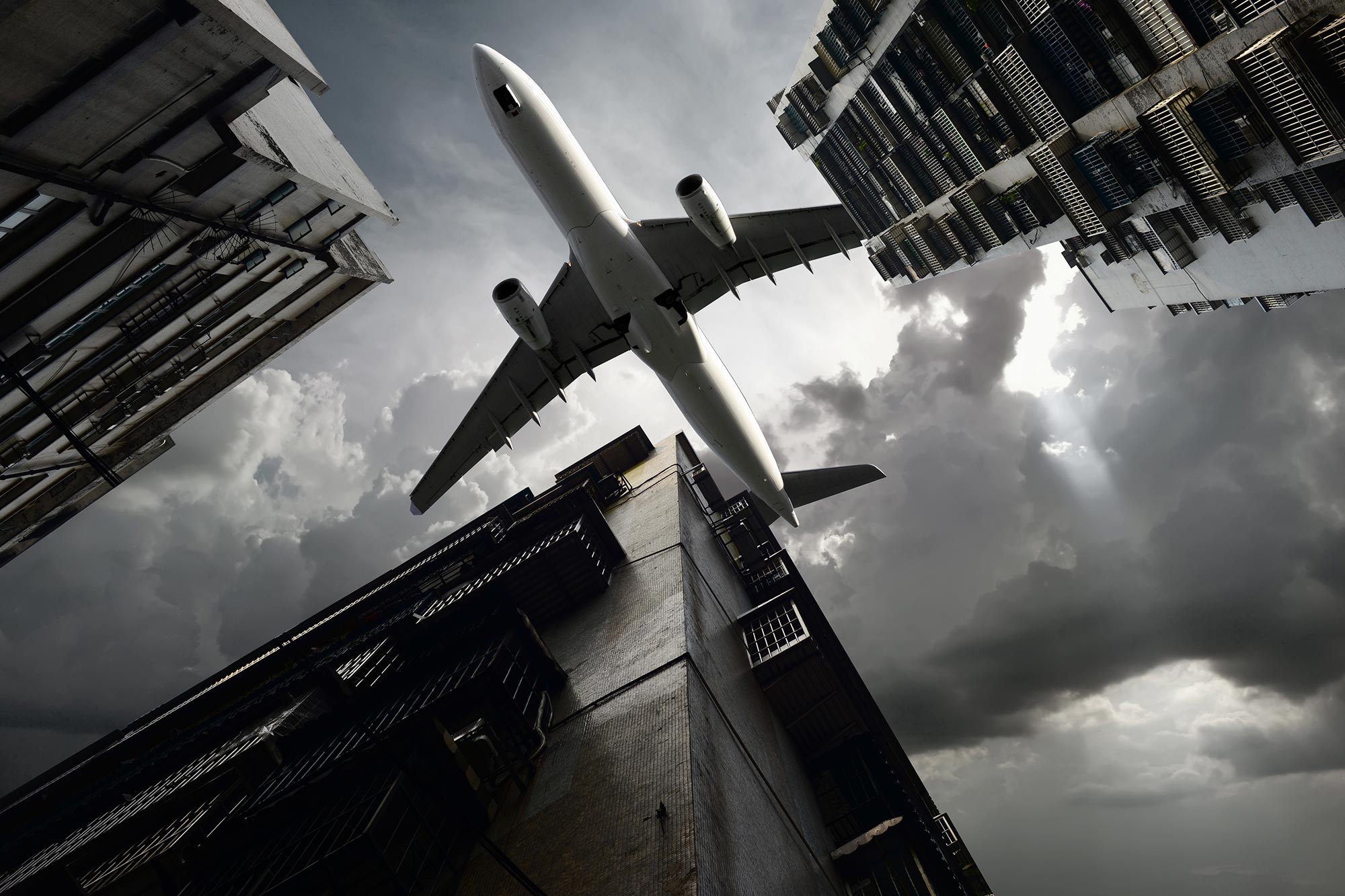
Residents living near major airports, exposed to high levels of aircraft noise, may face a significantly higher risk of serious heart conditions, reveals a UCL study.
The research, which involved heart imaging of individuals from airport-adjacent areas, found that elevated noise levels can lead to stiffer heart muscles and poorer heart function, particularly due to nighttime exposure which disrupts sleep and elevates stress.
Impact of Aircraft Noise on Heart Health
People living near airports and exposed to high levels of aircraft noise may face a greater risk of poor heart function, which can increase the chances of heart attacks, life-threatening irregular heart rhythms, and strokes. This finding comes from a new study led by researchers at University College London (UCL).
The study, published today (January 8) in the Journal of the American College of Cardiology (JACC), analyzed detailed heart imaging data from 3,635 individuals residing near four major airports in England.
Researchers compared the heart health of participants living in areas with high aircraft noise levels to those in quieter neighborhoods, uncovering significant differences linked to noise exposure.
Heart Risks Linked to Noise Exposure
They found that those who lived in areas with higher than recommended aircraft noise levels had stiffer and thicker heart muscles* that contracted and expanded less easily and were less efficient at pumping blood around the body.
This was especially the case for people exposed to higher aircraft noise at night, potentially due to factors such as impaired sleep and the fact that people are more likely to be at home at night and therefore exposed to the noise.
The researchers found in separate analyses of people not exposed to aircraft noise, that these types of heart abnormalities could result in two- to four-fold increased risks of a major cardiac event such as a heart attack, life-threatening heart rhythms, or stroke when compared to the risk of persons without any of these heart abnormalities.
Investigating the Causal Links
Senior author Dr. Gaby Captur (UCL Institute of Cardiovascular Science and consultant cardiologist at the Royal Free Hospital, London) said: “Our study is observational so we cannot say with certainty that high levels of aircraft noise caused these differences in heart structure and function.
“However, our findings add to a growing body of evidence that aircraft noise can adversely affect heart health and our health more generally.
“Concerted efforts from government and industry are needed to reduce our exposure to aircraft noise and mitigate its impact on the health of millions of people who live close to airports or under flight paths.”
Professor Anna Hansell from the University of Leicester added: “We are concerned that the type of abnormalities we saw with night-time aircraft noise might result in increased risk of heart problems and stroke. Aircraft noise at night has been shown to affect sleep quality** and this may be an important factor affecting health.
“The role of noise on heart health is currently under investigation. However, there are many established ways to look after your heart. These include eating a healthy and balanced diet, keeping physically active, maintaining a healthy weight, giving up smoking if you smoke, reducing alcohol consumption, keeping conditions such as high blood pressure and diabetes under control, and taking medication including cholesterol-lowering drugs if prescribed by your doctor.”
Environmental Noise and Heart Health
As well as affecting sleep, noise from our environment can trigger stress responses and lead to an over-activation of the sympathetic nervous system (the network of nerves that controls our “fight or flight” response), causing blood pressure to rise, arteries to constrict or dilate, and slower digestion. It can also cause the release of cortisol, the stress hormone, which can increase the appetite and cause weight gain.
Aircraft noise may be more annoying than road or rail noise because of louder but intermittent noisy events and the unpredictability of the sound which makes it difficult to get used to.
It is already known that exposure to high levels of aircraft noise is linked to higher blood pressure and obesity. In the new study, both factors were found to account for a significant portion of the link between aircraft noise and differences in heart structure and function.
First author Dr. Cristian Topriceanu (UCL Institute of Cardiovascular Science) explained: “Between a quarter and half of the link was attributed to a higher BMI (body mass index) among participants exposed to higher levels of aircraft noise, while between 9% to 36% of the link was attributed to these participants having higher blood pressure (this was among those exposed to day-time aircraft noise only).
“Other factors that could be triggered by the stress response to aircraft noise include impaired sleep, inflammation, and atherosclerosis (build-up of fats, cholesterol and other substances in our arteries).”
For the new study, researchers looked at data from the UK Biobank of 3,635 participants who had detailed magnetic resonance imaging (MRI) of the heart and who lived near Heathrow, Gatwick, Birmingham or Manchester airports.
They used UK Civil Aviation Authority estimates of aircraft noise level for every 100 square meters within those areas. Higher aircraft noise was defined as over 50 decibels on average during the day and 45 decibels on average during the night (11 p.m. – 7 a.m.). This is louder than the aircraft noise limits of 45 decibels on average during the day and 40 decibels on average at night recommended by the World Health Organization.
Among the UK Biobank participants in these areas, 8% lived in an area with high day-time aircraft noise, with 3% in an area with high night-time noise.
Comparing the hearts of individuals in higher and lower aircraft noise areas, the researchers took into account a wide variety of factors that might have skewed the results, including age, sex, BMI, socioeconomic status, lifestyle factors such as whether participants smoked and exercised, as well as participants’ exposure to road and rail noise and air pollution.
Heart MRIs were done at least three years after the estimates of aircraft noise in the participants’ neighborhoods.
Participants who stayed in a higher aircraft noise area, the researchers found, had about 10-20% worse heart structure and function than their counterparts in these areas who moved away.
The research team then looked at a separate sample of 21,360 people who had detailed MRI scans of the heart as part of the UK Biobank study to investigate how heart abnormalities comparable to those linked to higher aircraft noise might affect the risk of a major adverse cardiac event.
They concluded that a hypothetical individual with these heart abnormalities may have up to four times the risk of an event such as a heart attack, abnormal heart rhythm, or stroke.
Earlier research led by the University of Leicester estimated that about 5% of adults in England were exposed to aircraft noise exceeding 50 decibels either during the day or night.***
Professor James Leiper, Associate Medical Director at the British Heart Foundation, said: “For most of us, a plane is seen as a ticket to some well-deserved rest and relaxation. But this innovative study reveals the potential invisible impact for those living close to some of our biggest travel hubs.
“While observational studies like this can’t prove cause and effect, these findings add to previous research showing the damaging impact of noise pollution on our heart health. Further research will be needed to investigate the longer-term effects of aircraft noise on the health of those with the highest exposure.”
Notes
- Thickening of the heart is when the heart muscle cells enlarge and the walls of the heart chambers thicken. In this case, the thickening is not beneficial so rather than making the heart muscle pump more efficiently, it has the reverse effect as a maladaptively thickened heart becomes stiffer over time and less able to pump blood around the body.
- “Associations between Aircraft Noise, Sleep, and Sleep–Wake Cycle: Actimetric Data from the UK Biobank Cohort near Four Major Airports” by Xiangpu Gong, Katie Eminson, Glory O. Atilola, Calvin Jephcote, Kathryn Adams, Gabriella Captur, Andrew P. Hall, Marta Blangiardo, John Gulliver, Alex V. Rowlands and Anna L. Hansell, 25 September 2024, Environmental Health Perspectives.
DOI: 10.1289/EHP14156 - “Spatial assessment of the attributable burden of disease due to transportation noise in England” by Calvin Jephcote, Sierra N. Clark, Anna L. Hansell, Nigel Jones, Yingxin Chen, Claire Blackmore, Katie Eminson, Megan Evans, Xiangpu Gong, Kathryn Adams, Georgia Rodgers, Benjamin Fenech and John Gulliver, 13 May 2023, Environment International.
DOI: 10.1016/j.envint.2023.107966
Reference: “Higher Aircraft Noise Exposure Is Linked to Worse Heart Structure and Function by Cardiovascular MRI” by Constantin-Cristian Topriceanu, Xiangpu Gong, Mit Shah, Hunain Shiwani, Katie Eminson, Glory O. Atilola, Calvin Jephcote, Kathryn Adams, Marta Blangiardo, James C. Moon, Alun D. Hughes, John Gulliver, Alex V. Rowlands, Nishi Chaturvedi, Declan P. O’Regan, Anna L. Hansell and Gabriella Captur, 8 January 2025, Journal of the American College of Cardiology.
DOI: 10.1016/j.jacc.2024.09.1217
The study received funding from the Medical Research Council, British Cardiovascular Society, British Heart Foundation, a UCL Charlotte and Yule Bogue Research Fellowship, and the National Institute for Health and Care Research (NIHR).
Never miss a breakthrough: Join the SciTechDaily newsletter.
Follow us on Google and Google News.