
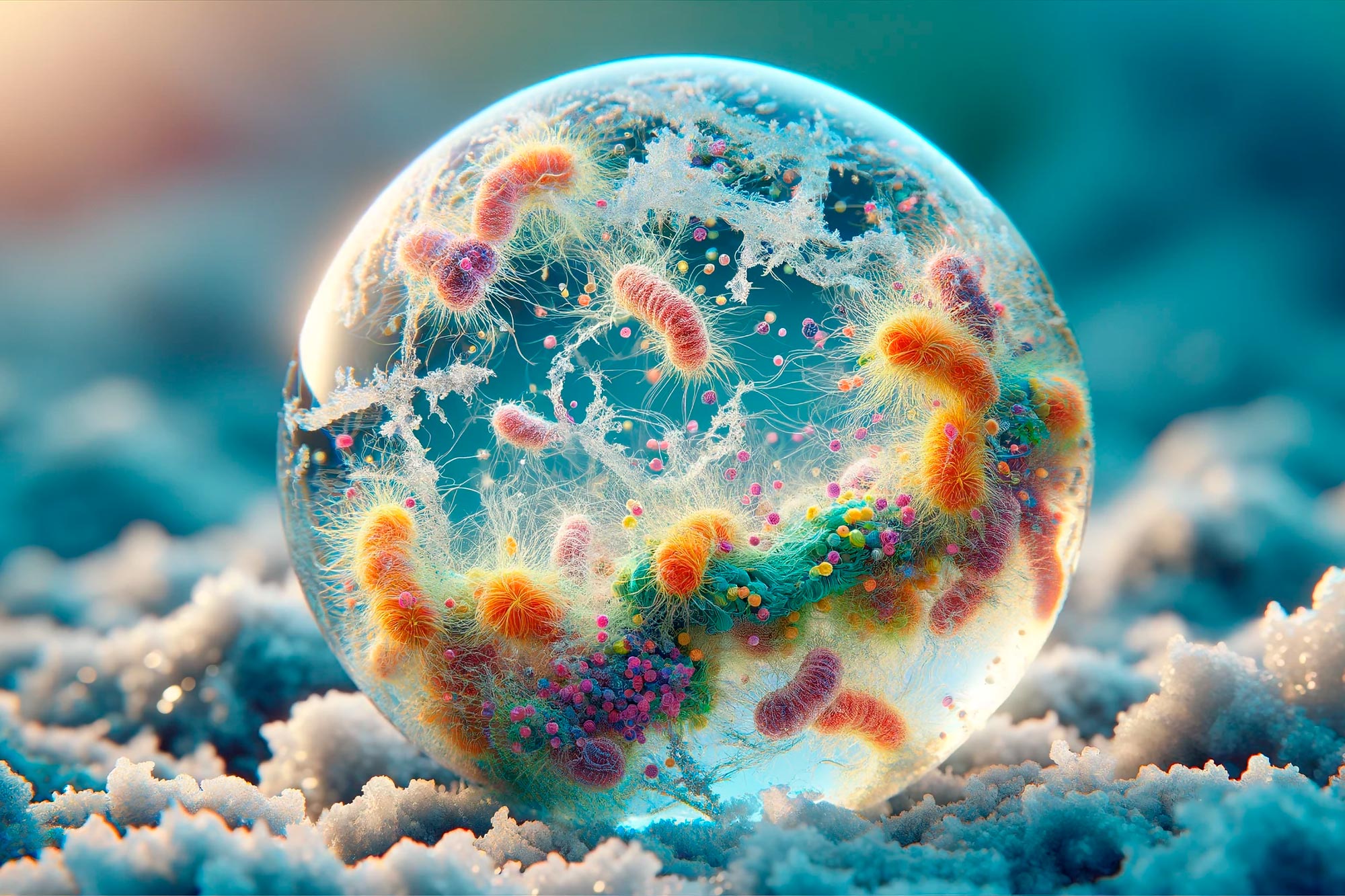
New Research on Microbes Expands the Known Limits for Life
A new study on microbes in extremely salty water suggests life may survive conditions previously thought to be uninhabitable. The research widens the possibilities for where life may be found throughout our solar system and shows how changes in salinity may affect life in aquatic habitats on Earth.
Oceans Across Space and Time
The research is part of a large collaboration called Oceans Across Space and Time led by Britney Schmidt, associate professor of astronomy in the College of Arts and Sciences and of Earth and atmospheric sciences at Cornell Engineering. The project is funded by NASA’s Astrobiology Program, which seeks to understand how ocean worlds and life co-evolve to produce detectable signs of life, past or present.
Groundbreaking Research on Salinity and Microbial Life
The new study, “Single-cell analysis in hypersaline brines predicts a water-activity limit of microbial anabolic activity,” published recently in the journal Science Advances. It’s based on analysis of metabolic activity in thousands of individual cells found in brines from industrial ponds on the coast of Southern California, where water is evaporated from seawater to harvest salt.
The research, led by Stanford University, expands our understanding of the potential habitable space throughout our solar system, and of the possible consequences of some earthly aquatic habitats becoming saltier as a result of drought and water diversion.
Salinity: A Key Factor in Extraterrestrial Life Search
“Salty environments are seen across the solar system, from Mars to Jupiter’s moon Europa. Understanding how microbes interact with and survive in such environments on Earth is critical for the search for life elsewhere,” said Schmidt.
Scientists interested in detecting life beyond Earth have long studied salty environments knowing that liquid water is necessary for life – and salt allows water to remain liquid at a wider range of temperatures. Salt can also preserve signs of life, like pickles in brine.
Methodology and Findings of the Study
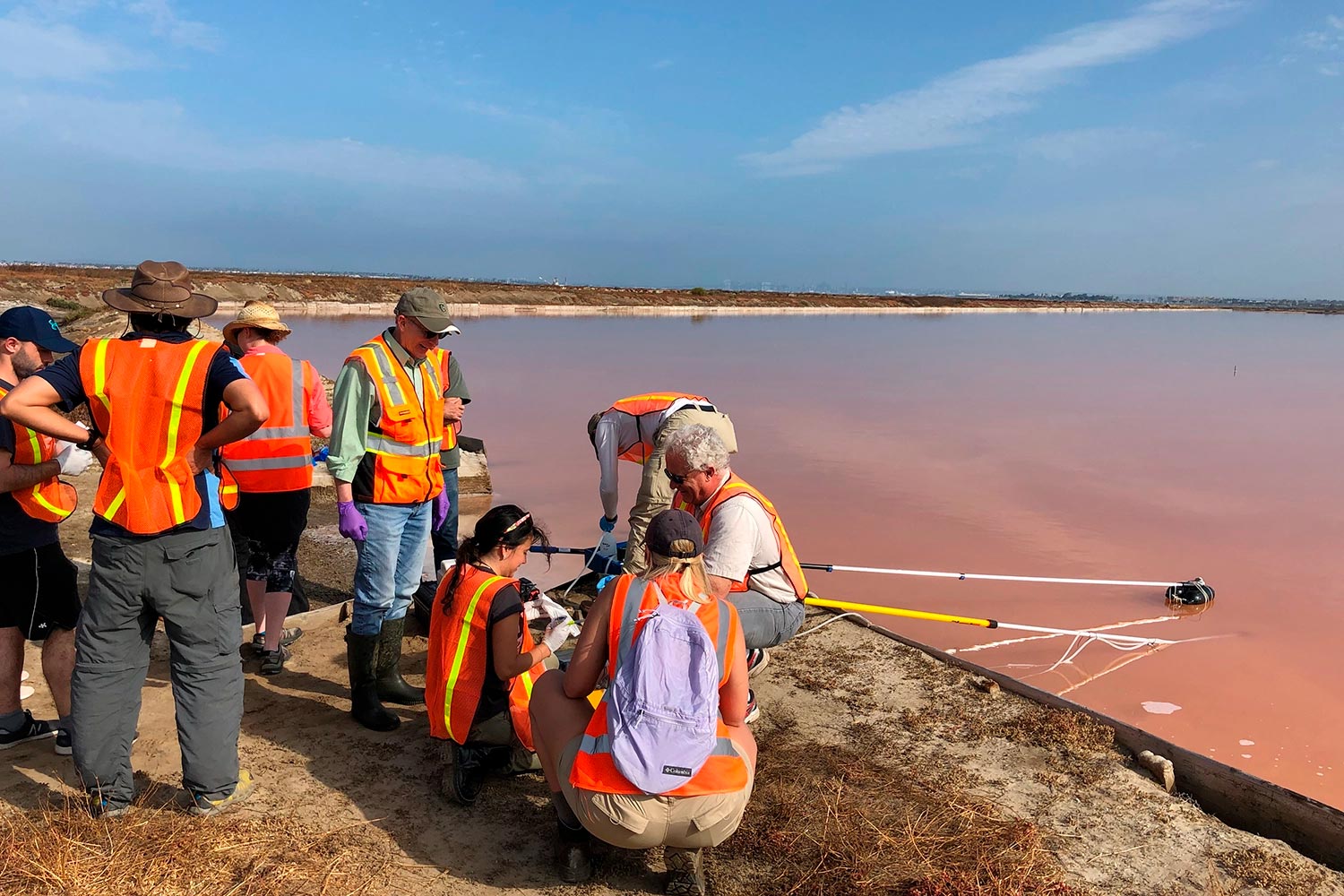
The multi-institute team collected samples from the South Bay Salt Works, home to some of the saltiest waters on Earth. They filled hundreds of bottles with brine from ponds of varying salinity levels at the salt works, which were then analyzed.
Most microbes stop dividing below a 0.9 level of water activity (the amount of water available for biological reactions that allow microbes to grow), and the absolute lowest water activity level reported to sustain cell division in a laboratory setting is just over 0.63. The researchers predicted a new limit of life, estimating that life could be active at levels as low as 0.54.
Previous studies looking for the water-activity limit of life have used pure cultures to look for the point at which cell division stops, marking the endpoint of life. But in these extreme conditions, life doubles painfully slowly. And studies on cell division don’t indicate when life dies; indeed, cells may be metabolically active and still very much alive, even when not replicating.
Instead, the researchers used the limit of cellular activity as a more flexible definition of life, as it considers cell division as well as cell building as a sign of life.
In hundreds of brine samples – some of them so salty they were thick as syrup – they identified the water activity level and how much, if any, carbon and nitrogen was being incorporated into the cells found in the brines. With this approach, they were able to detect when a cell increased its biomass by as little as half of 1%. By contrast, conventional methods focused on cell division can only detect biological activity after cells have roughly doubled their biomass. Then, based on how this process slowed as water activity decreased, the scientists predicted the cutoff for when it would stop altogether.
Setting New Boundaries for Life’s Potential
The research challenges previous beliefs about the water-activity limit for life. While most microbes cease to divide below a 0.9 water activity level, this study suggests life could be active at levels as low as 0.54. By focusing on cellular activity, including cell building, the researchers were able to detect life signs in conditions where traditional methods fall short.
For more on this discovery, see Stanford Finds Life Thriving in “Uninhabitable” Conditions.
Reference: “Single-cell analysis in hypersaline brines predicts a water-activity limit of microbial anabolic activity” by Emily R. Paris, Nestor Arandia-Gorostidi, Benjamin Klempay, Jeff S. Bowman, Alexandra Pontefract, Claire E. Elbon, Jennifer B. Glass, Ellery D. Ingall, Peter T. Doran, Sanjoy M. Som, Britney E. Schmidt and Anne E. Dekas, 22 December 2023, Science Advances.
DOI: 10.1126/sciadv.adj3594
The research is supported by NASA’s Oceans Across Space and Time Project, led by Cornell University, and the Simons Foundation through an Early Career Investigator Award to senior study author Anne Dekas at Stanford.
Never miss a breakthrough: Join the SciTechDaily newsletter.
Follow us on Google and Google News.