
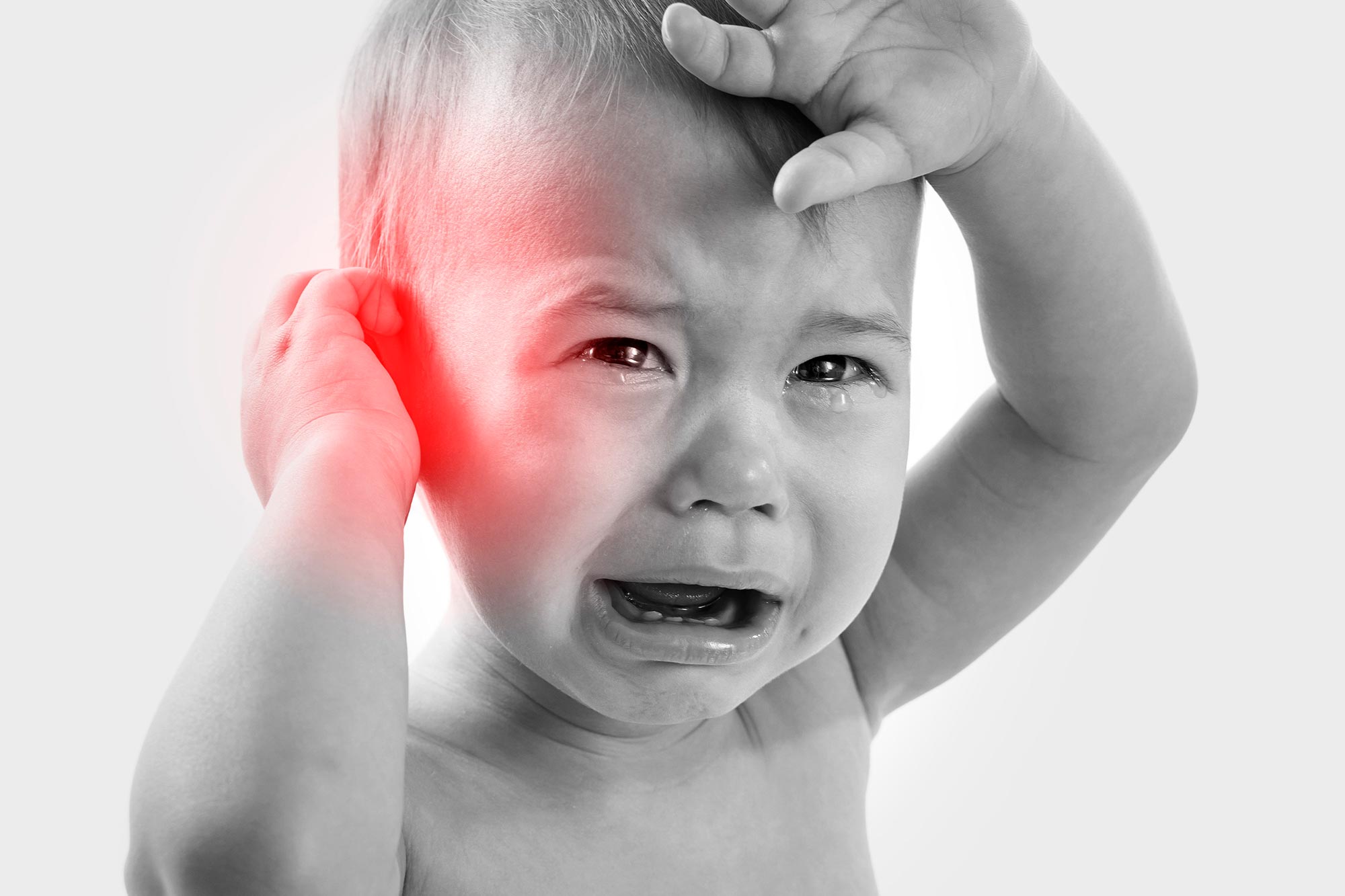
Vigilant monitoring and prompt treatment can help protect against bad outcomes.
Ear infections are a common childhood experience, but a new study suggests parents should take these infections seriously to preserve their children’s language development. That’s because each ear infection can potentially impair hearing with fluid building up behind the eardrum.
Link Between Chronic Ear Infections and Language Development
New research from University of Florida scientists reveals that when ear infections become chronic, this repeated, temporary hearing loss can lead to deficits in auditory processing and language development in children years later.
“Ear infections are so common that we tend to dismiss them as having no long-term effect. We should take all ear infections seriously,” said Susan Nittrouer, lead researcher and a UF professor of speech, language, and hearing sciences in the College of Public Health and Health Professions. “Parents should be aware that their child may have some middle ear fluid without it being painful and work with their doctor to monitor their child closely.”
Study Findings on Auditory Processing and Language Skills
Nittrouer and Joanna Lowenstein, a researcher in the UF Health Clinical and Translational Science Institute, studied the auditory processing and language development of 117 children from ages 5 to 10 years both with and without a history of chronic ear infections in early childhood.
On average, children with several ear infections before three years of age had smaller vocabularies and a harder time matching similar sounding words than children with few or no ear infections. They also had difficulty detecting changes in sounds, a sign of problems in their brain’s auditory processing centers.
One takeaway, Nittrouer says, is for parents, physicians, and speech pathologists to continue monitoring children long after the last preschool earache fades away. Some language deficits may only reveal themselves in later grades.
“As children go through school, the language they’re required to use becomes more complex,” said Nittrouer.
Assessment of Language Development and Auditory Processing
Nittrouer and Lowenstein used three tests to assess language development and auditory processing. In one test, children had to detect which of three cute cartoon characters sounded different than the other two. This involved manipulating the patterns of loudness, or amplitude, change across time.
“The better you can recognize this change in amplitude across time, the better you’re going to be able to recognize the structure of speech,” said Nittrouer.
The second task asked children to name pictures presented to them, a measure of their vocabulary size. Finally, children were asked to match words based on whether they began or ended with the same speech sound, a task essential not only to speech development but also to reading acquisition.
Prevention and Treatment of Ear Infections
Treating ear infections early can help prevent the fluid buildup that hurts language development, according to Nittrouer. If ear infections are common and fluid does build up, tubes placed temporarily in the eardrum can help drain the fluid and restore hearing, which should lead to less risk of delay in the development of the central auditory pathways and fewer problems acquiring language.
Future Research Directions
The researchers published their findings in November in the International Journal of Pediatric Otorhinolaryngology. They plan to continue this research by including children at risk for delays in auditory development for other reasons, including premature birth.
Reference: “Early otitis media puts children at risk for later auditory and language deficits” by Susan Nittrouer and Joanna H. Lowenstein, 22 November 2023, International Journal of Pediatric Otorhinolaryngology.
DOI: 10.1016/j.ijporl.2023.111801
Never miss a breakthrough: Join the SciTechDaily newsletter.
Follow us on Google and Google News.