

Scientists discover evidence of a previously unknown state involving one of the most common ions on Earth.
During an otherwise straightforward investigation into the assembly process of calcium-phosphate clusters, a team of researchers from the University of California, Santa Barbara and New York University stumbled upon an unexpected finding: Phosphate ions in water have a tendency to switch between their frequently observed hydrated state and a previously unknown and mysterious “dark” state.
The researchers believe that this newly found behavior has significant implications for comprehending the function of phosphate ions in biocatalysis, energy balance within cells, and the creation of biomaterials. The study has recently been published in the Proceedings of the National Academy of Sciences.
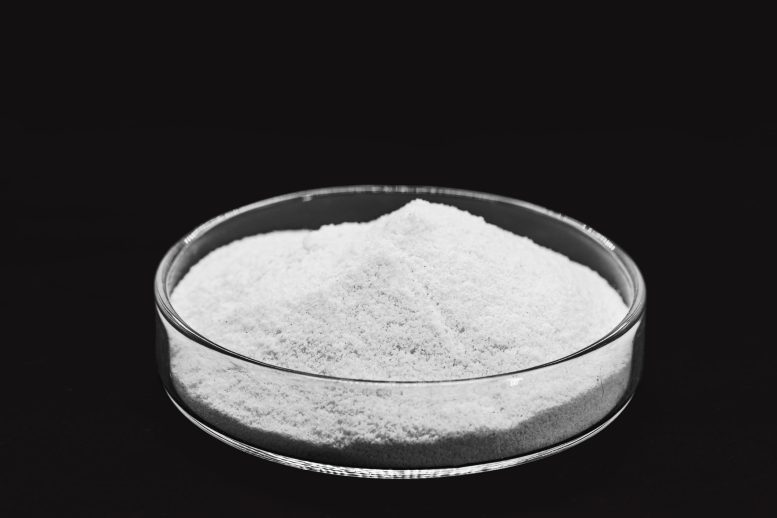
“Phosphate is everywhere,” said UCSB chemistry professor Songi Han, one of the authors of a paper in the Proceedings of the National Academy of Sciences. The ion consists of one phosphorus atom surrounded by four oxygen atoms. “It’s in our blood and in our serum,” Han continued. “It’s in every biologist’s buffer, it’s on our DNA and RNA.” It’s also a structural component of our bones and cell membranes, she added.
When bound with calcium, phosphates form small, molecular clusters on their way toward forming mineral deposits in cells and bone. That’s what Han and collaborators Matthew Helgeson at UCSB and Alexej Jerschow at NYU were preparing to study and characterize, in hopes of uncovering quantum behaviors in symmetric phosphate clusters proposed by UCSB physics professor Matthew Fisher. But first, the researchers had to set up control experiments, which involved scans of phosphate ions in the absence of calcium via nuclear magnetic resonance (NMR) spectroscopy and cryogenic transmission electron microscopy (cryo-TEM).
But as the UCSB and NYU students on the project were collecting reference data, which involved the naturally occurring isotope phosphorus 31 in aqueous solutions at varying concentrations and temperatures, their results didn’t match up with expectations. For instance, Han said, the line that represents the spectrum for 31P during NMR scans is supposed to narrow with increasing temperatures.
“The reason is, as you go to higher temperatures, the molecules tumble faster,” she explained. Typically, this rapid molecular motion would average out the anisotropic interactions, or interactions that are dependent on the relative orientations of these small molecules. The result would be a narrowing of resonances measured by the NMR instrument.
Dynamic Clustering and Temperature-Dependent Behavior
“We were expecting a phosphorus NMR signal, which is a simple one, with a peak that narrows with higher temperatures,” she said. “Surprisingly, though, we measured spectra that were broadening, doing the complete opposite of what we expected.”
This counterintuitive result set the team on a new path, following experiment after experiment to determine its molecular-level cause. The conclusion, after a year of eliminating one hypothesis after another? Phosphate ions were forming clusters under a wide range of biological conditions — clusters that were evading direct spectroscopic detection, which is likely why they had not been observed before. Furthermore, the measurements suggested these ions were alternating between a visible “free” state and a dark “assembled” state, hence the broadening of the signal instead of a sharp peak.
Additionally, as the temperature increased, the number of these assembled states was also increasing, another temperature-dependent behavior, according to co-lead author Mesopotamia Nowotarski.
“The conclusion from those experiments was that the phosphates are dehydrating and that allows them to come closer together,” she said. At lower temperatures, the vast majority of these phosphates in solution cling to water molecules that form a protective water coat around them. This hydrated state is typically assumed when considering how phosphate behaves in biological systems. But at higher temperatures, Nowotarski explained, they shed their water shields, allowing them to stick to each other. This concept was confirmed by NMR experiments that probed the phosphate water shell, and further validated by analysis of cryo-TEM images to identify the existence of clusters, as well as modeling the energetics of phosphate assembly by co-lead author Joshua Straub.
Implications for Biocatalysis and Energy Balance
These dynamic phosphate assemblies and hydration shells have important implications for biology and biochemistry, according to the researchers. Phosphate, said chemical engineer Matthew Helgeson, is a commonly understood “currency” used in biological systems to store and consume energy through conversion into adenosine triphosphate (ATP) and adenosine diphosphate (ADP). “If hydrated phosphate, ADP and ATP represent small ‘bills’ of currency, this new discovery suggests that these smaller currencies can exchange with much larger denominations — say $100 — which may have very different interactions with biochemical processes than currently known mechanisms,” he said.
Also, many biomolecular components include phosphate groups that may, similarly, form clusters. Hence, the finding that these phosphates can spontaneously assemble might shed some light on other fundamental biological processes such as biomineralization — how shells and skeletons form, as well as protein interactions.
“We also tested a range of phosphates, including those incorporated into the ATP molecule, and they all appear to show the same phenomenon, and we achieved quantitative analysis for these assemblies,” said co-lead author Jiaqi Lu.
This once overlooked process could also be significant in the realms of cell signaling, metabolism and disease processes such as Alzheimer’s disease, where the attachment of a phosphate group, or phosphorylation, to the protein tau in our brain is commonly found in neurofibrillary tangles — a hallmark of neurodegeneration. Having seen and studied this assembly behavior, the team is now digging deeper, with studies on the effect of pH on phosphate assembly, genetic translation and modified protein assembly, as well as their original work on calcium phosphate assembly.
“It really changes the way we think about the role of phosphate groups that we typically don’t consider a driver of molecular assembly,” Han said.
Reference: “Phosphates form spectroscopically dark state assemblies in common aqueous solutions” by Joshua S. Straub, Mesopotamia S. Nowotarski, Jiaqi Lu, Tanvi Sheth, Sally Jiao, Matthew P. A. Fisher, M. Scott Shell, Matthew E. Helgeson, Alexej Jerschow and Songi Han, 29 December 2022, Proceedings of the National Academy of Sciences.
DOI: 10.1073/pnas.2206765120
Never miss a breakthrough: Join the SciTechDaily newsletter.
Follow us on Google and Google News.