
Close Menu
    Facebook X (Twitter) Instagram
    SciTechDaily
    • Biology
    • Chemistry
    • Earth
    • Health
    • Physics
    • Science
    • Space
    • Technology
    Facebook X (Twitter) Pinterest YouTube RSS
    SciTechDaily
    Home»Biology»Ancient Bird Bones Redate Human Presence in Madagascar by 6,000 Years
    Biology

    Ancient Bird Bones Redate Human Presence in Madagascar by 6,000 Years

    By Emma Ackerley, Zoological Society of LondonSeptember 13, 2018No Comments3 Mins Read
    Facebook Twitter Pinterest Telegram LinkedIn WhatsApp Email Reddit
    Share
    Facebook Twitter LinkedIn Pinterest Telegram Email Reddit
    Ancient Bird Bones Redate Human Activity
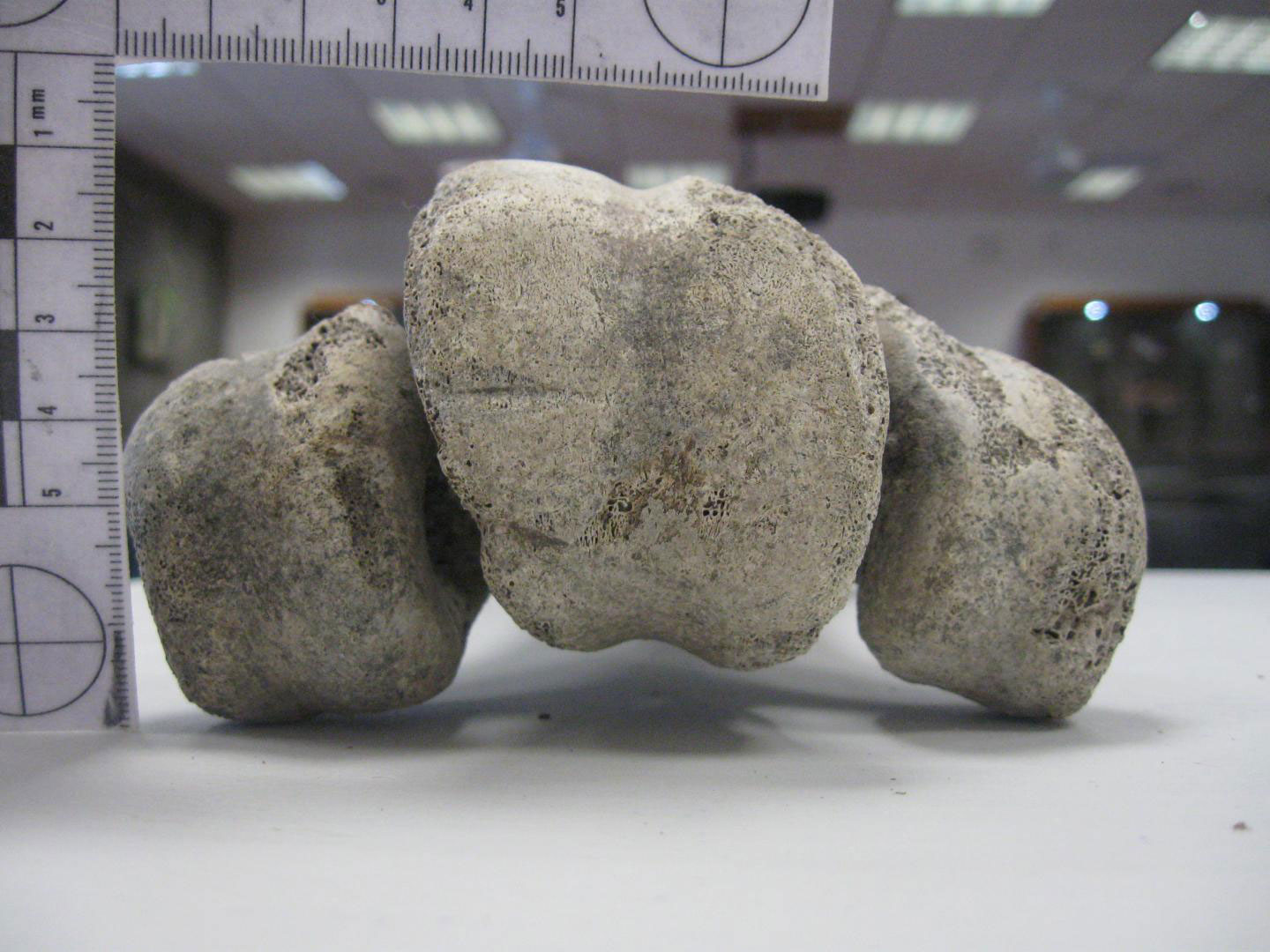
    Disarticulation marks on the base of the tarsometatarsus. These cut marks were made when removing the toes from the foot. ZSL

    Analysis of bones, from what was once the world’s largest bird, has revealed that humans arrived on the tropical island of Madagascar more than 6,000 years earlier than previously thought – according to a study published today, 12 September 2018, in the journal Science Advances.

    A team of scientists led by the international conservation charity ZSL (Zoological Society of London) discovered that ancient bones from the extinct Madagascan elephant birds (Aepyornis and Mullerornis) show cut marks and depression fractures consistent with hunting and butchery by prehistoric humans. Using radiocarbon dating techniques, the team were then able to determine when these giant birds had been killed, reassessing when humans first reached Madagascar.

    Previous research on lemur bones and archaeological artifacts suggested that humans first arrived in Madagascar 2,400-4,000 years ago. However, the new study provides evidence of human presence on Madagascar as far back as 10,500 years ago – making these modified elephant bird bones the earliest known evidence of humans on the island.

    Elephant Bird Bone Tool Marks
    Close up of the disarticulation marks on the base of the tarsometatarsus. Here you can see the v-shaped tool mark and rough edges indicating a stone tool was used. ZSL

    Lead author Dr. James Hansford from ZSL’s Institute of Zoology said: “We already know that Madagascar’s megafauna – elephant birds, hippos, giant tortoises and giant lemurs – became extinct less than 1,000 years ago. There are a number of theories about why this occurred, but the extent of human involvement hasn’t been clear.

    “Our research provides evidence of human activity in Madagascar more than 6,000 years earlier than previously suspected – which demonstrates that a radically different extinction theory is required to understand the huge biodiversity loss that has occurred on the island. Humans seem to have coexisted with elephant birds and other now-extinct species for over 9,000 years, apparently with limited negative impact on biodiversity for most of this period, which offers new insights for conservation today.”

    Co-author Professor Patricia Wright from Stony Brook University said: “This new discovery turns our idea of the first human arrivals on its head. We know that at the end of the Ice Age, when humans were only using stone tools, there were a group of humans that arrived on Madagascar. We do not know the origin of these people and won’t until we find further archaeological evidence, but we know there is no evidence of their genes in modern populations. The question remains – who these people were? And when and why did they disappear?”

    The bones of the elephant birds studied by this project were originally found in 2009 in the Christmas River in south-central Madagascar – a fossil ‘bone bed’ containing a rich concentration of ancient animal remains. This marsh site could have been a major kill site, but further research is required to confirm.

    Reference: “Early Holocene human presence in Madagascar evidenced by exploitation of avian megafauna” by J. Hansford, P. C. Wright, A. Rasoamiaramanana, V. R. Pérez, L. R. Godfrey, D. Errickson, T. Thompson and S. T. Turvey, 12 September 2018, Science Advances.
    DOI: 10.1126/sciadv.aat6925

    Never miss a breakthrough: Join the SciTechDaily newsletter.
    Follow us on Google and Google News.

    Birds Madagascar Zoological Society of London Zoology
    Share. Facebook Twitter Pinterest LinkedIn Email Reddit

    Related Articles

    Monitoring Species Condemned to Extinction May Help Conservationists Save Others As Global Temperatures Rise

    Falcons Have Natural “Eye Makeup” to Improve Hunting Ability

    Birds Can “Read” the Earth’s Magnetic Signature to Navigate Back on Course

    “Wonderchicken” – Origin of Modern Birds Revealed by Fossil From the Age of Dinosaurs

    New Identity for the World’s Largest Bird – Vorombe Titan

    All Modern Birds Evolved From The Same Common Ancestor

    Size Matters for Hummingbirds Mechanochemical Efficiency

    Princeton Study Finds That New Species Can Develop in as Little as 2 Generations

    Transgendered Bellbird Discovered in New Zealand

    Leave A Reply Cancel Reply

    • Facebook
    • Twitter
    • Pinterest
    • YouTube

    Don't Miss a Discovery

    Subscribe for the Latest in Science & Tech!

    Trending News

    Scientists Warn That This Common Pet Fish Can Wreck Entire Ecosystems

    Scientists Make Breakthrough in Turning Plastic Trash Into Clean Fuel Using Sunlight

    This Popular Supplement May Interfere With Cancer Treatment, Scientists Warn

    Scientists Finally Solved One of Water’s Biggest Mysteries

    Could This New Weight-Loss Pill Disrupt the Entire Market? Here’s What You Should Know About Orforglipron

    Earth’s Crust Is Tearing Open in Africa, and It Could Form a New Ocean

    Breakthrough Bowel Cancer Trial Leaves Patients Cancer-Free for Nearly 3 Years

    Natural Compound Shows Powerful Potential Against Rheumatoid Arthritis

    Follow SciTechDaily
    • Facebook
    • Twitter
    • YouTube
    • Pinterest
    • Newsletter
    • RSS
    SciTech News
    • Biology News
    • Chemistry News
    • Earth News
    • Health News
    • Physics News
    • Science News
    • Space News
    • Technology News
    Recent Posts
    • The Most Effective Knee Arthritis Treatments Aren’t What You Expect
    • Scientists Develop Bioengineered Chewing Gum That Could Help Fight Oral Cancer
    • Popular Weight-Loss Drugs Found To Cut Heart Attack and Stroke Risk
    • After 37 Years, the World’s Longest-Running Soil Warming Experiment Uncovers a Startling Climate Secret
    • NASA Satellite Captures First-Ever High-Res View of Massive Pacific Tsunami
    Copyright © 1998 - 2026 SciTechDaily. All Rights Reserved.
    • Science News
    • About
    • Contact
    • Editorial Board
    • Privacy Policy
    • Terms of Use

    Type above and press Enter to search. Press Esc to cancel.