
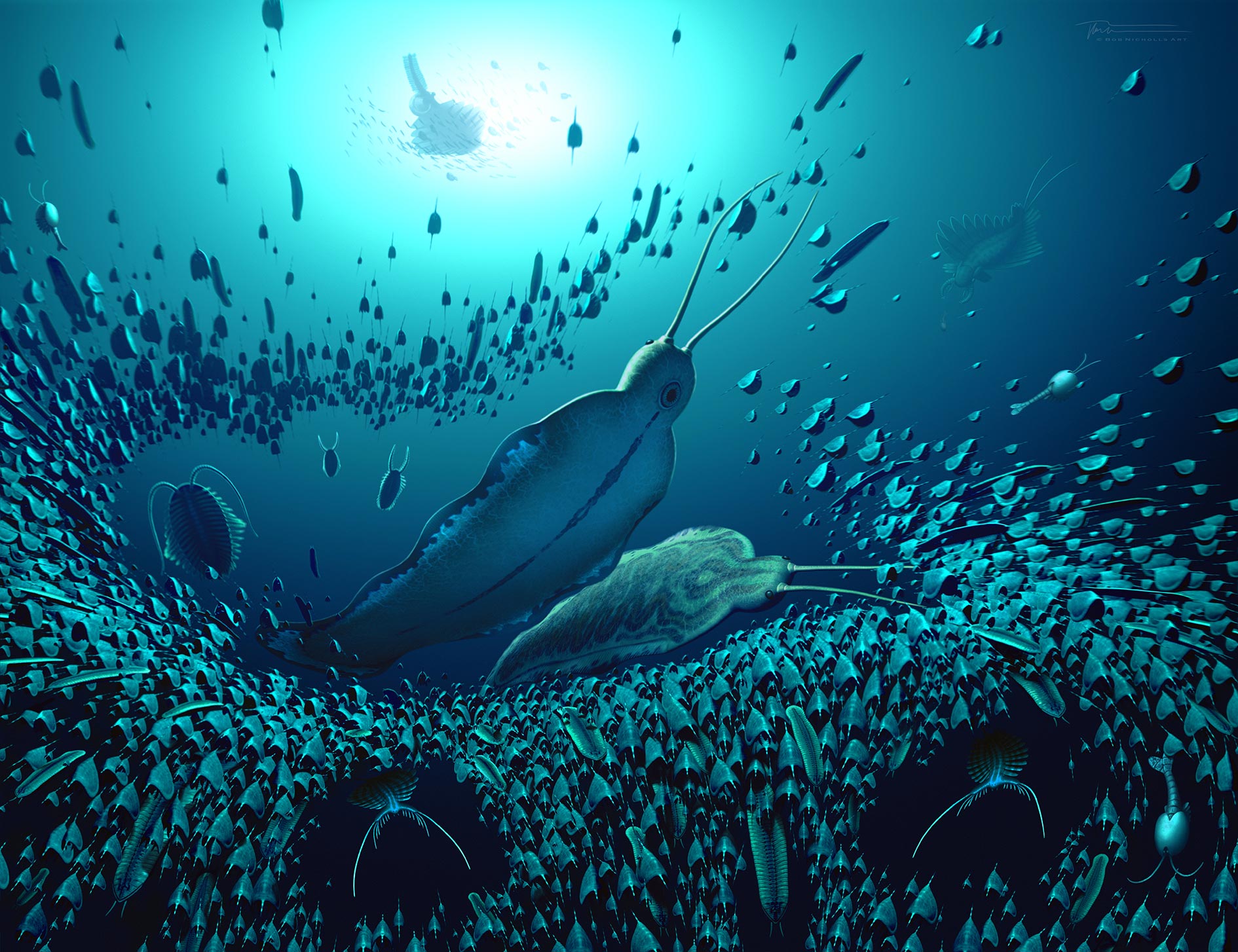
Newly discovered fossils of Timorebestia, large predatory worms from over 518 million years ago, have been found in Greenland, shedding light on early ocean predators and their complex ecosystems. This find offers vital clues about the evolution of jawed predators and the role of arrow worms in ancient marine food chains.
Fossils of a new group of animal predators have been located in the Early Cambrian Sirius Passet fossil locality in North Greenland. These large worms may be some of the earliest carnivorous animals to have colonized the water column more than 518 million years ago, revealing a past dynasty of predators that scientists didn’t know existed.
Introducing Timorebestia: The Early Cambrian Terror Beasts
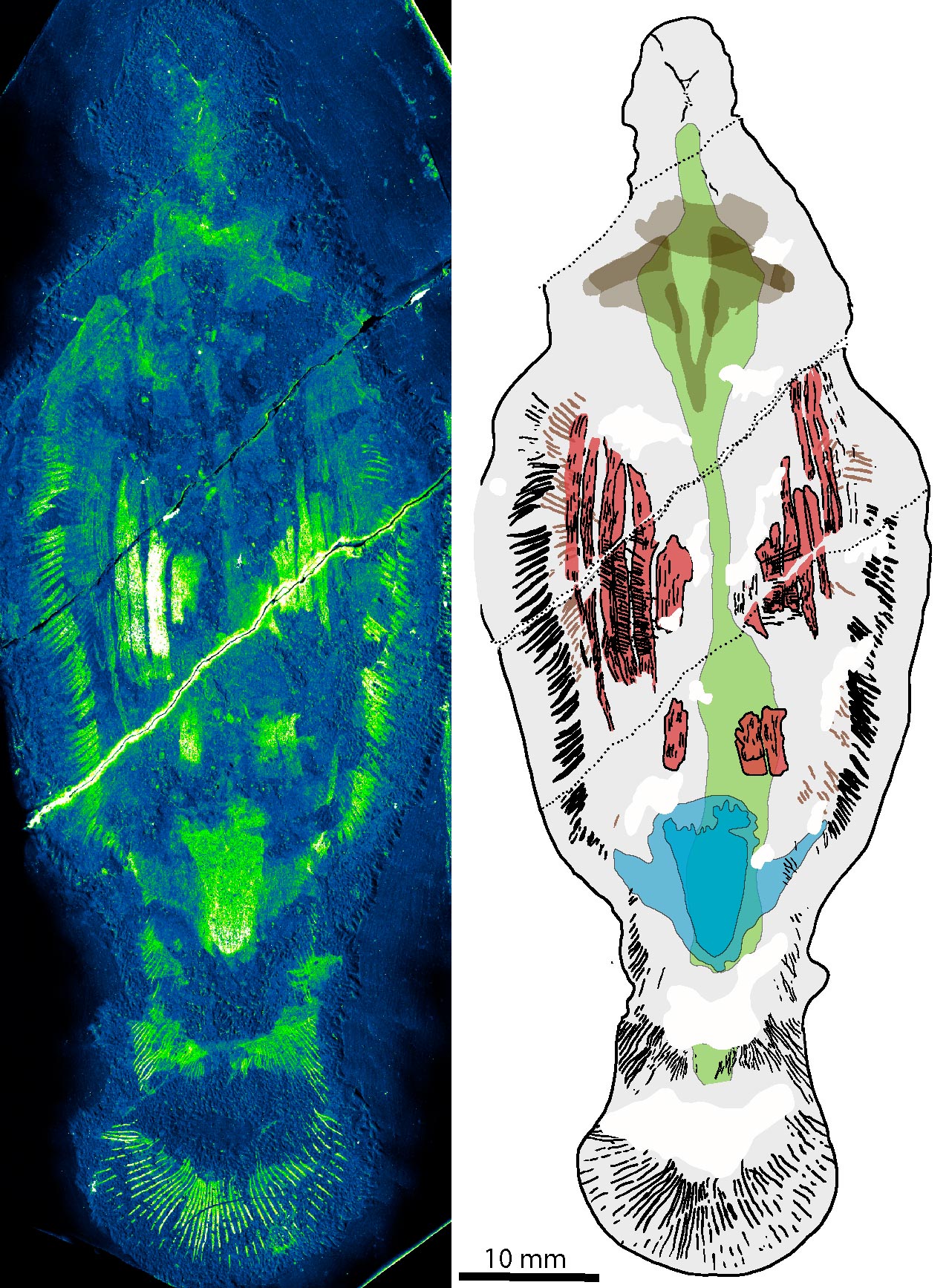
The new fossil animals have been named Timorebestia, meaning ‘terror beasts’ in Latin. Adorned with fins down the sides of their body, a distinct head with long antennae, massive jaw structures inside their mouth, and growing to more than 30cm in length, these were some of the largest swimming animals in the Early Cambrian times.
A Shift in Understanding Early Ocean Predators
“We have previously known that primitive arthropods were the dominant predators during the Cambrian, such as the bizarre-looking anomalocaridids,” said Dr. Jakob Vinther from the University of Bristol’s Schools of Earth Sciences and Biological Sciences, a senior author on the study. “However, Timorebestia is a distant, but close, relative of living arrow worms, or chaetognaths. These are much smaller ocean predators today that feed on tiny zooplankton.
“Our research shows that these ancient ocean ecosystems were fairly complex with a food chain that allowed for several tiers of predators.
“Timorebestia were giants of their day and would have been close to the top of the food chain. That makes it equivalent in importance to some of the top carnivores in modern oceans, such as sharks and seals back in the Cambrian period.”
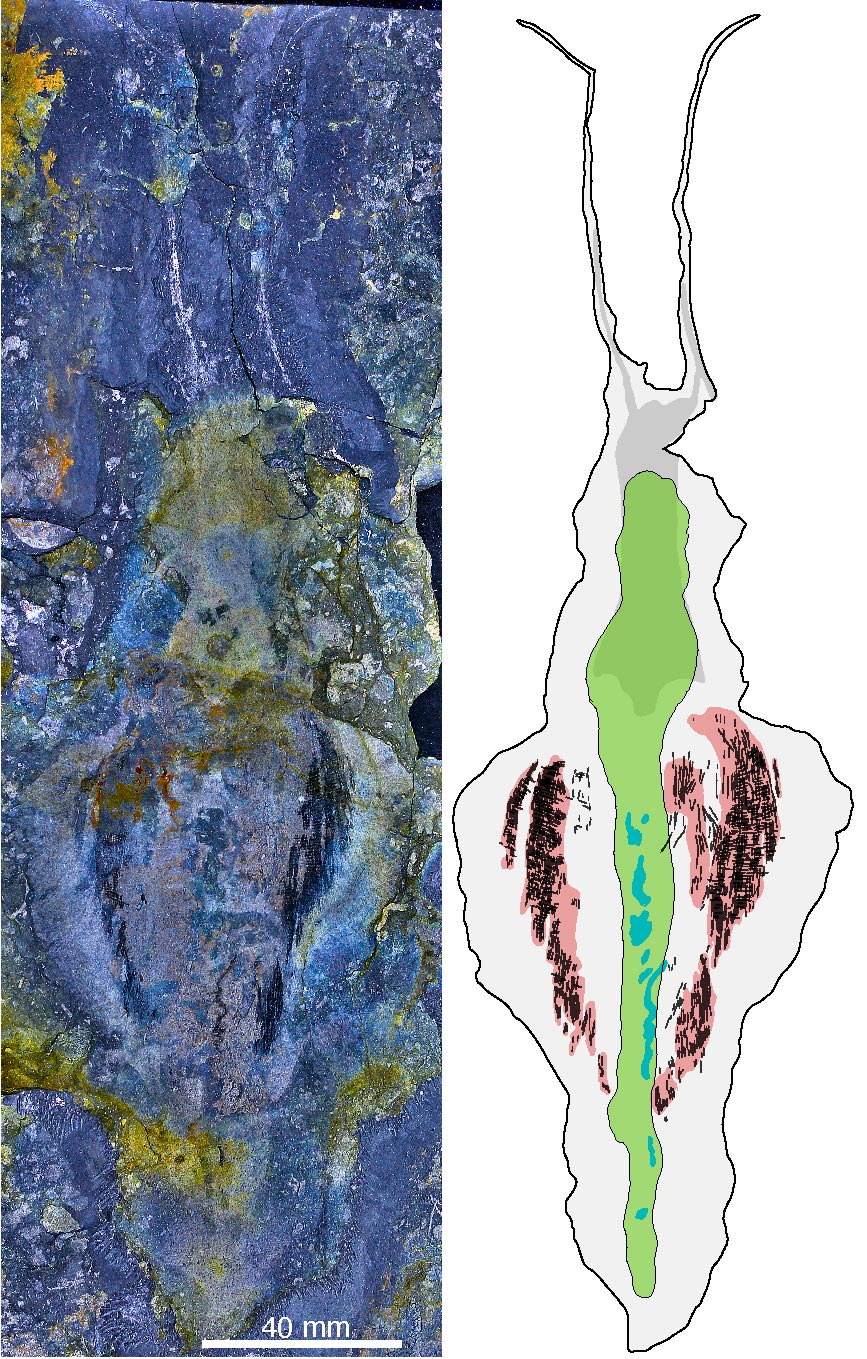
Inside the fossilized digestive system of Timorebestia, the researchers found remains of a common, swimming arthropod called Isoxys. “We can see these arthropods was a food source many other animals,” said Morten Lunde Nielsen, a former PhD student at Bristol and part of the current study. “They are very common at Sirius Passet and had long protective spines, pointing both forwards and backward. However, they clearly didn’t completely succeed in avoiding that fate, because Timorebestia munched on them in great quantities.”
The Age of Arrow Worms
Arrow worms are one of the oldest animal fossils from the Cambrian. While arthropods appear in the fossil record about 521 to 529 million years ago, arrow worms can be traced back at least 538 million years back in time. Dr. Vinther explained: “Both arrow worms, and the more primitive Timorebestia, were swimming predators. We can therefore surmise that in all likelihood they were the predators that dominated the oceans before arthropods took off. Perhaps they had a dynasty of about 10-15 million years before they got superseded by other, and more successful, groups.”
Linking Past and Present Predators
Luke Parry from Oxford University, who was part of the study, added “Timorebestia is a really significant find for understanding where these jawed predators came from. Today, arrow worms have menacing bristles on the outside of their heads for catching prey, whereas Timorebestia has jaws inside its head. This is what we see in microscopic jaw worms today—organisms that arrow worms shared an ancestor with over half a billion years ago. Timorebestia and other fossils like it provide links between closely related organisms that today look very different.”

“Our discovery firms up how arrow worms evolved,” added Tae Yoon Park from the Korean Polar Research Institute, the other senior author and field expedition leader. “Living arrow worms have a distinct nervous center on their belly, called a ventral ganglion. It is entirely unique to these animals.
“We have found this preserved in Timorebestia and another fossil called Amiskwia. People have debated whether or not Amiskwia was closely related to arrow worms, as part of their evolutionary stem lineage. The preservation of these unique ventral ganglia gives us a great deal more confidence in this hypothesis.
Future Discoveries From Sirius Passet
“We are very excited to have discovered such unique predators in Sirius Passet. Over a series of expeditions to the very remote Sirius Passet in the furthest reaches of North Greenland more than 82,5˚ north, we have collected a great diversity of exciting new organisms. Thanks to the remarkable, exceptional preservation in Sirius Passet we can also reveal exciting anatomical details including their digestive system, muscle anatomy, and nervous systems.
“We have many more exciting findings to share in the coming years that will help show how the earliest animal ecosystems looked like and evolved,” Dr. Park concludes.
Reference: “A giant stem-group chaetognath” by Tae-Yoon S. Park, Morten Lunde Nielsen, Luke A. Parry, Martin Vinther Sørensen, Mirinae Lee, Ji-Hoon Kihm, Inhye Ahn, Changkun Park, Giacinto de Vivo, M. Paul Smith, David A. T. Harper, Arne T. Nielsen and Jakob Vinther, 3 January 2024, Science Advances.
DOI: 10.1126/sciadv.adi6678
Never miss a breakthrough: Join the SciTechDaily newsletter.
Follow us on Google and Google News.
2 Comments
H
Now scientists are naming animals with clickbait names… terrorbeast?! My God. This is why the general population thinks scientific research and study is a joke and a waste of time and public funding. Good job morons.