
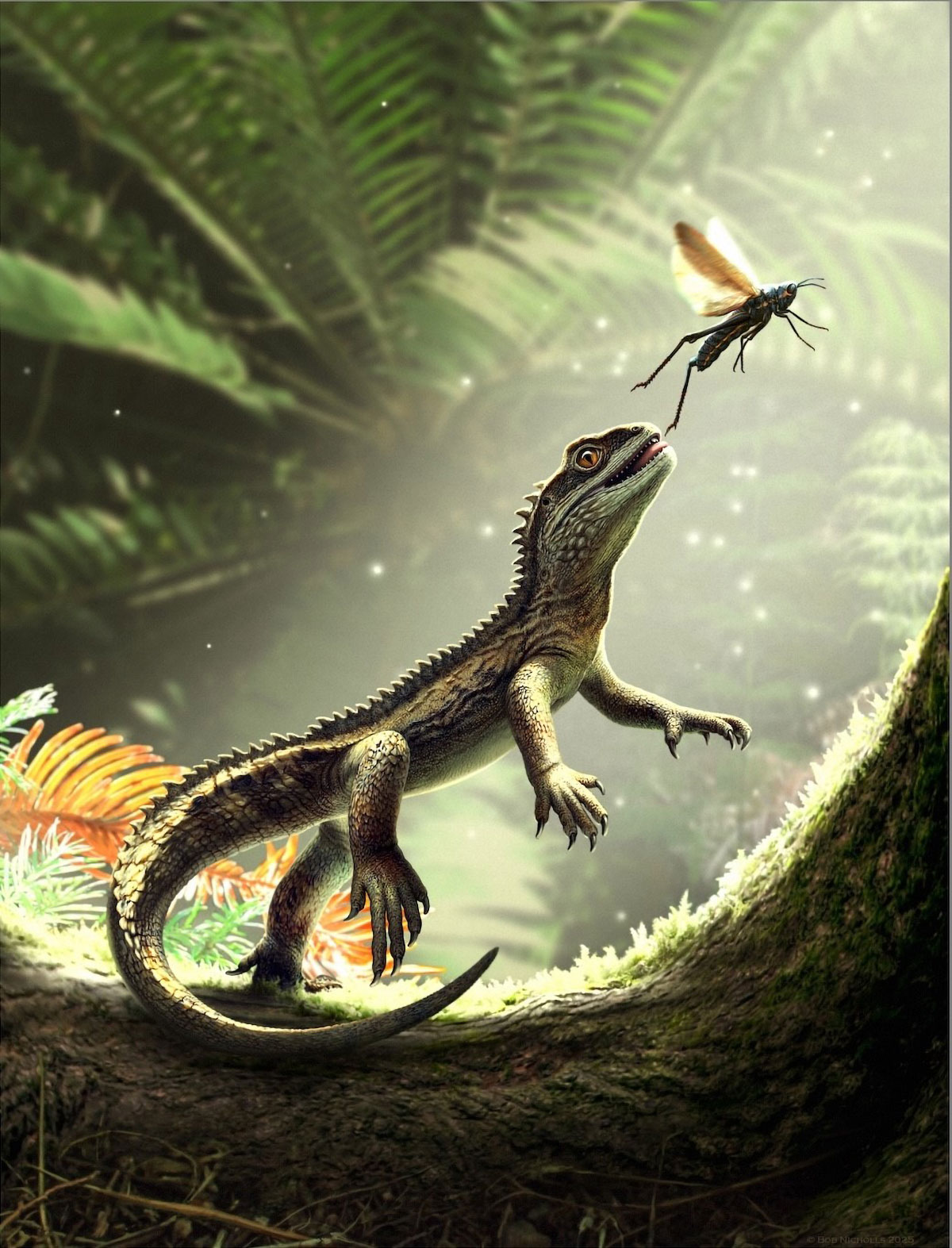
A 242-million-year-old fossil from Devon reveals unexpected skull and tooth features in one of the earliest lepidosaurs.
A newly discovered fossil from Devon has provided rare insight into the appearance of the earliest members of the lizard lineage, and the findings include some unexpected traits, according to researchers at the University of Bristol. The study was recently published in Nature.
Today, lizards, snakes, and the tuatara of New Zealand together form the Lepidosauria, the most diverse group of living land vertebrates, boasting more than 12,000 species—surpassing both birds and mammals. This remarkable success raises questions about which characteristics enabled their evolutionary advantage.
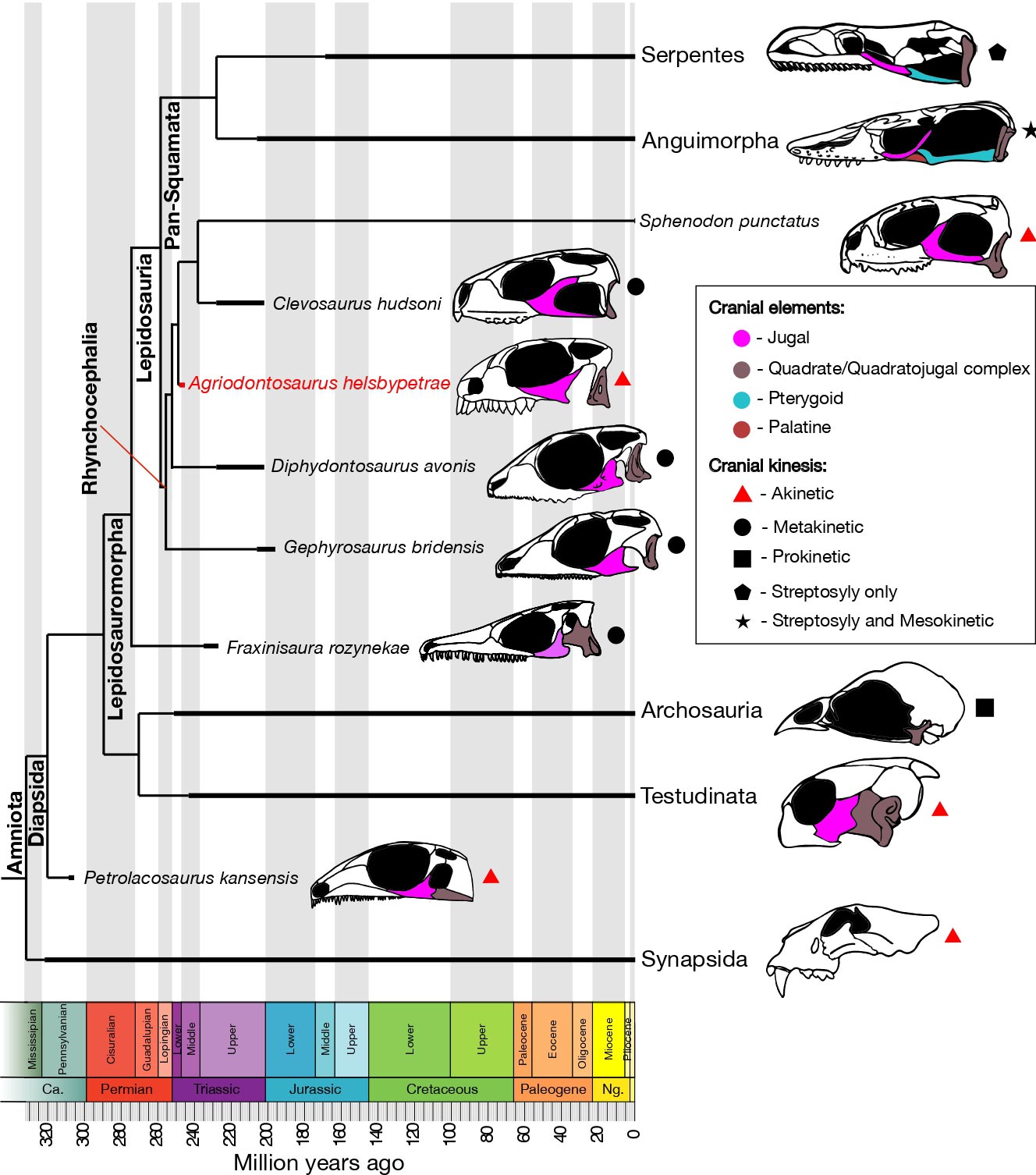
Paleontologists long assumed that the earliest lepidosaurs would already display key lizard-like features, including a partially flexible skull, an open lower temporal bar, and numerous teeth along the roof of the mouth (palate). In modern lizards and snakes, these adaptations allow the mouth to open extremely wide (skull hinge) to handle large prey, while palatal teeth help secure smaller, struggling animals.
The lower temporal bar, essentially a rod of bone forming the cheek, is missing in living lizards and snakes. Instead, they share additional adaptations that enhance skull flexibility. The tuatara is the exception: it retains a fully developed lower temporal bar, an ancient feature that gives it a more primitive appearance, along with large palatal teeth.
Surprising features of the fossil
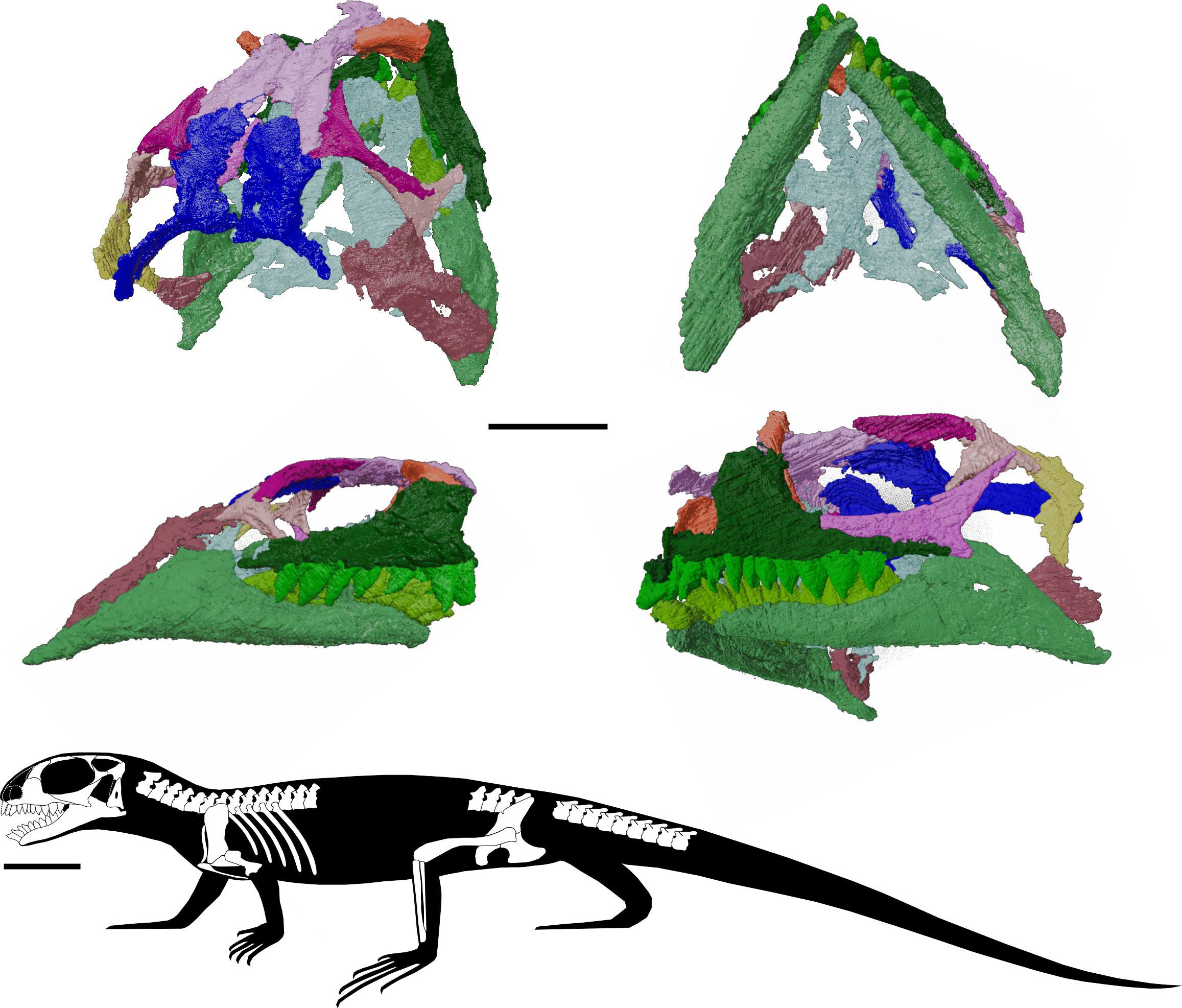
“The new fossil shows almost none of what we expected,” said Dan Marke, who led the project as part of his studies for the MSc in Palaeobiology at Bristol. “It has no teeth on the palate, and no sign of any hinging. It does though, have the open temporal bar, so one out of three. Not only this, but it possesses some spectacularly large teeth compared to its closest relatives.”
“In modern paleontological studies we often X-ray scan the fossils,” added Dr David Whiteside, a co-supervisor of the project. “But the exceptional resolution and quality of scans from synchrotron X-ray sources show us all the fine details and save any risk of damage.
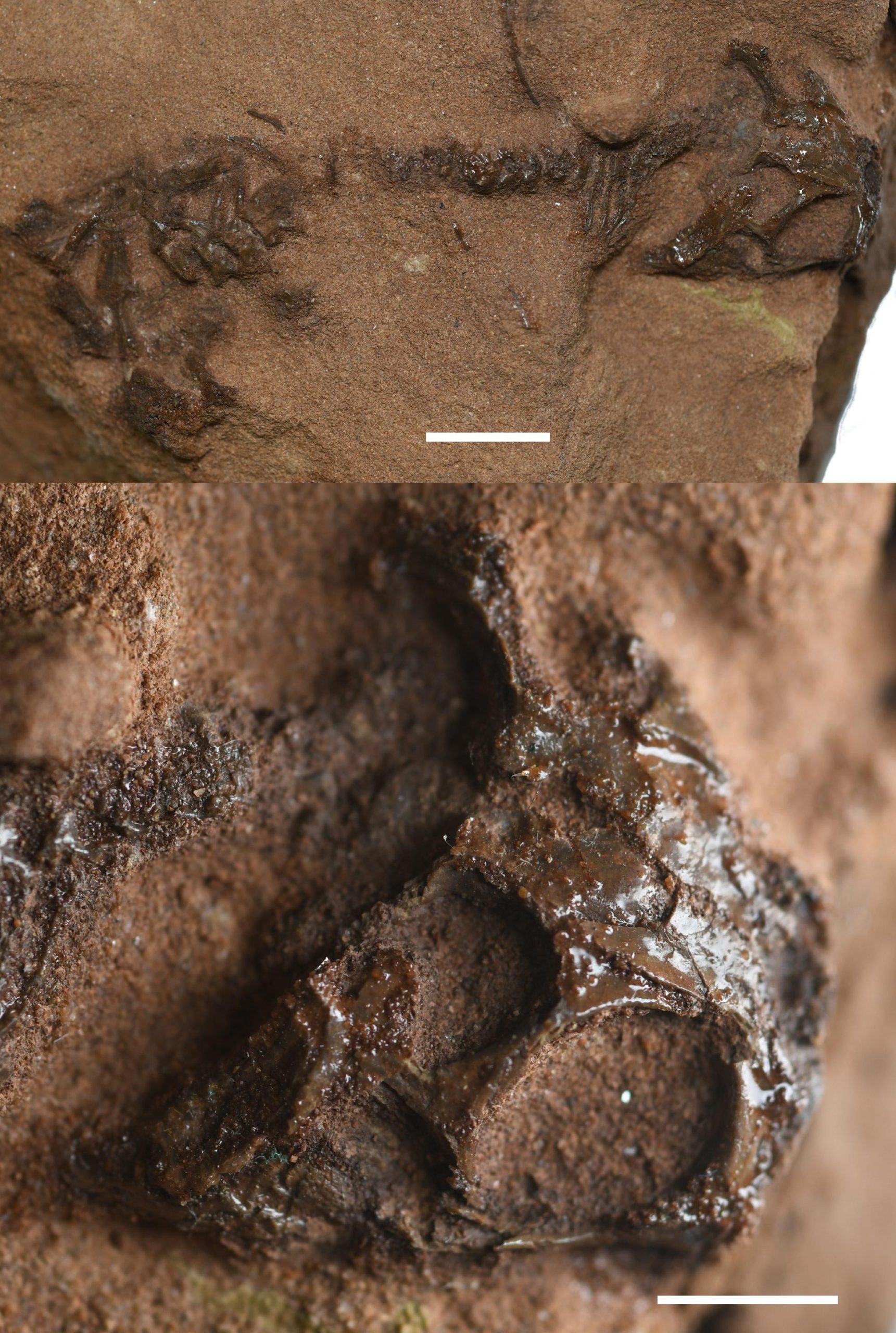
“An earlier MSc student, Thitiwoot Sethapanichsakul, had worked on the regular scans and found fantastic detail, but it’s so tiny – the skull is only 1.5 cm long, and we could barely see the teeth. So, we were so grateful to be able to make synchrotron CT scans to get even finer resolution, using two powerful beamlines at the European Synchrotron Radiation Facility (France) and the Diamond Light Source (UK).”
“When you look at the fossil, the whole skeleton sits in the palm of your hand,” explained Michael Benton, another co-supervisor and Professor of Vertebrate Paleontology in the School of Earth Sciences at the University of Bristol.
“But after the scans and the hard work of our students cleaning up the scan data, we can see the most amazing detail. The new beast has relatively large triangular-shaped teeth and probably used these to pierce and shear the hard cuticles of its insect prey, pretty much as the tuatara does today.”
Naming a new ancient reptile
“The new animal is unlike anything yet discovered and has made us all think again about the evolution of the lizard, snakes, and the tuatara,” said Dan Marke. “We had to give it a name to distinguish it from everything else, and we chose Agriodontosaurus helsbypetrae, quite a mouthful, meaning ‘fierce toothed lizard from the Helsby rock” after the Helsby Sandstone Formation in which it was discovered.
“This specimen not only provides important information about the ancestral skull of all lepidosaurs but also builds on the growing knowledge that the tuatara, while often called a “living fossil”; belongs to a once-diverse order of ancient reptiles with a rich evolutionary history.”
Evolutionary significance of the find
The fossil dates back 242 million years, in the Middle Triassic, just before the dinosaurs appeared, and since then the lepidosaurs have diversified in several stages, the early ones flitting in and out of the undergrowth under the feet of the dinosaurs. They owe their success to their amazing ability to capture insects and other prey using a variety of remarkable adaptations, including their highly flexible jaws and, in the case of some snakes and lizards, the use of venom.
“When I found the specimen back in 2015 on the beach in Devon, I had no idea what it was because there was so little of it exposed,” added Dr Rob Coram. “It’s been great to see such an amazing fossil coming from a site that has been providing fossils for 150 years.”
Reference: “The oldest known lepidosaur and origins of lepidosaur feeding adaptations” by Daniel Marke, David I. Whiteside, Thitiwoot Sethapanichsakul, Robert A. Coram, Vincent Fernandez, Alexander Liptak, Elis Newham and Michael J. Benton, 10 September 2025, Nature.
DOI: 10.1038/s41586-025-09496-9
Funded by the Natural Environment Research Council BETR programme (NE/P013724/1) European Research Council Advanced Grant ‘Innovation’ (ERC 788203).
Never miss a breakthrough: Join the SciTechDaily newsletter.
Follow us on Google and Google News.
3 Comments
It didn’t “re-write” ANYTHING. It’s just science.
If it takes just a single new fossil to rewrite evolution, then it wasn’t written very well to begin with.
Well, of course with new discoveries, we find out more about evolution, so we can write more.