

Paleontologists have discovered a huge new mosasaur from Morocco, named Thalassotitan atrox, which filled the apex predator niche. With massive jaws and teeth like those of killer whales, Thalassotitan hunted other marine reptiles — plesiosaurs, sea turtles, and other mosasaurs.
Sea monsters really existed at the end of the Cretaceous period, 66 million years ago. While dinosaurs flourished on land, enormous marine reptiles called mosasaurs ruled the seas.
Mosasaurs weren’t actually dinosaurs, but enormous marine lizards growing up to 12 meters (40 feet) in length. They were distant relatives of modern iguanas and monitor lizards.
Mosasaurs looked like a Komodo dragon, except with flippers instead of legs, and a shark-like tail fin. Mosasaurs became larger and more specialized in the final 25 million years of the Cretaceous period, taking niches once filled by other marine reptiles like plesiosaurs and ichthyosaurs. Some evolved to eat small prey like fish and squid. Others crushed ammonites and clams. The new mosasaur, named Thalassotitan atrox, evolved to prey on all the other marine reptiles.
The remains of the new species were discovered in a dig in Morocco, about an hour outside Casablanca. Here, near the end of the Cretaceous, the Atlantic flooded northern Africa. Nutrient-rich waters upwelling from the depths fed blooms of plankton. Those fed small fish, feeding larger fish, which fed mosasaurs and plesiosaurs — and so on, with these marine reptiles becoming food for the gigantic, carnivorous Thalassotitan.
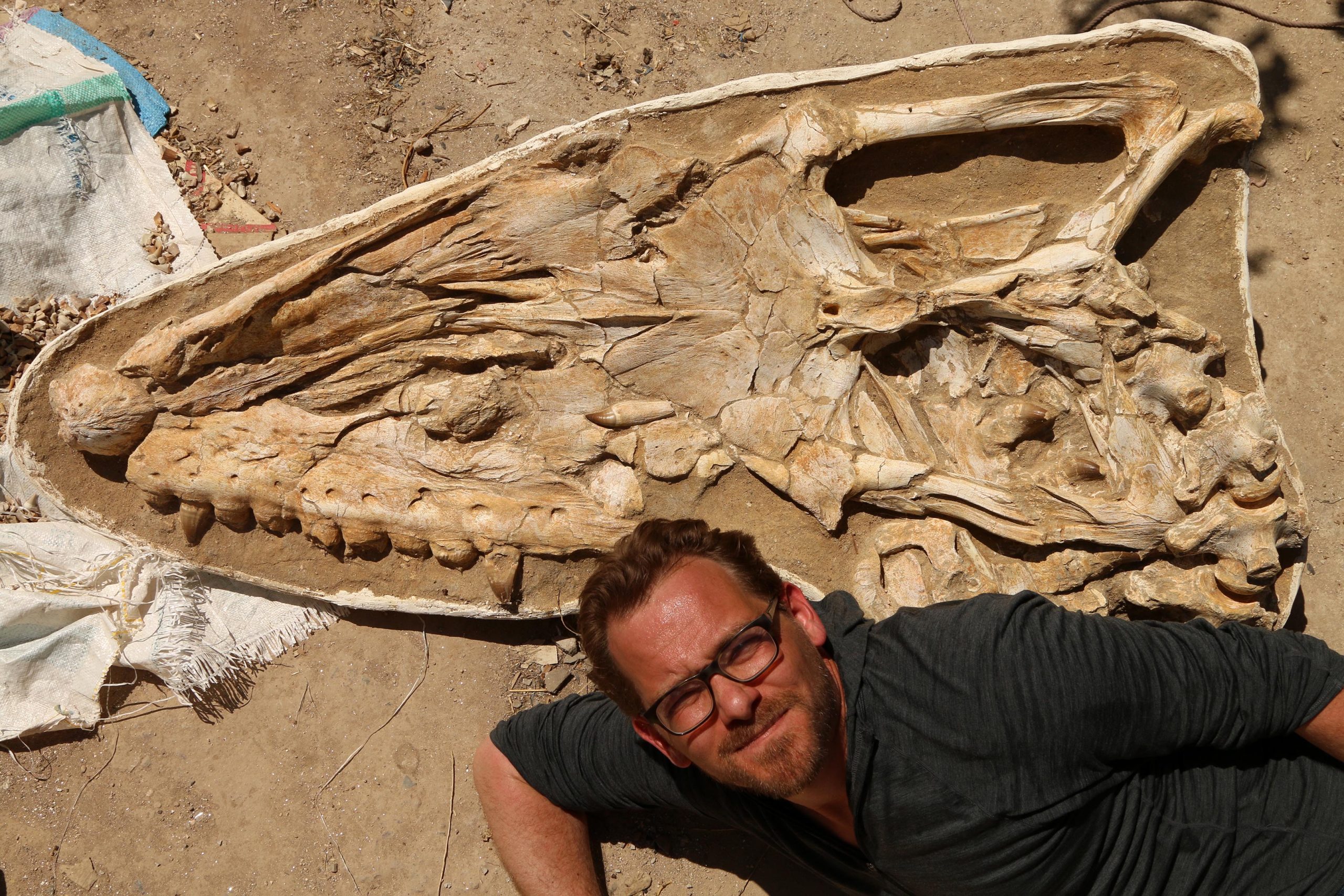
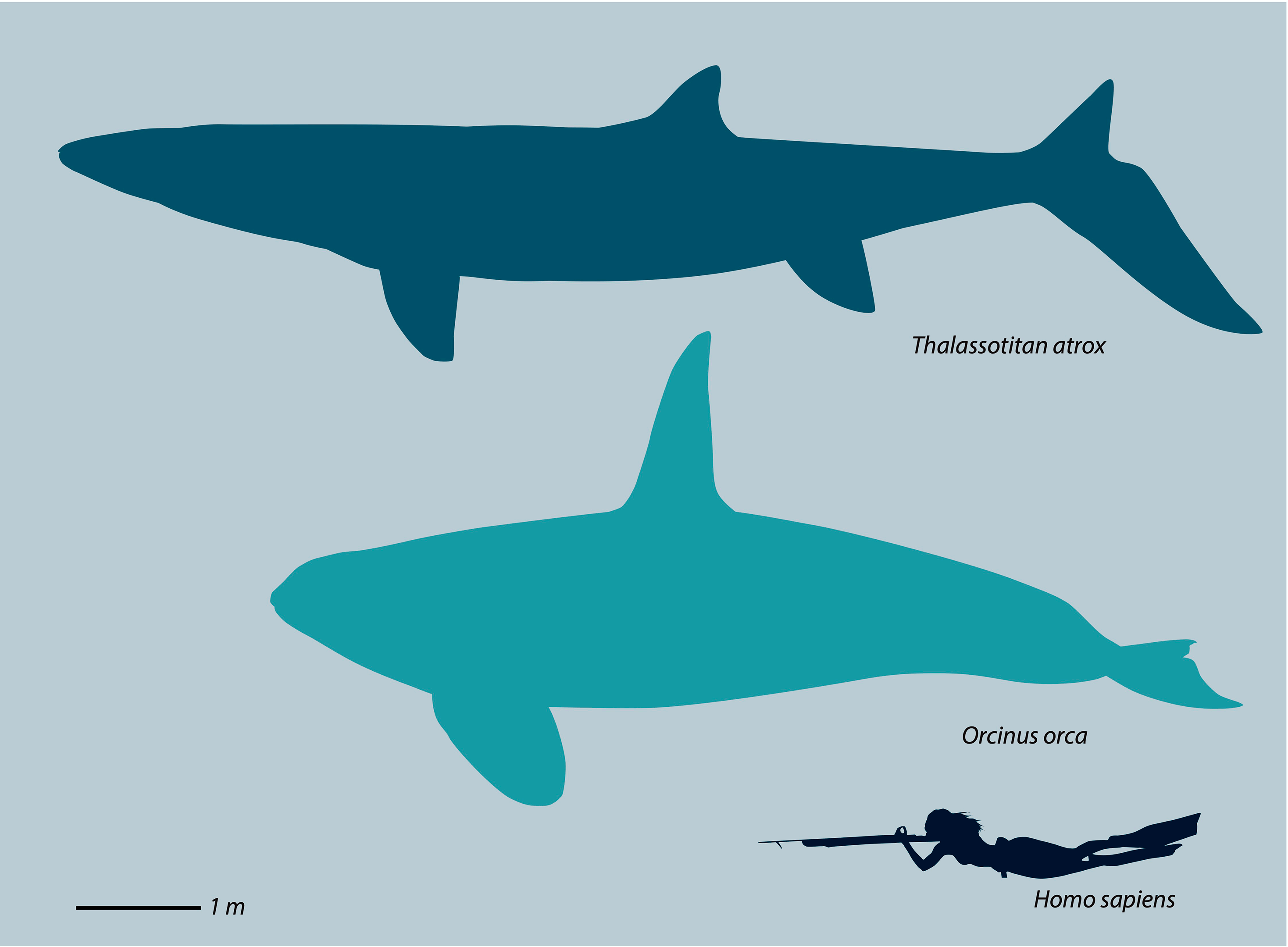
Thalassotitan, had an enormous skull measuring 1.4 meters (5 feet) long, and grew to nearly 9 meters (30 feet) long, the size of a killer whale. Most mosasaurs had long jaws and slender teeth for catching fish, but Thalassotitan had a short, wide muzzle and massive, conical teeth like those of an orca. These let it seize and rip apart huge prey. These anatomical adaptations suggest Thalassotitan was an apex predator, sitting at the top of the food chain. Essentially, the giant mosasaur occupied the same ecological niche as today’s killer whales and great white sharks.
Thalassotitan’s teeth are often worn and broken. Eating fish wouldn’t have produced this sort of tooth wear. Instead, this suggests that the giant mosasaur attacked other marine reptiles, chipping, grinding, and breaking its teeth as it bit into their bones and tore them apart. Some teeth are so heavily damaged they have been almost ground down to the root.
Fossilized Remains of Prey
Remarkably, possible remains of Thalassotitan’s victims have also been discovered. Fossils from the same beds show damage from acids, with teeth and bone eaten away. Fossils with this peculiar damage include large predatory fish, a sea turtle, a half-meter-long (1.6-foot-long) plesiosaur head, and jaws and skulls of at least three different mosasaur species. They would have been digested in Thalassotitan’s stomach before it spat out their bones.
“It’s circumstantial evidence,” said Dr. Nick Longrich, lead author on the study, published today (August 24, 2022) in Cretaceous Research. Longrich is Senior Lecturer from the Milner Center for Evolution at the University of Bath.
“We can’t say for certain which species of animal ate all these other mosasaurs. But we have the bones of marine reptiles killed and eaten by a large predator.
“And in the same location, we find Thalassotitan, a species that fits the profile of the killer – it’s a mosasaur specialized to prey on other marine reptiles. That’s probably not a coincidence.”
Thalassotitan was a threat to everything in the oceans — including other Thalassotitan. The huge mosasaurs bear injuries sustained in violent combat with other mosasaurs, with injuries to their face and jaws sustained in fights. Other mosasaurs show similar injuries, but in Thalassotitan these wounds were exceptionally common, indicating frequent, intense fights over feeding grounds or mates.
“Thalassotitan was an amazing, terrifying animal,” said Dr. Nick Longrich, who led the study. “Imagine a Komodo Dragon crossed with a great white shark crossed with a T. rex crossed with a killer whale.”
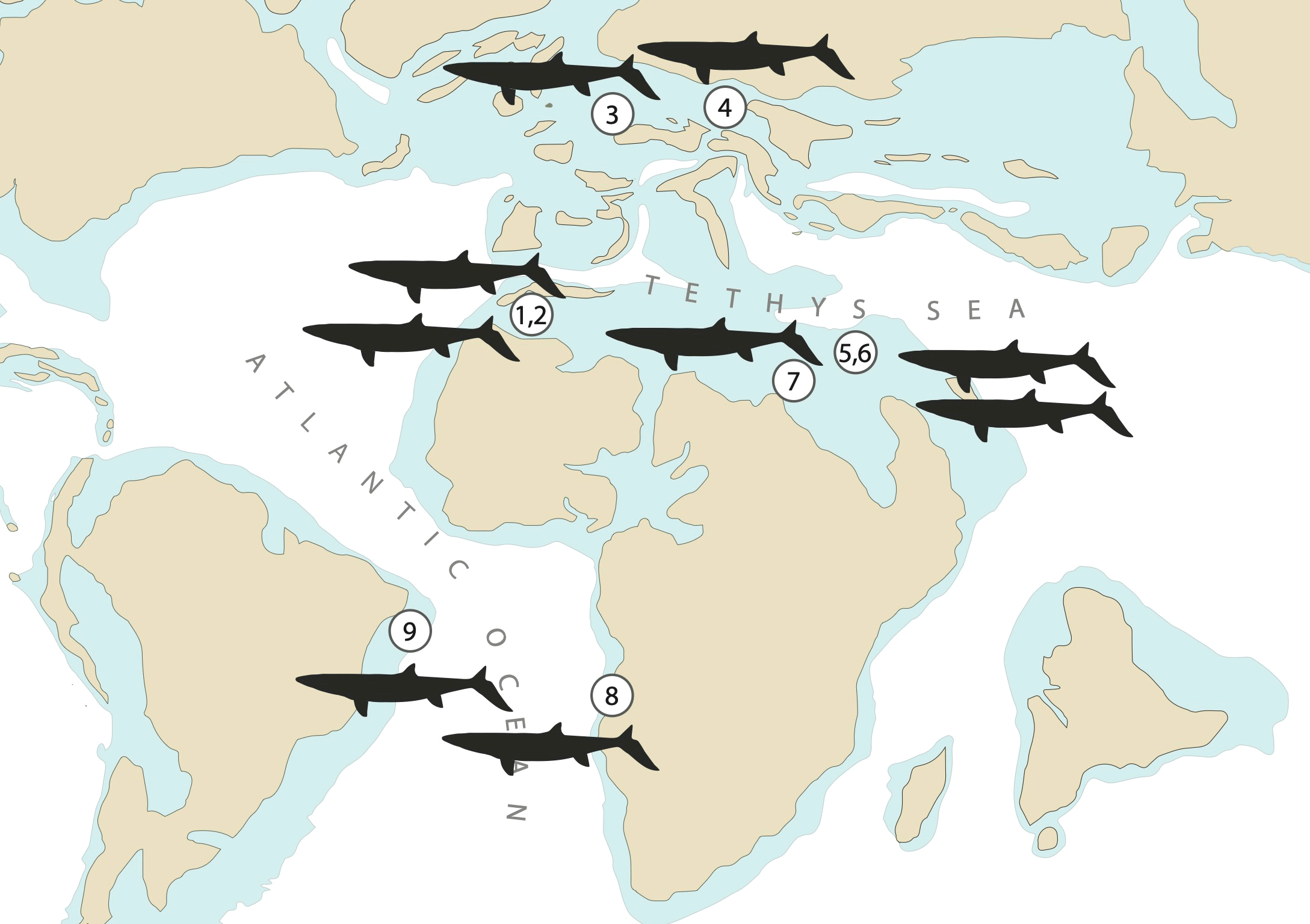
The new mosasaur lived in the final million years of the Age of Dinosaurs, a contemporary of animals like T. rex and Triceratops. Recent discoveries of mosasaurs from Morocco, suggest that mosasaurs weren’t in decline before the asteroid impact that drove the Cretaceous mass extinction. Instead, they flourished.
Professor Nour-Eddine Jalil, a co-author on the paper from the Museum of Natural History in Paris, said: “The phosphate fossils of Morocco offer an unparalleled window on the paleobiodiversity at the end of Cretaceous.
“They tell us how life was rich and diversified just before the end of the ‘dinosaur era’, where animals had to specialize to have a place in their ecosystems. Thalassotitan completes the picture by taking on the role of the megapredator at the top of the food chain.”
“There’s so much more to be done,” said Longrich. “Morocco has one of the richest and most diverse marine faunas known from the Cretaceous. We’re just getting started understanding the diversity and the biology of the mosasaurs.”
Dr. Longrich has written a blog about the research here: https://www.nicklongrich.com/blog/thalassotitan-the-killer-mosasaur
Reference: “Thalassotitan atrox, a giant predatory mosasaurid (Squamata) from the Upper Maastrichtian Phosphates of Morocco” by Nicholas R. Longrich, Nour-Eddine Jalil, Fatima Khaldoune, Oussama Khadiri Yazami, Xabier Pereda-Suberbiola and Nathalie Bardet, 24 August 2022, Cretaceous Research.
DOI: 10.1016/j.cretres.2022.105315
Never miss a breakthrough: Join the SciTechDaily newsletter.
Follow us on Google and Google News.
1 Comment
When considering giant apex marine predators, don’t overlook the plesiosaur Kronosaurus queenslandicus whose skull is 2.4 meters (about 7.9 feet) long, with an estimated body length of about 10 meters (32 feet). Comparable in overall body size, but with a substantially larger head than Thalassotitan.