
Close Menu
    Facebook X (Twitter) Instagram
    SciTechDaily
    • Biology
    • Chemistry
    • Earth
    • Health
    • Physics
    • Science
    • Space
    • Technology
    Facebook X (Twitter) Pinterest YouTube RSS
    SciTechDaily
    Home»Science»Overlooked “Jurassic Park of Lizards” Discovered by Researchers
    Science

    Overlooked “Jurassic Park of Lizards” Discovered by Researchers

    By University of BristolMay 7, 2022No Comments3 Mins Read
    Facebook Twitter Pinterest Telegram LinkedIn WhatsApp Email Reddit
    Share
    Facebook Twitter LinkedIn Pinterest Telegram Email Reddit
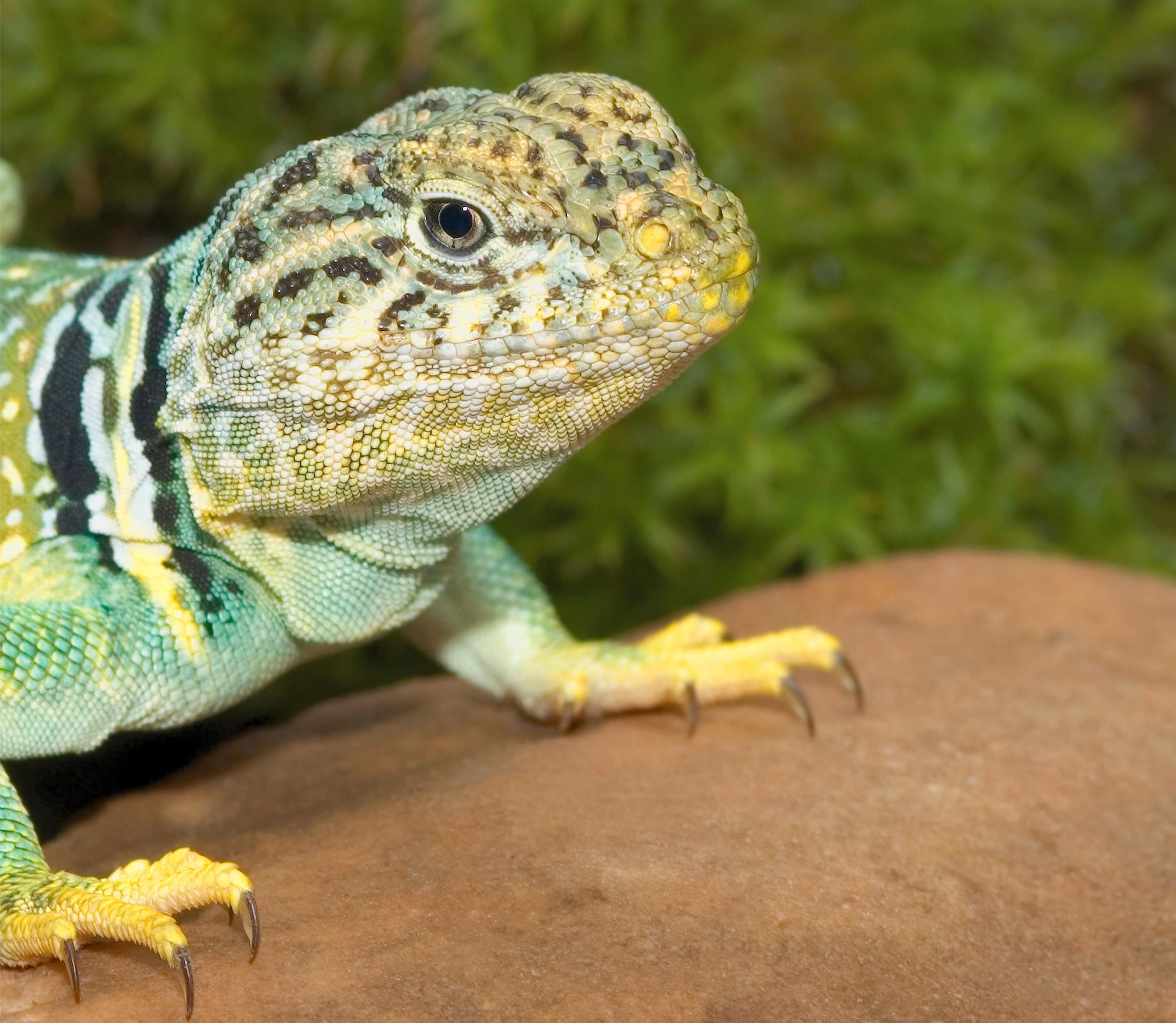
    Collared Lizard Close Up
    New research challenges the current consensus that the radiation of squamates – a key modern group of reptiles that includes lizards and snakes – happened in the Cretaceous period.

    Scientists have found that a key modern group of reptiles that includes lizards and snakes – known as squamates – diverged in the Jurassic period, 50 million years earlier than previously thought.

    New research published on May 3, 2022, in the journal eLife by scientists from the Institut Català de Paleontologia Miquel Crusafont (ICP) and the University of Bristol challenges the current consensus that the radiation of squamates happened in the Cretaceous period. This was when many terrestrial tetrapod groups like mammals, lizards, and birds, apparently underwent a great diversification during the so-called Cretaceous Terrestrial Revolution, which was triggered by the rise of flowering plants.
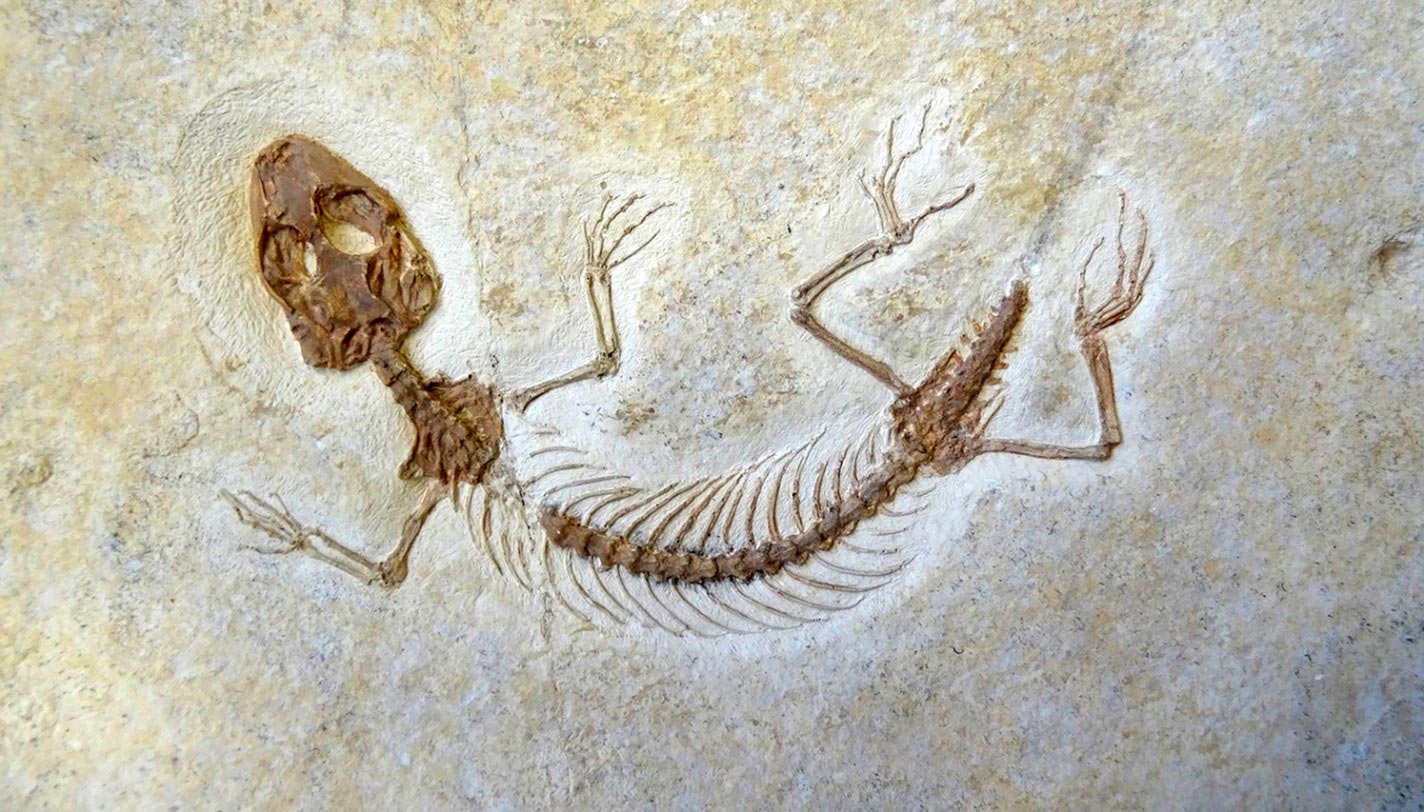
    Jurassic Lizard Eichstaettisaurus Fossil
    The fossil of Jurassic lizard Eichstaettisaurus. Credit: Jorge Herrera Flores

    Now, a new research study, led by Dr. Arnau Bolet, a paleontologist at the Institut Català de Paleontologia Miquel Crusafont and the University of Bristol, implies a much earlier radiation of squamates. Along with colleagues from Bristol’s School of Earth Sciences, Prof Michael Benton, Dr. Tom Stubbs, and Jorge Herrera-Flores, their research concludes that this group of reptiles probably achieved a diverse array of adaptations in the Jurassic (between 201 and 145 Myr.), long before current estimates.

    “Even though Jurassic squamates are rare, reconstructed evolutionary trees show that all the main specializations of squamates evolved then, and it’s possible to distinguish adaptations of geckoes, iguanas, skinks, worm lizards, and snakes some 50 million years earlier than had been thought,” explains Michael Benton, co-author of the research. “But how could the scarce Jurassic fossils suggest an early burst in evolution? The key is in their anatomy.”
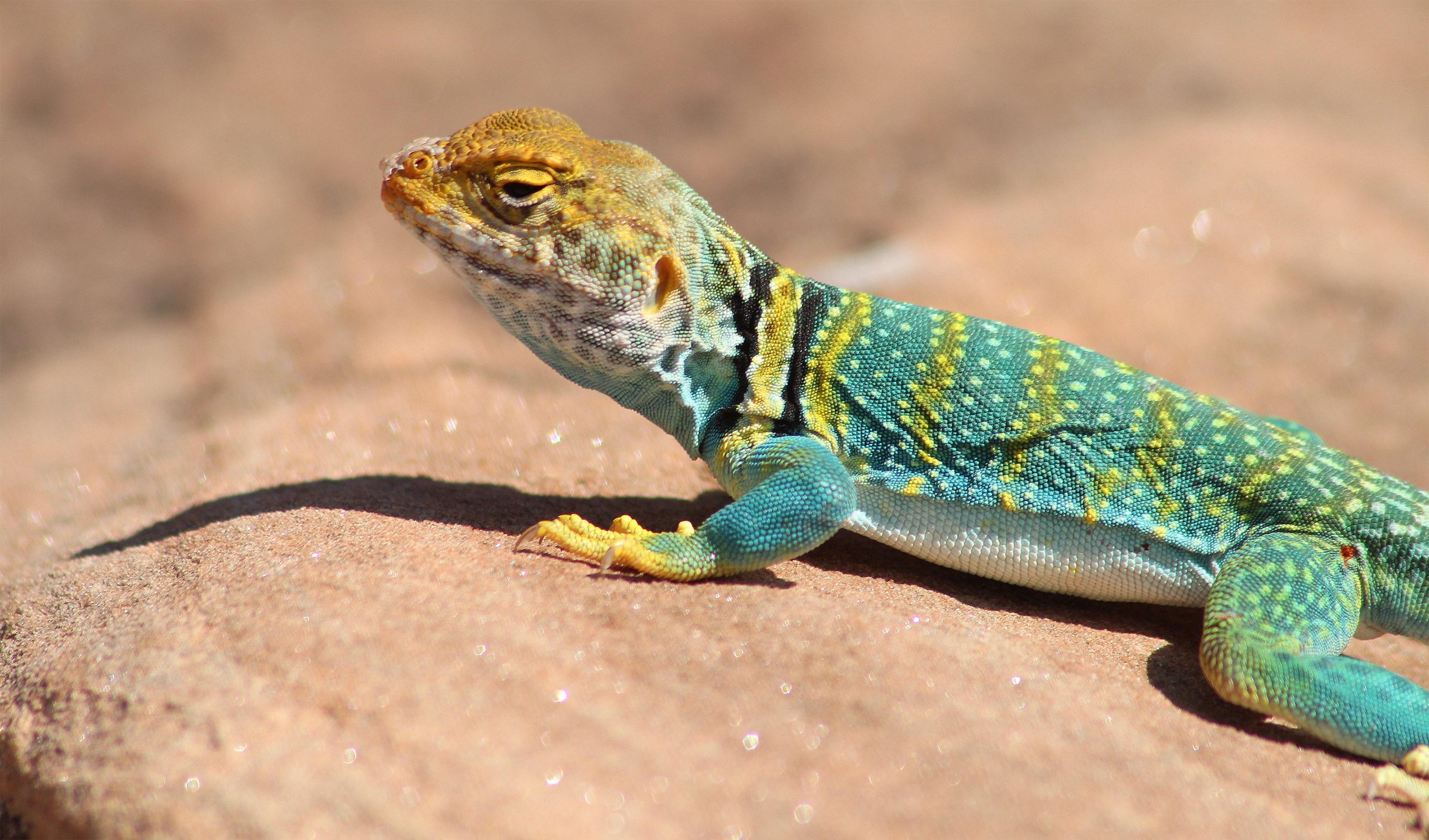
    Collared Lizard Posing on Rock
    Collared lizard in Colorado. Credit: Pahcal123 (CC BY-SA 4.0)

    The few Jurassic squamates do not show primitive morphologies as would be expected, but they relate directly to the diverse modern groups. “Instead of finding a suite of generalized lizards on the stem of the squamate tree, what we found in the Jurassic were the first representatives of many modern groups, showing advanced morphological features,” says Arnau Bolet, lead author of the article.

    The observed times of divergence, morphospace plots, and evolutionary rates, all suggest that the Jurassic was a time of innovation in squamate evolution, during which the bases of the success of the group were established. According to these results, the apparent sudden increase in diversity observed in the Cretaceous could be related to an improved fossil record, capable of recording a larger number of species, or to a burst of origins of new species related to the new kinds of forests and insects.

    The Squamata is the largest order of reptiles, including lizards, snakes, and worm lizards. Squamates are all cold-blooded, and their skins are covered by horny scales. They are key parts of modern terrestrial faunas, especially in warmer climates, with an astonishing diversity of more than 10,000 species. However, the evolutionary paths that forged their success are still poorly understood.

    Establishing the timing and mode of radiation of squamates is key for not only understanding the dynamics of terrestrial ecosystems in the Mesozoic, but also for deciphering how the group achieved an astonishing diversity of more than 10,000 species, only rivaled by birds among tetrapods.

    Reference: “The Jurassic rise of squamates as supported by lepidosaur disparity and evolutionary rates” by Arnau Bolet, Thomas L Stubbs, Jorge A Herrera-Flores and Michael J Benton, 3 May 2022, eLife.
    DOI: 10.7554/eLife.66511

    Never miss a breakthrough: Join the SciTechDaily newsletter.
    Follow us on Google and Google News.

    Evolution Lizard Paleontology Popular Reptiles University of Bristol
    Share. Facebook Twitter Pinterest LinkedIn Email Reddit

    Related Articles

    After Mass Extinctions, Herbivores Developed Powerful Jaws to Digest Tougher Plants

    Preserved With Life-Like Fidelity, 100 Million-Year-Old Beetle Is Fireflies’ Missing Fossil Link

    Pioneering Research Reveals How Teeth Functioned and Evolved in Giant Mega-Sharks

    Crocodiles Have Changed Very Little Since the Age of the Dinosaurs – New Research Explains Why

    Pioneering Reconstruction Reveals Surprising Insights Into Early Dinosaur’s Brain, Eating Habits and Agility

    Switch to Warm-Bloodedness Triggered by World’s Greatest Mass Extinction

    Evolved to Strike Terror: Paleontologists Identify New Species of Mosasaur

    Finally Revealed: Gargantuan True Size of Legendary Prehistoric Mega-Shark Megalodon

    It Seems There Were Too Many Meat-Eating Dinosaurs – This May Be the Explanation

    Leave A Reply Cancel Reply

    • Facebook
    • Twitter
    • Pinterest
    • YouTube

    Don't Miss a Discovery

    Subscribe for the Latest in Science & Tech!

    Trending News

    Your Blood Pressure Reading Could Be Wrong Because of One Simple Mistake

    Astronomers Stunned by Ancient Galaxy With No Spin

    Physicists May Be on the Verge of Discovering “New Physics” at CERN

    Scientists Solve 320-Million-Year Mystery of Reptile Skin Armor

    Scientists Say This Daily Walking Habit May Be the Secret to Keeping Weight Off After Dieting

    New Therapy Rewires the Brain To Restore Joy in Depression Patients

    Giant Squid Detected off Western Australia in Stunning Deep-Sea Discovery

    Popular Sugar-Free Sweetener Linked to Liver Disease, Study Warns

    Follow SciTechDaily
    • Facebook
    • Twitter
    • YouTube
    • Pinterest
    • Newsletter
    • RSS
    SciTech News
    • Biology News
    • Chemistry News
    • Earth News
    • Health News
    • Physics News
    • Science News
    • Space News
    • Technology News
    Recent Posts
    • Scientists Discover “Hidden” Materials That Could Transform Clean Energy and Batteries
    • Scientists Just Measured an Energy Pulse Smaller Than a Trillionth of a Billionth of a Joule
    • 540-Million-Year-Old Fossils Reveal a Huge Surprise About Early Life on Earth
    • Scientists Create “Living” Materials That Crawl, Walk, and Dig on Their Own
    • Dante’s Inferno May Secretly Be About a Planet-Destroying Asteroid Strike
    Copyright © 1998 - 2026 SciTechDaily. All Rights Reserved.
    • Science News
    • About
    • Contact
    • Editorial Board
    • Privacy Policy
    • Terms of Use

    Type above and press Enter to search. Press Esc to cancel.