
Close Menu
    Facebook X (Twitter) Instagram
    SciTechDaily
    • Biology
    • Chemistry
    • Earth
    • Health
    • Physics
    • Science
    • Space
    • Technology
    Facebook X (Twitter) Pinterest YouTube RSS
    SciTechDaily
    Home»Science»Finally Revealed: Gargantuan True Size of Legendary Prehistoric Mega-Shark Megalodon
    Science

    Finally Revealed: Gargantuan True Size of Legendary Prehistoric Mega-Shark Megalodon

    By Swansea UniversitySeptember 4, 2020No Comments4 Mins Read
    Facebook Twitter Pinterest Telegram LinkedIn WhatsApp Email Reddit
    Share
    Facebook Twitter LinkedIn Pinterest Telegram Email Reddit
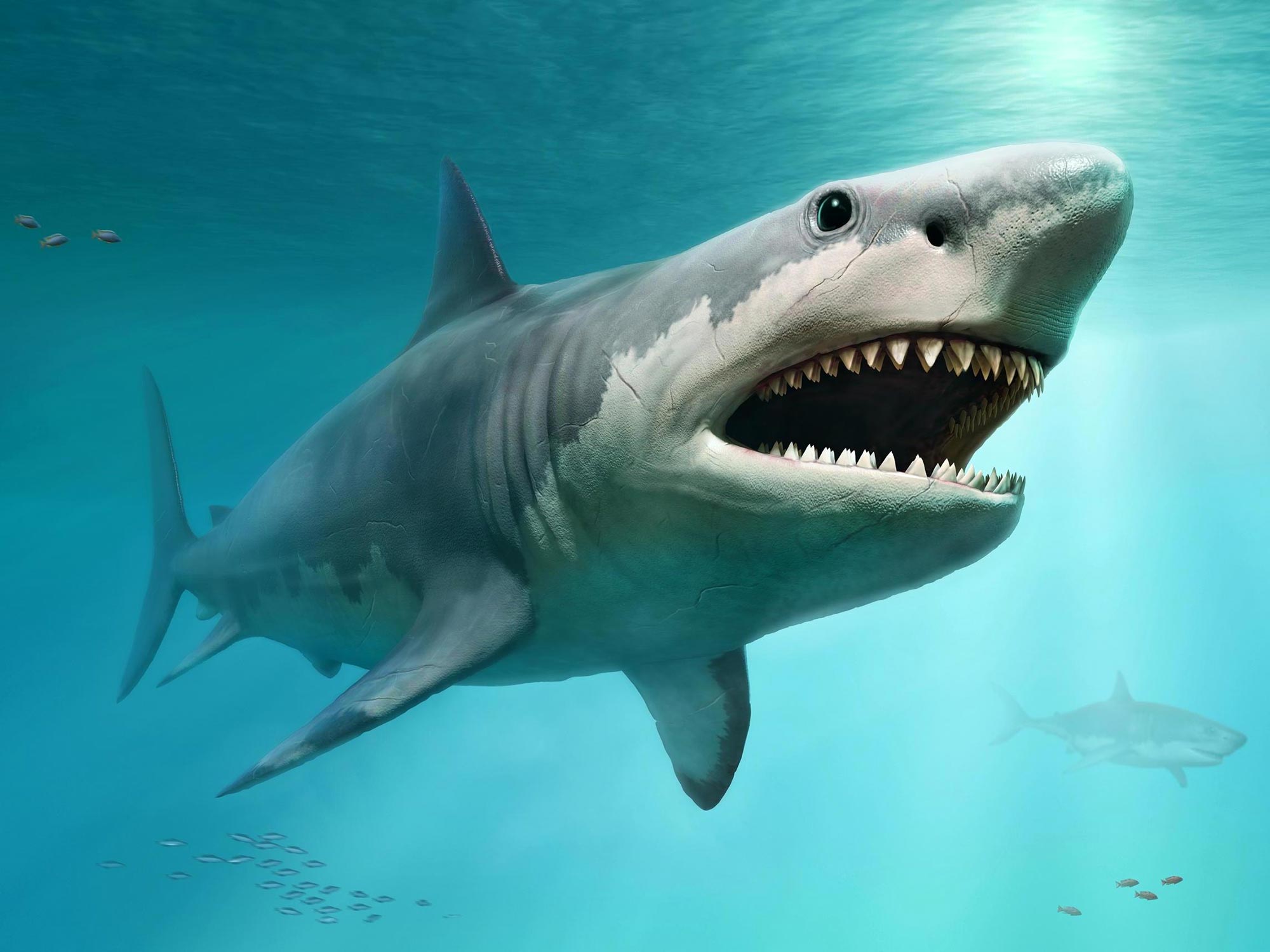
    Megalodon Illustration
    Illustration of legendary giant shark Megalodon.

    A new study led by the University of Bristol and Swansea University has revealed the size of the legendary giant shark Megalodon, including fins that are as large as an adult human.

    There is a grim fascination in determining the size of the largest sharks, but this can be difficult for fossil forms where teeth are often all that remain.

    Today, the most fearsome living shark is the Great White, at over six meters (20 feet) long, which bites with a force of two tonnes.

    Its fossil relative, the big tooth shark Megalodon, star of Hollywood movies, lived from 23 to around three million years ago, was over twice the length of a Great White and had a bite force of more than ten tonnes.

    The fossils of the Megalodon are mostly huge triangular cutting teeth bigger than a human hand.
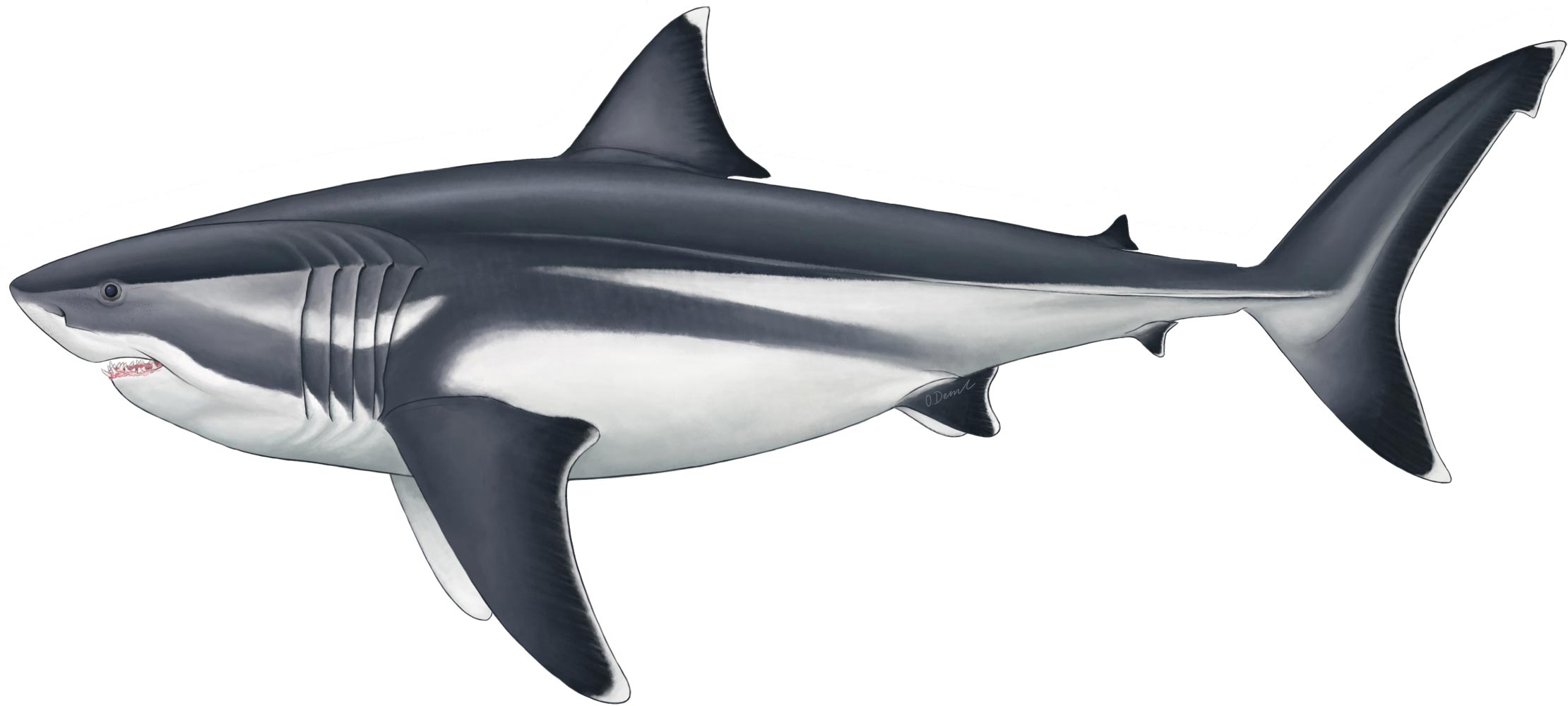
    Megalodon Paleoartist Reconstruction
    Paleoartist reconstruction of a 16m adult Megalodon. Reconstruction by Oliver E. Demuth. Credit: Oliver E. Demuth

    Jack Cooper and colleagues from Swansea University and the University of Bristol used a number of mathematical methods to pin down the size and proportions of this monster, by making close comparisons to a diversity of living relatives with ecological and physiological similarities to Megalodon.

    The project was supervised by shark expert Dr. Catalina Pimiento from Swansea University and Professor Mike Benton, a paleontologist at the University of Bristol. Dr. Humberto Ferrón from Bristol also collaborated.
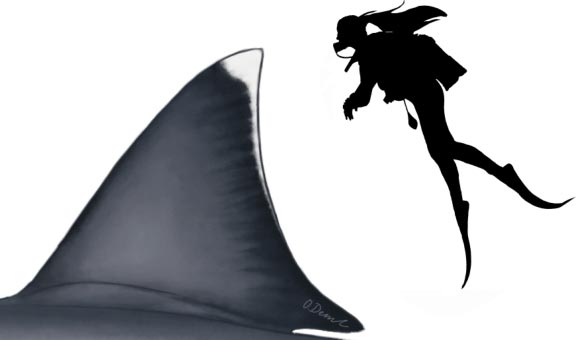
    Megalodon Dorsal Fin Size Comparison
    Comparison of an adult Megalodon’s dorsal fin to a 1.6m diver. Fin reconstruction by Oliver E. Demuth. Credit: Oliver E. Demuth

    Jack Cooper, who will now start his Ph.D. at Swansea University said: “I have always been mad about sharks. As an undergraduate, I have worked and dived with Great Whites in South Africa — protected by a steel cage of course. It’s that sense of danger, but also that sharks are such beautiful and well-adapted animals, that makes them so attractive to study.

    “Megalodon was actually the very animal that inspired me to pursue paleontology in the first place at just six years old, so I was over the moon to get a chance to study it.

    “This was my dream project. But to study the whole animal is difficult considering that all we really have are lots of isolated teeth.”

    Previously the fossil shark, known formally as Otodus megalodon, was only compared with the Great White. Jack and his colleagues, for the first time, expanded this analysis to include five modern sharks.

    Dr. Catalina Pimiento said: “Megalodon is not a direct ancestor of the Great White but is equally related to other macropredatory sharks such as the Makos, Salmon shark and Porbeagle shark, as well as the Great White. We pooled detailed measurements of all five to make predictions about Megalodon.”
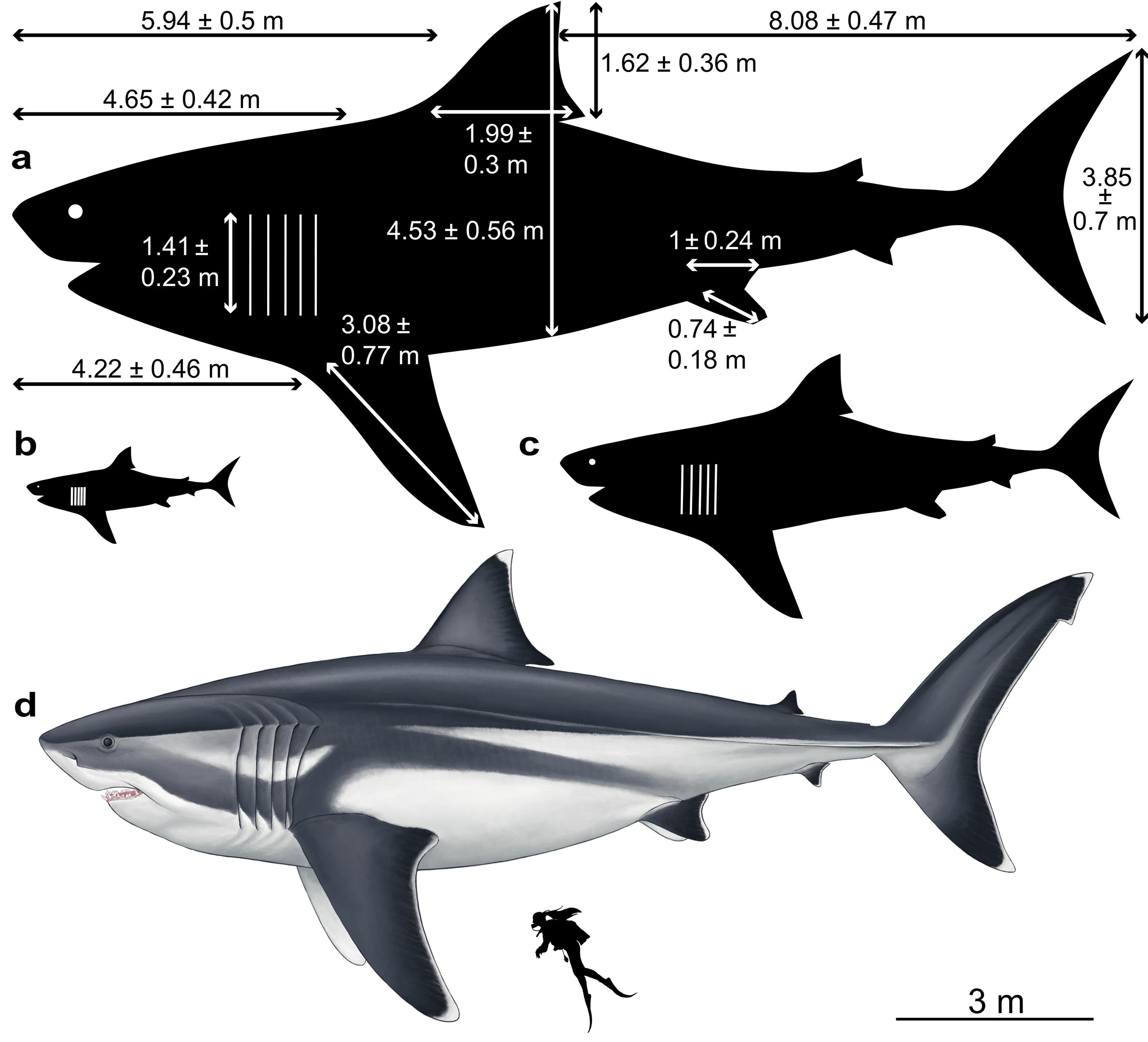
    Megalodon Computational Reconstruction
    Computational reconstruction of Megalodon’s size and proportions at different life stages: a) 16m (52.5ft) adult with 12m (39.4ft) estimated body dimensions recorded; b) 3m (9.8ft) newborn and c) 8m (26.2ft) juvenile. Credit: Oliver E. Demuth

    Professor Benton added: “Before we could do anything, we had to test whether these five modern sharks changed proportions as they grew up. If, for example, they had been like humans, where babies have big heads and short legs, we would have had some difficulties in projecting the adult proportions for such a huge extinct shark.

    “But we were surprised, and relieved, to discover that in fact that the babies of all these modern predatory sharks start out as little adults, and they don’t change in proportion as they get larger.”

    Jack Cooper added: “This means we could simply take the growth curves of the five modern forms and project the overall shape as they get larger and larger — right up to a body length of 16 meters (52.5 feet).”

    The results suggest that a 16-meter-long Otodus megalodon likely had a head around 4.65 meters (15 feet) long, a dorsal fin approximately 1.62 meters (5.3 feet) tall and a tail around 3.85 meters (12.6 feet) high.

    This means an adult human could stand on the back of this shark and would be about the same height as the dorsal fin.

    The reconstruction of the size of Megalodon body parts represents a fundamental step towards a better understanding of the physiology of this giant, and the intrinsic factors that may have made it prone to extinction.

    Reference: “Body dimensions of the extinct giant shark Otodus megalodon: a 2D reconstruction” by Jack A. Cooper, Catalina Pimiento, Humberto G. Ferrón and Michael J. Benton, 3 September 2020, Scientific Reports.
    DOI: 10.1038/s41598-020-71387-y

    Never miss a breakthrough: Join the SciTechDaily newsletter.
    Follow us on Google and Google News.

    Archaeology Evolution Paleontology Popular Sharks Swansea University University of Bristol
    Share. Facebook Twitter Pinterest LinkedIn Email Reddit

    Related Articles

    Pioneering Research Reveals How Teeth Functioned and Evolved in Giant Mega-Sharks

    Terror Crocodiles With “Teeth the Size of Bananas” Preyed on Even the Very Largest Dinosaurs

    Important Missing Piece of Human History Uncovered From Ancient DNA

    Evidence T. Rex’s Long Legs Evolved for Distance, Not Speed Like Previously Thought

    66-Million-Year-Old ‘Crazy Beast’ Marooned on Mesozoic Madagascar

    Fossilized Monkey Teeth Discovered in Peru Indicate Ancient Primates Crossed the Atlantic Ocean From Africa

    Earliest Interbreeding Between Ancient Human Populations Discovered – Evolutionary Puzzle Solved

    It Seems There Were Too Many Meat-Eating Dinosaurs – This May Be the Explanation

    New Evidence Shows Humans Mastered Fire Earlier Than Thought

    Leave A Reply Cancel Reply

    • Facebook
    • Twitter
    • Pinterest
    • YouTube

    Don't Miss a Discovery

    Subscribe for the Latest in Science & Tech!

    Trending News

    New Study Reveals Why Ozempic Works Better for Some People Than Others

    Climate Change Is Altering a Key Greenhouse Gas in a Way Scientists Didn’t Expect

    New Study Suggests Gravitational Waves May Have Created Dark Matter

    Scientists Discover Why the Brain Gets Stuck in Schizophrenia

    Scientists Engineer “Tumor-Eating” Bacteria That Devour Cancer From Within

    Even “Failed” Diets May Deliver Long-Term Health Gains, Study Finds

    NIH Scientists Discover Powerful New Opioid That Relieves Pain Without Dangerous Side Effects

    Collapsing Plasma May Hold the Key to Cosmic Magnetism

    Follow SciTechDaily
    • Facebook
    • Twitter
    • YouTube
    • Pinterest
    • Newsletter
    • RSS
    SciTech News
    • Biology News
    • Chemistry News
    • Earth News
    • Health News
    • Physics News
    • Science News
    • Space News
    • Technology News
    Recent Posts
    • 35-Million-Year-Old Mystery: Strange Arachnid Discovered Preserved in Amber
    • Revolutionary Gas Turbine Generates Power Without Air Compression
    • Is AI Really Just a Tool? It Could Be Altering How You See Reality
    • JWST Reveals a “Forbidden” Planet With a Baffling Composition
    • New Research Challenges 30-Year-Old Theory of Eye Development
    Copyright © 1998 - 2026 SciTechDaily. All Rights Reserved.
    • Science News
    • About
    • Contact
    • Editorial Board
    • Privacy Policy
    • Terms of Use

    Type above and press Enter to search. Press Esc to cancel.