
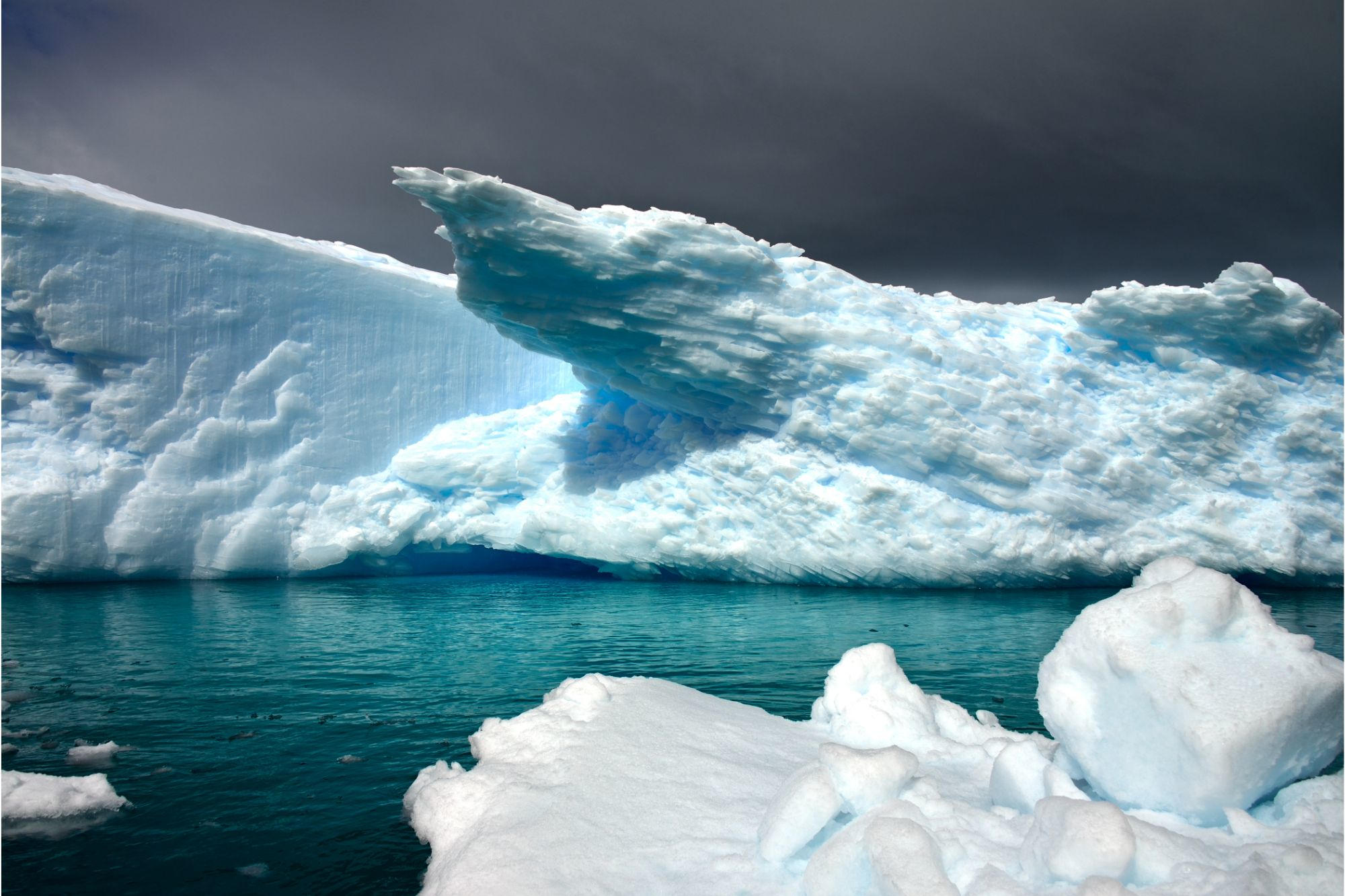
Recent research shows that Andes glaciers are shrinking to sizes unseen since the last ice age due to global warming, possibly forecasting similar future trends for global glaciers.
As they are in many places around the globe, glaciers perched high in the Andes Mountains are shrinking. Now, researchers at the University of Wisconsin–Madison and their collaborators have uncovered evidence that the high-altitude tropical ice fields are likely smaller than they’ve been at any time since the last ice age ended 11,700 years ago.
That would make the tropical Andes the first region in the world known to pass that threshold as a result of the steadily warming global climate. It also makes them possible harbingers of what’s to come for glaciers globally.
“We think these are the canary in the coal mine. The tropics would probably be the first place you’d expect ice to disappear, and that’s what we’re seeing,” says Shaun Marcott, a professor of geoscience at UW–Madison. Marcott guided the research with colleagues at Boston College and Tulane University. Andrew Gorin, a former Boston College graduate student who is now at the University of California, Berkeley, led the study, which was recently published in the journal Science.
Mechanisms of Glacier Formation and Melting
Glaciers grow slowly over time in regions where summer weather isn’t warm enough to melt all of the previous winter’s snowfall. Over time, unmelted snow collects and gets compacted and begins to move under its own weight, resulting in the year-round ice that defines a glacier.
Satellite imagery and on-the-ground observations have provided conclusive evidence for decades that high-altitude glaciers in the Andes are steadily shrinking as warmer temperatures cause them to melt more quickly than falling snow can replenish them.
What has remained unclear, though, is whether the glaciers’ dwindling footprints are anomalously small compared to the rest of the period that began at the end of the last ice age, known as the Holocene. Meanwhile, glaciers in other parts of the world were smaller at some points in the early Holocene, when the global climate was warmer and drier than recent millennia.
“We knew that glaciers ebbed and flowed in the past, so we wanted to learn how the behavior of glaciers today — melting due to human-caused climate change — stacks up against their long-term fluctuations,” says Andy Jones, a UW–Madison doctoral student and study co-author.
Geochemical Analysis of Glacial Retreat
To answer this question, the team of scientists analyzed the geochemistry of bedrock from areas near the edges of four glaciers in the high tropical Andes, choosing sites that satellite imagery showed were exposed by melting ice in only the last two or three decades.
The team specifically looked for evidence of two unique isotopes — basically chemical flavors — of a pair of elements with the bedrock’s quartz crystals: beryllium-10 and carbon-14. These isotopes are only present in rock that has spent time at or near the Earth’s surface as they result from interactions between the rock and cosmic rays, which are high-energy particles that constantly rain down on the planet from outer space.
Bedrock accumulates beryllium-10 and carbon-14 once it’s exposed to the surface, so measuring the isotopes’ concentrations in rock crystals near glaciers can be useful for understanding the previous extent of ice coverage. The team found “remarkably low” concentrations of both isotopes in nearly all samples, suggesting that melting ice has exposed bedrock near the glaciers for the first time only recently in most of the sampled locations.
Additional analyses — and the fact that the extremely low concentrations were consistent across sample sites — made the researchers confident that melting ice, rather than erosion, exposed the bedrock.
“It’s highly unlikely this is from erosion,” says Marcott. “Because the multiple locations we went to all show the same thing.”
This consistency points to a single likely conclusion, according to Marcott: The world’s tropical glaciers, more than 99% of which are located in the Andes, are the first to shrink beyond what’s been seen in the recent geologic past.
“Glaciers are very sensitive to the climate system that they live in,” says Marcott. “They really are the place you would look to see some of the first big changes resulting from a warming climate. You can look to these glaciers and imagine what we might be looking at going into the future in other places like the Western United States, which is a no-ice scenario.”
Reference: “Recent tropical Andean glacier retreat is unprecedented in the Holocene” by Andrew L. Gorin, Jeremy D. Shakun, Andrew G. Jones, Tori M. Kennedy, Shaun A. Marcott, Brent M. Goehring, Lucas K. Zoet, Vincent Jomelli, Gordon R. M. Bromley, Emilio I. Mateo, Bryan G. Mark, Donald T. Rodbell, Adrien Gilbert and Marc W. Caffee, 1 August 2024, Science.
DOI: 10.1126/science.adg7546
This research was supported by the National Science Foundation (EAR-1805620; EAR-1805133; EAR-1805892).
Never miss a breakthrough: Join the SciTechDaily newsletter.
Follow us on Google and Google News.