
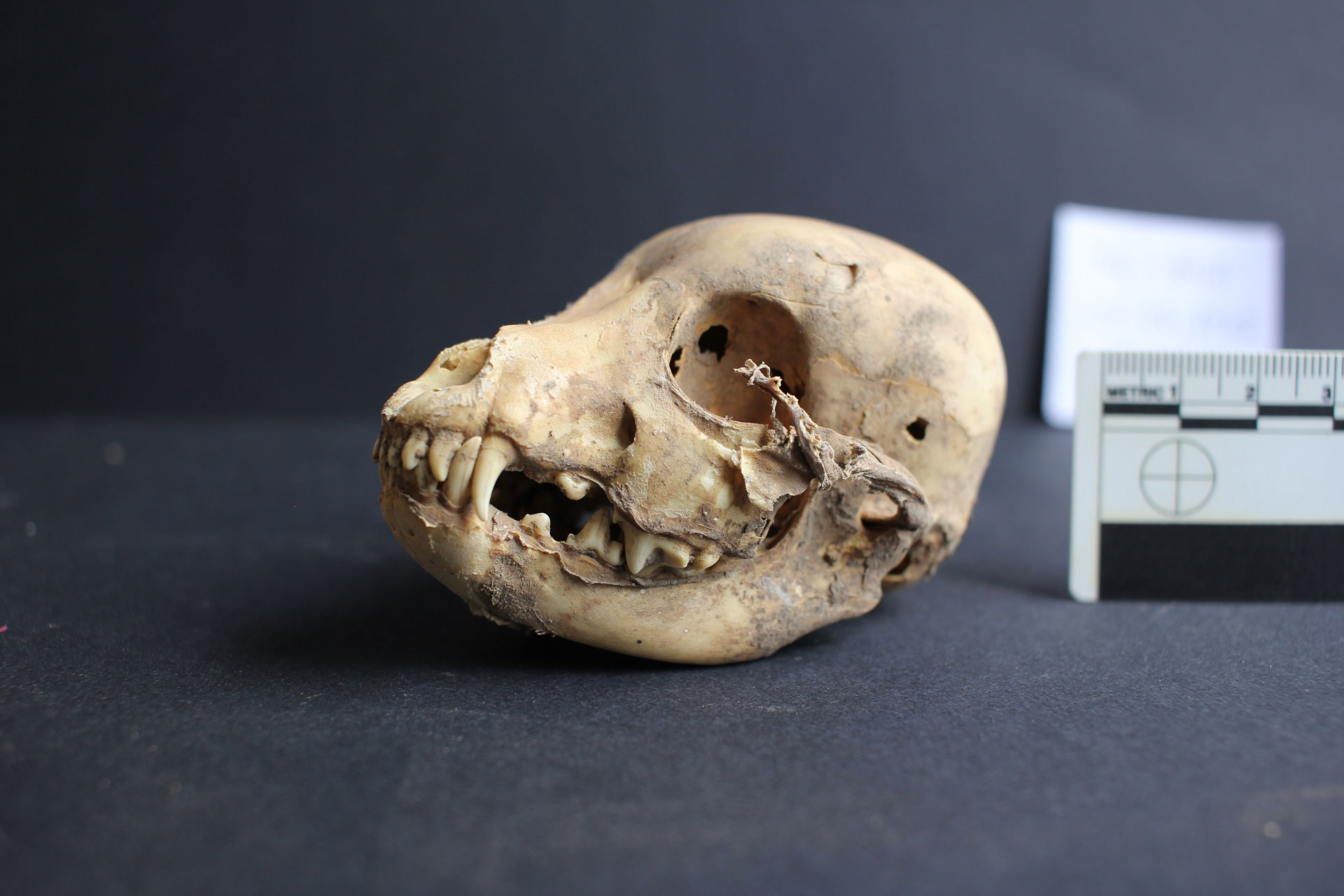
Bone remains and a mummified dog suggest that dogs lived alongside humans.
Long before the Inca rose to power, distinctive hairless dogs were already living alongside people on Peru’s northern coast. These medium-sized Indigenous dogs with pointed ears appear frequently in ancient Andean pottery, and a modern variation is recognized by the American Kennel Club as the Peruvian Inca orchid. Peru declared the dogs part of its cultural heritage in 2000.
Physical remains now provide the first direct evidence of Peruvian hairless dogs at Castillo de Huarmey, the only Wari Empire site identified to date on the northern Peruvian coast. The findings are reported in the Journal of Anthropological Archaeology.
Located roughly 190 miles north of Lima, Castillo de Huarmey covers about 110 acres and served as a Wari administrative and funerary complex between 600 and 1050 CE, approximately 400 years before the rise of the Inca.
The site has produced several major archaeological discoveries. In 2012, researchers uncovered the first undisturbed elite tomb, containing 58 high-status females, 1,300 artifacts, and six human sacrifices. In 2022, burials of elite craftspeople were also found with gold, silver, and bronze tools, providing additional evidence about how the Wari administered their provinces.
“Our findings indicate that humans and dogs coexisted at this Wari site, but reconstructing their bond is challenging, as past emotions are difficult to capture through archaeological methods,” says first author, Weronika Tomczyk, a research associate in the Department of Anthropology and postdoctoral fellow in the Ecology, Evolution, Environment and Society Program at Dartmouth. “The goal of our study was to not only present data on Castillo de Huarmey’s dog burials, but also emphasize that people in the past had often contradictory relationships with the animals, just as they do today: a pet for one group of people could at the same time be considered a pest by their closest neighbors.”
Desert conditions preserved rare canine remains
Castillo de Huarmey lies near one of the driest, hyperarid deserts on the Pacific coast. Those conditions helped preserve fragile organic materials and artifacts including hair, bone, decorated pottery, pigment, clothing, and leather.
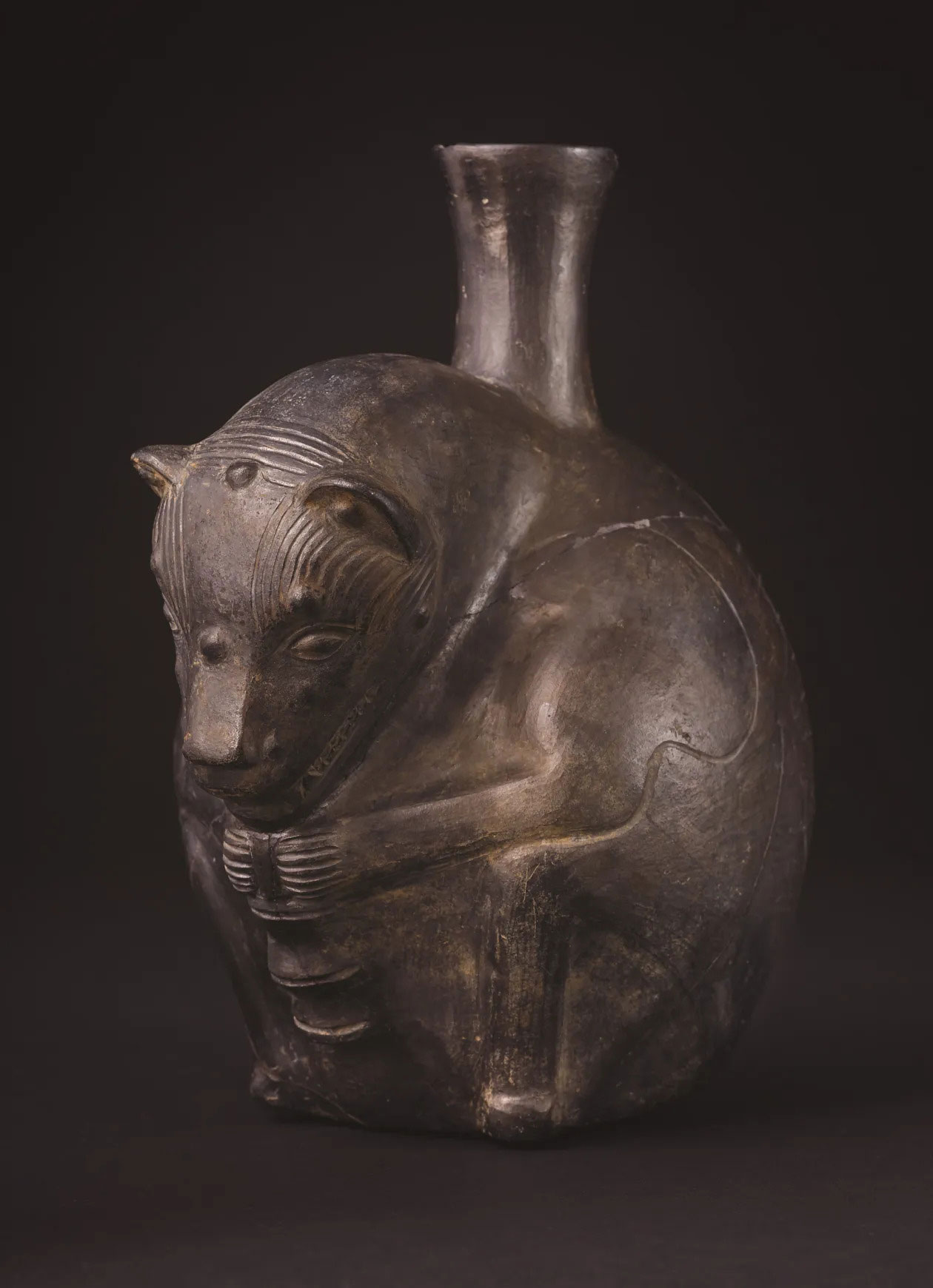
Among the finds was a ceramic vessel shaped like a seated, humanlike Peruvian hairless dog holding an object that resembles an instrument.
Between 2010 and 2025, archaeologists also recovered remains from numerous South American camelids, most likely domesticated llamas and alpacas that may have been used as funerary offerings or discarded as refuse. Dog bones were found as well.
Interpreting those remains is complicated by the site’s history. A 1970 earthquake caused one side of Castillo de Huarmey to collapse, exposing burial chambers filled with pottery and other artifacts and contributing to extensive looting. Deeper layers that were never looted preserved their Wari context, but the upper deposits containing most of the animal remains became intermixed.

Teeth helped identify hairless dogs
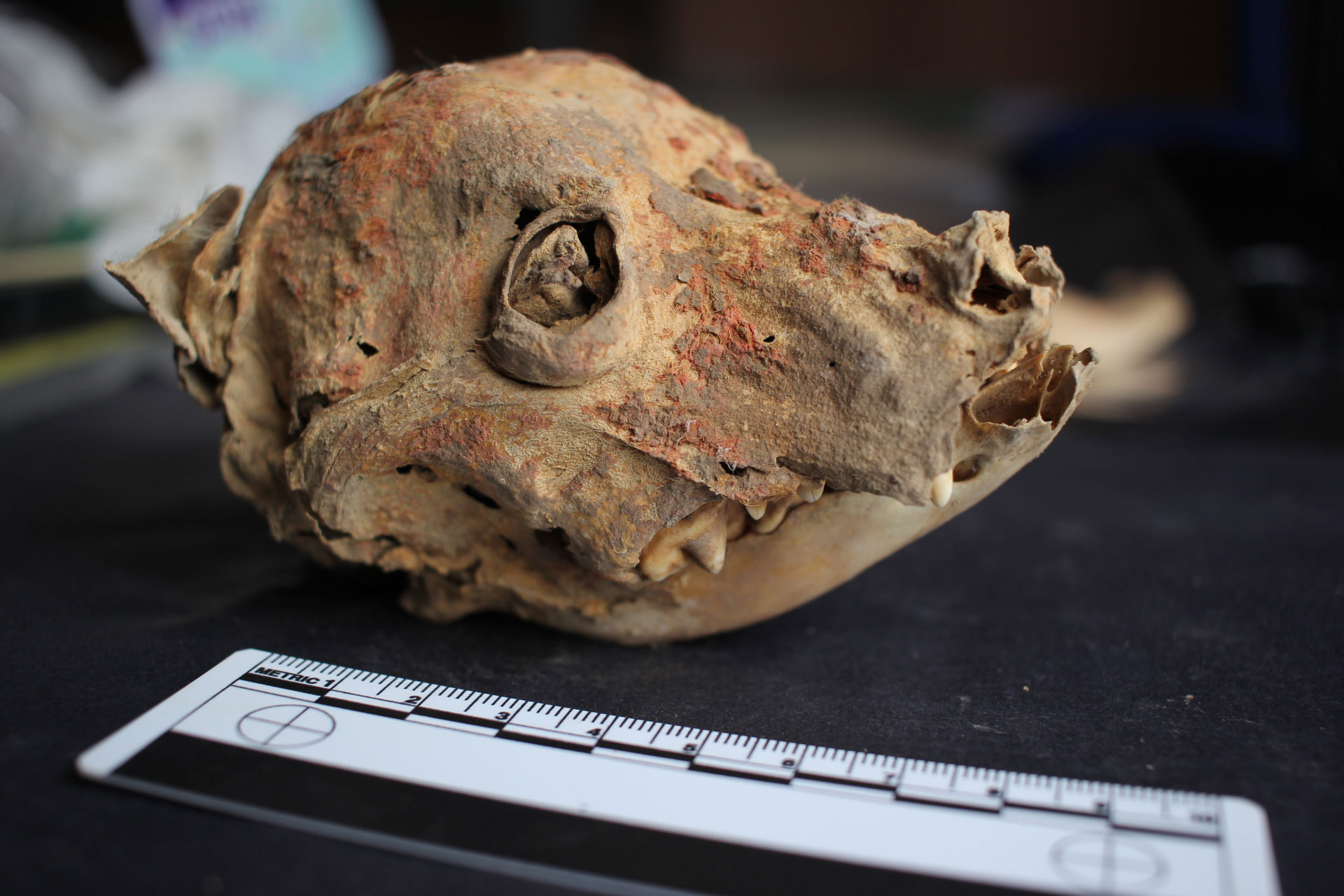
Three sets of canine remains found in the northern part of the main ceremonial area stood out. One was a naturally mummified skull with hairless skin still visible and its ears attached, coated with cinnabar, a pigment commonly used to decorate the dead in ancient Peru.
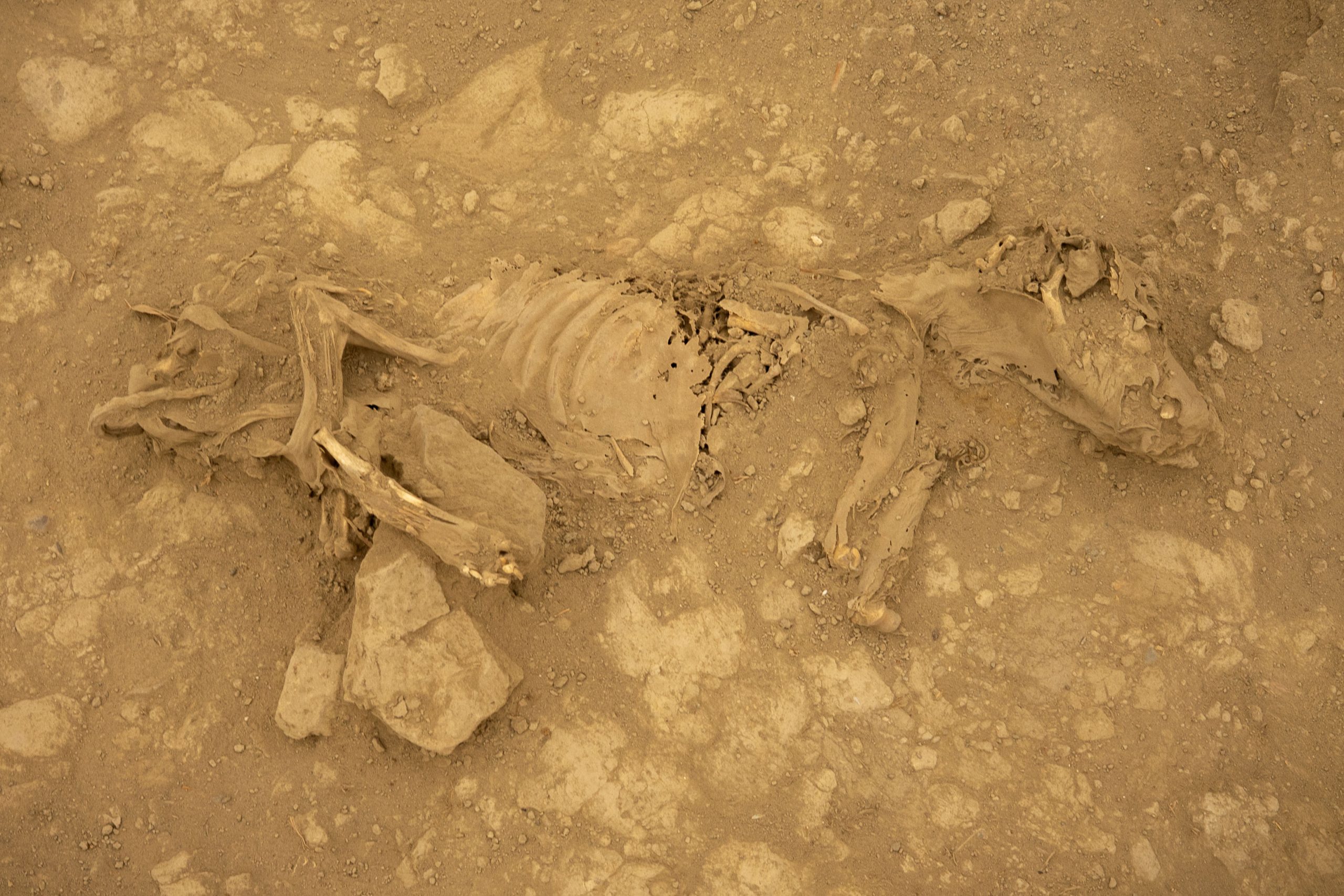
Archaeologists also recovered a larger dog skull and the naturally mummified skeleton of a male dog from a shallow pit, missing only its lower front limbs. At first, the researchers suspected the animal might have been buried during looting about 50 years ago. Tomczyk noticed something different: the dog was hairless, and all three individuals lacked their first premolars.
“What I noticed is that some of the dog skeletons were missing teeth, and not that they lost them during their lifespan; some teeth, especially first premolars and sometimes last molars, had just never erupted,” said Tomczyk. “And then I found in the literature that the same gene which is responsible for hairlessness in dogs is responsible for a reduced number of teeth, indicating that these were Peruvian hairless dogs.”
Dog remains reveal varied human relationships
The researchers estimated the dogs’ ages using standard zooarchaeological techniques and analyzed isotopes in their bones and teeth. Carbon, nitrogen, oxygen, and strontium isotopes can preserve clues about what an animal ate and drank and where it lived.
Strontium, in particular, reflects local geological signatures incorporated into tissues as they form, allowing researchers to investigate origins and possible movements. The dog results were then compared with human and camelid data from Castillo de Huarmey.
“Isotopic analyses of a dog’s tooth give a signal of its life as a puppy because dog teeth erupt so fast, and the bone gives a signal of more or less the last year of its life,” said Tomczyk. “Such sampling strategy aimed to provide signals from distinct stages of a dog’s life.”
Altogether, the researchers recovered 341 dog bone specimens representing at least 19 individuals, along with the complete mummified male dog. Among them were bones from a 6- to 8-week-old puppy buried with an elite craftsman nicknamed the “Master Basketmaker,” an adult dog buried in the palace, and part of a puppy skeleton buried with a male guardian recorded as XY, who was likely sacrificed to guard a tomb.
Most of the dogs were adults when they were buried. Some appear to have been deliberately interred, while other remains were discarded as refuse. Only a small number showed butchery marks, suggesting dogs were not widely eaten at the site.
Radiocarbon dating showed that the mummified dog is at least 1,200 years old. It produced the oldest radiocarbon date yet obtained from Castillo de Huarmey, with important implications for the site’s chronology.
Isotope measurements also showed that most of the dogs ate some maize, a staple food in the Pre-Hispanic Andes, giving them diets that overlapped with those of humans. Dogs suspected of being hairless had diets more similar to those of children when they were puppies, while their diets became more varied in adulthood.
“We do not know if the dogs were intentionally fed maize or if perhaps, they were just eating leftovers or trash,” said Tomczyk. “Yet, the distinct dietary patterns of hairless puppies provide insights into what may have been organized breeding.”
“While we will never know if any of the three dogs were pets or how people treated them, it is evident they received different treatment than other dogs,” said Tomczyk.
Reference: “The many lives of companion species: a zooarchaeological and isotopic research on Wari dog remains from Castillo de Huarmey, Peru” by Weronika Tomczyk, Miłosz Giersz, Wiesław Więckowski, Roberto Pimentel Nita and Claire E. Ebert, 31 March 2026, Journal of Anthropological Archaeology.
DOI: 10.1016/j.jaa.2026.101767
This work was supported by the Wenner-Gren Foundation Dissertation Fieldwork Grant (no. 10035), Rust Family Foundation Archaeology Program Grant (no. RFF-2020-138), and internal funding from Stanford’s Department of Anthropology and Archaeology Center.
Never miss a breakthrough: Join the SciTechDaily newsletter.
Follow us on Google and Google News.
1 Comment
What a badly written title for the article. It makes it sound like they found a living dog that is 1200 years old. Come on, do better. Put a bit more effort into choosing the proper words. All they had to do was add “remains of” to the title for it to be clear and accurate. It should have read: “Archeologists Discover 1200-Year-Old Remains of Hairless Dog at…”.