
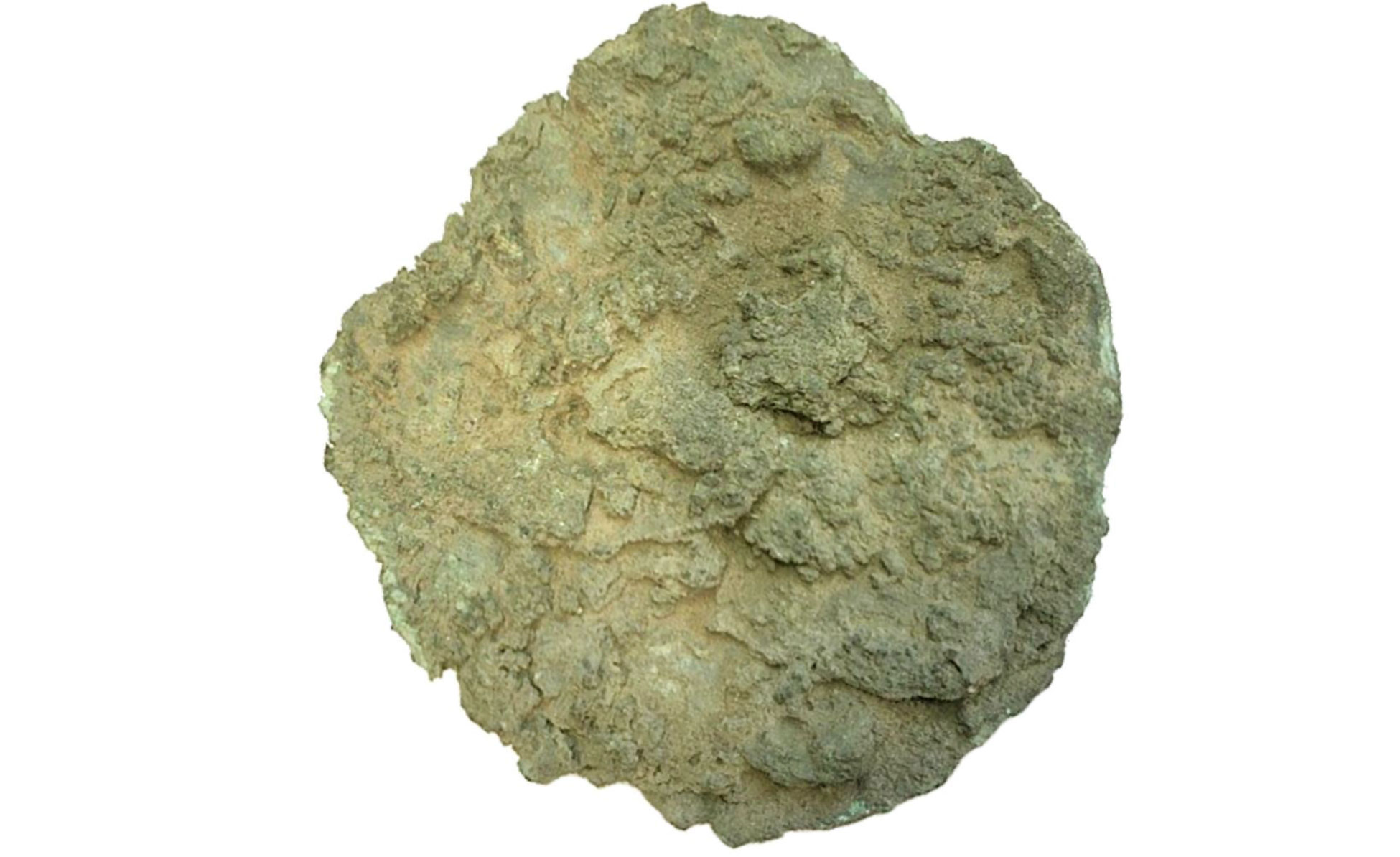
A Swedish ingot once believed to be from the Bronze Age has revealed, through cutting-edge analysis and international collaboration, new clues about Iron Age metal networks in the Baltic region.
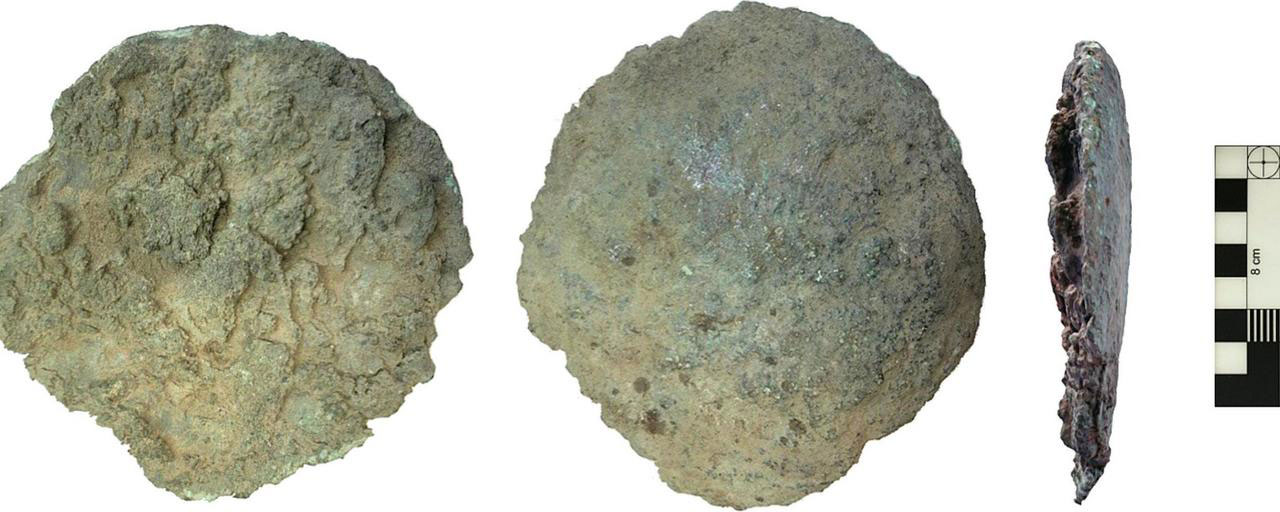
Archaeologists in Sweden have uncovered a complete plano-convex ingot, marking the first discovery of its kind in the country. When researchers at the University of Gothenburg conducted isotopic and chemical tests on the object, the results took them by surprise.
“Due, in particular, to its shape and size, it seemed to us a Bronze Age artifact, but the ingot turned out to be made of a copper-zinc-tin-lead alloy, typical of the Iron Age and later periods,” says Serena Sabatini.
Plano-convex ingots are typically made of copper, though examples crafted from bronze or other copper-based alloys also exist. They are commonly found throughout the Mediterranean, continental Europe, and along the Atlantic coast, where they served as a practical form for transporting metal during both the Bronze and Iron Ages.
At first, the research team believed the Särdal ingot dated back to the Bronze Age. Because it was discovered in isolation, without accompanying artifacts to provide context, the archaeologists decided to conduct a detailed series of isotopic and chemical analyses to determine its exact composition and estimate its age.
Unexpected Analytical Results
The findings revealed something unexpected: the ingot was composed of a copper-zinc-tin-lead alloy, a metal blend more characteristic of the Iron Age and later historical periods.
“Thanks to the collaborative climate of the archaeometallurgy research world- we teamed up with a group of Polish scholars, who were working with some Iron Age finds which have the almost exact composition of our ingot,” says Serena Sabatini.
The results show that unique, isolated finds, which are traditionally considered very difficult to interpret, can be given historical context and contribute to our understanding of the past when carefully analyzed through an interdisciplinary approach that includes both archaeological and natural science methods.
“Networking and international collaboration are also important to unveil patterns and data that would remain unknown when one looks exclusively at the local context. This work clearly shows the importance of teamwork and data sharing. Without the successful collaboration with our Polish colleagues, we would have never achieved such remarkable results!” says Serena Sabatini.
Methods in Archaeometallurgy
The study uses well-established analytical methods in archaeometallurgy (which is the branch of archaeology specialized in the study of ancient metals), such as lead isotope and trace element analyses of metal finds. Such methods have been used since the 1980s to investigate the composition and the origin of the metal (in the sense that they enable pointing out the mineral region from which the metal was extracted).
“What is new in this study is that we went a step further, and by combining the obtained data with known historical and archaeological information, we managed to propose a historical context, for both the unique Särdal plano-convex ingot and the rod ingots from the Iława Lakeland area in northeastern Poland. Given the astonishing similarity of the metal composition in all those artifacts, we also manage to strengthen earlier hypotheses about contacts and networking in the Baltic area during the Nordic pre-Roman Iron Age,” says Serena Sabatini.
Never miss a breakthrough: Join the SciTechDaily newsletter.
Follow us on Google and Google News.