

New Screening Test for Those at Risk of Sudden Cardiac Arrest
Many people think that cardiac arrest and heart attack are the same things, but they are actually distinct conditions. In sudden cardiac arrest, the heart abruptly malfunctions and stops beating unexpectedly, while a heart attack occurs when blood flow to the heart is blocked.
Both are serious conditions, but 70%-90% of sudden cardiac arrest victims die before reaching the hospital. According to the CDC, cardiac arrest is a public health issue with widespread incidence and severe impact on human health and well-being. Approximately 357,000 people experienced out-of-hospital cardiac arrest (OHCA) in the United States in 2015.
Now, new research from the Victor Chang Cardiac Research Institute could allow families around the world to discover if they are carrying genetic mutations that cause sudden cardiac arrest – a serious condition that kills 9 out of 10 victims.
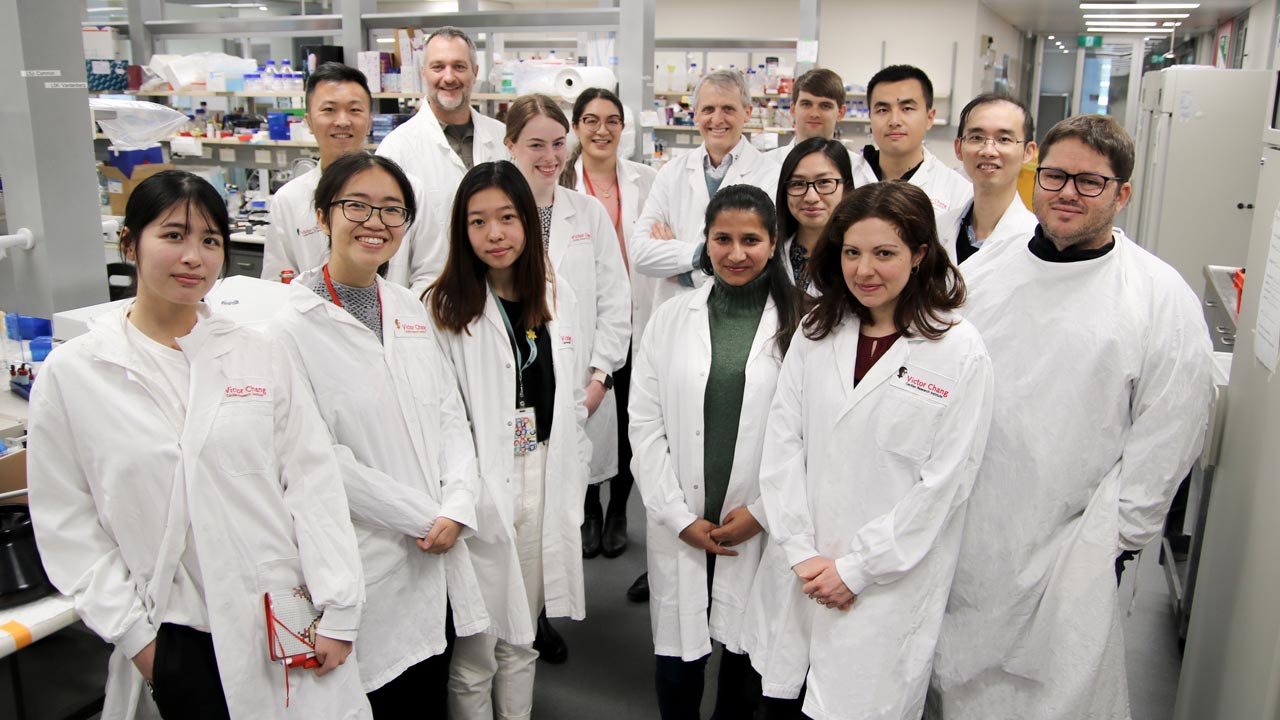
Researchers at the Institute have developed a new electrical test that can screen hundreds of gene mutations to pinpoint the exact mutations that are harmful to the heart for those suffering from inherited heart disorders syndromes, which can cause sudden death.
The breakthrough is a giant step forward in the accuracy and precision of genetic testing that has profound implications for not only inherited heart disorders but a wide range of neurological conditions, and muscle and kidney diseases.
Professor Jamie Vandenberg, who led the research published in two back-to-back papers in the American Journal of Human Genetics, says: “It’s primarily young people with otherwise healthy hearts that die from these inherited heart disorders and even though that number is small, the consequences are long-lasting.
“When a person dies young, in the prime of their life, it’s a lot more than just the death of one individual. The impact is felt on the family and their friends and that lasts forever.”
Fellow author Dr. Chai-Ann Ng, of the Victor Chang Cardiac Research Institute, says that being able to identify these dangerous mutations will prevent people from dying from sudden cardiac arrest and ensure more people are treated for this life-threatening disorder.

“If you can isolate the mutation and identify those at risk, there are lifestyle changes people can make, as well as taking beta-blockers or even using a defibrillator. Family members can also get themselves tested too,” says Dr. Ng.
“Genetic sequencing has revealed that all of us contain a vast array of genetic variants, but we have not always been able to pinpoint if these variants are dangerous or not, only that they are different.
“So when genes are currently tested, the clinical genetics lab may tell the patient, There’s a variant, but we don’t know whether it raises your risk of cardiac arrest. That creates a huge amount of anxiety not just for the patient but also for the rest of the family who may also have inherited the mutation. We can now remove that uncertainty which is a big development.”
Key Stats
- Inherited arrhythmia disorders are found in more than half of all initially unexplained cases of sudden cardiac death in young people.
- Around 20,000 Australians suffer a cardiac arrest outside a hospital every year. Only 10% of people will survive an out-of-hospital cardiac arrest.
Professor Vandenberg’s team investigated variants in genes that encode ion channels, which are proteins that control the movement of electrical signals between cells. The majority of genetic disorders that lead to an increased risk of sudden cardiac arrest are caused by these mutations.
Key Findings
- In the first study, they developed a fast and accurate electrical test that assesses variants in an ion channel gene that causes an inherited heart arrhythmia condition called Long QT syndrome type 2. They’re now classifying all known variants in this gene to determine which are benign and which are dangerous and will be uploading the findings to a giant genetic database that will be accessible to clinicians the world over.
- The test they have developed can easily be adapted to test other ion channel genes – not just ones associated with sudden cardiac arrest but a wide range of other diseases spanning neurological, kidney, and muscle disorders.
- In the second paper, Professor Vandenberg and his team collaborated with Dr Kroncke at Vanderbilt University Medical Centre to develop a new method based on high throughput genome sequencing technology. This will enable them to assess the impact of every possible missense variant in KCNH2, which amounts to approximately 22,000 variants, within one to two years.
Impact
Professor Vandenberg says: “We hope that within five years, as soon as anyone gets their gene testing done, or their genomes sequenced, they will immediately find out if their variant is dangerous.
“It’s incredible to think we will be able to screen family members not just across Australia but anywhere in the world and give them a diagnosis. Ultimately, this genetic database will reduce the number of cardiac arrests and deaths caused by genetic disorders.
“In the short term, it’s cardiology patients who are at risk of sudden death that will benefit most. But in the longer term, the research can be adapted to assess any of the approximate 400 different ion channel genes in the human genome which are associated with a wide range of neural disorders, muscle and kidney problems.”
References:
“A calibrated functional patch-clamp assay to enhance clinical variant interpretation in KCNH2-related long QT syndrome” by Connie Jiang, Ebony Richardson, Jessica Farr, Adam P. Hill, Rizwan Ullah, Brett M. Kroncke, Steven M. Harrison, Kate L. Thomson, Jodie Ingles, Jamie I. Vandenberg and Chai-Ann Ng, 9 June 2022, American Journal of Human Genetics.
DOI: 10.1016/j.ajhg.2022.05.002
“A massively parallel assay accurately discriminates between functionally normal and abnormal variants in a hotspot domain of KCNH2” by Chai-Ann Ng, Rizwan Ullah, Jessica Farr, Adam P. Hill, Krystian A. Kozek, Loren R. Vanags, Devyn W. Mitchell, Brett M. Kroncke and Jamie I. Vandenberg, 9 June 2022, American Journal of Human Genetics.
DOI: 10.1016/j.ajhg.2022.05.003
Never miss a breakthrough: Join the SciTechDaily newsletter.
Follow us on Google and Google News.