
Close Menu
    Facebook X (Twitter) Instagram
    SciTechDaily
    • Biology
    • Chemistry
    • Earth
    • Health
    • Physics
    • Science
    • Space
    • Technology
    Facebook X (Twitter) Pinterest YouTube RSS
    SciTechDaily
    Home»Space»Ariane 6’s Hot Fire Rocket Engine Test: Blazing the Trail for Space
    Space

    Ariane 6’s Hot Fire Rocket Engine Test: Blazing the Trail for Space

    By European Space Agency (ESA)November 26, 2023No Comments4 Mins Read
    Facebook Twitter Pinterest Telegram LinkedIn WhatsApp Email Reddit
    Share
    Facebook Twitter LinkedIn Pinterest Telegram Email Reddit
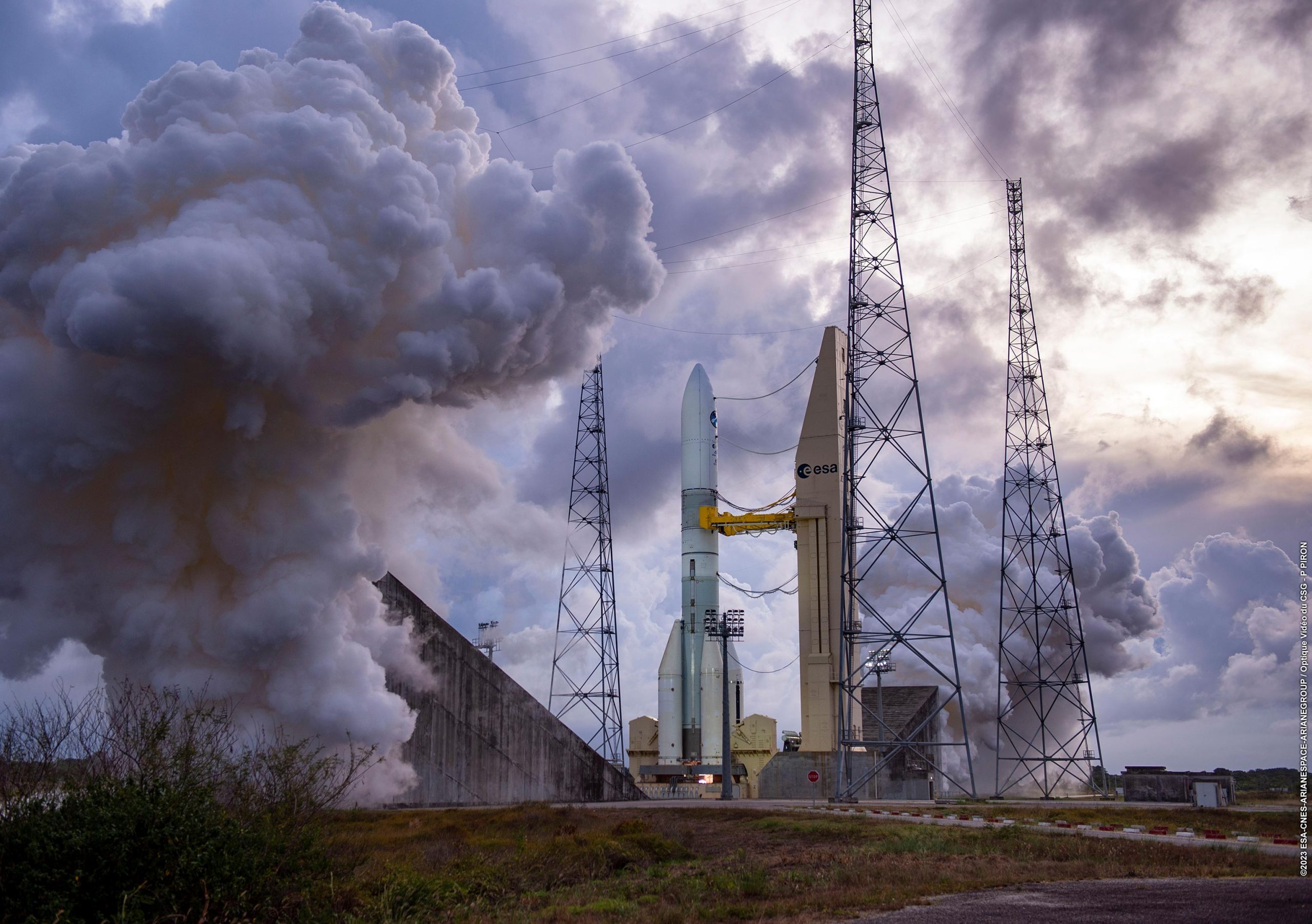
    Ariane 6 Plumes During Combined Hot Fire Test
    On the launch pad in Kourou, French Guiana, this Ariane 6 test model was put through a combined test hot-fire (CTHF) before launch – over seven-minutes ‘hot firing’ of its Vulcain 2.1 main stage. This engine, on a real flight, would work with the boosters to propel the 62-m-tall rocket off Earth and into space. Credit: ESA – CNES – Arianespace – ArianeGroup / Optique Vidéo du CSG – P. PIRON

    ESA’s new Ariane 6 rocket passed a major full-scale rehearsal on November 23 in preparation for its first flight, when teams on the ground went through a complete launch countdown followed by a seven-minute full firing of the core stage’s engine, as it would fire on a launch into space.

    For this rehearsal, the boosters were not ignited so Ariane 6 stayed firmly on the launch pad at Europe’s Spaceport in French Guiana, as planned.

    The engine-fire trial reenacts how the Ariane 6 core stage will fire during a normal flight into space. Once complete the main engine would shut down and the core stage would separate from the upper stage, which would then take over propulsion and complete its mission.
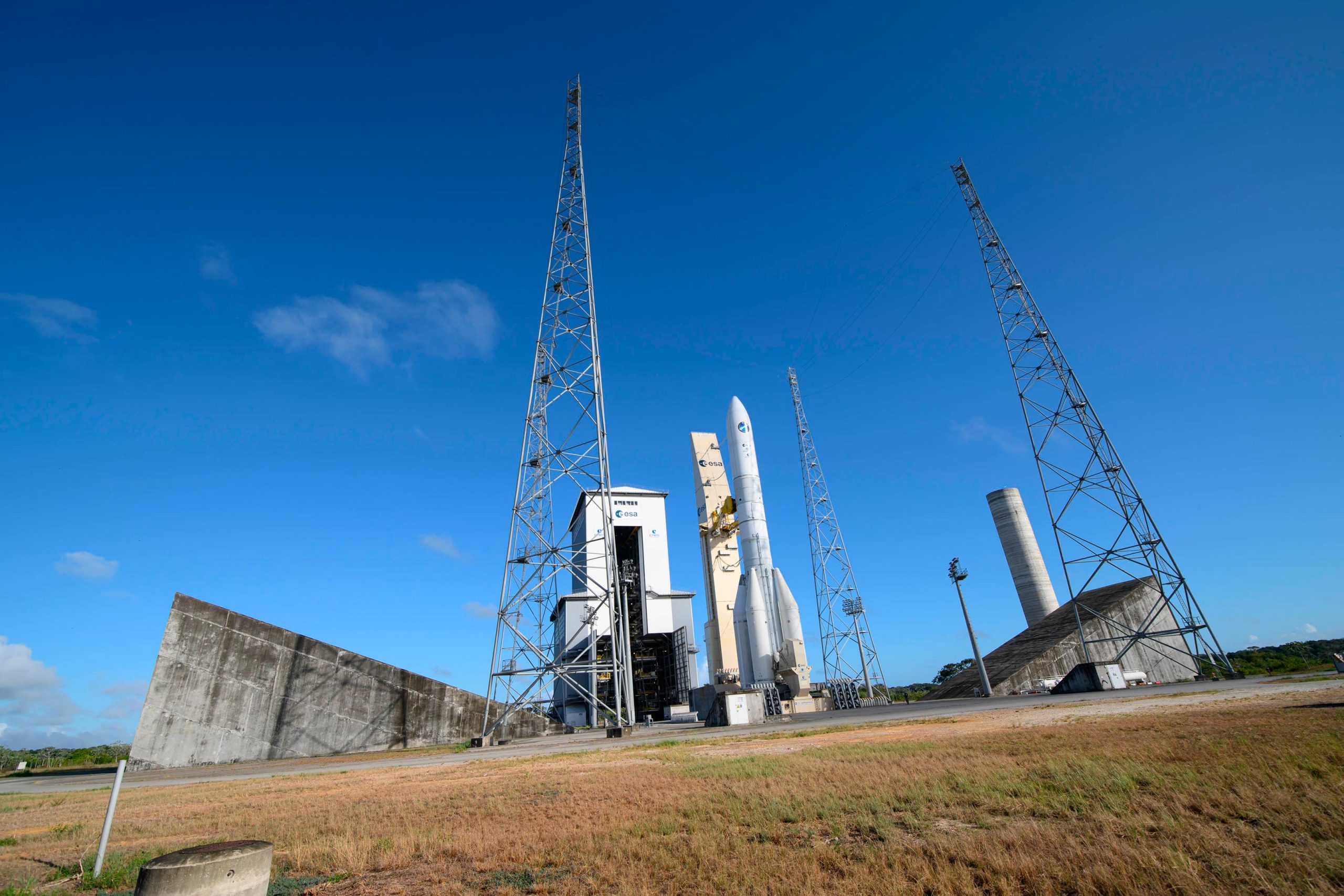
    Ariane 6 Before Core Stage Full Fire Test
    For the combined test hot-fire test on November 23, the rocket stayed firmly on the ground, but its upgraded engine burnt through 150,000 kg of supercooled liquid oxygen and hydrogen fuel for the duration of a real flight. Not only was the core stage being tested, but all aspects of the launch pad and operations, too, from the delicate procedure of fuelling both the main engine and the orbital stage stacked above it to testing the thermal effects of a launch on mechanical and electrical components. Credit: ESA

    Longest ‘Full-Stack’ Run

    The trial, conducted with a test model on the launch pad at Europe’s Spaceport in French Guiana, was the longest ‘full-stack’ run yet for Ariane 6’s lower liquid propulsion module with a Vulcain 2.1 engine.

    “The teams from ArianeGroup, CNES, and ESA have now run through every step of the rocket’s flight without it leaving Earth,” says ESA’s Director General Josef Aschbacher.

    “This milestone rehearsal comes after years of designing, planning, preparing, building, and hard work from some of the finest space engineers in Europe. We are back on track towards resecuring Europe’s autonomous access to space. Well done to all involved!”
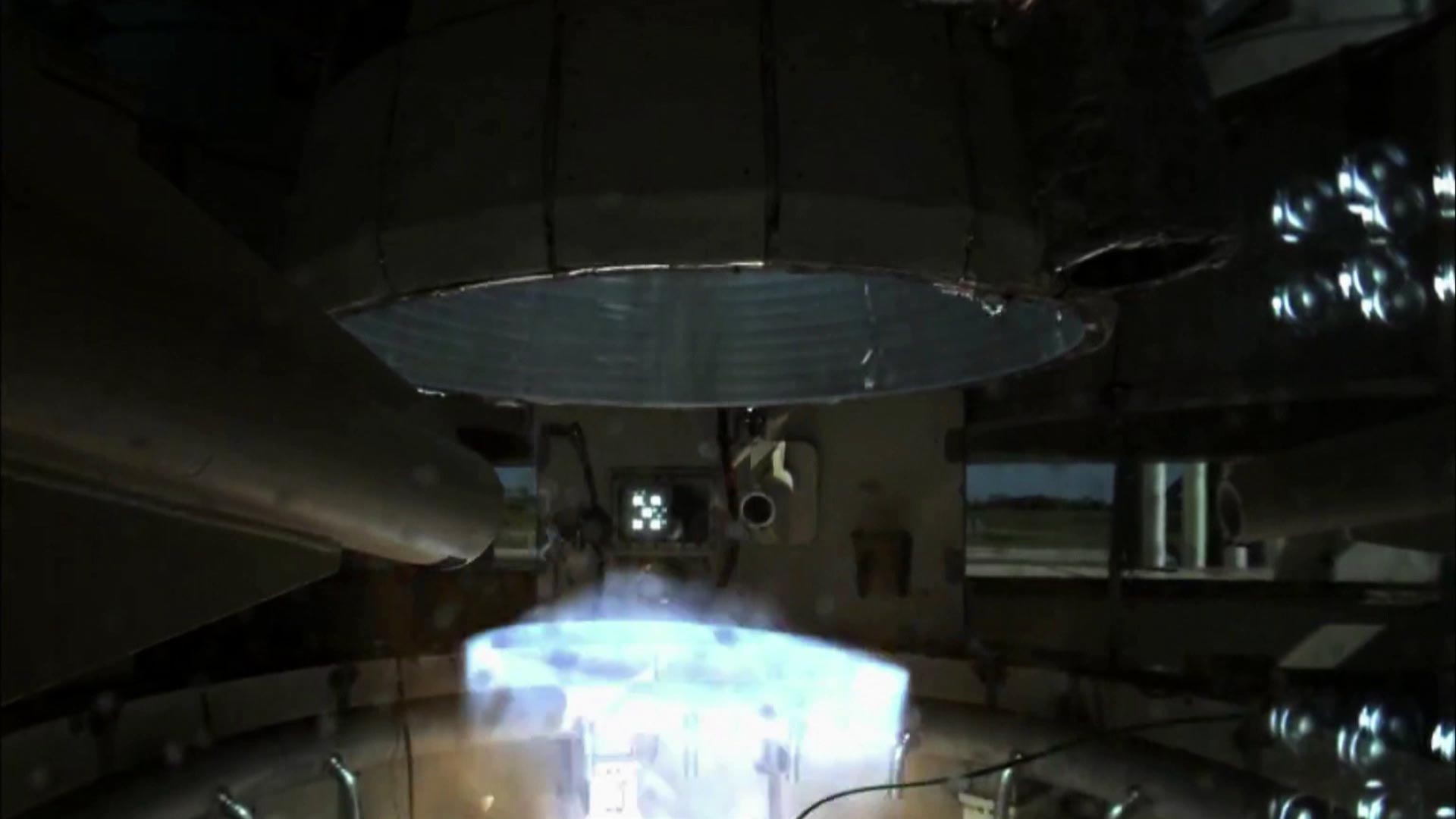
    Vulcain 2.1 Firing
    Vulcain 2.1 firing. Credit: ESA/ArianeGroup/CNES – Optique vidéo du CSG

    Vulcain 2.1 Engine

    The Vulcain 2.1 engine burnt through almost 150 tonnes of propellant in the Ariane 6 core stage tanks – liquid oxygen and liquid hydrogen, the latter supercooled to temperatures below -250°C. Vulcain 2.1 is an evolution of the Vulcain 2 engine which made Ariane 5 Europe’s most successful launch system to date. The upgrade has a simplified and cheaper design, and new technology in the engine nozzle and ignition system has been moved from the engine to the launch pad structure, to make the stage perform better and cost less.
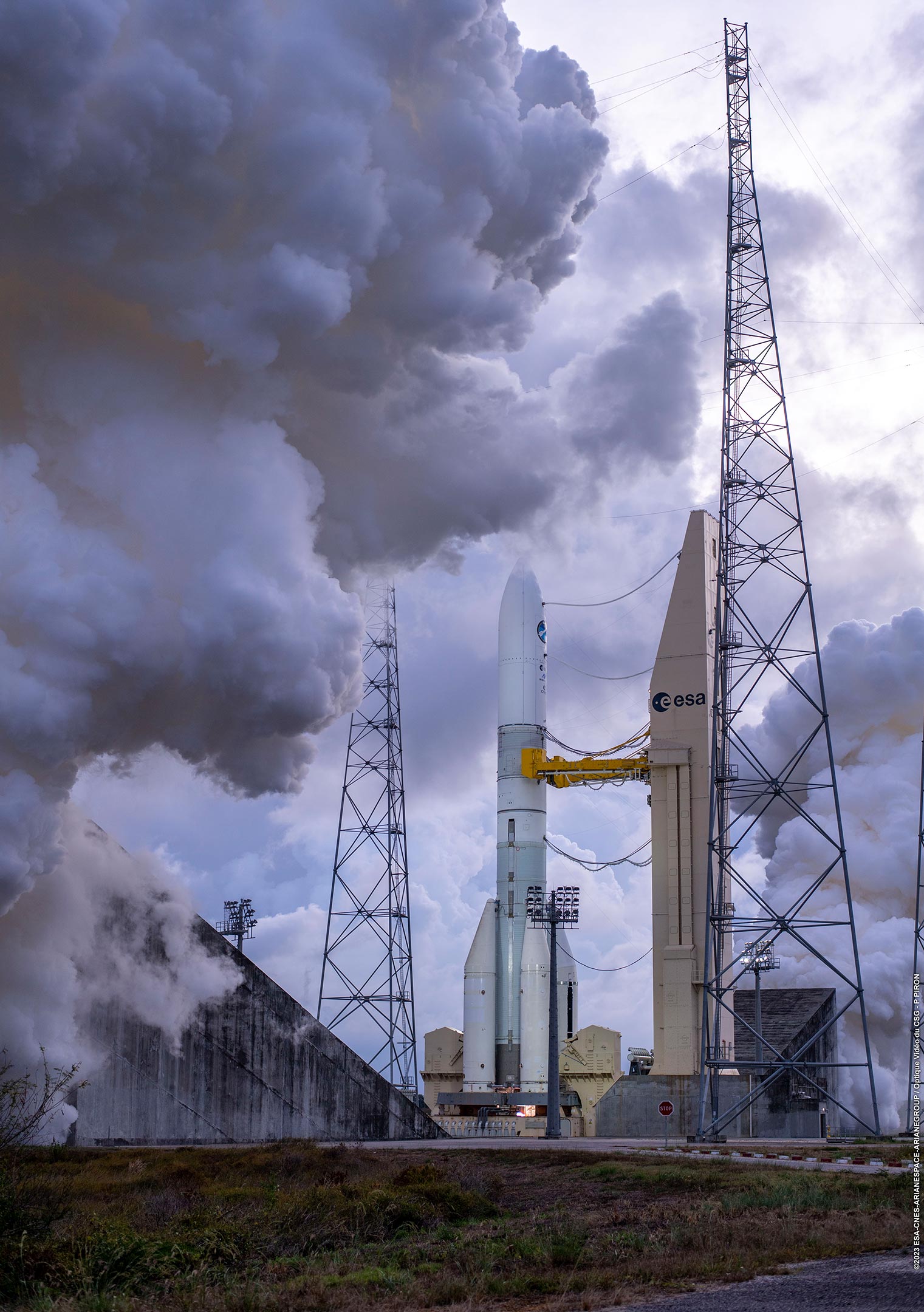
    Ariane 6 During Combined Hot Fire Test
    Ariane 6 plumes during combined hot fire test. Credit: ESA – CNES – Arianespace – ArianeGroup / Optique Vidéo du CSG – P. PIRON

    Launch Pad Operations

    It took just over two hours and required teams of people and delicate operations to load the rocket’s central core with fuel. The filling operations were performed during a long countdown that included other qualification tests, similar to the previous rehearsals this year. For fidelity and to guarantee launcher stability, the upper stage tanks were also fueled – even though the upper stage engine only kicks in once in orbit after separation from the main stage and so was not fired during this ground test.

    The launch pad – operated by France’s space agency CNES – used its water deluge system to temper the heat from the engine.

    ESA’s Director of Space Transportation, Toni Tolker-Nielsen, added his vote of confidence in the teams across Europe working to bring Ariane 6 to service: “A huge thanks to all of our dedicated colleagues who are committed and working tirelessly to see this rocket fly.”

    The test followed a shorter burn in September (known as CTLO1) when Ariane 6’s tanks were filled and its Vulcain 2.1 engine briefly ignited and switched off, and the filling and draining test executed in October (known as CTLO2.1) to check the launch system functions such as draining fuel in the presence of multiple simulated failures.

    A last hot-fire test of the upper stage is being prepared and planned for December 2023 at the German Aerospace Center, DLR, Lampoldshausen test center.

    Never miss a breakthrough: Join the SciTechDaily newsletter.
    Follow us on Google and Google News.

    European Space Agency Rocket
    Share. Facebook Twitter Pinterest LinkedIn Email Reddit

    Related Articles

    Prometheus Full Ignition: Progress for Ultra-Low Cost Reusable Rocket Engine

    Igniting Ariane 6: Europe’s Spaceport Tests the Next Big Thing in Rockets

    Next-Generation Heavy-Lift Launcher: Trial by Fire for Ariane 6 Rocket’s Upper Stage

    Prometheus Ignites: Future of Space Travel With Reusable Rockets

    Blasting Off to Jupiter’s Moons: Ariane 5 Sends JUICE on a Chilling Expedition

    Standing Tall: Massive Moon Rocket Milestone for Artemis

    Webb Space Telescope’s Ariane 5 Rocket Core Stage Ready

    Rocket Tanks Made of Lightweight Carbon Fiber Proven Possible

    ESA’s Vega Rocket Has Launched on Its Maiden Voyage, Carries 9 Satellites

    Leave A Reply Cancel Reply

    • Facebook
    • Twitter
    • Pinterest
    • YouTube

    Don't Miss a Discovery

    Subscribe for the Latest in Science & Tech!

    Trending News

    Mezcal “Worm” in a Bottle Mystery: DNA Testing Reveals a Surprise

    New Research Reveals That Your Morning Coffee Activates an Ancient Longevity Switch

    This Is What Makes You Irresistible to Mosquitoes

    Shockingly Powerful Giant Octopuses Ruled the Seas 100 Million Years Ago

    Scientists Stunned by New Organic Molecules Found on Mars

    Rewriting Dinosaur Evolution: Scientists Unearth Remarkable 150-Million-Year-Old Stegosaur Skull

    Omega-3 Supplements Linked to Cognitive Decline in Surprising New Study

    First-of-Its-Kind Discovery: Homer’s Iliad Found Embedded in a 1,600-Year-Old Egyptian Mummy

    Follow SciTechDaily
    • Facebook
    • Twitter
    • YouTube
    • Pinterest
    • Newsletter
    • RSS
    SciTech News
    • Biology News
    • Chemistry News
    • Earth News
    • Health News
    • Physics News
    • Science News
    • Space News
    • Technology News
    Recent Posts
    • Doing This After 9 p.m. Could Double Your Risk of Gut Issues
    • New Research Challenges Long-Held Beliefs About How the Brain Makes Decisions
    • Breakthrough Technology Reveals New Treatment Targets for Cancer
    • Scientists Discover New Way To Make Drug-Resistant Cancer Treatable Again
    • This Simple Exercise Trick Builds Muscle With Less Effort, Study Finds
    Copyright © 1998 - 2026 SciTechDaily. All Rights Reserved.
    • Science News
    • About
    • Contact
    • Editorial Board
    • Privacy Policy
    • Terms of Use

    Type above and press Enter to search. Press Esc to cancel.