

Close Menu
    Facebook X (Twitter) Instagram
    SciTechDaily
    • Biology
    • Chemistry
    • Earth
    • Health
    • Physics
    • Science
    • Space
    • Technology
    Facebook X (Twitter) Pinterest YouTube RSS
    SciTechDaily
    Home»Physics»Aristotle’s Icebreaker: How Quantum Systems Defy Freezing Logic
    Physics

    Aristotle’s Icebreaker: How Quantum Systems Defy Freezing Logic

    By Kyoto UniversitySeptember 7, 20232 Comments3 Mins Read
    Facebook Twitter Pinterest Telegram LinkedIn WhatsApp Email Reddit
    Share
    Facebook Twitter LinkedIn Pinterest Telegram Email Reddit
    Thermal Quantum Physics Concept
    Researchers investigated the Mpemba effect in quantum systems, a phenomenon where hotter water can freeze faster than cooler water. This quantum Mpemba effect retains memory of its initial conditions, affecting its thermal relaxation later. The team used two systems with quantum dots and discovered the thermal quantum Mpemba effect across various conditions, suggesting possible broader applications beyond thermal analysis.

    Hotter Quantum Systems Can Cool Faster Than Initially Colder Equivalents

    Does hot water freeze faster than cold water? Aristotle may have been the first to tackle this question that later became known as the Mpemba effect.

    This phenomenon originally referred to the non-monotonic initial temperature dependence of the freezing start time, but it has been observed in various systems — including colloids — and has also become known as a mysterious relaxation phenomenon that depends on initial conditions.

    However, very few have previously investigated the effect in quantum systems.

    What Is the Mpemba Effect?

    The Mpemba effect is a counterintuitive phenomenon where hot water can freeze faster than cold water under certain conditions. Named after Erasto Mpemba, a Tanzanian student who observed this effect in the 1960s and subsequently brought it to the attention of the scientific community, the phenomenon has been a topic of curiosity for centuries, with references dating back to the likes of Aristotle. The exact cause of the Mpemba effect is still a topic of debate among scientists.

    Recent Findings

    Now, a team of researchers from Kyoto University and the Tokyo University of Agriculture and Technology has shown that the temperature quantum Mpemba effect can be realized over a wide range of initial conditions.

    “The quantum Mpemba effect bears the memory of initial conditions that result in anomalous thermal relaxation at later times,” explains project leader and co-author Hisao Hayakawa at KyotoU’s Yukawa Institute for Theoretical Physics.
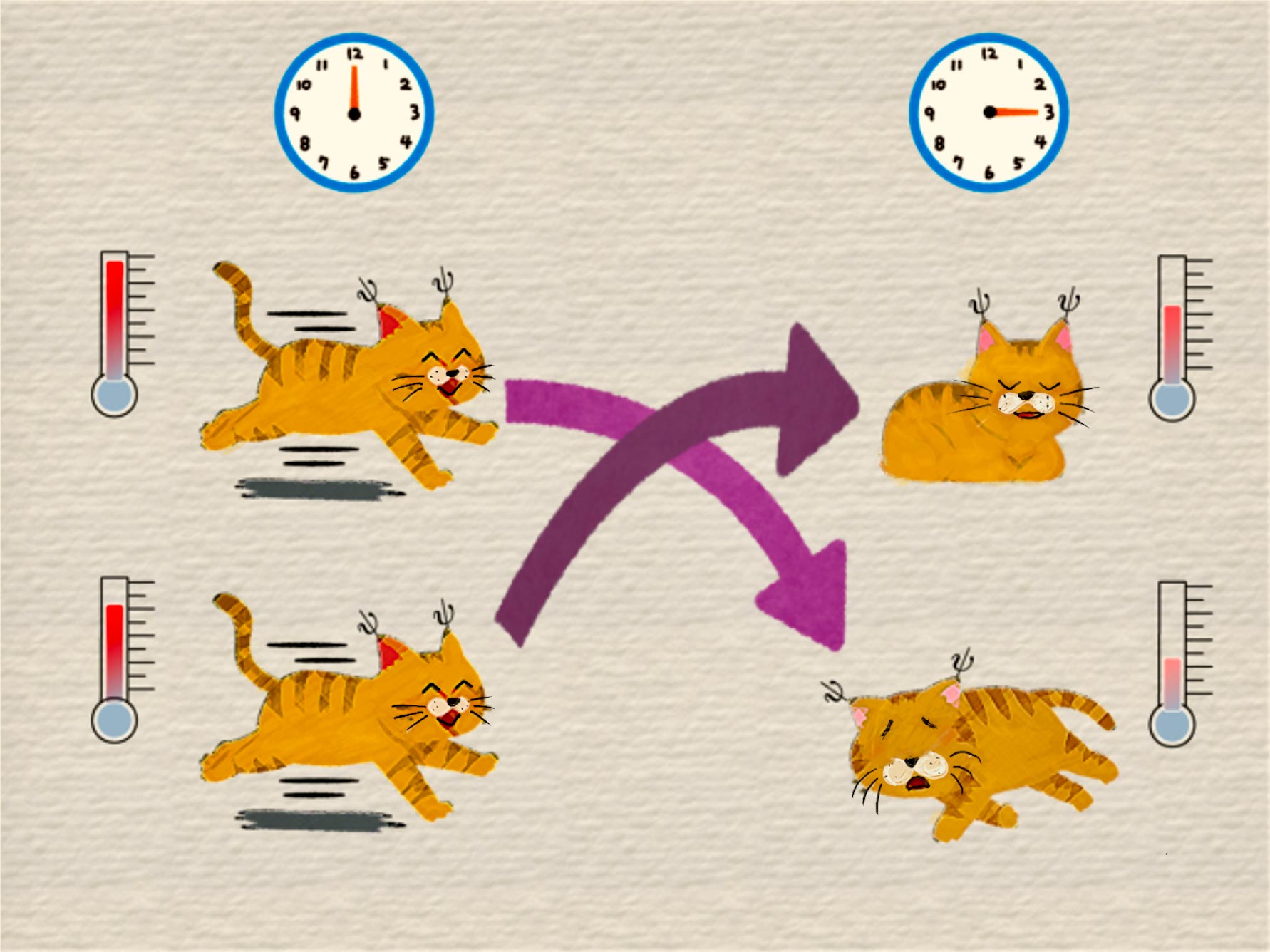
    Thermal Quantum Mpemba Effect
    Two systems with quantum dots connected to a heat bath, one with a current flowing and the other in an equilibrium state. The time evolution toward a steady state was followed for each. Credit: KyotoU/Hisao Hayakawa

    Hayakawa’s team prepared two systems with quantum dots connected to a heat bath, one with a current flowing and the other in an equilibrium state. Both were quenched to a low-temperature equilibrium state, allowing the team to follow their time evolution toward a steady state regarding the density matrix, energy, entropy, and — most critically — temperature.

    Achieving the Quantum Mpemba Effect

    “When the two copies crossed each other before reaching the same equilibrium state — so that the hotter part became colder and vice versa in an identity reversal — we knew we had achieved the thermal quantum Mpemba effect,” says co-author Satoshi Takada of TUAT.

    “After analyzing the quantum master equation, we also discovered we had obtained the thermal quantum Mpemba effect in a wide range of parameters, including reservoir temperatures and chemical potentials,” adds first and corresponding author Amit Kumar Chatterjee, also of KyotoU.

    “Our results encourage us to explore the potential use of the quantum Mpemba effect in future applications beyond thermal analyses,” reflects Hayakawa.

    Reference: “Quantum Mpemba Effect in a Quantum Dot with Reservoirs” by Amit Kumar Chatterjee, Satoshi Takada and Hisao Hayakawa, 22 August 2023, Physical Review Letters.
    DOI: 10.1103/PhysRevLett.131.080402

    Never miss a breakthrough: Join the SciTechDaily newsletter.
    Follow us on Google and Google News.

    Kyoto University Popular Quantum Information Science Quantum Mechanics
    Share. Facebook Twitter Pinterest LinkedIn Email Reddit

    Related Articles

    Magic Particles: The Large Hadron Collider’s Quantum Computing Breakthrough

    “Spooky Action” at Ultra-Short Distances: Unlocking the Quantum Core of Matter

    Elemental Surprise: Physicists Discover a New Quantum State

    The End of the Quantum Ice Age: Room Temperature Breakthrough

    Micro Marvels: Researchers Shrink Quantum Memory for Mass Production

    Breaking the Born-Oppenheimer Approximation – Experiments Unveil Long-Theorized Quantum Phenomenon

    Quantum Entanglement Shatters Einstein’s Local Causality: The Future of Computing and Cryptography

    Superstring Theory and Higher Dimensions: Bridging Einstein’s Relativity and Quantum Mechanics

    Molecular Beehive: Physicists Probe “Astonishing” Morphing Properties of Honeycomb-Like Quantum Material

    2 Comments

    1. ELKBIR SAIF on September 7, 2023 11:41 am

      yes

      Reply
      • Bao-hua ZHANG on September 7, 2023 6:37 pm

        Low dimensional spatiotemporal matter is the underlying structure of high-dimensional spatiotemporal matter. Quantum mechanics describes the motion laws of low-dimensional spacetime matter. It is extremely absurd to compare quantum with a cat.
        If you are really interested in science, please browse https://zhuanlan.zhihu.com/p/624024548.

        Reply
    Leave A Reply Cancel Reply

    • Facebook
    • Twitter
    • Pinterest
    • YouTube

    Don't Miss a Discovery

    Subscribe for the Latest in Science & Tech!

    Trending News

    Your Blood Pressure Reading Could Be Wrong Because of One Simple Mistake

    Astronomers Stunned by Ancient Galaxy With No Spin

    Physicists May Be on the Verge of Discovering “New Physics” at CERN

    Scientists Solve 320-Million-Year Mystery of Reptile Skin Armor

    Scientists Say This Daily Walking Habit May Be the Secret to Keeping Weight Off After Dieting

    New Therapy Rewires the Brain To Restore Joy in Depression Patients

    Giant Squid Detected off Western Australia in Stunning Deep-Sea Discovery

    Popular Sugar-Free Sweetener Linked to Liver Disease, Study Warns

    Follow SciTechDaily
    • Facebook
    • Twitter
    • YouTube
    • Pinterest
    • Newsletter
    • RSS
    SciTech News
    • Biology News
    • Chemistry News
    • Earth News
    • Health News
    • Physics News
    • Science News
    • Space News
    • Technology News
    Recent Posts
    • Hidden Warm Water Beneath Antarctica Could Rapidly Raise Global Sea Levels
    • Scientists Revive Ancient Chemistry Trick To Engineer Next-Generation Glass
    • Scientists Use AI To Supercharge Ultrafast Laser Simulations by More Than 250x
    • Scientists Just Found a Surprising Way To Destroy “Forever Chemicals”
    • Popular Supplement Ingredient Linked to Shorter Lifespan in Men
    Copyright © 1998 - 2026 SciTechDaily. All Rights Reserved.
    • Science News
    • About
    • Contact
    • Editorial Board
    • Privacy Policy
    • Terms of Use

    Type above and press Enter to search. Press Esc to cancel.