
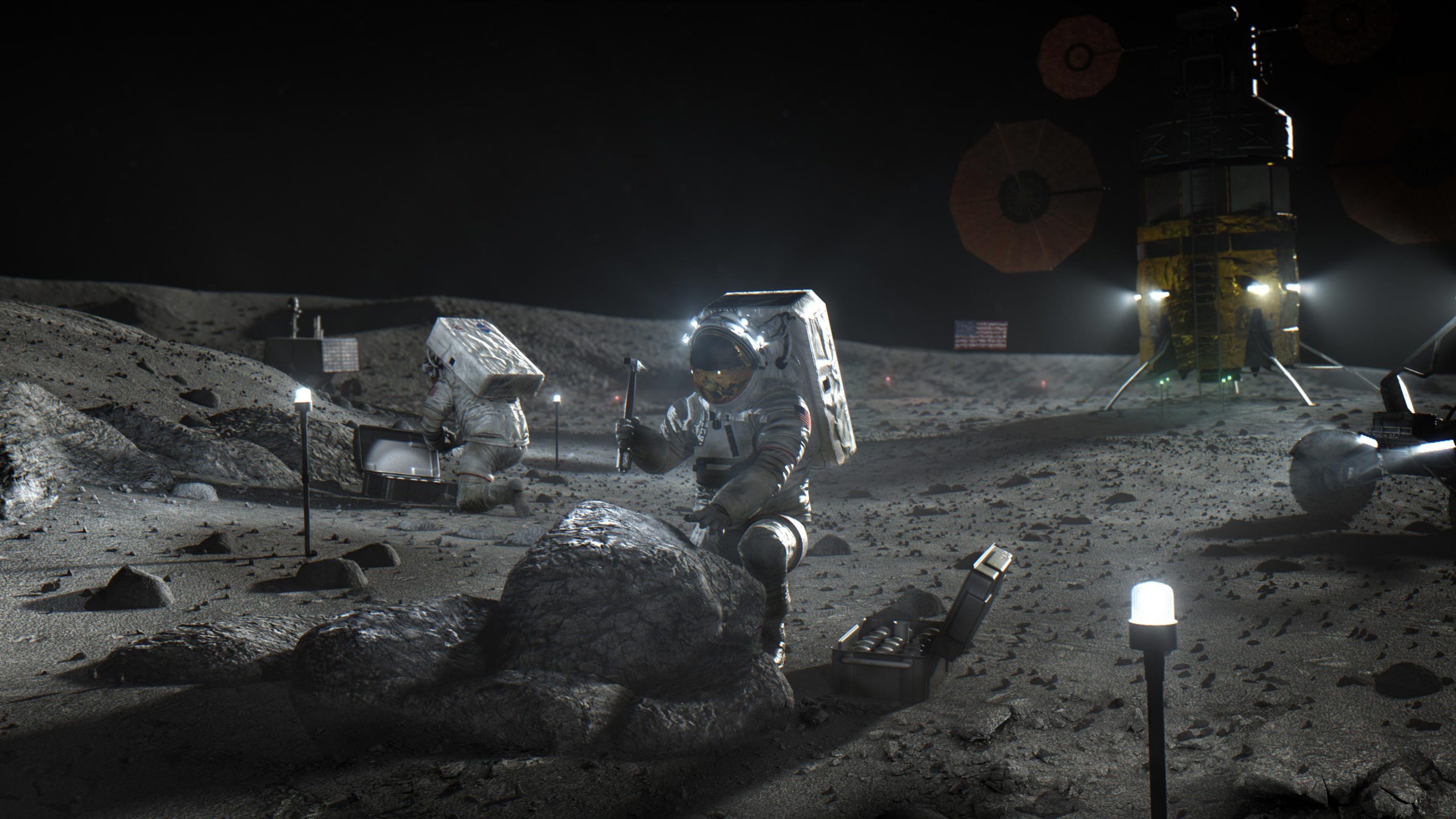
The first flight of the Artemis Generation – the journey of half a million miles – is about to begin. The uncrewed NASA Artemis I mission will jump-start humanity’s return to the Moon with the thunderous liftoff of NASA’s powerful new Space Launch System rocket and Orion spacecraft. This critical flight test will send Orion farther than any human-rated spacecraft has ever flown before, putting new systems and processes to the test. It will light the way for the crew missions to come. Artemis I is ready for departure – and, together with partners around the world, NASA is ready to return to the Moon, with their sights on Mars and beyond.
Video Transcript:
Artemis stands ready. Ready to turn dreams into reality. Ready to return humanity to the Moon and take us further than ever before.
The culmination of inspiration and innovation of herculean efforts and steadfast collaboration. Artemis 1 is ready for departure.
And the Artemis generation is about to leave its mark.
What will be a journey of more than a half a million miles to the Moon and back starts right here at Launch Complex 39 Bravo.
Although this first flight will not carry a crew, it will test every system in the deep depths of space to prepare the way for future crewed missions.
When the final go is given and the teams at Kennedy Space Center release this rocket, Artemis will roar to life and we will witness the beginning of a tightly choreographed mission.
The first two and a half minutes lift Artemis off Earth and build momentum. It’s another six minutes of pressing uphill accelerating to orbit. This is followed by push from the second stage to raise Orion higher
And once all the systems are cleared to continue, the second stage will fire again and push Orion beyond the bounds of Earth.
At this point, we’re going to the Moon. It’ll take several days to reach our destination. But as we sprint across the void, many new procedures and systems will be tested and proven.
240 thousand miles (390 thousand kilometers) later Orion will enter an oval-shaped orbit around the Moon. One that will take Orion to about 60 miles (97 kilometers) above the lunar surface and then out to 40,000 miles (64,000 kilometers) beyond the Moon.
This is a distance farther than any human-rated spacecraft has ever gone before.
As momentous as reaching the Moon will be, returning to Earth is just as significant and challenging.
Every observation we make, every lesson we learn on this journey, prepares the way for humans to safely venture out and return home. And so on its final lap around the Moon Orion will ignite its main engine push out of lunar orbit and begin the long trek home.
This is a spacecraft built for the harsh conditions of deep space as well as the intensity of returning home.
Nearing Earth Orion separates from the main power and propulsion systems of the European Service Module and prepares for the final sequence of events.
Entering Earth’s atmosphere at 24,500 miles per hour (11,000 meters per second) the heat shield endures the fury of re-entry. The air around Orion reaches temperatures half as hot as the sun, but also slows Orion considerably.
Until finally, parachutes can deploy allowing Orion to gently dip into the Pacific Ocean.
To the Moon and safely home again. This is the journey of Artemis I and it will set the precedent for all that follows.
United with partners around the world, this is the challenge we choose. To meet hand in hand, step by step, lighting the way from the Earth to the Moon to Mars and beyond.
We are ready.
Never miss a breakthrough: Join the SciTechDaily newsletter.
Follow us on Google and Google News.
3 Comments
“We Are Ready To Jump-Start Humanity’s Return to the Moon.”
To what end? What scientific questions are in need of being answered that the Artemis program can answer? Hopefully, all this money isn’t being spent to just be able to say that women have walked on the moon too. As things stand, there are some people who can’t even tell us what a woman is. Maybe we need to be able to answer that question before returning to the moon.
… “Humanity” – get real this is not ,,,
I can’t find an answer to my question on the official sites.
I remember back in Apollo days 50 years ago , it was nail biting in the last three televised missions as they were broadcast live, but it was scary for all of them.
If the lunar module’s engine failed, they were going to die on the Moon. THere was no rescue..
Has NASA a rescue plan for Artemis? There is no end of decade deadline this time so there should be no need for high risk. Is there a back up lander ready to rescue stranded astronauts in 2025??