
As human development increasingly encroaches on the Amazon, researchers find that the growing boundary between forests and urban areas is accelerating the spillover of yellow fever into human populations.
Human activity is pushing deeper into previously undisturbed ecosystems, disrupting natural balances and creating new risks for people. A study from UC Santa Barbara finds that changes in land use are contributing to a rise in human yellow fever cases across the Amazon basin.
Published in Biology Letters, the research links this increase to the expanding boundary between forests and urban areas.
“Yellow fever is increasingly infecting humans when they are living close to the forest,” said author Kacie Ring, a doctoral student co-advised by Professors Andy MacDonald and Cherie Briggs. “And this is because humans are encroaching into areas where the disease is circulating naturally, disrupting its transmission cycle in the forest.”
In the past, yellow fever had become uncommon in South America and was largely limited to monkeys in forested regions. This decline reflected the success of major public health campaigns in the late 19th and early 20th centuries. Now, however, there is growing concern that the disease could reestablish urban transmission cycles, allowing it to spread directly among people without relying on animal hosts.
The geography of disease
To investigate this trend, Ring, MacDonald, and junior research specialist Terrell Sipin analyzed records of human yellow fever cases from districts in Brazil, Peru, and Colombia within the Amazon Basin. The data, sourced from national public health agencies, extended back to 2000 for Brazil, 2007 for Colombia, and 2016 for Peru.
They also used land use data from the MapBiomas Project, which classifies landscapes into categories such as forest, agriculture, pasture, and urban areas. The researchers then examined how case rates related to three geographic factors: average forest patch size, forest edge density, and the extent of contact between forested and urban areas.
Initial models showed that areas with more forest edge had a higher likelihood of spillover events. However, when additional variables were included, the strongest predictor was the degree of direct contact between forests and urban zones. A 10% increase in forest–urban adjacency raised the probability of a spillover event by 0.09, equivalent to a 150% increase in annual spillover events. This interface is expanding by about 13% per year in the regions studied.
When ecology doesn’t match epidemiology
Previous research has linked deforestation and forest fragmentation to increased yellow fever activity in wildlife, particularly among monkeys. Based on this, the team expected ecological factors like patch size and edge density to strongly influence human cases.
Instead, models that accounted for human interaction with the forest showed that proximity to these environments was the most important factor. “It was a little surprising that the ecology wasn’t more predictive of the actual transmission to humans,” said MacDonald, a professor in UCSB’s Bren School of Environmental Science & Management.
“It seems the thing that’s causing the disease spillover is that humans are moving closer to the forest edge,” Ring said.
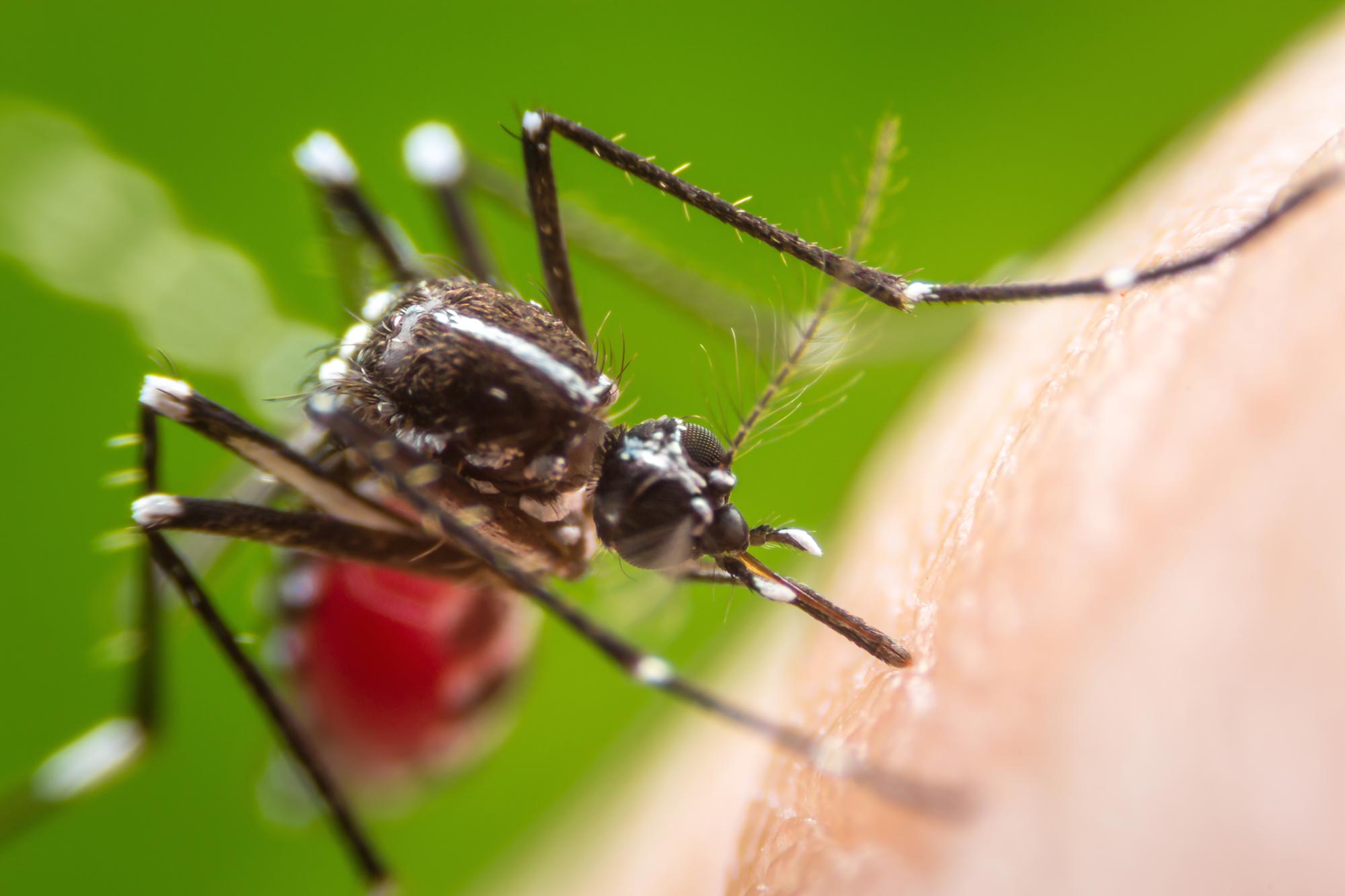
As urban areas expand toward forests, people face greater exposure to infected mosquitoes, which are often more abundant and active along forest margins. Conditions such as higher temperatures and standing water in these zones can further support mosquito populations.
The return of an old foe
Yellow fever was once widespread in the Americas, with urban transmission cycles similar to those still seen in parts of Western Africa. Alongside malaria, it contributed to the failure of the French effort to build the Panama Canal. “They were losing workers left and right,” MacDonald said. “Over 20,000 workers died.” At the time, the causes of these diseases were not yet understood.
Advances in science, combined with large-scale mosquito control and vaccination programs, eventually reduced transmission. These efforts enabled the successful completion of the canal in 1914 and helped eliminate urban transmission cycles in South America by the mid-20th century.
“But a campaign like this would never be executed in the modern day,” Ring added. “Widespread use of DDT led to long-term storage in the soil and contamination in drinking water.”
Today, cases are rising again as the boundary between forests and cities expands. “We can see the benefits of earlier efforts dwindling,” Ring said. “It shows that diseases can come up again if you don’t properly maintain the infrastructure of public health and vaccination.”
“The concern is that the more we have these spillover events, the more likely it is that we’re going to see these urban transmission cycles reemerging,” MacDonald added.
Although the study includes data only through 2021, World Health Organization figures show continued growth in cases. In 2024, infections were mostly concentrated in the Amazon region. By 2025, however, cases were increasingly reported outside the Amazon, with 212 confirmed cases compared to 61 in 2024, a threefold increase.
Because yellow fever remains relatively rare in the Americas, vaccine supplies are limited. “So, if cases change suddenly, then we’re unprepared to deal with it,” MacDonald said.
The researchers plan to continue exploring how land use changes influence infectious diseases. Ring is studying links between deforestation and tick-borne diseases in Madagascar, while MacDonald is examining how activities such as agriculture and pasture expansion affect diseases like malaria, dengue, and leishmaniasis in the Amazon.
Ultimately, the team hopes their findings will help guide development in ways that better protect both people and ecosystems. As Ring said, “these emerging infectious diseases are indicators of broader environmental issues.”
Never miss a breakthrough: Join the SciTechDaily newsletter.
Follow us on Google and Google News.