
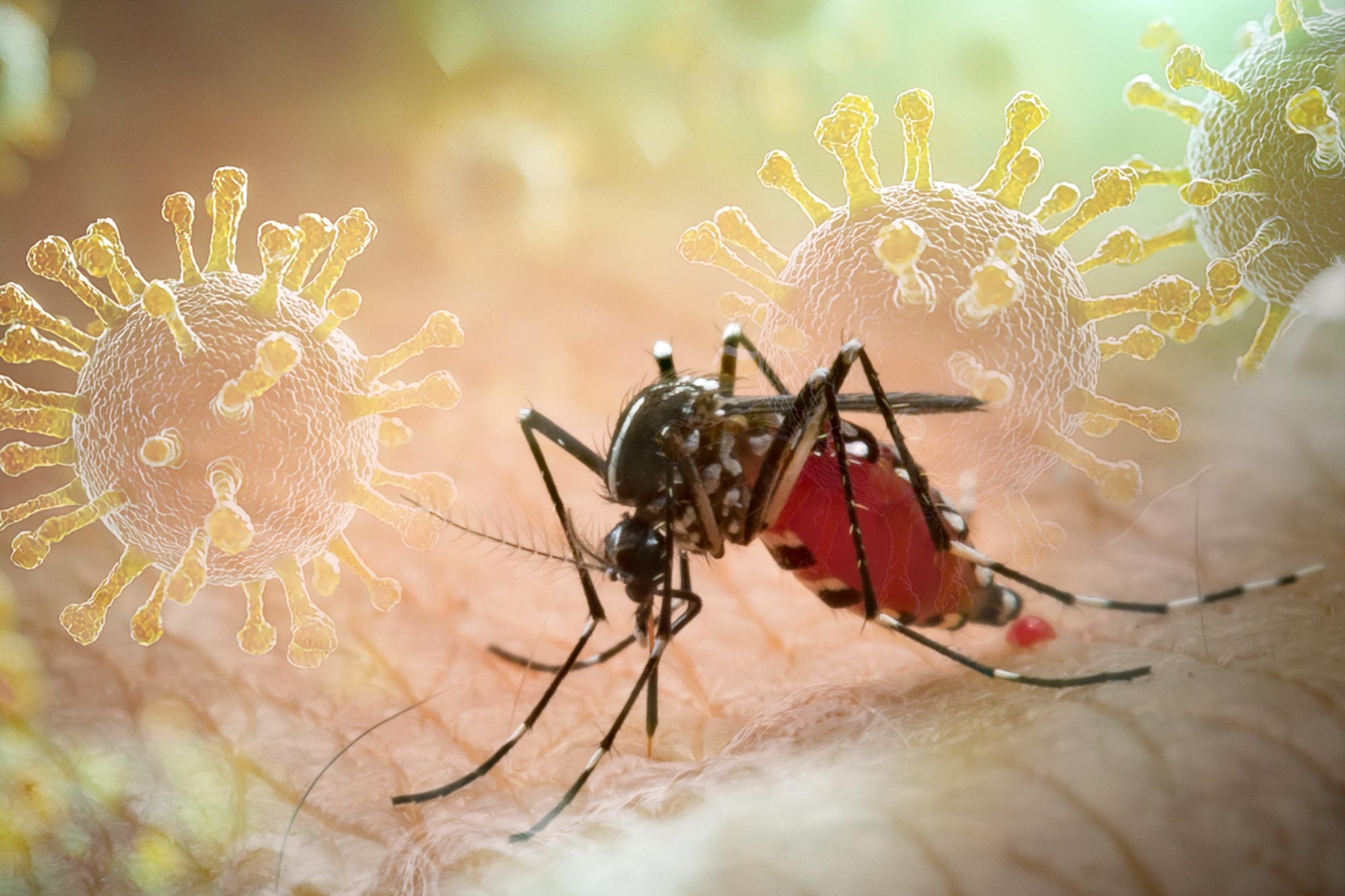
Southern China is battling its worst chikungunya outbreak on record, fueled by mosquitoes and changing environmental conditions.
An editorial published in Biocontaminant highlights that Guangdong Province is now facing the largest chikungunya fever outbreak ever documented in China. Since late July, health officials have confirmed more than 4,000 infections. The majority of these cases, over 3,600, have been reported in Shunde District of Foshan, while additional cases have emerged in Guangzhou, Shenzhen, Hong Kong, and Macao.
Chikungunya fever is caused by the chikungunya virus, an RNA virus belonging to the Alphavirus genus in the Togaviridae family. It is spread through the bites of infected Aedes mosquitoes (primarily Aedes aegypti and Aedes albopictus), which are also known carriers of dengue and Zika viruses.
The illness typically begins with sudden high fever and severe joint pain, often accompanied by rash, headache, and muscle aches. Unlike diseases that spread directly between people, chikungunya requires a mosquito vector, making effective control of mosquito populations the most important strategy for prevention.
“The outbreak reflects both the global spread of chikungunya and the favorable conditions for mosquito-borne diseases in southern China,” said lead author Guang-Guo Ying of South China Normal University.
Control Measures and Contributing Factors
Authorities have launched a province-wide campaign urging residents to remove stagnant water and reduce mosquito breeding sites. The editorial also stresses that climate change, urbanization, and global travel are expanding the reach of arboviruses worldwide, posing growing public health challenges.
The World Health Organization has recently introduced updated clinical guidelines and reinforced its Global Arbovirus Initiative to strengthen monitoring, prevention, and coordinated response. The authors call for investment in genomic surveillance, community engagement, and international cooperation to mitigate future outbreaks.
Reference: “Outbreak of chikungunya fever in Guangdong: transmission and control of arboviruses” by Guang-Guo Ying and Yi Luo, 11 August 2025, Biocontaminant.
DOI: 10.48130/biocontam-0025-0002
Never miss a breakthrough: Join the SciTechDaily newsletter.
Follow us on Google and Google News.
3 Comments
“The editorial also stresses that climate change, …”
To put things in perspective, the average global temperature has increased less than 0.2 degrees Celsius in the last decade, with more increase in Winter and in the Arctic than for China or the globe in general. Why does “climate change” or “global warming” invariably get mentioned when the annual increases are so small that random variations and events like El Nino dwarf the trend? It takes away from the concerns about global travel and mosquito abatement, which are much more important!
Puh-leeze! 10 years is too small a time range to matter when it comes to world systems. You need to take a longer viewpoint.
According to Perplexity, “Since the beginning of the industrial revolution (around 1850-1900), global average surface temperature has increased by about 1.5 to 1.6°C (2.7 to 2.9°F) as of 2024, and most estimates for 2025 put the total warming in roughly this range as well.”
THAT is a significant increase!
” You need to take a longer viewpoint.”
Why? This article is about a new problem in China, NOT an old one that is getting worse. This wasn’t a problem in developed countries in 1950. Mosquitoes have been disease vectors since before the temperature really increased much. The solution to eliminating malaria wasn’t cooling the Earth. It was mosquito abatement and the introduction insect screens on homes, along with insecticides. The problem of mosquitoes has returned because countries have stopped using DDT, reduced their attention to curtail stagnant waters, and rarely even put oil films on standing water too deep to drain. Chikungunya fever has spread outside its native endemic regions because it no longer takes weeks to cross the oceans, and there is no effort at quarantines at the destination airports. Puh-leeze, if in one’s zeal to blame global warming for everything except the “heart break of psoriasis,” the attempts at eliminating chikungunya fever will fail!