
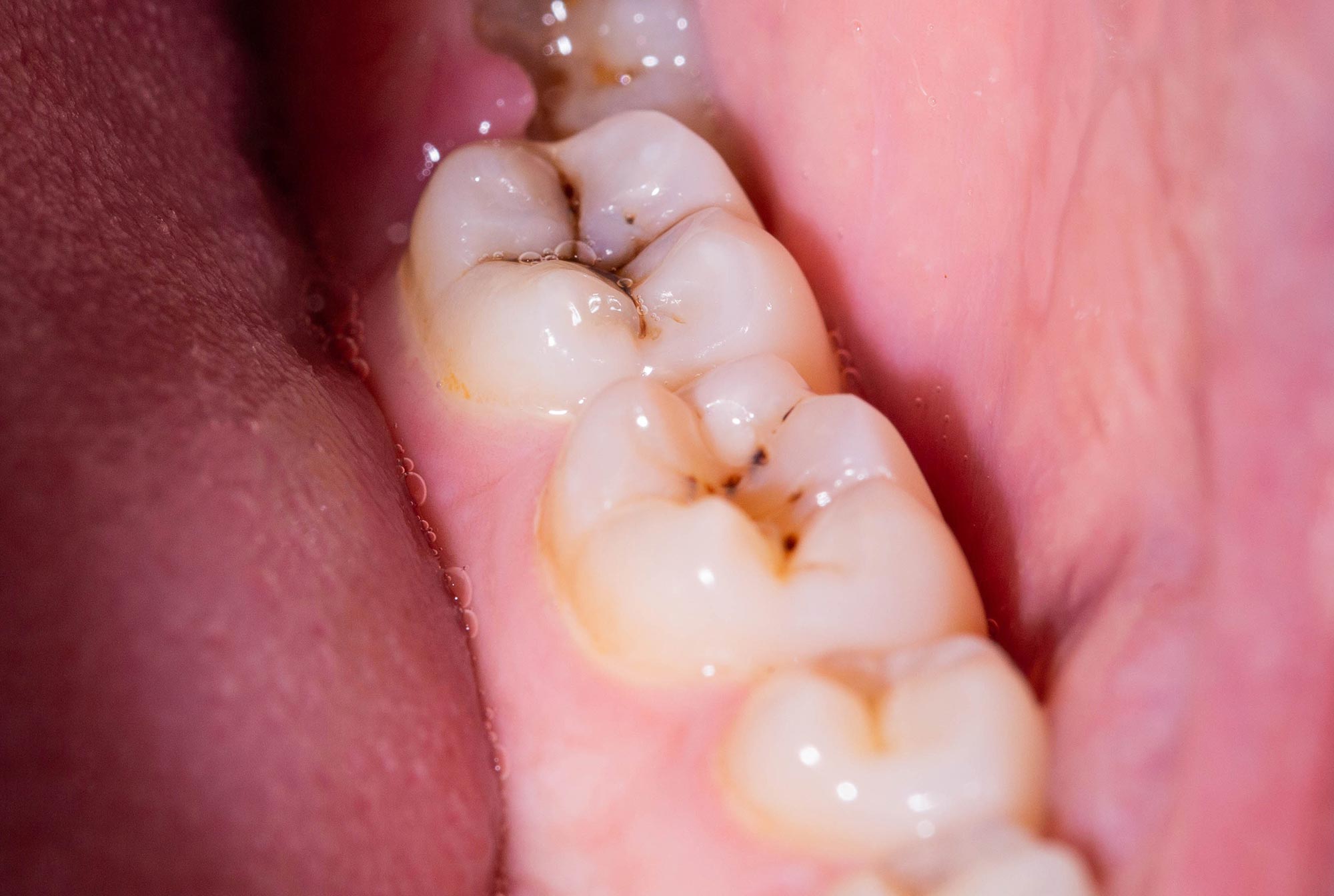
Silver diamine fluoride prevents cavities and keeps existing ones from worsening in school-based program.
An inexpensive, cavity-fighting liquid called silver diamine fluoride (SDF) works as well as dental sealants to keep tooth decay at bay in a school cavity prevention and treatment program, according to a new study by researchers at NYU College of Dentistry.
The study, which followed more than 4,000 elementary school students for four years and is published in JAMA Pediatrics, shows that SDF is an effective alternative to sealants, and can increase access to dental care while reducing costs.
Dental cavities are the most prevalent chronic disease in children and can lead to pain, school absences, and lower academic performance. To prevent cavities, especially among children less likely to see a dentist, the Centers for Disease Control and Prevention (CDC) supports the use of school sealant programs. In sealant programs, dental professionals visit schools to apply a thin, protective coating to the surface of teeth that hardens and safeguards against decay.
SDF has emerged as another promising treatment for fighting cavities. Originally approved by the FDA for treating tooth sensitivity, the solution is brushed onto the surface of teeth, killing decay-causing bacteria and remineralizing teeth to prevent further decay.
“A growing body of research shows that SDF—which is quicker to apply and less expensive than sealants—can prevent and arrest cavities, reducing the need for drilling and filling,” said Richard Niederman, DMD, professor of epidemiology & health promotion at NYU College of Dentistry and the study’s senior author.
SDF in schools
Researchers at NYU College of Dentistry led CariedAway, the nation’s largest school-based cavity prevention study, to compare the use of SDF and traditional sealants. The study included approximately 4,100 children in New York City elementary schools; more than a quarter of kids had untreated cavities at the start of the study.

At each school visit, a team of health professionals examined children’s teeth and applied either sealants or SDF followed by fluoride varnish, depending on which treatment the school was randomly assigned to receive. Sealants were administered by dental hygienists, while SDF was applied by either dental hygienists or registered nurses, all under the supervision of a dentist. Starting in 2018, the team visited each school twice a year, although the COVID-19 pandemic and school closures led to missed visits.
The researchers reported last year in the journal JAMA Network Open that a single treatment of either SDF or sealants prevented 80% of cavities and kept 50% of existing cavities from worsening two years later. The team continued their study for another two years, and in their study published in JAMA Pediatrics, found that SDF and sealants prevented roughly the same number of cavities after children were followed for a total of four years. Moreover, both sealants and SDF reduced the risk of decay at each follow-up visit.
“Our longitudinal study reaffirms that both sealants and SDF are effective against cavities. SDF is a promising alternative that can support school-based cavity prevention—not to replace the dental sealant model, but as another option that also prevents and arrests decay,” said Ryan Richard Ruff, PhD, MPH, associate professor of epidemiology & health promotion at NYU College of Dentistry and the study’s first author.
“Most research shows that SDF can stop a cavity from progressing further. Our study demonstrated that SDF can prevent cavities from happening in the first place,” said Tamarinda Barry Godín, DDS, MPH, associate program director and supervising dentist for CariedAway, research scientist at NYU College of Dentistry, and the study’s co-author.
An “untapped” oral health workforce
Embracing SDF for cavity prevention and treatment in schools could keep kids from needing fillings, saving families and the healthcare system money. Yet these programs can only succeed if there are enough health professionals to provide care.
The NYU researchers found that children who had SDF applied by dental hygienists and registered nurses had similar outcomes, suggesting that nurses—including school nurses—could play a crucial role in cavity prevention programs.
“Nurses may be an untapped resource for addressing oral health inequities,” added Ruff. “Our results suggest that nurses can effectively provide this preventive care, which could dramatically improve access, given the role of school nurses and the size of the nursing workforce.”
Reference: “Noninferiority of Silver Diamine Fluoride vs Sealants for Reducing Dental Caries Prevalence and Incidence: A Randomized Clinical Trial” by Ryan Richard Ruff, Tamarinda J. Barry Godín and Richard Niederman, 4 March 2024, JAMA Pediatrics.
DOI: 10.1001/jamapediatrics.2023.6770
This research was funded by the Patient-Centered Outcomes Research Institute (PCS-160936724). The CariedAway cavity prevention model is currently being used in three New Hampshire school districts, supported by Northeast Delta Dental.
Never miss a breakthrough: Join the SciTechDaily newsletter.
Follow us on Google and Google News.
5 Comments
It permanently stains teeth black, yeah its amazing! LMAO
It helps keep you from getting cavities while making you look like you have one at the same time!
It only stains cavities, not healthy enamel.
still looks like crap. shame it’s a good treatment. but mainly insurance won’t cover it.
Looks good, but chemical seepage with food may accumulate in body may result systemic diseases or cancer with passage of time.
I just coat my teeth with super glue, no cavities.