
Close Menu
    Facebook X (Twitter) Instagram
    SciTechDaily
    • Biology
    • Chemistry
    • Earth
    • Health
    • Physics
    • Science
    • Space
    • Technology
    Facebook X (Twitter) Pinterest YouTube RSS
    SciTechDaily
    Home»Space»Astronauts Begin Spacewalk to Install Solar Array Live on NASA TV
    Space

    Astronauts Begin Spacewalk to Install Solar Array Live on NASA TV

    By NASAJune 9, 2023No Comments2 Mins Read
    Facebook Twitter Pinterest Telegram LinkedIn WhatsApp Email Reddit
    Share
    Facebook Twitter LinkedIn Pinterest Telegram Email Reddit
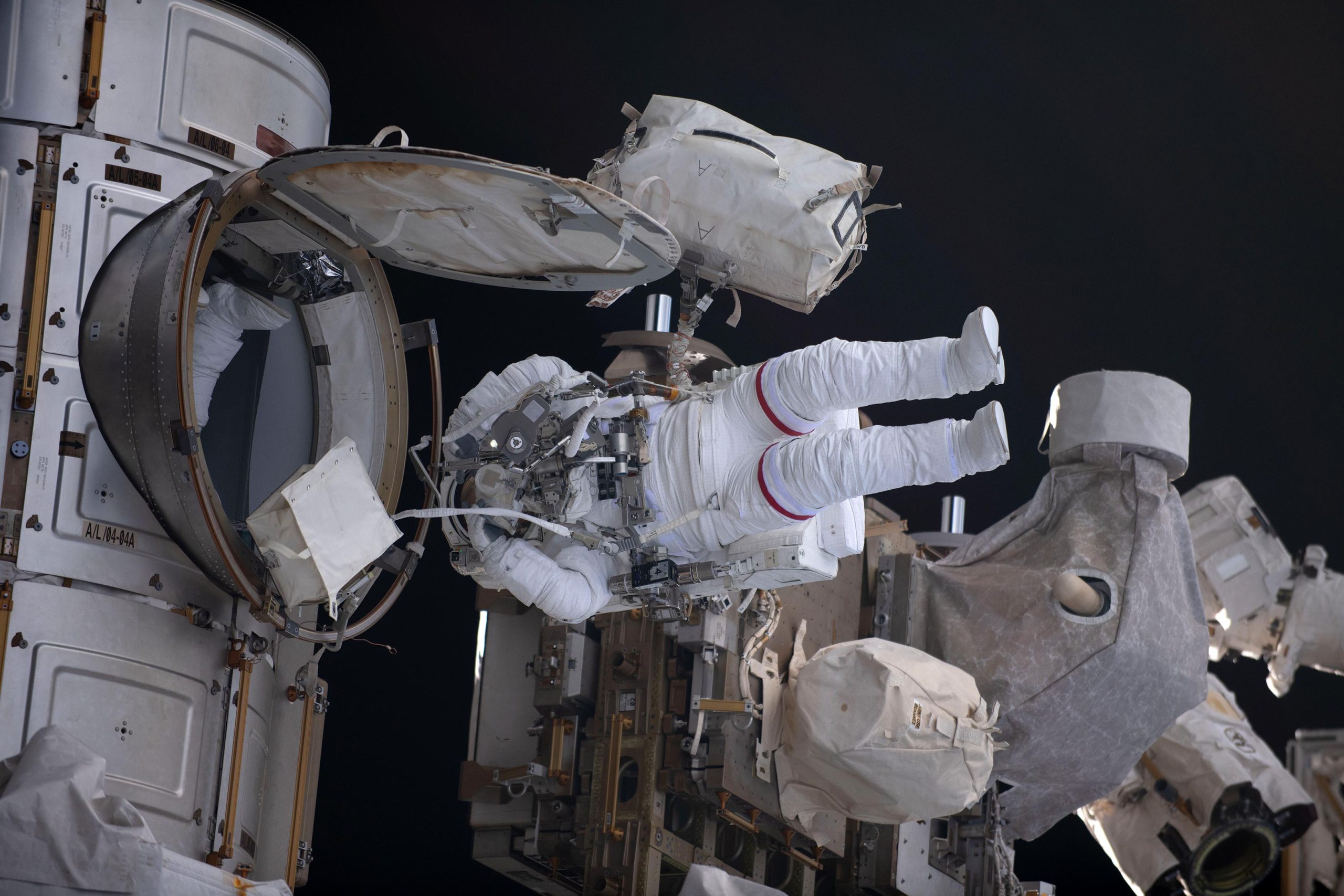
    Spacewalker Stephen Bowen Exits the Quest Airlock
    NASA astronaut Stephen Bowen is pictured in his Extravehicular Mobility Unit, or spacesuit, exiting the International Space Station’s Quest airlock and beginning a spacewalk on April 28, 2023. Credit: NASA

    NASA astronauts Bowen and Hoburg have begun a spacewalk to install an IROSA to expand power generation on the International Space Station. The new arrays will increase power production by 30%.

    Expedition 69 Flight Engineers Steve Bowen and Woody Hoburg of NASA began a spacewalk at 9:25 a.m. EDT (6:25 a,m, PDT) today, June 9, to install an IROSA (International Space Station Roll-Out Solar Array) to augment power generation for the 1A power channel on the station’s starboard truss structure.

    Bowen, designated extravehicular crew member 1 (EV1), is wearing a suit with red stripes. Hoburg, designated extravehicular crewmember 2 (EV 2), is in an unmarked suit. Coverage of the spacewalk continues on NASA Television, the NASA app, and the agency’s website.
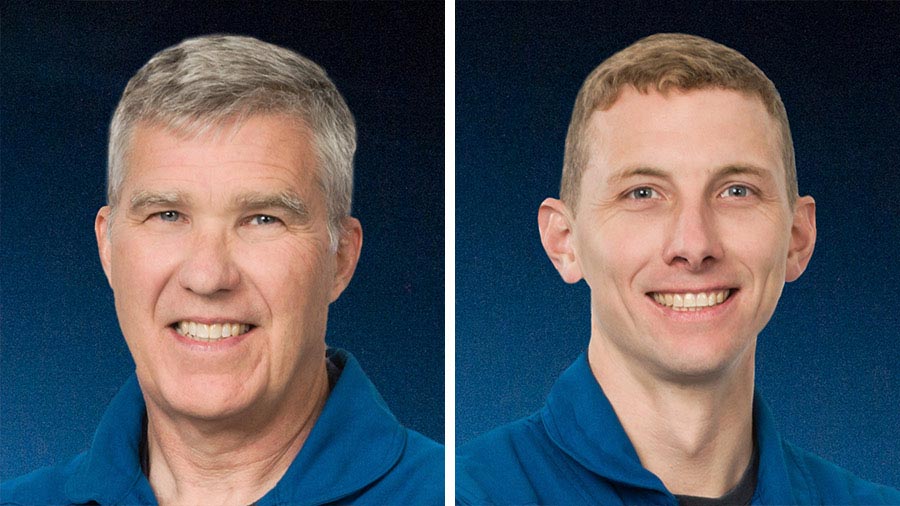
    Stephen Bowen and Woody Hoburg
    NASA astronauts (from left) Stephen Bowen and Woody Hoburg will install a set of new roll-out solar arrays on the space station during today’s spacewalk. Credit: NASA

    To kick off the spacewalk, which is expected to last about seven hours, the astronauts exited the International Space Station‘s Quest airlock. Bowen and Hoburg will install an IROSA (International Space Station Roll-Out Solar Array) to augment power generation for the 1A power channel on the station’s starboard truss structure.

    The new arrays are 60 feet long by 20 feet wide (18.2 meters by 6 meters) and will shade a little more than half of the original arrays, which are 112 feet long by 39 feet wide. Each new IROSA will produce more than 20 kilowatts of electricity, and once all are installed, will enable a 30% increase in power production over the station’s current arrays.

    The spacewalk is the ninth for Bowen and the first for Hoburg.

    Never miss a breakthrough: Join the SciTechDaily newsletter.
    Follow us on Google and Google News.

    Astronaut International Space Station NASA
    Share. Facebook Twitter Pinterest LinkedIn Email Reddit

    Related Articles

    NASA’s Crew-9 Returns After 286-Day Mission With a Spectacular Splashdown in the Gulf of America

    NASA’s SpaceX Crew-9 Splashes Down Off Coast of Florida

    SpaceX Dragon Undocks With NASA Crew-9 Members for Return to Earth

    Liftoff! NASA’s SpaceX Crew-10 Blasts Off From Kennedy Space Center [Video]

    Rocket Ready: NASA’s SpaceX Crew-10 Set for Liftoff

    NASA’s SpaceX Crew-10 Was Moments From Liftoff – Then a Last-Minute Malfunction Shut It Down

    NASA’s SpaceX Crew-10: Four Astronauts, a 17,500 MPH Rocket, and 200+ Experiments

    No Treadmill, No Problem – NASA’s Space Workout Experiment Could Change Fitness Forever

    NASA and SpaceX’s Unexpected Spacecraft Swap Sends Crew-10 to Space Sooner

    Leave A Reply Cancel Reply

    • Facebook
    • Twitter
    • Pinterest
    • YouTube

    Don't Miss a Discovery

    Subscribe for the Latest in Science & Tech!

    Trending News

    Chimpanzees Keep Throwing Stones at the Same Trees – Scientists Want To Know Why

    Coffee May Protect the Liver in More Ways Than Scientists Realized

    AI Just Uncovered a Hidden Secret Inside Water

    Scientists Catch a “Jumping Gene” Moving Between Species

    This Tiny-Bead Procedure Is Helping Patients Avoid Knee Replacement

    Neanderthals Nearly Vanished 75,000 Years Ago – Then One Group Repopulated Europe

    AI Detects Hidden Warning Signs Before Major Earthquakes

    Scientists Have Found Evidence That Dark Matter May Not Be Playing by the Rules

    Follow SciTechDaily
    • Facebook
    • Twitter
    • YouTube
    • Pinterest
    • Newsletter
    • RSS
    SciTech News
    • Biology News
    • Chemistry News
    • Earth News
    • Health News
    • Physics News
    • Science News
    • Space News
    • Technology News
    Recent Posts
    • Natural Compound Found in Cheese and Mushrooms May Help Boost Vaccine Responses
    • A Deadly Ebola-Like Virus Is Spreading. Are We Ready?
    • Two Drinks a Day May Be Riskier Than Many Americans Think
    • A Troubling Breast Cancer Trend Is Emerging in Asian American Communities
    • Scientists Have Identified a Key Driver of Age-Related Cognitive Decline
    Copyright © 1998 - 2026 SciTechDaily. All Rights Reserved.
    • Science News
    • About
    • Contact
    • Editorial Board
    • Privacy Policy
    • Terms of Use

    Type above and press Enter to search. Press Esc to cancel.