
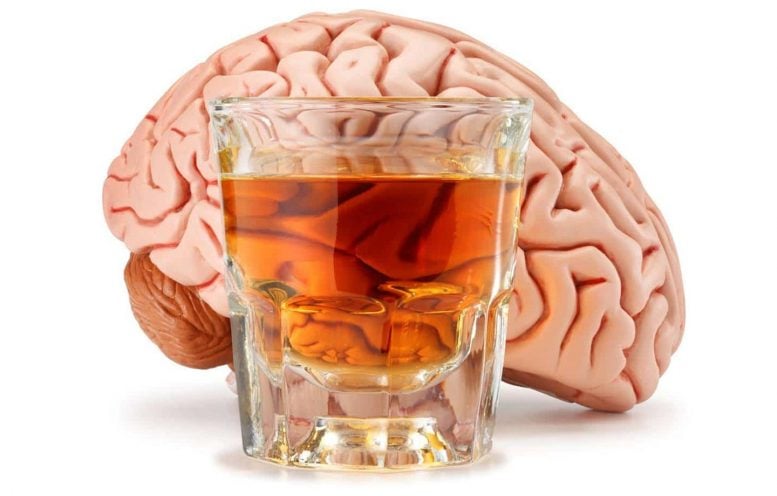
A study conducted at Penn State University suggests that binge drinking during adolescence may cause irreversible dysregulation of neurons in the brain, potentially leading to long-lasting behavioral and cognitive changes.
Heavy alcohol consumption may cause permanent dysregulation of neurons, or brain cells, in adolescents, according to a new study in mice. The findings suggest that exposure to binge-levels of alcohol during adolescence, when the brain is still developing, lead to long-lasting changes in the brain’s ability to signal and communicate — potentially setting the stage for long-term behavioral changes and hinting towards the mechanisms of alcohol-induced cognitive changes in humans.
“What we’re seeing here,” said Nikki Crowley, assistant professor in biology and biomedical engineering and Huck Early Chair in Neurobiology and Neural Engineering, “is that if adolescent binge drinking knocks neurons off this trajectory, they might not be able to get back, even if the alcohol consumption stops.”
The prefrontal cortex is a key brain region for executive functioning, risk assessment, and decision-making. According to Crowley, it’s not fully formed in adolescents and is still maturing in humans until around age 25. Disruptions to its development in young people may have serious and long-lasting consequences, added Crowley.
“Heavy binge drinking is problematic for everyone, and should be avoided, but adolescent brains appear to be particularly vulnerable to the consequences, which in humans, will follow them for decades,” Crowley said.
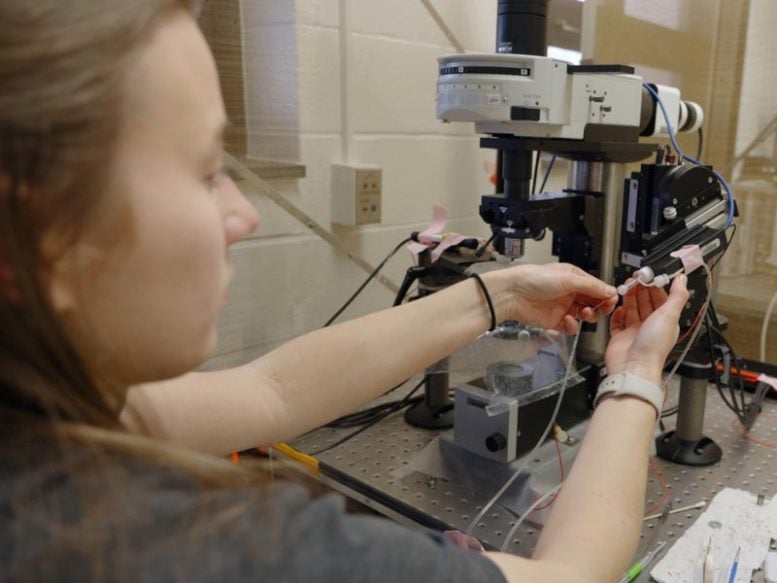
The team, led by Avery Sicher, a doctoral student in Penn State’s neuroscience program, used a model of adolescent ethanol exposure in mice to understand how different populations of neurons in the cortex, the outermost layer of the brain, are changed by voluntary binge alcohol consumption. In this model, mice are known to consume alcohol in patterns that approximate human binge drinking — defined by the National Institute on Alcohol Abuse and Alcoholism as a pattern of alcohol consumption that leads to a blood alcohol concentration of 0.08% or higher, usually in about two hours. Binge drinking is considered to be one of the most dangerous patterns of alcohol misuse, and understanding its impact on the developing brain can help inform treatment.
Sicher and her colleagues gave mice access to alcohol during a 30-day period. Due to their faster development and shorter lifespan, this corresponded to roughly ages 11-18 in human years. They then looked at the electrophysiological properties of different neurons throughout the prefrontal cortex to understand how adolescent binge drinking influenced the wiring and firing of these circuits. Sicher et al. used whole-cell patch clamp electrophysiology, combined with techniques such as optogenetics, which allowed the team to isolate individual neurons and record measurements related to intrinsic excitability, such as the resting membrane potential and the ability for each neuron to fire action potentials. This allowed them to understand how these neurons had changed their ability to signal with other neurons.
Somatostatin Neurons and Long-Term Dysregulation
They found that somatostatin neurons, a key population of cells that provides inhibition of neurotransmitter release from other cell types throughout the brain and helps to “dampen the noise,” appeared to be permanently dysregulated in the mice that binge drank as compared to mice that were only provided water throughout development. Somatostatin neurons release both inhibitory neurotransmitters, like GABA, as well as inhibitory peptides like somatostatin, and proper functioning of these neurons is necessary for a healthy brain. The neurons were more excitable — meaning they were signaling too much and dampening the activity of other key neurons — as far out as 30 days after the mice stopped drinking alcohol, when the mice have transitioned into adulthood.
“Neurons have a relatively fixed developmental trajectory — they need to get where they are going and sync up with the right partners during specific periods of development in order to function properly,” explained Crowley.
David Starnes, an undergraduate biology student in Schreyer’s Honor College, performed somatostatin cell counts to quantify cell density before and after ethanol consumption. He found that while the electrophysiology data suggested these neurons wire differently, the number of SST neurons does not appear to change as a result of binge drinking.
The paper will be published in the August 15 issue of the journal Neuropharmacology and is currently available in the online version.
Reference: “Adolescent binge drinking leads to long-lasting changes in cortical microcircuits in mice” by Avery R. Sicher, William D. Starnes, Keith R. Griffith, Nigel C. Dao, Grace C. Smith, Dakota F. Brockway and Nicole A. Crowley, 1 May 2023, Neuropharmacology.
DOI: 10.1016/j.neuropharm.2023.109561
Other authors on the paper include Keith Griffith, a research technician in the lab and former undergraduate in Engineering Science and Mechanics, Grace Smith, a graduate student in Biomedical Engineering, Dakota Brockway, a graduate student in neuroscience, and Nigel Dao, a former research technician in the lab and current doctoral student at New York University. This research was supported by the National Institutes of Health and the Huck Institutes of the Life Sciences at Penn State.
Never miss a breakthrough: Join the SciTechDaily newsletter.
Follow us on Google and Google News.