
Close Menu
    Facebook X (Twitter) Instagram
    SciTechDaily
    • Biology
    • Chemistry
    • Earth
    • Health
    • Physics
    • Science
    • Space
    • Technology
    Facebook X (Twitter) Pinterest YouTube RSS
    SciTechDaily
    Home»Space»Astronomers Discover Eleven Dangerous Asteroids That Could Impact the Earth
    Space

    Astronomers Discover Eleven Dangerous Asteroids That Could Impact the Earth

    By Netherlands Research School for AstronomyFebruary 16, 2020No Comments3 Mins Read
    Facebook Twitter Pinterest Telegram LinkedIn WhatsApp Email Reddit
    Share
    Facebook Twitter LinkedIn Pinterest Telegram Email Reddit
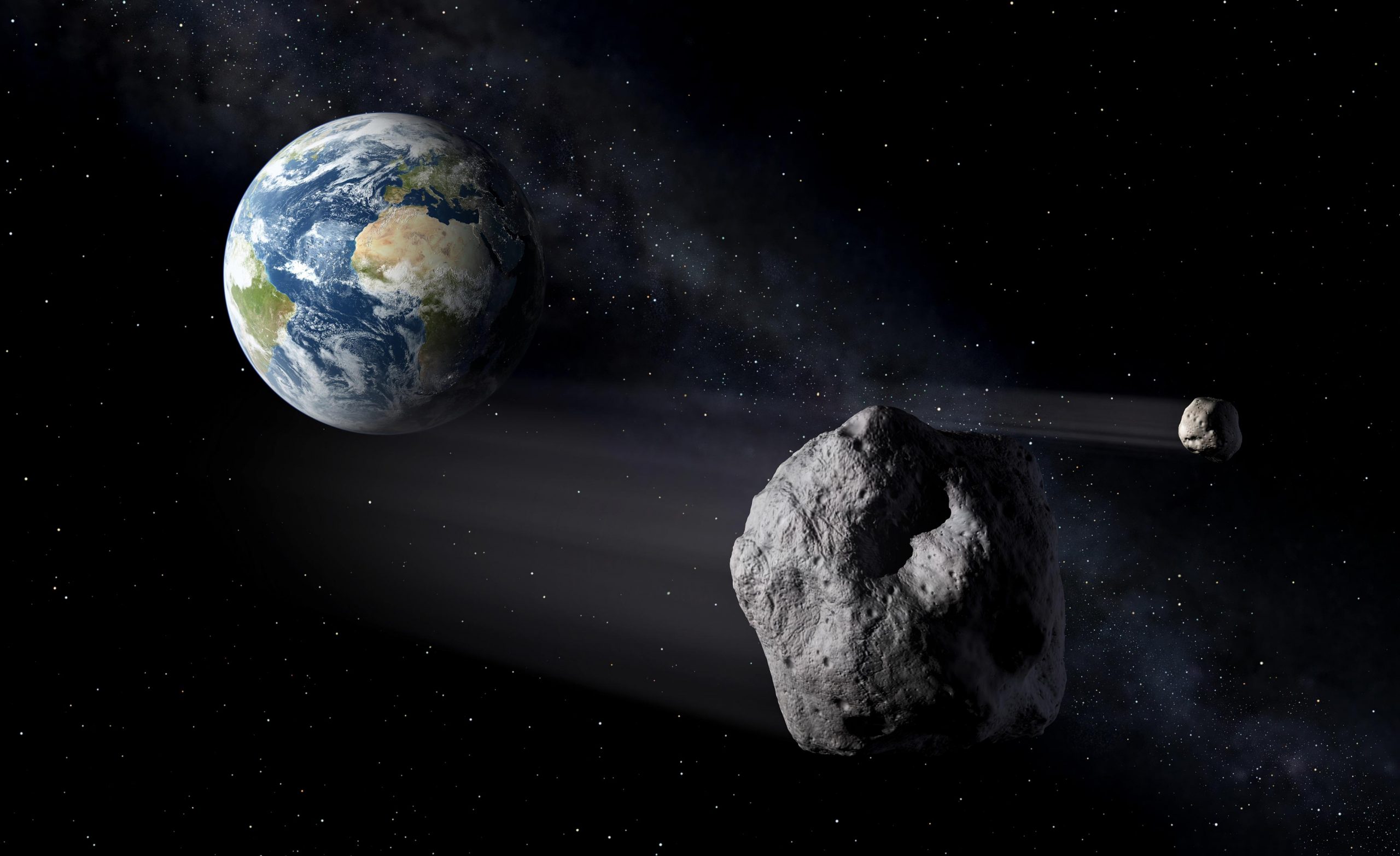
    Near Earth Objects
    Near Earth objects. Credit: ESA – P.Carril

    Three Leiden astronomers have shown that some asteroids that are considered harmless for now, can collide with Earth in the future. They did their research with the help of an artificial neural network. The results have been accepted for publication in the journal Astronomy & Astrophysics.

    Using a supercomputer, the researchers integrated the orbits of the sun and its planets forward in time for 10,000 years. After that, they traced the orbits back in time while launching asteroids from the Earth’s surface. During the backwards calculation, they included the asteroids in the simulations in order to study their orbital distributions at today’s date. In this way, they acquired a database of hypothetical asteroids for which the researchers knew that they would land on the Earth’s surface.

    Turning back the hands of time

    Astronomer and simulation expert Simon Portegies Zwart explains: ‘If you rewind the clock, you will see the well-known asteroids land again on Earth. This way, you can make a library of the orbits of asteroids that landed on Earth.’ The library of asteroids then served as training material for the neural network.

    Eleven dangerous asteroids

    The first set of calculations was performed on the new Leiden super computer ALICE, but the neural network runs on a simple laptop. The researchers call their method Hazardous Object Identifier (HOI), which means ‘hi’ or ‘hello’ in Dutch.

    The neural network can recognize well-known near-Earth objects. In addition, HOI also identifies a number of hazardous objects that were not previously classified as such. For example, HOI discovered eleven asteroids that, between the years 2131 and 2923, come closer than ten times the Earth-Moon distance and are larger than a hundred meters in diameter.

    Chaotic orbits cover asteroids

    That these asteroids have not previously been identified as potentially dangerous is because the orbit of these asteroids is so chaotic. As a result, they are not noticed by the current software from space organizations, which is based on probability calculations that use expensive brute force simulations.

    Preventing impact

    According to Portegies Zwart, the research is only a first exercise: ‘We now know that our method works, but we would certainly like to delve deeper in the research with a better neural network and with more input. The tricky part is that small disruptions in the orbit calculations can lead to major changes in the conclusions.’

    The researchers hope that in the future an artificial neural network can be used to detect potentially hazardous objects. Such a method is much faster than the traditional methods that space organizations use nowadays. By noticing asteroid on a collision course earlier, the researchers say, organizations can sooner think of a strategy to prevent impact.

    Reference: “Identifying Earth-impacting asteroids using an artificial neural network” by John D. Hefele, Francesco Bortolussi and Simon Portegies Zwart, 4 February 2020, Astronomy & Astrophysics.
    DOI: 10.1051/0004-6361/201935983

    Never miss a breakthrough: Join the SciTechDaily newsletter.
    Follow us on Google and Google News.

    Asteroid Astronomy Astrophysics Popular
    Share. Facebook Twitter Pinterest LinkedIn Email Reddit

    Related Articles

    From the Abyss of Space: Webb Observes 3 Dwarf Planets in the Kuiper Belt

    Cracking the ’Oumuamua Code: Alien Spaceship or Natural Phenomenon?

    Astronomers Identify Unknown Class of Water-Rich Asteroids

    Ancient Space Dust Analysis Could Solve Mystery of Origins of Earth’s Water

    Don’t Look Up: Several Asteroids Are Heading Towards Earth – Dealing With Real-Life Threats to Our Planet

    Feared Apophis Impact Ruled Out – Asteroid Will Pass Close Enough to Earth to See With Naked Eye

    NASA Analysis: Earth Is Safe From Asteroid Apophis Impact for at Least 100 Years

    Remnants of an Ancient Asteroid Shake Up a Once Accepted Timeline for Cataclysmic Events in the Early Solar System

    Particles As Big as Softballs Ejected From Asteroid Bennu Seem to Do the Impossible – Now Astrophysicists Know Why

    Leave A Reply Cancel Reply

    • Facebook
    • Twitter
    • Pinterest
    • YouTube

    Don't Miss a Discovery

    Subscribe for the Latest in Science & Tech!

    Trending News

    Chimpanzees Keep Throwing Stones at the Same Trees – Scientists Want To Know Why

    Coffee May Protect the Liver in More Ways Than Scientists Realized

    AI Just Uncovered a Hidden Secret Inside Water

    Scientists Catch a “Jumping Gene” Moving Between Species

    This Tiny-Bead Procedure Is Helping Patients Avoid Knee Replacement

    Neanderthals Nearly Vanished 75,000 Years Ago – Then One Group Repopulated Europe

    AI Detects Hidden Warning Signs Before Major Earthquakes

    Scientists Have Found Evidence That Dark Matter May Not Be Playing by the Rules

    Follow SciTechDaily
    • Facebook
    • Twitter
    • YouTube
    • Pinterest
    • Newsletter
    • RSS
    SciTech News
    • Biology News
    • Chemistry News
    • Earth News
    • Health News
    • Physics News
    • Science News
    • Space News
    • Technology News
    Recent Posts
    • 567-Million-Year-Old Fossils Suggest Animals Evolved Earlier Than We Thought
    • Scientists Discover a 5-Million-Year-Old Whale Graveyard Deep Beneath the Indian Ocean
    • Ancient DNA Reveals the Hidden Origins of China’s Mysterious Shimao Civilization
    • Scientists Finally Solve a 50-Year Mystery Hidden in Solid Nitrogen
    • Saturn’s Largest Moon May Hold the Resources for a Space Colony
    Copyright © 1998 - 2026 SciTechDaily. All Rights Reserved.
    • Science News
    • About
    • Contact
    • Editorial Board
    • Privacy Policy
    • Terms of Use

    Type above and press Enter to search. Press Esc to cancel.