
Close Menu
    Facebook X (Twitter) Instagram
    SciTechDaily
    • Biology
    • Chemistry
    • Earth
    • Health
    • Physics
    • Science
    • Space
    • Technology
    Facebook X (Twitter) Pinterest YouTube RSS
    SciTechDaily
    Home»Space»Astronomy & Astrophysics 101: Nebula
    Space

    Astronomy & Astrophysics 101: Nebula

    By ESA/HubbleAugust 18, 2022No Comments4 Mins Read
    Facebook Twitter Pinterest Telegram LinkedIn WhatsApp Email Reddit
    Share
    Facebook Twitter LinkedIn Pinterest Telegram Email Reddit
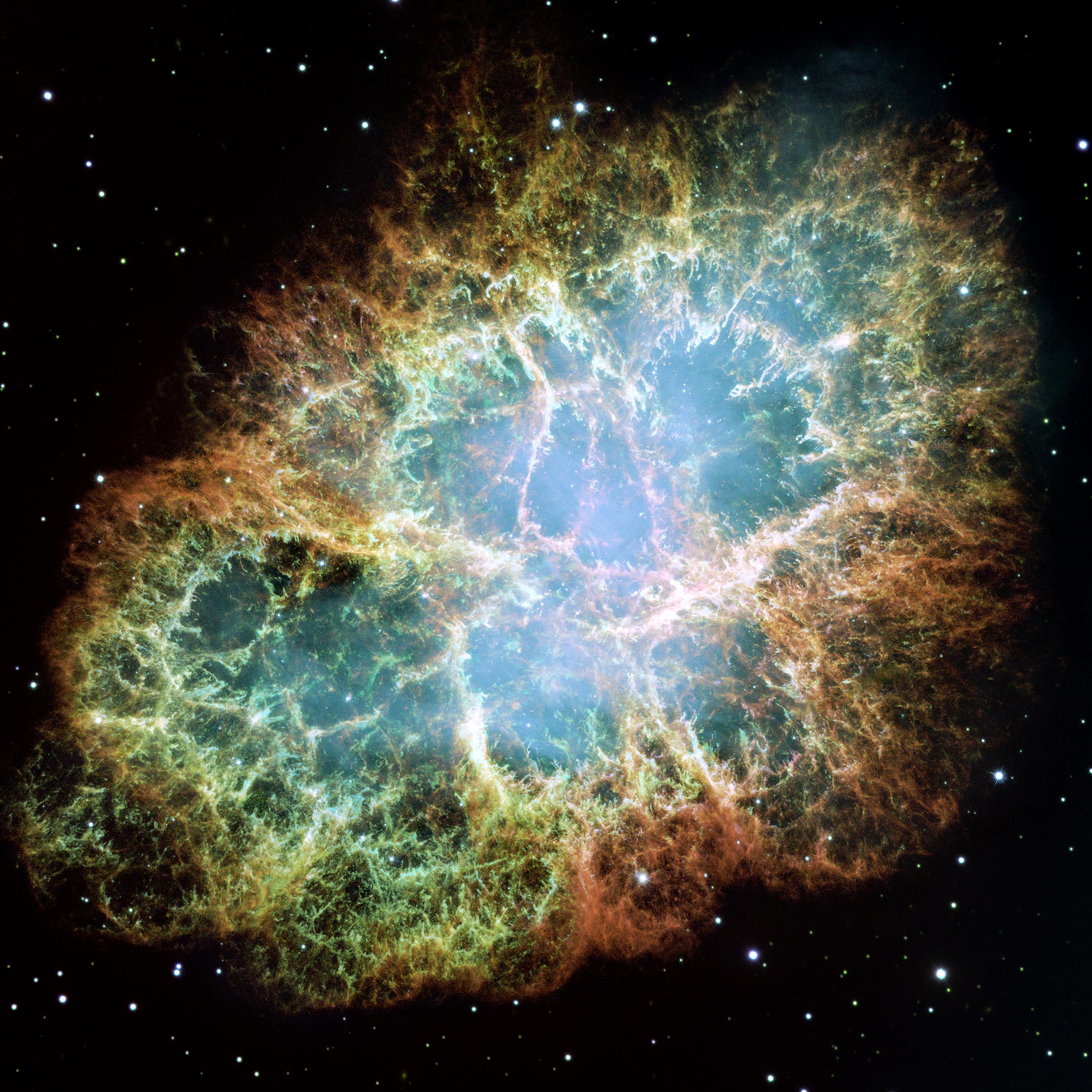
    Crab Nebula Hubble
    This Hubble image gives the most detailed view of the entire Crab Nebula ever. The Crab is among the most interesting and well-studied objects in astronomy. This image is the largest image ever taken with Hubble’s WFPC2 camera. It was assembled from 24 individual exposures taken with the NASA/ESA Hubble Space Telescope and is the highest resolution image of the entire Crab Nebula ever made. Credit: NASA, ESA, and Allison Loll/Jeff Hester (Arizona State University). Acknowledgment: Davide De Martin (ESA/Hubble)

    What Is a Nebula?

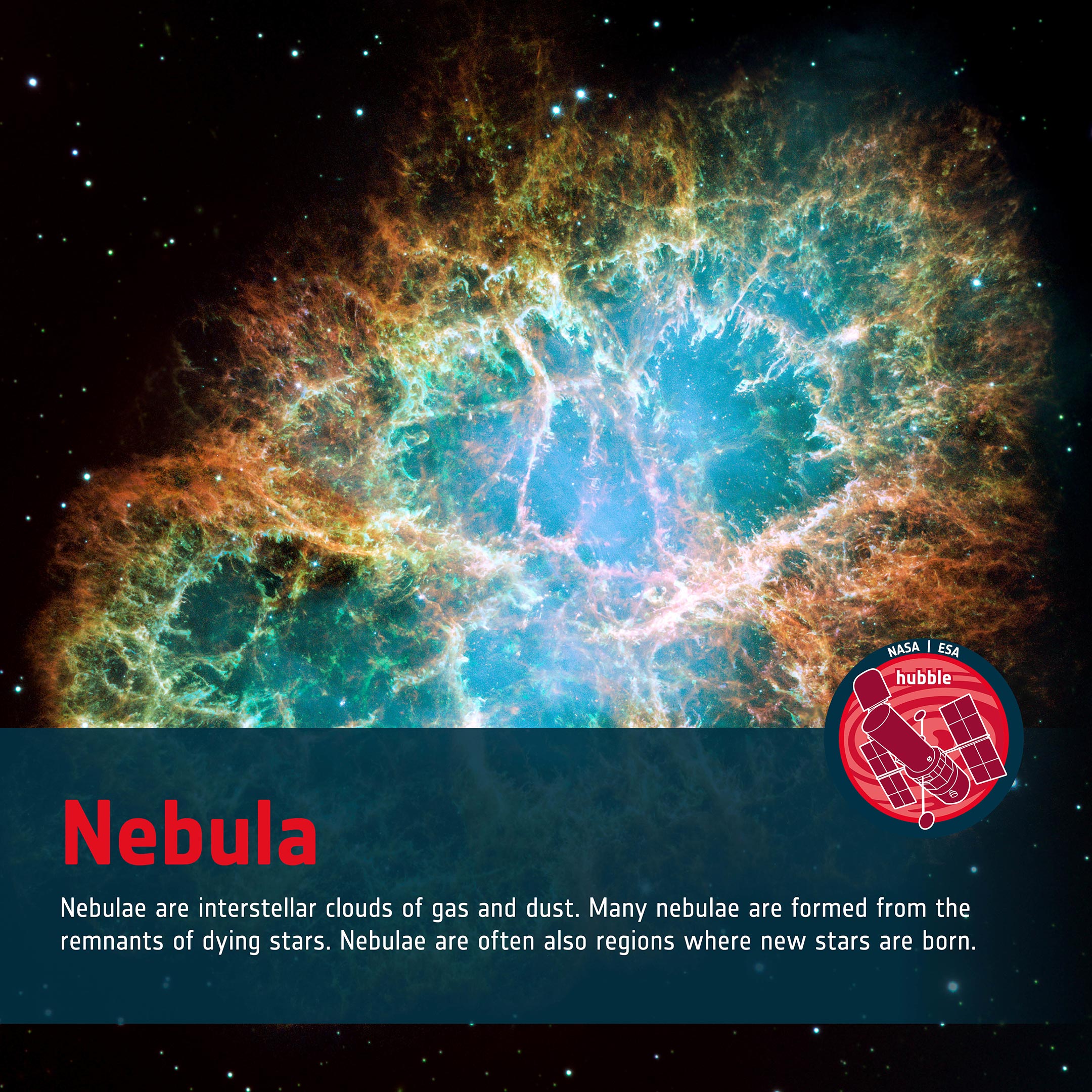
    Nebulae are interstellar clouds of gas and dust. Many nebulae are formed from the remnants of dying stars. Nebulae are often also regions where new stars are born.

    These days, the term ‘nebula’ refers to an interstellar cloud of dust and gas. Nebulae are frequently formed from the remnants of dying stars: from planetary nebulae or the dispersed debris from supernova explosions. They are also often regions of intense star formation, as the rich reservoirs of dust and gas provide the necessary raw material from which new stars are born. Nebulae are usually mind-bogglingly big, spanning several light years in size. The word ‘nebula’ used to have a much broader meaning, referring to any celestial object that appeared to have a diffuse structure, including the objects that we now know as galaxies.

    Some of the most popular images captured by the Hubble Space Telescope have been of beautiful and colorful nebulae. You can explore the vast ESA/Hubble archive of hundreds of nebula images here. This includes the popular images of the Lagoon Nebula (Hubble’s 28th-anniversary image), NGC 2014 and NGC 2020 (the 30th-anniversary image), the Pillars of Creation, the Crab Nebula, and more.


    Nebulae are interstellar clouds of gas and dust. Many nebulae are formed from the remnants of dying stars. Nebulae are often also regions where new stars are born. Credit: NASA, ESA, and the Hubble Heritage Team (AURA/STScI)

    One of the most detailed images of a star-forming region ever made is the large mosaic of 15 Hubble images showing the central part of the Orion Nebula complex. Hubble’s high resolution has been crucial in the investigation of the dust discs, dubbed proplyds, around the newborn stars in this nebula. The ‘proplyds’ may very well be young planetary systems in the early phases of their creation. The details that Hubble revealed are better than what has been achieved with ground-based instruments, and thanks to Hubble we have visual proof that dusty discs around young stars are common.

    Hubble’s Wide Field Camera 3 (WFC3) instrument is designed to make detailed images in both visible and infrared light, and offers greatly improved capabilities in the infrared. This allows Hubble to peer through the dust and gas of nebulae and observe the newborn stars. Dust clouds scatter visible light, but let infrared light through unimpeded, meaning infrared observations are often the only way to clearly see the full extent of the star formation in the region.
    Word Bank Nebula
    Credit: ESA/Hubble, NASA, ESA and Allison Loll/Jeff Hester (Arizona State University), Acknowledgment: Davide De Martin (ESA/Hubble)

    Using Hubble, astronomers have also caught a rare glimpse of the nebula Hen 3-1357, nicknamed the Stingray Nebula, fading precipitously over just the past two decades. Although the Universe is constantly changing, most processes are too slow to be observed within a human lifespan. However, the Stingray Nebula offered researchers a special opportunity to observe a system’s evolution in real-time. For example, images captured by Hubble in 2016, when compared to Hubble images taken in 1996, showed a nebula that has drastically dimmed in brightness and changed shape.

    Never miss a breakthrough: Join the SciTechDaily newsletter.
    Follow us on Google and Google News.

    Astronomy Astrophysics Hubble Space Telescope
    Share. Facebook Twitter Pinterest LinkedIn Email Reddit

    Related Articles

    Hubble Solves Mystery of Monster Star’s Dimming – Red Hypergiant Is As Bright as 300,000 Suns

    Astronomers Make a Weird Discovery: A Concentration of Smaller Black Holes Lurking Where They Expected a Single Massive Black Hole

    Tantrums of a Baby Star: Herbig-Haro Objects

    Unexpected Discovery: Hubble Space Telescope Uncovers Concentration of Small Black Holes

    Dissecting the Anatomy of Planetary Nebulae Using the Hubble Space Telescope

    HAWC+ Reveals Magnetic Chaos Hidden Within the Whirlpool Galaxy

    Supermassive Black Hole’s Dust Ring May Be Casting Shadows From Heart of a Galaxy

    Quasars Rip Across Galaxies Like Tsunamis – The Most Energetic Outflows Ever Witnessed in the Universe

    “Unprecedented” – Unusual Planetary Nebula Fades Mere Decades After It Arrived

    Leave A Reply Cancel Reply

    • Facebook
    • Twitter
    • Pinterest
    • YouTube

    Don't Miss a Discovery

    Subscribe for the Latest in Science & Tech!

    Trending News

    The Universe Is Expanding Too Fast and Scientists Can’t Explain Why

    “Like Liquid Metal”: Scientists Create Strange Shape-Shifting Material

    Early Warning Signals of Esophageal Cancer May Be Hiding in Plain Sight

    Common Blood Pressure Drug Shows Surprising Power Against Deadly Antibiotic-Resistant Superbug

    Scientists Uncover Dangerous Connection Between Serotonin and Heart Valve Disease

    Scientists Discover a “Protector” Protein That Could Help Reverse Hair Loss

    Bone-Strengthening Discovery Could Reverse Osteoporosis

    Scientists Uncover Hidden Trigger Behind Stem Cell Aging

    Follow SciTechDaily
    • Facebook
    • Twitter
    • YouTube
    • Pinterest
    • Newsletter
    • RSS
    SciTech News
    • Biology News
    • Chemistry News
    • Earth News
    • Health News
    • Physics News
    • Science News
    • Space News
    • Technology News
    Recent Posts
    • Scientists Overcome Major Quantum Bottleneck, Potentially Transforming Teleportation and Computing
    • Quantum Physics’ Strangest Problem May Hold the Key to Time Itself
    • Scientists Create “Liquid Gears” That Spin Without Touching
    • The Simple Habit That Could Help Prevent Cancer
    • Forgotten Medicinal Plant Shows Promise in Fighting Dangerous Superbugs
    Copyright © 1998 - 2026 SciTechDaily. All Rights Reserved.
    • Science News
    • About
    • Contact
    • Editorial Board
    • Privacy Policy
    • Terms of Use

    Type above and press Enter to search. Press Esc to cancel.