
Close Menu
    Facebook X (Twitter) Instagram
    SciTechDaily
    • Biology
    • Chemistry
    • Earth
    • Health
    • Physics
    • Science
    • Space
    • Technology
    Facebook X (Twitter) Pinterest YouTube RSS
    SciTechDaily
    Home»Space»Fireball Lights Up the Sky Over Salt Lake City – 16 Times Brighter Than the Full Moon
    Space

    Fireball Lights Up the Sky Over Salt Lake City – 16 Times Brighter Than the Full Moon

    By MSFC Meteoroid Environment OfficeAugust 18, 20226 Comments2 Mins Read
    Facebook Twitter Pinterest Telegram LinkedIn WhatsApp Email Reddit
    Share
    Facebook Twitter LinkedIn Pinterest Telegram Email Reddit
    GOES 17 Fireball Over Northern Utah
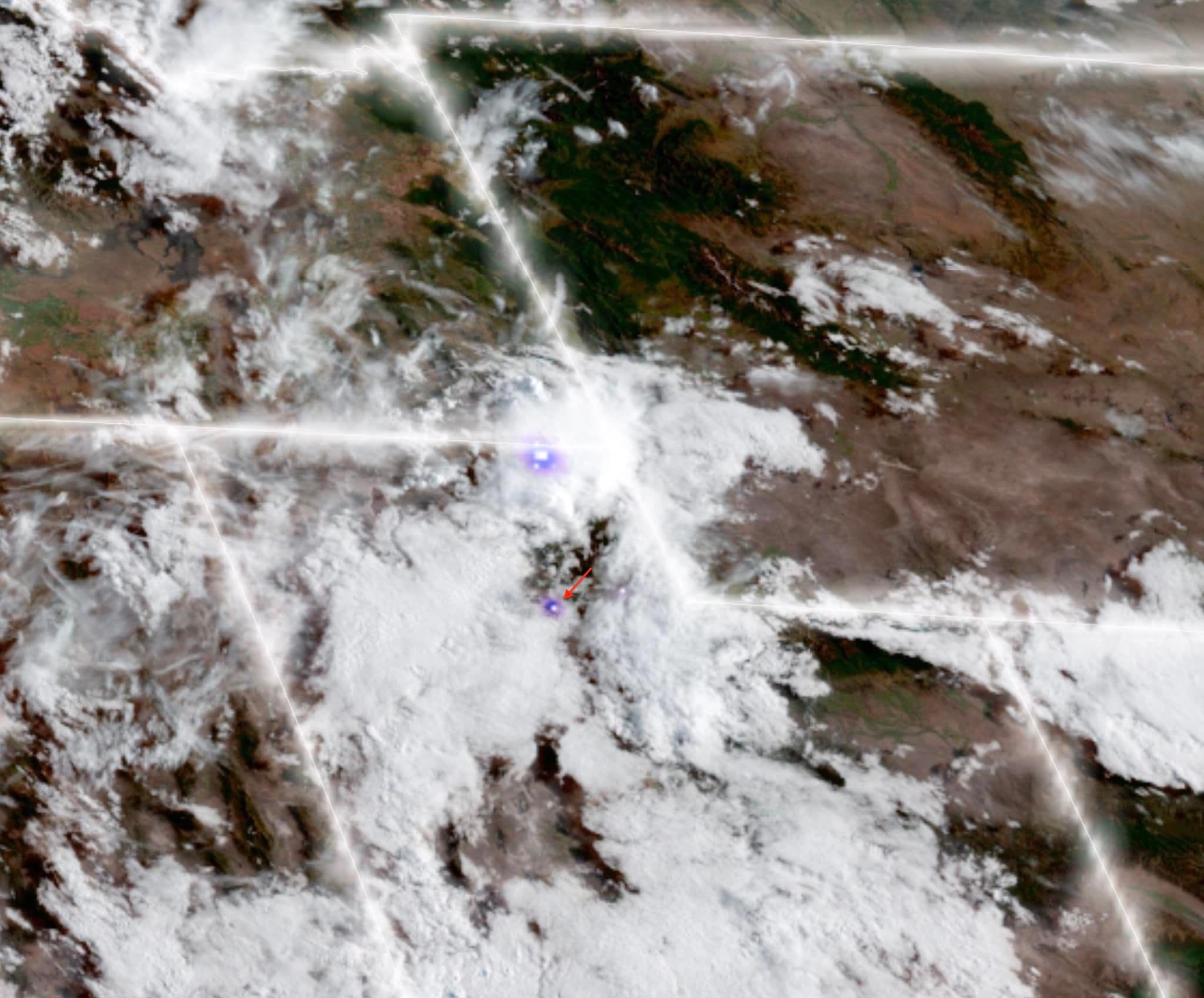
    GOES 17 Geostationary Lightning Mapper detection of the August 13, 2022, fireball over northern Utah. Credit: NOAA

    On Saturday morning, a brilliant meteor flew through the skies over northern Utah, later raining down meteorites over the Great Salt Lake.

    Residents of the Salt Lake City, Utah area were startled by loud booms at 8:30 a.m. MDT on Saturday, August 13, 2022. Eyewitnesses saw a spectacular fireball in the sky, 16 times brighter than the full Moon.

    Approximately 22,000 miles out in space, NOAA’s Geostationary Lightning Mappers (GLM) onboard the Geostationary Operational Environmental Satellites (GOES) 17 and 18 detected the meteor. It was first seen 50 miles over West Valley City, however, it is difficult to pinpoint its exact trajectory.

    Meteor Seen 50 Miles Over West Valley City, Utah
    The meteor was first seen 50 miles over West Valley City, Utah, moving to the northwest at 39,000 miles per hour. The object broke apart above the eastern shore of the Great Salt Lake. Credit: NASA

    “Daytime fireballs are very tough to analyze,” said Bill Cooke, lead of NASA’s Meteoroid Environments Office at Marshall Space Flight Center in Huntsville, Alabama. “There are few eyewitness sightings of the fireball and videos posted on social media are difficult to calibrate without stars in the background.”

    After traveling northwest at 39,000 miles per hour, the object broke apart above the eastern shore of the lake. The object was likely a piece of an asteroid, measuring about 2 feet across. “One meteorite has been recovered from the lake shore,” said Cooke. “There are probably more, but I would expect the vast majority fell into the water.”

    NASA studies meteoroid environments in space to protect astronauts and satellites in space. NASA’s Meteoroid Environment Office prepares meteoroid forecasts for missions like Artemis I, the first integrated test of NASA’s deep space exploration systems: the Orion spacecraft, Space Launch System rocket, and the ground systems at Kennedy Space Center in Cape Canaveral, Florida. The Artemis I launch is currently targeted for August 29.

    Never miss a breakthrough: Join the SciTechDaily newsletter.
    Follow us on Google and Google News.

    Meteors NASA NASA Marshall Space Flight Center Popular
    Share. Facebook Twitter Pinterest LinkedIn Email Reddit

    Related Articles

    Don’t Miss: “Gorgeously Green” Geminid Meteor Shower Peaks This Week

    Don’t Miss: Best Meteor Shower of the Year Peaks This Weekend

    Experts on the Future of Planetary Defense 10 Years After the Chelyabinsk Asteroid Impact’s 440 Kiloton Explosion

    Astrophysicists Solve 40-Year-Old Black Hole Jet Mystery With NASA’s IXPE

    Don’t Miss: Total Lunar Eclipse and Leonid Meteor Shower

    Surprising Results From NASA’s IXPE Help Unlock the Secrets of Famous Exploded Star

    Perseids Meteor Shower on the Way – But There’s a Big Problem

    NASA’s $10 Billion Webb Space Telescope Struck by Micrometeoroid

    Spectacular New Tau Herculids Meteor Shower May Light Up the Skies Over North America

    6 Comments

    1. Sharon Wilander on August 21, 2022 10:52 am

      This has really nothing to do with thus page, I don’t know who to talk about what I saw along with my Sons at 430 am the end of May. As we looked up in the sky it looked lik a ribbon of stars flowing and flowing for awhile and then it was gone. Of course I did have a camera. We havent heard anything about that morning. I wonder if we are the Only
      ones that saw it that morning. Would really like to know what it was?

      Reply
      • Greg on August 21, 2022 11:34 am

        Google “Starlink satellites”

        Reply
    2. Don on August 21, 2022 11:30 am

      We’er they traveling from west to east? If so they were the Star link satellites. I saw them once at the same time in northern Idaho. Pretty cool imo.

      Reply
    3. Tina on August 21, 2022 12:24 pm

      I believe that was what is called a star link constilation.

      Reply
    4. Astronomer guy on August 21, 2022 3:52 pm

      Sharon, you saw a “train” of starlink satellites shortly after launch. SpaceX launches many of them on the same rocket. They start off looking like a ribbon of stars and slowly spread apart in the weeks afterwards.

      Reply
    5. McDVOICE on August 21, 2022 11:04 pm

      There are few eyewitness sightings of the fireball and videos posted on social media are difficult to calibrate without stars in the background.

      Reply
    Leave A Reply Cancel Reply

    • Facebook
    • Twitter
    • Pinterest
    • YouTube

    Don't Miss a Discovery

    Subscribe for the Latest in Science & Tech!

    Trending News

    Artificial Sweeteners May Harm Future Generations, Study Suggests

    Splashdown! NASA Artemis II Returns From Record-Breaking Moon Mission

    What If Consciousness Exists Beyond Your Brain

    Scientists Finally Crack the 100-Million-Year Evolutionary Mystery of Squid and Cuttlefish

    Beyond “Safe Levels”: Study Challenges What We Know About Pesticides and Cancer

    Researchers Have Found a Dietary Compound That Increases Longevity

    Scientists Baffled by Bizarre “Living Fossil” From 275 Million Years Ago

    Your IQ at 23 Could Predict Your Wealth at 27, Study Finds

    Follow SciTechDaily
    • Facebook
    • Twitter
    • YouTube
    • Pinterest
    • Newsletter
    • RSS
    SciTech News
    • Biology News
    • Chemistry News
    • Earth News
    • Health News
    • Physics News
    • Science News
    • Space News
    • Technology News
    Recent Posts
    • This Metal Melts in Your Hand – and Scientists Just Discovered Something Strange
    • Why Losing Too Much Fat Can Be Just As Dangerous as Obesity
    • Beef vs. Chicken: Surprising Results From New Prediabetes Study
    • Alzheimer’s Breakthrough: Scientists Discover Key Protein May Prevent Toxic Protein Clumps in the Brain
    • Scientists Discover New Way To Make Protein Shakes Taste Better
    Copyright © 1998 - 2026 SciTechDaily. All Rights Reserved.
    • Science News
    • About
    • Contact
    • Editorial Board
    • Privacy Policy
    • Terms of Use

    Type above and press Enter to search. Press Esc to cancel.