
Close Menu
    Facebook X (Twitter) Instagram
    SciTechDaily
    • Biology
    • Chemistry
    • Earth
    • Health
    • Physics
    • Science
    • Space
    • Technology
    Facebook X (Twitter) Pinterest YouTube RSS
    SciTechDaily
    Home»Chemistry»Atomic Layer Deposition Scaled Up to Large Surfaces With Lower Costs
    Chemistry

    Atomic Layer Deposition Scaled Up to Large Surfaces With Lower Costs

    By EPFLNovember 12, 20192 Comments2 Mins Read
    Facebook Twitter Pinterest Telegram LinkedIn WhatsApp Email Reddit
    Share
    Facebook Twitter LinkedIn Pinterest Telegram Email Reddit
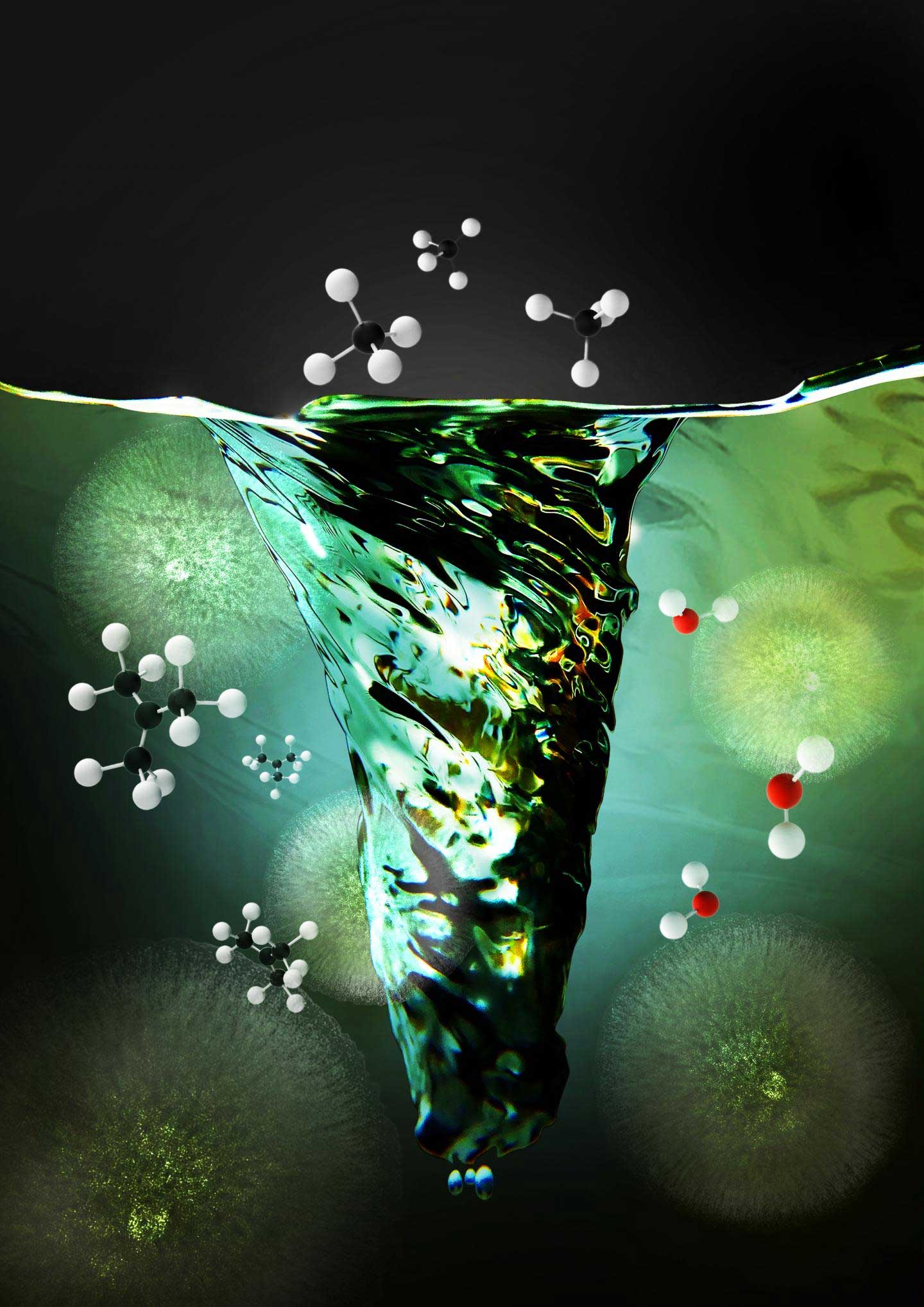
    Artistic Illustration of Atomic Layer Deposition
    This is an artistic illustration of atomic layer deposition. Credit: J. Luterbacher (EPFL)

    Atomic layer deposition (ALD) involves stacking layers of atoms on top of each other like pancakes. The atoms come from a vaporized material called a precursor. ASD is a well-established technique for manufacturing microelectronics like semiconductors and magnetic heads for sound recording, as well as sensors for bioengineering and diagnostics.

    However, using ALD for depositing layers on larger surfaces has been a struggle, especially when it comes to manufacturing materials that must be kept at low cost, e.g. catalysts and solar devices.

    “The sticking point is not necessarily making the right material but making it cheaply,” explains Professor Jeremy Luterbacher, head of EPFL’s Laboratory of Sustainable and Catalytic Processing (LPDC). “Coating larger surface areas with gas-phase methods requires long deposition times, and huge excesses of precursor, both of which increase costs,” adds Benjamin Le Monnier, the Ph.D. student who performed most of the research.

    Now, the LPDC has developed a solution. Using ALD in a liquid phase, the scientists can produce materials indistinguishable from those made in the gas phase, with far cheaper equipment and no excess precursors.

    Greater precision cuts costs

    The researchers achieved this breakthrough by carefully measuring the ratio of the reacting precursors before injecting them onto the surface of a substrate. This way, they used exactly the right amount of precursor, with no leftovers that can cause unwanted reactions or be wasted.

    The new method also reduces costs by requiring only standard lab equipment for chemical synthesis. It can also be easily scaled up to coat more than 150 g of material with the same cheap equipment, without loss of coating quality. The technique can even achieve coatings that are not possible using gas-phase ALD, e.g. by using non-volatile precursors.

    “We believe that this technique could greatly democratize the use ALD on catalysts and other high surface area materials,” says Luterbacher.

    This research was published yesterday (November 11, 2019) in the journal Advanced Materials.

    Reference: “Atomic layer deposition on dispersed materials in liquid phase by stoichiometrically limited injections” by Benjamin P. Le Monnier, Frederick Wells, Farzaneh Talebkeikhah and Jeremy S. Luterbacher, 11 November 2019, Advanced Materials.
    DOI: 10.1002/adma.201904276

    Never miss a breakthrough: Join the SciTechDaily newsletter.
    Follow us on Google and Google News.

    Catalysts Chemical Engineering EPFL Materials Science
    Share. Facebook Twitter Pinterest LinkedIn Email Reddit

    Related Articles

    New Catalyst Turns CO2 Into Valuable Methanol With Unprecedented Efficiency

    Tiny Bubbles Unlock a Powerful New Source of Blue Energy

    New Catalyst Design Solves a Decades-Old Chemical Challenge

    Century-Old Mystery Solved: Scientists Measure a Fraction of an Electron, Unlocking the Secret to Catalysis

    The New King of Propylene? Cobalt Catalyst Outperforms Precious Metals

    Record-Breaking Catalyst Converts Carbon Dioxide Into Valuable Chemicals

    Increasing the Efficiency of Chemical Reactions To Help Decarbonize Fuels and Chemicals

    UJI Patents New Graphene-Based Catalysts

    Scientists Examine Platinum-Based Catalyst Design

    2 Comments

    1. John Dello-stritto on November 12, 2019 4:45 pm

      how close are we star trek replicator?

      Reply
    2. John Dello-stritto on November 12, 2019 4:46 pm

      how close are we to the star trek replicator?

      Reply
    Leave A Reply Cancel Reply

    • Facebook
    • Twitter
    • Pinterest
    • YouTube

    Don't Miss a Discovery

    Subscribe for the Latest in Science & Tech!

    Trending News

    The Universe Is Expanding Too Fast and Scientists Can’t Explain Why

    “Like Liquid Metal”: Scientists Create Strange Shape-Shifting Material

    Early Warning Signals of Esophageal Cancer May Be Hiding in Plain Sight

    Common Blood Pressure Drug Shows Surprising Power Against Deadly Antibiotic-Resistant Superbug

    Scientists Uncover Dangerous Connection Between Serotonin and Heart Valve Disease

    Scientists Discover a “Protector” Protein That Could Help Reverse Hair Loss

    Bone-Strengthening Discovery Could Reverse Osteoporosis

    Scientists Uncover Hidden Trigger Behind Stem Cell Aging

    Follow SciTechDaily
    • Facebook
    • Twitter
    • YouTube
    • Pinterest
    • Newsletter
    • RSS
    SciTech News
    • Biology News
    • Chemistry News
    • Earth News
    • Health News
    • Physics News
    • Science News
    • Space News
    • Technology News
    Recent Posts
    • Scientists Overcome Major Quantum Bottleneck, Potentially Transforming Teleportation and Computing
    • Quantum Physics’ Strangest Problem May Hold the Key to Time Itself
    • Scientists Create “Liquid Gears” That Spin Without Touching
    • The Simple Habit That Could Help Prevent Cancer
    • Forgotten Medicinal Plant Shows Promise in Fighting Dangerous Superbugs
    Copyright © 1998 - 2026 SciTechDaily. All Rights Reserved.
    • Science News
    • About
    • Contact
    • Editorial Board
    • Privacy Policy
    • Terms of Use

    Type above and press Enter to search. Press Esc to cancel.