
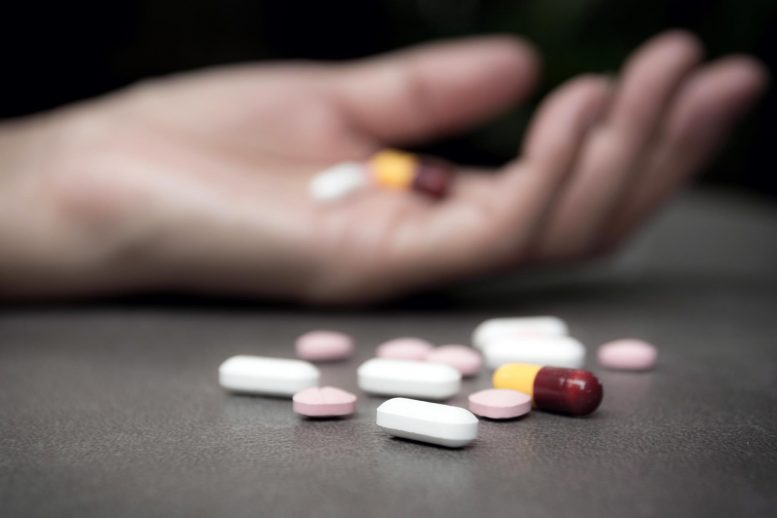
Rural areas experience a higher rate of reported cases, as well as a higher rate during school months.
A new study from Nationwide Children’s Hospital and the Central Ohio Poison Center found rates of suicide attempts by self-poisoning among youth and adolescents are higher in rural communities, higher during the academic school year, and involve common medications found in many households.
The study, published online today (October 6, 2019) in Clinical Toxicology, expands on previous research that evaluated the incidence and outcomes from intentional suspected-suicide self-poisoning in children and young adults ages 10 to 24 years old from 2000-2018. In that 19-year time frame, there were more than 1.6 million intentional suspected-suicide self-poisoning cases in youth and young adults reported to U.S. poison centers. The majority of cases were female (71%), and involved a pharmaceutical (92%).
“While most of these cases involved medications, with adolescents, any available medication can be a potential hazard,” said Henry Spiller, MS, D.ABAT, director of the Central Ohio Poison Center at Nationwide Children’s, and co-author of the study. “It’s not so much a matter of substance type, but rather a matter of access to the substance. Any type of medication can be misused and abused in ways that can, unfortunately, lead to very severe outcomes, including death.”
The two most common substance groups in all age groups were over-the-counter (OTC) analgesics — such as acetaminophen, ibuprofen, and aspirin — followed by antidepressants. In youth and adolescents 10-12 and 13-15 years old, ADHD medications were common, and had the highest risk of serious medical outcomes. Opiates only accounted for 7% of cases with serious medical outcomes.
“Because medications are so readily available in homes, many families do not take precautions to store them safely. Our findings suggest this is a big problem,” said John Ackerman, Ph.D., clinical psychologist and suicide prevention coordinator for the Center for Suicide Prevention and Research at Nationwide Children’s, and co-author of the study. “Medications can be part of effective treatment, but they require an extra layer of care. The answer is not to stop prescribing medications to those who stand to benefit, but rather to emphasize the practice of safe storage and vigilance when administering any kind of medicine, especially when children and teens live in the home.”
The study also found that states with a lower population per square mile (rural areas) had a greater number of reported cases with all outcomes and serious medical outcomes. Results also revealed there was a significant decrease in the number of cases in school-aged individuals during the non-school months of June through August (27.5% decrease in 10-12-year-olds; 27.3% decrease in 13-15-year-olds; and 18.3% decrease in 16-18-year-olds), compared with school months September through May.
Nationwide Children’s Big Lots Behavioral Health experts recommend that parents check in with their children regularly, and ask them directly how they are doing and if they have ever had thoughts about ending their life. These direct questions are even more critical if warning signs of suicide are observed. Medications should be stored up, away, and out of sight, preferably in a locked cabinet. The administration of medicine should always be supervised.
“It should concern us that youth in rural areas are about twice as likely as those living in urban areas to die by suicide. Although we are in dire need of more research to help us understand what places some people at more risk than others, available evidence indicates that include increased social isolation, stigma, access to lethal means and lack of appropriate mental health resources may play a role in this disparity,” said Ackerman, whose suicide prevention team provides comprehensive training to more than 140 central and southeast Ohio schools with the SOS Signs of Suicide program. “It is vital that parents, teachers, and other trusted adults start conversations about mental health early, and pay even closer attention during the school year, as rates of anxiety and depression are shown to increase during that time. Warning signs can often be detected and support is available for young people in crisis.”
Dr. Ackerman recommends parents start now to increase the dialogue and have important conversations as a family with resources found at OnOurSleeves.org.
The American Association of Suicidology and American Foundation for Suicide Prevention also have many resources for families and professionals.
Reference: “Suicide attempts by self-poisoning in the United States among 10–25 year olds from 2000 to 2018: substances used, temporal changes and demographics” by Henry A. Spiller, John P. Ackerman, Gary A. Smith, Sandhya Kistamgari, Alexandra R. Funk, Michael R. McDermott and Marcel J. Casavant, 6 October 2019, Clinical Toxicology.
DOI: 10.1080/15563650.2019.1665182
Data for this study were collected by the National Poison Data System (NPDS).
If you or your child need immediate help due to having suicidal thoughts, go to your local emergency room immediately, call the National Suicide Prevention Lifeline at 1-800-273-TALK (8255) or you can reach the Crisis Text Line by texting “START” to 741-741. If you believe an overdose has occurred, call the national Poison Help hotline 1-800-222-1222.
Never miss a breakthrough: Join the SciTechDaily newsletter.
Follow us on Google and Google News.