
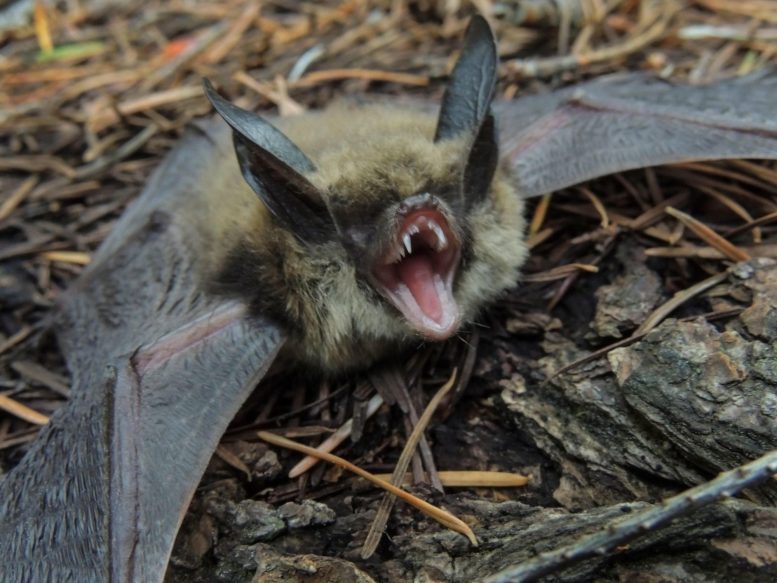
Scientists propose protecting bats and their habitats to prevent zoonotic pandemics, highlighting their vital ecological benefits and the need for global conservation efforts.
A recent paper in the journal The Lancet Planetary Health advocates for a universal agreement to avoid disturbing bats and their habitats as a measure to prevent pandemics.
Bats have been identified as the source of the virus in both the SARS coronavirus outbreak of 2003 and the COVID-19 pandemic. It remains uncertain whether the transmission resulted from direct contact with an infected bat, exposure to bat bodily fluids in a cave or similar environment, or via another animal infected by a bat, we will quite likely never know.
Even a virus released via a lab accident would still have originally come from a bat. But we don’t need to know all of the details in order to act.
Bats are known to be reservoirs for a wide range of viruses that can infect other species, including people. They are a source of rabies, Marburg filoviruses, Hendra and Nipah paramyxoviruses, coronaviruses such as Middle East Respiratory Syndrome (MERS) Coronavirus, and fruit bats are strongly believed to be a source of Ebolaviruses.
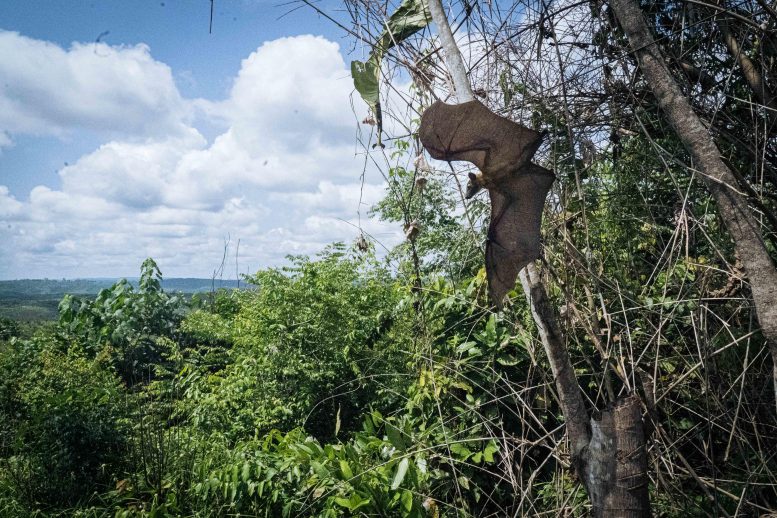
A new analysis points to the value of a global taboo whereby humanity agrees to leave bats alone—not fear them or try to chase them away or cull them (activities that only serve to disperse them and increase the odds of zoonotic spillover)—but to let them have the habitats they need and live undisturbed.
If an ounce of prevention is indeed worth a pound of cure, then the authors emphasize that humanity simply must take the most basic, common-sense upstream steps to lower our risk of incurring another pandemic—at the interface where dangerous viruses can actually move from animals into people.
“In a globalized world with 8 billion people, we can no longer ignore our interconnectedness with the wildlife and ecosystems around us. We must change humanity’s relationship with nature if we want to prevent the next pandemic of zoonotic origin—and that can start with bats,” says Dr. Susan Lieberman, WCS’s Vice President for International Policy.
Preventing Future Pandemics Through Conservation
Simply put, humanity must change its broken relationship with nature, specifically wildlife and bats in particular. The costs of implementing the human behavioral changes we need are insignificant compared to the costs of another global pandemic (which could be even more devastating).
“Getting humanity to work collaboratively at a global scale underpins most of the existential challenges we face, from climate change and environmental pollution to biodiversity loss and ecosystem collapse—this at a time when earnest collaboration even at local scales often seems elusive,” notes Cornell Professor of Wildlife Health & Health Policy Steven A. Osofsky, lead author of the study. “However, if we can actually stop hunting, eating, and trading bats, stay out of their caves, keep livestock away from areas where bats are concentrated, and if we can stop deforesting, degrading (or even start restoring) their natural habitats, we can indisputably lower the chances of another pandemic.”
The authors emphasize that allowing bats to survive and thrive will also pay billions of dollars in dividends in the form of the ecosystem services that bats provide, such as control of mosquitos and other harmful insects, as well as pollination of a wide array of important crops. They conclude that humanity’s relationships with other kinds of animals indeed merit close scrutiny, but respecting bats and the habitats they need is truly the lowest hanging fruit of genuine upstream pandemic prevention—an important better-late-than-never message now that we’ve passed the third anniversary of the COVID-19 pandemic.
Reference: “An immediate way to lower pandemic risk: (not) seizing the low-hanging fruit (bat)” by Steven A Osofsky, Susan Lieberman, Christian Walzer, Helen L Lee and Laurel A Neme, 5 June 2023, The Lancet Planetary Health.
DOI: 10.1016/S2542-5196(23)00077-3
Never miss a breakthrough: Join the SciTechDaily newsletter.
Follow us on Google and Google News.
1 Comment
“Bats have been identified as the source of the virus in both the SARS coronavirus outbreak of 2003 and the COVID-19 pandemic. ”
Does this site even care about facts and truth anymore?
It has already been proven COVID did not start with, or come from, bats.