
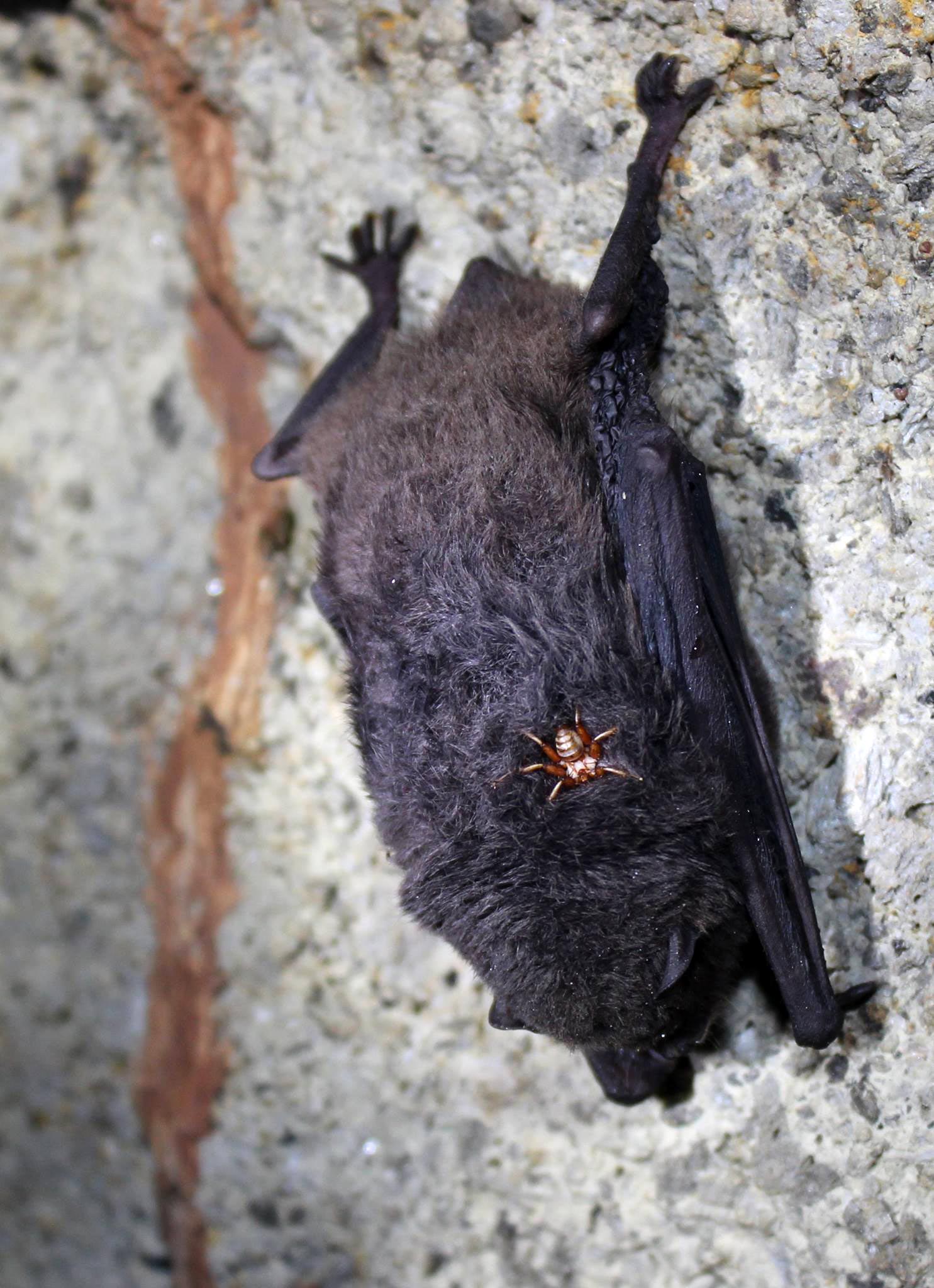
Blood-sucking flies may be following chemicals produced by skin bacteria to locate bats to feed on.
We humans aren’t the only animals that have to worry about bug bites. There are thousands of insect species that have evolved to specialize in feeding on different mammals and birds, but scientists are still learning how these bugs differentiate between species to track down their preferred prey. It turns out, the attraction might not even be skin-deep: a new study in Molecular Ecology found evidence that blood-sucking flies that specialize on bats may be locating their preferred hosts by following the scent of chemicals produced by bacteria on the bats’ skin.
Holly Lutz, the paper’s lead author, got the idea for the project from previous research showing that mosquitoes seem to prefer some people over others. “You know when you go to a barbecue and your friend is getting bombarded by mosquitoes, but you’re fine? There is some research to support the idea that the difference in mosquito attraction is linked to your skin microbiome — the unique community of bacteria living on your skin,” says Lutz, a research associate at Chicago’s Field Museum and a project scientist with the labs of Jack Gilbert (who co-authored this study) and Rob Knight at the University of California, San Diego. “Keeping in mind that some people are more attractive to mosquitoes than others, I wondered what makes insects attracted to some bats but not others.”
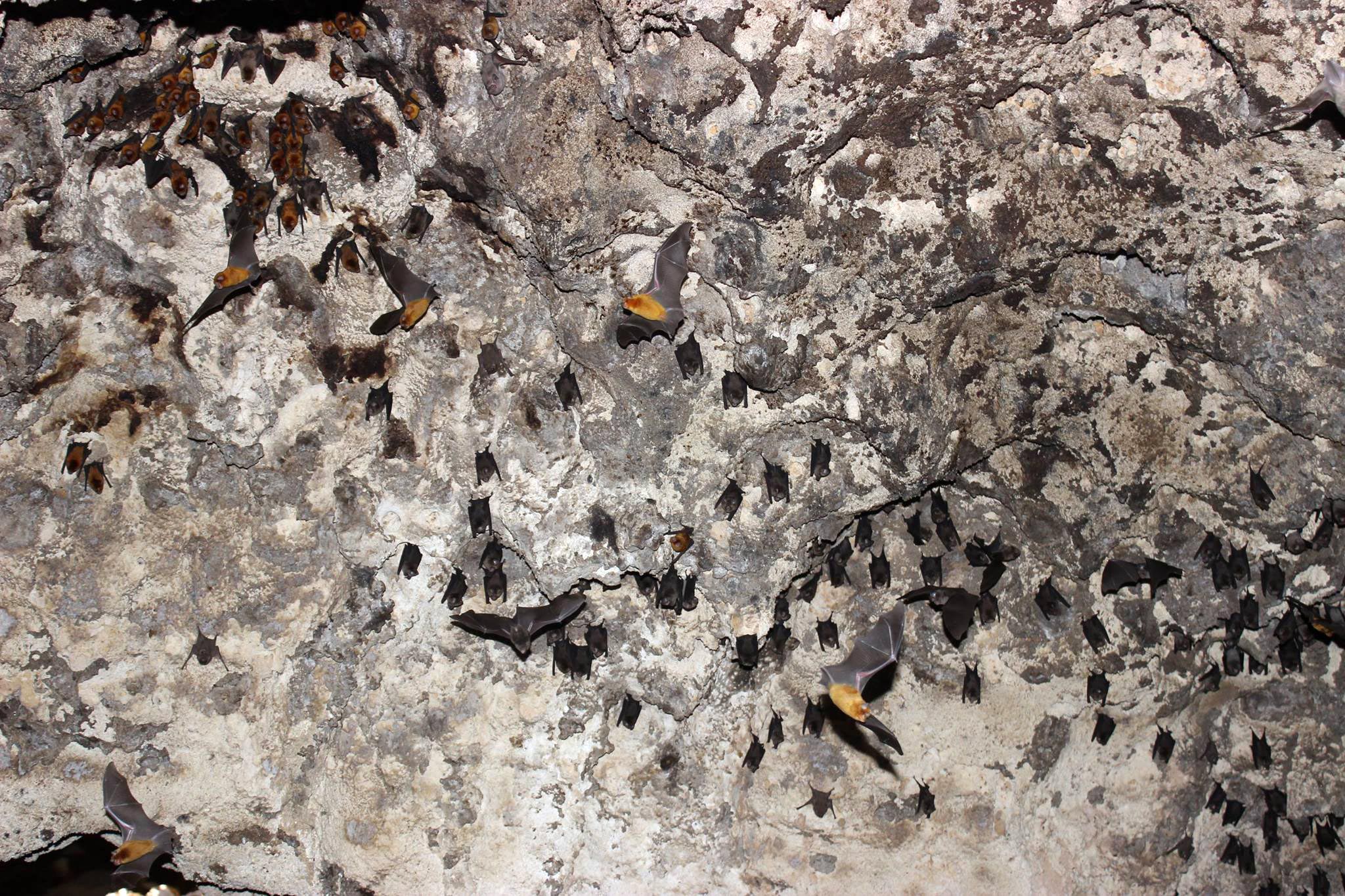
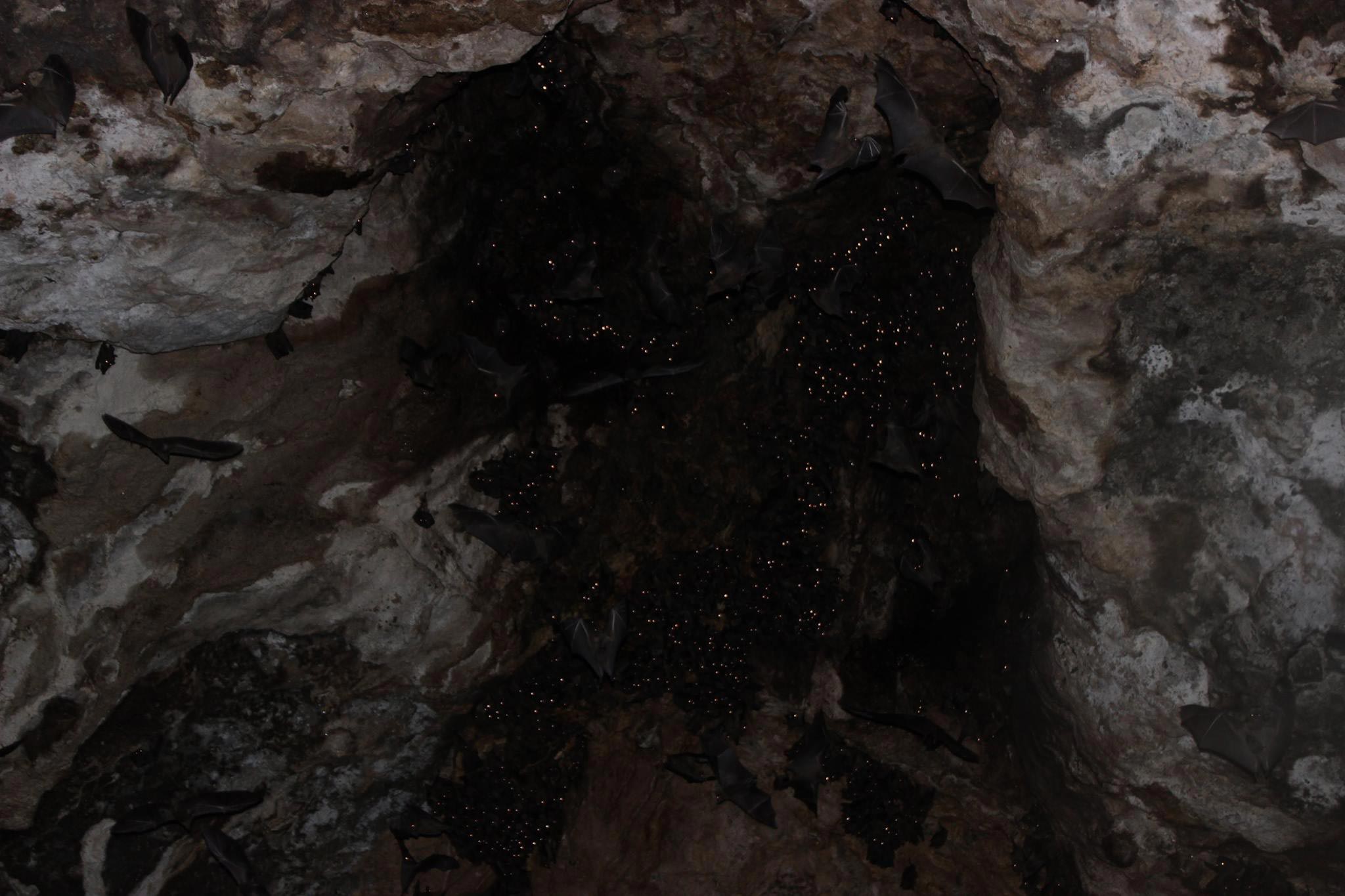
Lutz encountered plenty of bats during her PhD work and postdoctoral residency at the Field Museum, on fieldwork trips to bat caves in Kenya and Uganda studying malaria. “In these caves, I’d see all these different bat species or even taxonomic families roosting side by side. Some of them were loaded with bat flies, while others had none or only a few. And these flies are typically very specific to different kinds of bats — you won’t find a fly that normally feeds on horseshoe bats crawling around on a fruit bat,” says Lutz. “I started wondering why the flies are so particular — clearly, they can crawl over from one kind of bat to another, but they don’t really seem to be doing that.”
Blind, Flightless, and Picky: The Strange Lives of Bat Flies
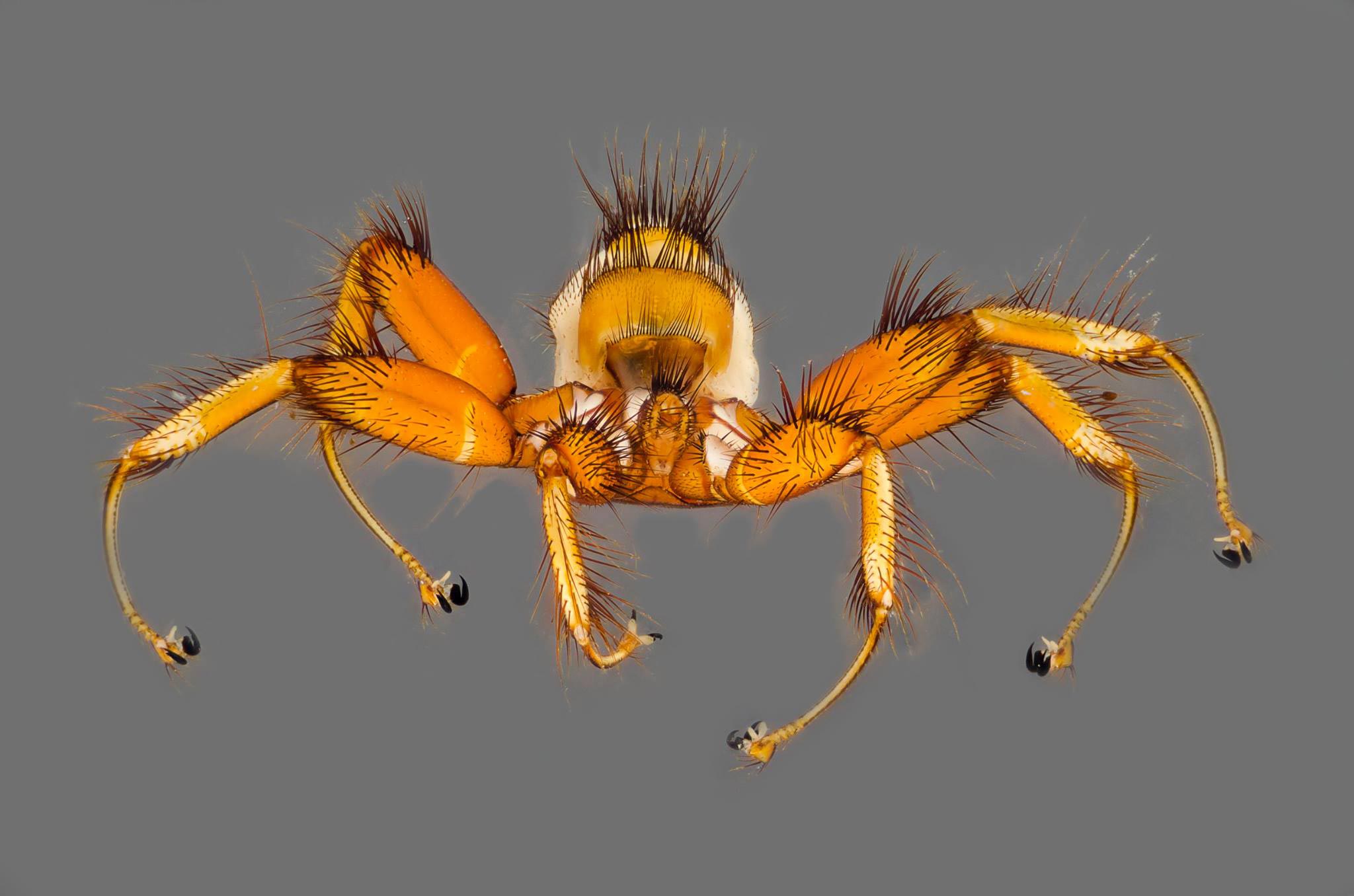
The flies in question are cousins of mosquitoes, and while they’re technically flies, most can’t actually fly. “They have incredibly reduced wings in many cases and can’t actually fly,” says Lutz. “And they have reduced eyesight, so they probably aren’t really operating by vision. So some other sensory mechanisms must be at play, maybe a sense of smell or an ability to detect chemical cues.”
”How the flies actually locate and find their bats has previously been something of a mystery,” says Carl Dick, a research associate at the Field Museum, professor of biology at Western Kentucky University, and one of the study’s co-authors. “But because most bat flies live and feed on only one bat species, it is clear that they somehow find the right host.”
Furthermore, bat flies transmit malaria between bats, and the malaria parasites are host-specific as well. It’s an intricate, complex system with important parallels to other vector-borne pathways for disease transmission, such as malarial and viral transmission among humans by anopheline mosquitoes. Previous research has shown that different bacterial species associated with skin or even the disease status of individual humans can influence feeding preferences of blood-seeking mosquitoes.
Lutz suspected that, similarly to what’s been observed in humans, the bats’ skin microbiomes may be playing a role in attracting the flies seeking them out. Skin — whether it belongs to a human or a bat — is covered with tiny microorganisms that help protect the body from invading pathogens, bolster the immune system, and break down natural products like sweat. Host species evolve alongside their skin microbiomes, leading to different species being home to different sets of bacteria.
All these different kinds of bacteria produce a unique bouquet of airborne chemicals as they metabolize nutrients. And, according to Lutz’s hypothesis, different kinds of insects are attracted to different chemical signals, which could help explain why some bats are more attractive to blood-sucking flies than others — just like your friend at the barbeque.
To test this hypothesis, Lutz examined dozens of bats from a variety of species. “We went into a ton of different caves where they roost and used long bat nets, which are basically like super sturdy butterfly nets, to catch them,” says Lutz. She and her colleagues took skin and fur samples from the bats’ bodies and wings in order to examine both the bats’ DNA and the microbes living on their skin. The researchers also examined the bats for flies. “You brush the bats’ fur with your forceps, and it’s like you’re chasing the fastest little spider,” says Lutz. “The flies can disappear in a split second. They are fascinatingly creepy.”
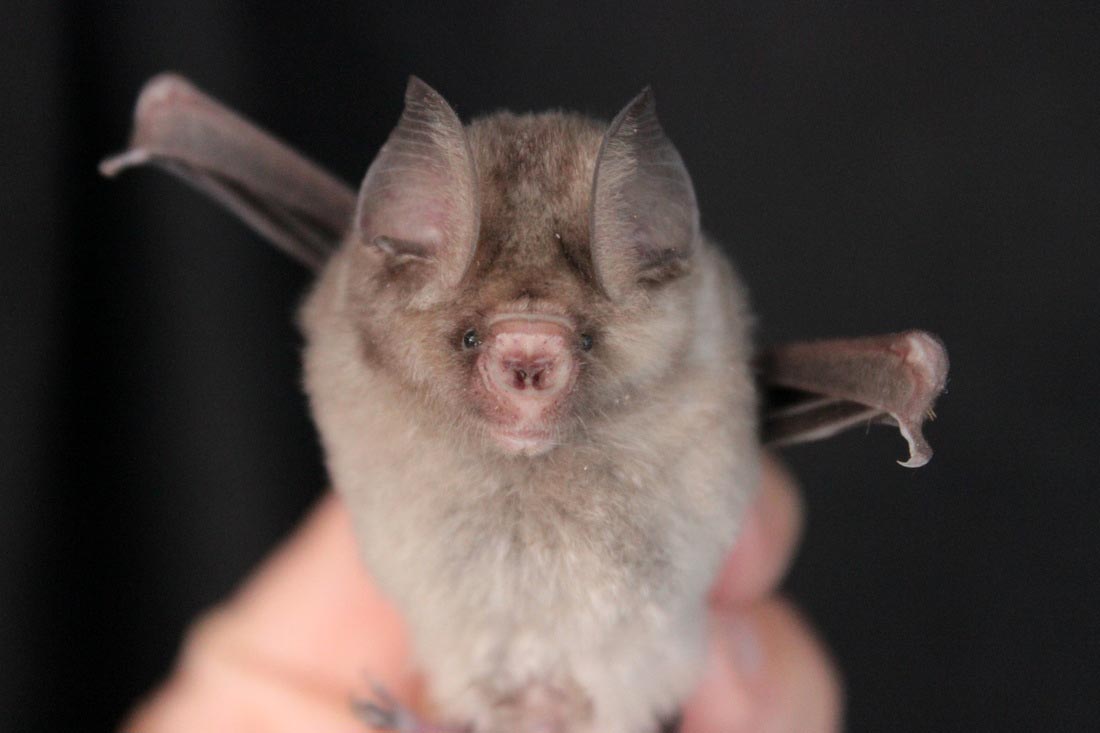
“The flies are exquisitely evolved to stay on their bat,” says Dick. “They have special combs, spines, and claws that hold them in place in the fur, and they can run quickly in any direction to evade the biting and scratching of the bats, or the efforts by researchers to capture them.”
The researchers then analyzed the specimens back at the Field Museum’s Pritzker DNA Laboratory. “Once we were back at the lab, we extracted all the DNA from the bacteria and sequenced it. We basically created libraries of all the bacteria associated with each individual skin sample. Then we used bioinformatics methods to characterize the bacteria there and identify which ones are present across different bat groups, comparing bats that were parasitized by flies to those that were not,” says Lutz.
Distinct Microbiomes Linked to Parasitized Bats
The team found that the different bat families had their own unique combinations of skin bacteria, even when the bats were collected from different locations. “The goal of this study was to ask, ‘Are there differences in the skin microbiome of these different bats, and are there bacteria that are common among bats that have parasites versus those that don’t?’” says Lutz. “Getting these results was really exciting — this paper is the culmination of years of thinking and wondering and sampling.”
There are still some big questions to answer, however. “We weren’t able to collect the actual chemicals producing cue — secondary metabolites or volatile organic compounds — during this initial work. Without that information, we can’t definitively say that the bacteria are leading the flies to their hosts. So, next steps will be to sample bats in a way that we can actually tie these compounds to the bacteria” says Lutz, “In science, there is always a next step.”
In addition to explaining how blind, flightless flies are able to be so picky with which bats they feed on, the study gets at bigger-picture questions of how different organisms coexist. “We live in these complex communities where different types of life are always bumping into each other and interacting and sometimes depending on each other or eating each other,” says Lutz. “In a healthy natural state, these organisms partition themselves so they can coexist. But as habitats are destroyed, organisms are forced to share resources or start utilizing new ones.” Animals that used to be able to give each other a wide berth might no longer be able to, and that can lead to new diseases spreading from one organism to another.
“Humans are affecting these ecosystems, and these ecosystems can in turn affect us,” says Lutz. “That’s why it’s important to study them.”
Reference: “Associations between Afrotropical bats, eukaryotic parasites, and microbial symbionts” by Holly L. Lutz, Jack A. Gilbert and Carl W. Dick, 28 June 2021, Molecular Ecology.
DOI: 10.1111/mec.16044
Never miss a breakthrough: Join the SciTechDaily newsletter.
Follow us on Google and Google News.