
Close Menu
    Facebook X (Twitter) Instagram
    SciTechDaily
    • Biology
    • Chemistry
    • Earth
    • Health
    • Physics
    • Science
    • Space
    • Technology
    Facebook X (Twitter) Pinterest YouTube RSS
    SciTechDaily
    Home»Science»Bizarre Manta-Like Sharks Once Soared Through Late Cretaceous Oceans
    Science

    Bizarre Manta-Like Sharks Once Soared Through Late Cretaceous Oceans

    By American Association for the Advancement of ScienceApril 4, 2021No Comments2 Mins Read
    Facebook Twitter Pinterest Telegram LinkedIn WhatsApp Email Reddit
    Share
    Facebook Twitter LinkedIn Pinterest Telegram Email Reddit
    Eagle Shark
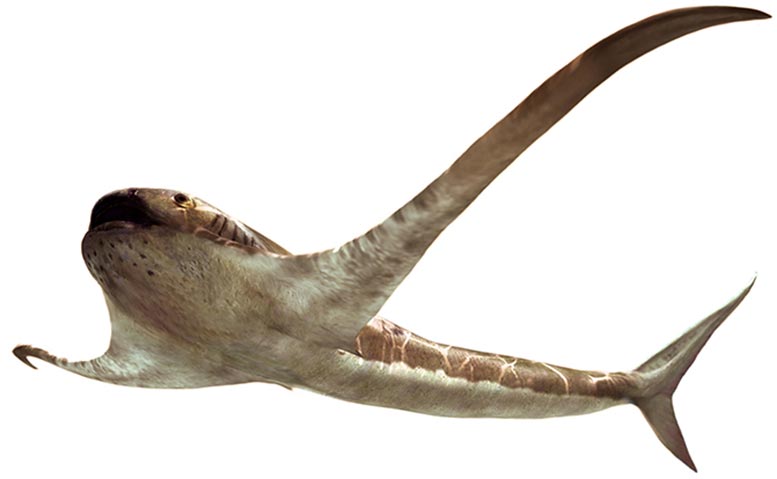
    Artist’s impression showing one eagle shark. Credit: © Oscar Sanisidro

    Aquilolamna milarcae, a newly discovered Late Cretaceous species dubbed the “winged shark,” has captivated paleontologists with its manta-like pectoral fins and filter-feeding lifestyle.

    Introducing a “bizarre” shark from the Late Cretaceous that, more than 66 million years ago, plied the seas feasting upon plankton while soaring through the water on long, slender fins.

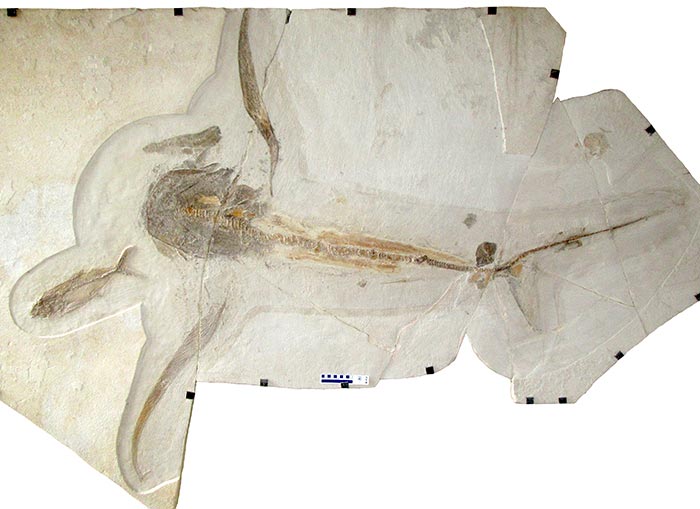
    In a new study, Romain Vullo and colleagues describe this new species of manta-like planktivorous shark, dubbed Aquilolamna milarcae, from the creatures’ fossilized remains discovered in northern Mexico. The findings reveal an unexpectedly early evolutionary experimentation with underwater flight among sharks predating the rise of similar traits in manta rays and devilfish by more than 30 million years.

    Evolutionary Origins of Elasmobranch Diversity

    Elasmobranchs — the highly successful group of cartilaginous fishes including sharks, skates, and rays — first appeared in Earth’s oceans roughly 380 million years ago and have since evolved to fill a diverse array of ecological roles. Modern plankton-feeding elasmobranchs are characterized by two distantly related clades — those with a more “traditional” shark-like body shape, such as whale and basking sharks, and those with the sleek, flattened bodies and winglike fins of Mobulidae rays.
    Fossil of the Aquilolamna Milarcae Shark
    Fossil of the Aquilolamna milarcae shark found in the limestone of Vallecillo (Mexico). Credit: © Wolfgang Stinnesbeck

    Standing out among both living and fossil planktivorous sharks and rays, Aquilolamna milarcae resides somewhere in-between. According to Vullo et al., the newly discovered extinct species displays many manta-like features, including unusually long, slender pectoral fins and a wide mouth seemingly adapted to filter-feeding. However, the winged shark also had an elongated, torpedo-like body and tail, culminating in a distinct caudal fin like many other shark species.

    The fossils indicate that the unique elasmobranch was a relatively slow swimmer, using both its long pectoral fins and tail to glide through the water while scooping up suspended plankton using its large, gaping mouth. What’s more, the findings demonstrate that winglike fins evolved independently in each main lineage of filter-feeding elasmobranchs.

    For more on this discovery, read Discovery of Bizarre, Winged “Eagle Shark” in the Cretaceous Seas.

    Reference: “Manta-like planktivorous sharks in Late Cretaceous oceans” by Romain Vullo, Eberhard Frey, Christina Ifrim, Margarito A. González González, Eva S. Stinnesbeck and Wolfgang Stinnesbeck, 18 March 2021, Science.
    DOI: 10.1126/science.abc1490

    Never miss a breakthrough: Join the SciTechDaily newsletter.
    Follow us on Google and Google News.

    American Association for the Advancement of Science New Species Paleontology Sharks
    Share. Facebook Twitter Pinterest LinkedIn Email Reddit

    Related Articles

    New Species of Ancient Shark Discovered

    Dinosaurs Once Crossed Oceans: First Duckbill Dinosaur Fossil Discovered in Africa

    New Species of Ancient Cynodont Discovered – 220-Million-Year-Old Precursor of Modern-Day Mammals

    5-Million-Year-Old Honey Badger-Like Animal Discovered

    240 Million-Year-Old Marine Predator Species With Fang-Like Teeth Uncovered in China

    Evolved to Strike Terror: Paleontologists Identify New Species of Mosasaur

    Body Size of Extinct Gigantic Megatooth Shark – Otodus Megalodon – Indeed off the Charts in the Shark World

    Finally Revealed: Gargantuan True Size of Legendary Prehistoric Mega-Shark Megalodon

    “Seriously Strange” New Extinct Family of Giant Wombat Relatives Discovered in Australian Desert

    Leave A Reply Cancel Reply

    • Facebook
    • Twitter
    • Pinterest
    • YouTube

    Don't Miss a Discovery

    Subscribe for the Latest in Science & Tech!

    Trending News

    Scientists Uncover Potential Brain Risks of Popular Fish Oil Supplements

    Scientists Discover a Surprising Way To Make Bread Healthier and More Nutritious

    After 60 Years, Scientists Uncover Unexpected Brain Effects of Popular Diabetes Drug Metformin

    New Research Uncovers Hidden Side Effects of Popular Weight-Loss Drugs

    Scientists Rethink Extreme Warming After Surprising Ocean Discovery

    Landmark Study Links Never Marrying to Significantly Higher Cancer Risk

    Researchers Discover Unknown Beetle Species Just Steps From Their Lab

    Largest-Ever Study Finds Medicinal Cannabis Ineffective for Anxiety, Depression, PTSD

    Follow SciTechDaily
    • Facebook
    • Twitter
    • YouTube
    • Pinterest
    • Newsletter
    • RSS
    SciTech News
    • Biology News
    • Chemistry News
    • Earth News
    • Health News
    • Physics News
    • Science News
    • Space News
    • Technology News
    Recent Posts
    • Not Just Alzheimer’s: Scientists Uncover Clues to a Second, Overlooked Disorder
    • Scientists Uncover Dangerous Connection Between Serotonin and Heart Valve Disease
    • Scientists Discover a “Protector” Protein That Could Help Reverse Hair Loss
    • Powerful Lasers Reveal How Matter Becomes Plasma in Trillionths of a Second
    • A Simpler Path to Super-Resolution: Scientists Reinvent Microscopy
    Copyright © 1998 - 2026 SciTechDaily. All Rights Reserved.
    • Science News
    • About
    • Contact
    • Editorial Board
    • Privacy Policy
    • Terms of Use

    Type above and press Enter to search. Press Esc to cancel.