
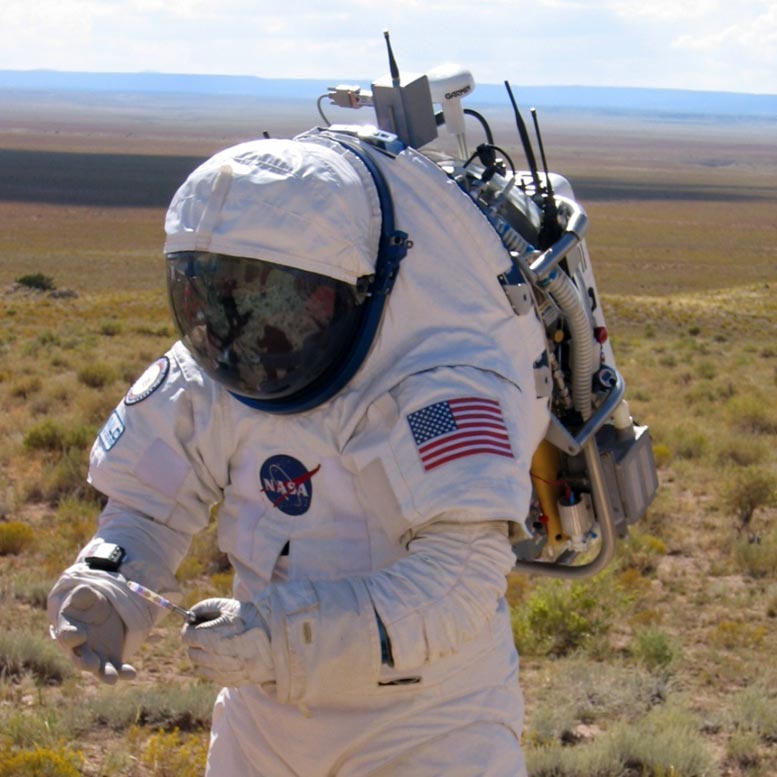
Want to “live” on Mars? NASA’s accepting applicants for a one-year Earth-based simulation.
Want to try living on Mars, but not sure you want to experience the nine-month flight time to get there? NASA is looking for applicants to serve as crew members for a one-year analog mission in a habitat to simulate life on the Red Planet, beginning in Fall 2022. All you have to do is get to Houston, Texas, and you’ll even get paid.
NASA is looking for “highly motivated individuals” to participate in the year-long test to see how astronauts might respond to the rigors of a long-duration, but Earth-based Martian simulation.
Requirements for applying is that you are a healthy, motivated U.S. citizen or permanent resident, age 30 to 55 years old, nonsmoker, and proficient in English for effective communication between crew and mission control. Crew selection will follow standard NASA criteria for astronaut candidate applicants.
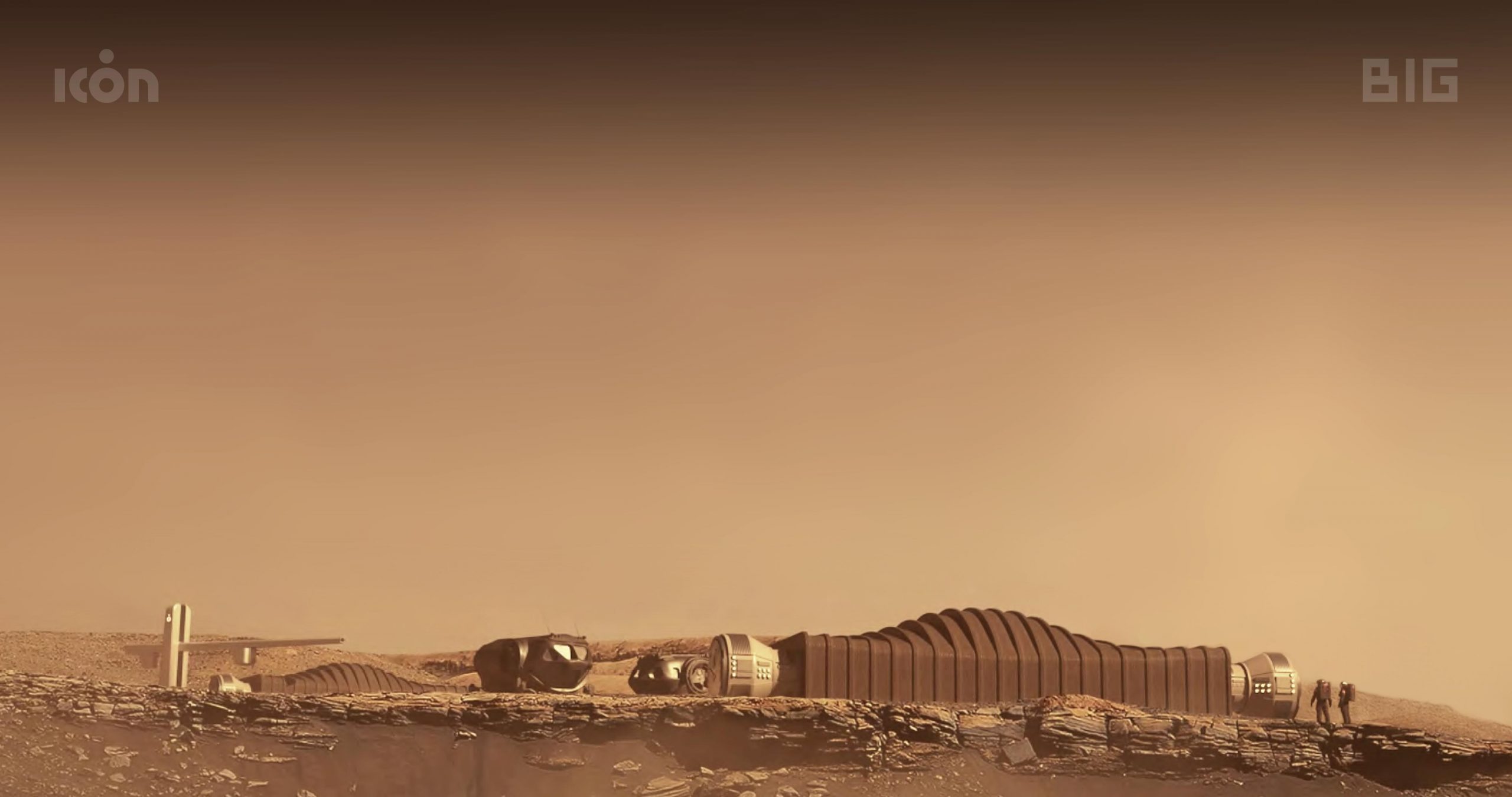
NASA will be doing a series of these analog missions – known as Crew Health and Performance Exploration Analog, and they hope to set up three one-year Mars surface simulations, with subsequent missions in 2024 and 2025. The simulations will be based at NASA’s Johnson Space Center, with four crew members for each simulation who will live and work in a 1,700-square-foot, 3D-printed module, called Mars Dune Alpha. NASA says the analog missions will support research to develop methods and technologies to prevent and resolve potential problems on future human spaceflight missions to the Moon and Mars.

Simulating the Rigors of Martian Life
“The analog is critical for testing solutions to meet the complex needs of living on the Martian surface” said Grace Douglas, lead scientist for NASA’s Advanced Food Technology research effort at NASA’s Johnson Space Center in Houston. “Simulations on Earth will help us understand and counter the physical and mental challenges astronauts will face before they go.”
Some of the challenges the test subjects will face will be resource limitations, equipment failure, communication delays, and other environmental stressors.

Many space experts and behavioral scientists believe one of the biggest challenges facing human Mars missions will be limited and delayed communications with Earth.
“A huge watershed moment will be when we don’t have real-time communications with Earth,” said Dr. Albert Holland, a senior operations psychologist who leads NASA’s Behavioral Health and Performance Group at JSC, in an interview with me in 2020. “I think people underestimate how much this will change space exploration as we know it today.”
Communication to the Moon has a 1.3 second delay, so real-time conversations are still possible, where crews can still feel connected to Earth, their families, and ground control. But once a comm lag is introduced, missions will undergo a radical change.
“Crews will need more autonomy and more self-sufficiency, requiring overlap in key technical areas in case one crew member is incapacitated or lost,” Holland said. “Crews will need a stronger, vertical, hierarchical line of authority compared to what we currently have on station, where the chain of command is rather flat. There will be a huge operational difference between a vehicle in LEO and something out beyond the comfortable, real-time communications point.”
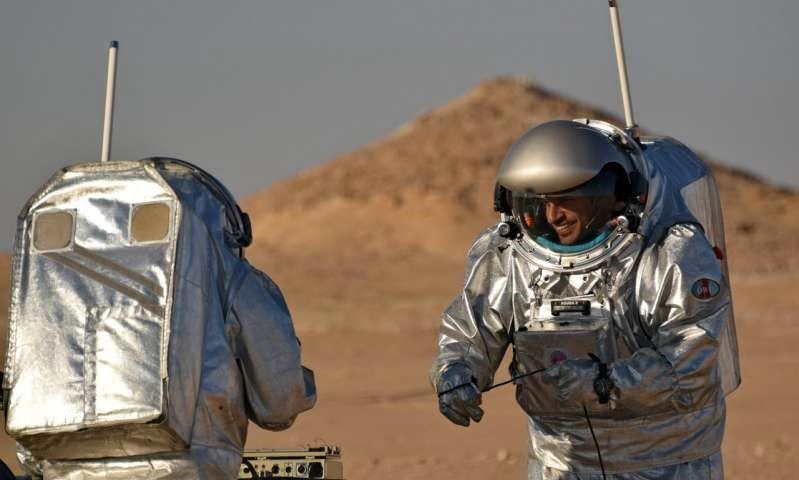
What Will the Crew Do? Simulated Spacewalks and More
Some of the crew tasks NASA anticipates for these analog missions include simulated spacewalks, scientific research, use of virtual reality and robotic controls, and communications. The results will provide important scientific data to validate systems and develop solutions.
NASA says they are especially interested in people with a master’s degree in a STEM field such as engineering, mathematics, or biological, physical or computer science from an accredited institution with at least two years of professional STEM experience or a minimum of one thousand hours piloting an aircraft is required. Candidates who have completed two years of work toward a doctoral program in STEM, or completed a medical degree, or a test pilot program will also be considered. Additionally, with four years of professional experience, applicants who have completed military officer training or a Bachelor of Science in a STEM field may be considered.
NASA says this mission is for you “if you have a strong desire for unique, rewarding adventures and are interested in contributing to NASA’s work in preparing for the first human journey to Mars.”
Adapted from an article originally published on Universe Today.
Never miss a breakthrough: Join the SciTechDaily newsletter.
Follow us on Google and Google News.
4 Comments
Unfortunately, NASA engages in religious discrimination in accepting applicants. For example, a successful applicant must abandon religious restrictions on food, and eat whatever NASA requires.
Ignorance is bliss
It might also be helpful to have an individual who has lived in a wilderness alone and successfully…who can think of alternate ways to accomplish the things at hand.
I want to became an astronaut I Am from Nepal if you wait I will surly come there next year I really want to be the part of mars mission please I beg you I will do my best please select me as as astronaut