
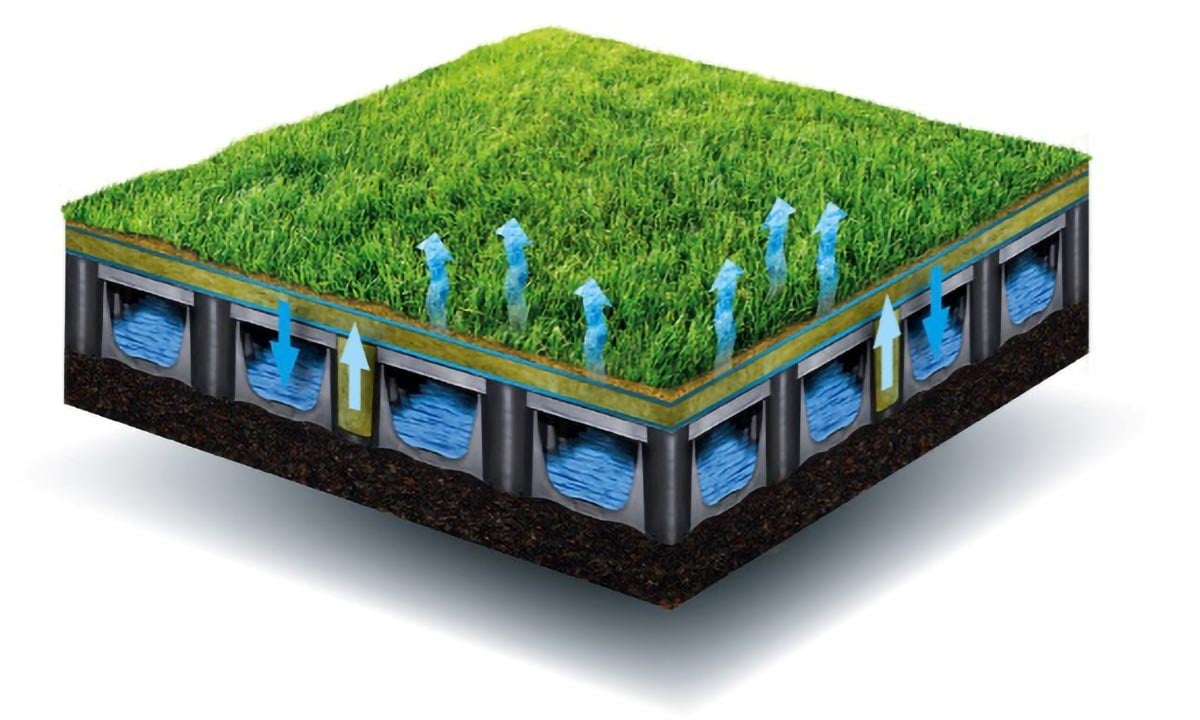
A new artificial turf can cool itself by storing rainwater and using capillary action to reduce surface temperatures, providing a safer and more sustainable alternative for urban sports fields.
The natural grass in city parks and sports fields has often been replaced with more durable artificial turf, as it allows for heavy consecutive use. However, artificial turf has its downsides, for both people and cities as a whole. It decreases soil infiltration of rain and can reach dangerously high surface temperatures, contributing to the urban heat island effect.
Innovative Cooling System in Artificial Turf
Now, scientists from the Netherlands have developed an artificial turf that includes a subsurface water storage and capillary irrigation system. This system, detailed in a new study published in Frontiers in Sustainable Cities, provides a cooler, safer, and more sustainable alternative to conventional artificial turf.
“Here we show that including a subsurface water storage and capillary irrigation system in artificial turf fields can lead to significantly lower surface temperatures compared to conventional artificial turf fields,” said first author Dr Marjolein van Huijgevoort, a hydrologist at KWR Water Research Institute. “With circular on-site water management below the field, a significant evaporative cooling effect is achieved.”
Reducing Heat on Artificial Fields
The artificial turf and subbase system includes an open water storage layer directly underneath the artificial turf and shockpad. In this water layer, rainwater is stored. This water retention system contains cylinders that transport the stored water back up to the surface of the artificial turf, where it evaporates.
“The process of evaporative cooling and capillary rise is controlled by natural processes and weather conditions, so water only evaporates when there is demand for cooling,” van Huijgevoort explained.
Experimentation and Results
Conventional artificial turf can reach surface temperatures of up to 70°C on sunny days. These temperatures are high enough to cause burn injuries and trigger heat-related illnesses, ranging from mild rashes to potentially life-threatening conditions like heat stroke.
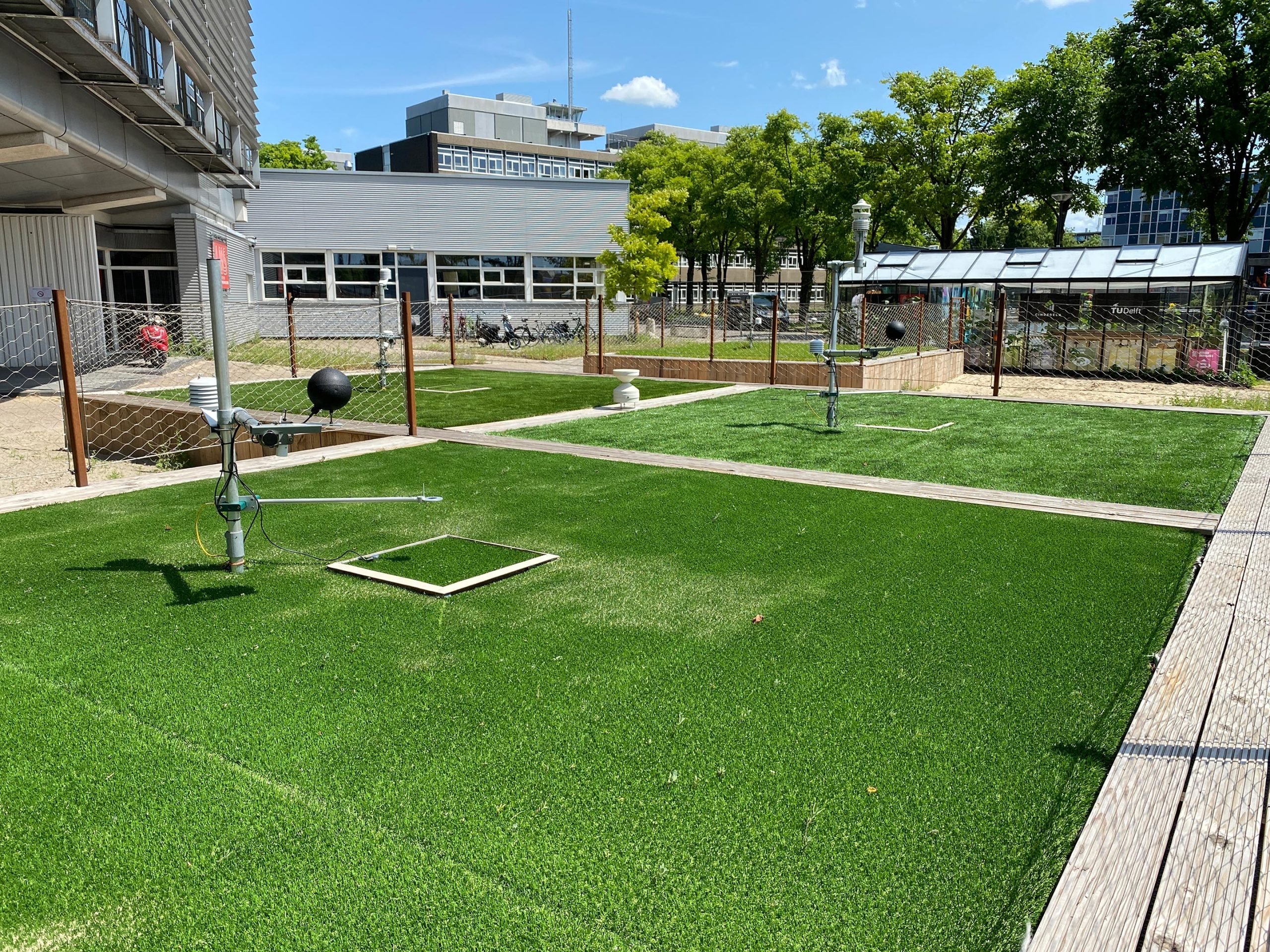
In a field experiment conducted in Amsterdam, the researchers found that when conventional turf was replaced with the self-cooling turf, temperatures dropped. They reported that on a particularly hot day in June 2020, the cooled turf reached a surface temperature of 37°C – just 1.7°C higher than natural grass – whereas surface temperatures of the conventional artificial turf reached 62.5°C.
Above the plots, temperatures also differed. “We found lower air temperatures 75cm above the cooled plots compared to conventional artificial turf fields, especially during the night,” said van Huijgevoort. “This is a first indication that the cooled plots contribute less to the urban heat island effect.”
Environmental and Practical Advantages
The cooling turf combines the advantages of artificial turf and natural grass: It is durable, keeps itself cool, and offers a healthy environment to play sports. It can also store almost as much rainwater as natural grass. The field’s rainwater retention capacity also reduces stormwater drainage, which helps mitigate urban flooding. During periods when it does not rain enough, extra water can be added directly into the system. Alternatively, it could be watered like natural grass.
Economic and Research Considerations
Installation costs, however, can be up to twice as expensive as for conventional artificial turf. The researchers said that a full-scale cost-benefit analysis should be undertaken to find out the true value of the investment.
Further research also needs to confirm how cooling turf could impact the surrounding area and cities as a whole. Learning more about the benefits of the turf in different climates and using different storage sizes, materials, and infills is also necessary to find the optimal combination, the researchers pointed out.
Initial results, however, are promising. “People in urban areas, especially children, have a growing need for sport and play facilities,” van Huijgevoort concluded. “With this work we show the benefits of the subsurface water storage and capillary irrigation system without negative effects of artificial turf fields.”
Reference: “Climate adaptive solution for artificial turf in cities: integrated rainwater storage and evaporative cooling” by Marjolein H. J. van Huijgevoort, Dirk Gijsbert Cirkel and Joris G. W. F. Voeten, 23 May 2024, Frontiers in Sustainable Cities.
DOI: 10.3389/frsc.2024.1399858
Never miss a breakthrough: Join the SciTechDaily newsletter.
Follow us on Google and Google News.
3 Comments
very interesting
Astroturf with pad and 1.5 feet of ready cistern. How long ’til the mycomaterials crowd make it?
The self-cooling artificial turf might help with urban heat and water conservation, but its plastic composition is a serious environmental issue. Plastic turf will emit microplastics, contributing to pollution that devastates ecosystems and harms human health. Claiming this product is sustainable ignores the long-term damage from microplastic contamination. The use of plastic undermines any short-term benefits, making this solution more problematic than it appears.