
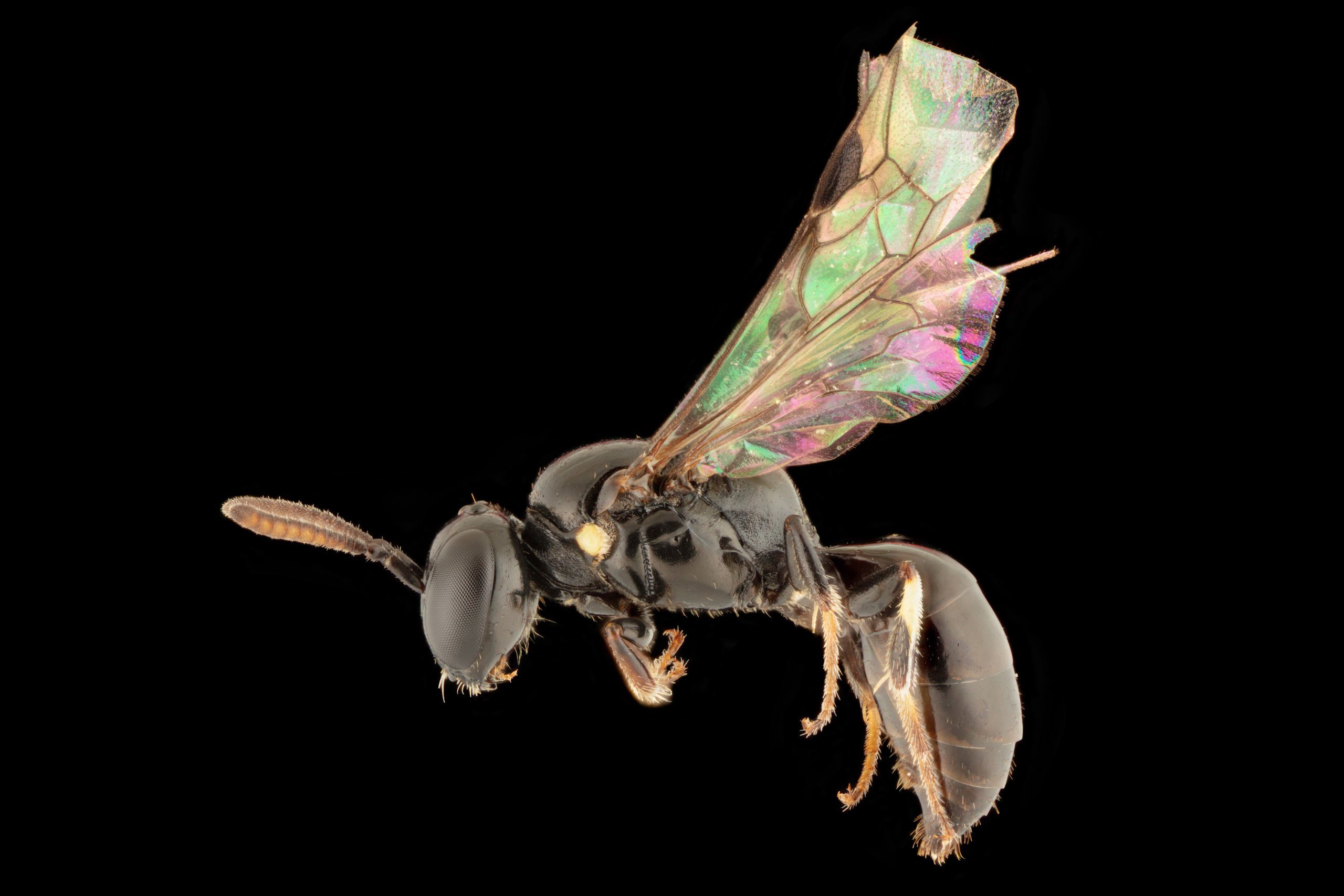
Scientists have discovered a previously unknown species radiation of masked bees, which is restricted to the tree canopies of Pacific islands.
In 1934, Elwood Zimmerman, an American entomologist who was an undergraduate at Berkeley at the time, took part in the ‘Mangarevan expedition’ to Polynesia. He collected samples that included three small (4 mm in length), orange-brown solitary bees, which were discovered on tahetahe flowers in the Tuamotu Archipelago.
The specimens rested undisturbed in the Bernice P Bishop Museum of Honolulu until 1965, when the famous bee specialist Prof Charles Michener examined them. He described them as a species new to science: Hylaeus tuamotuensis, or Tuamotu’s masked bee, in the family Colletidae.
How these tiny bees had reached French Polynesia was a mystery: its nearest known relatives lived in Australia, New Guinea, and New Zealand, more than 3,000 km west of Tuamotu. What’s more, the new species had never been collected again and was feared extinct – until the present day.
Now, 59 years later, the puzzle has been answered in a new study published in Frontiers in Ecology and Evolution.
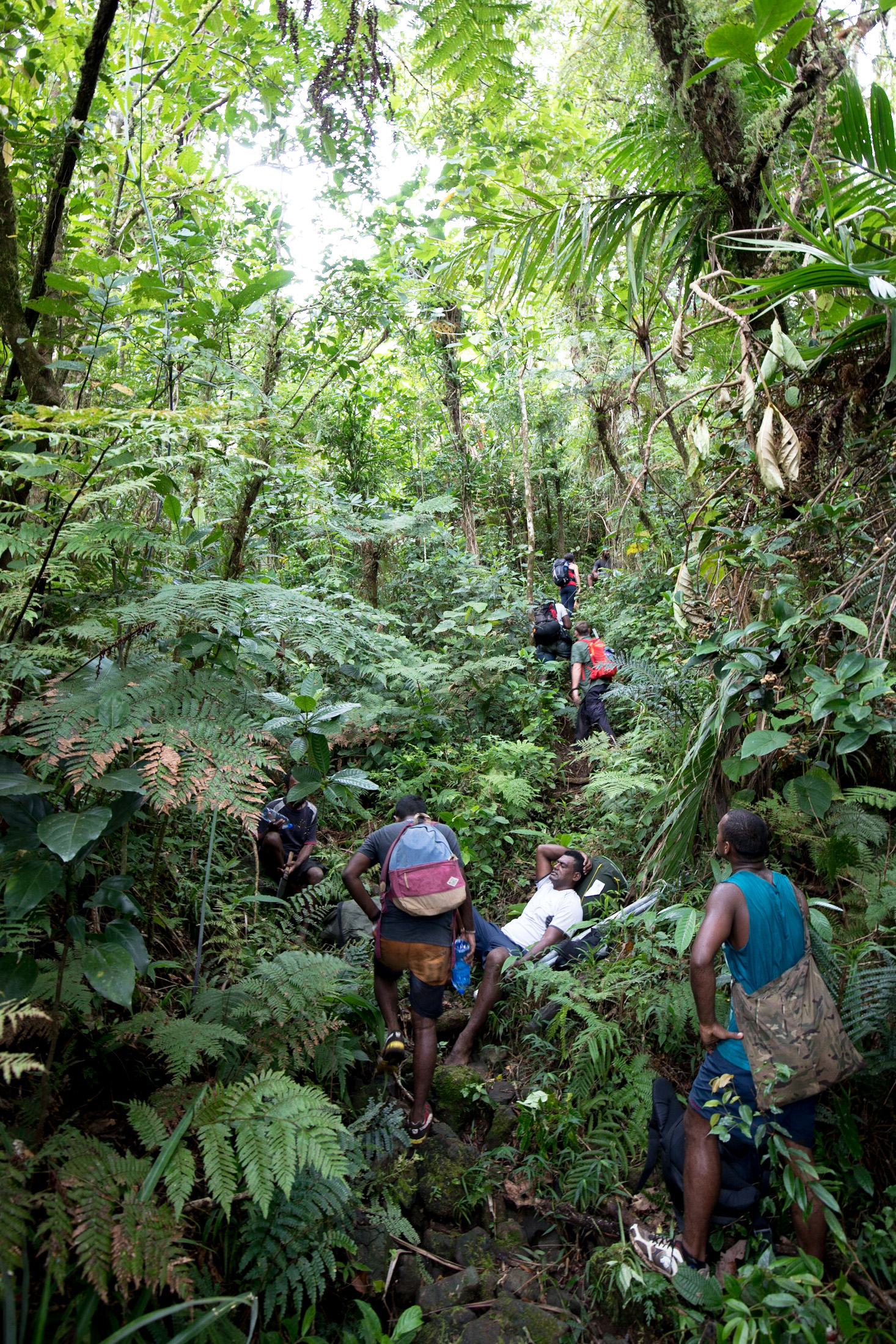
“Here we show that, despite almost a decade of sampling for bees in Fiji, there is a whole group of species that flew right over our heads until now. By exploring new sampling techniques, we discovered an unknown species radiation of Hylaeus masked bees in the forest canopy,” said Dr James Dorey, a lecturer at the University of Wollongong and an adjunct lecturer at Flinders University and lead author of the study.
“With these bees, we can solve the mystery: the ancestors of H. tuamotuensis reached French Polynesia by island-hopping via Fiji and the southwest Pacific!”

New to science
There, the team of authors describes eight new species of Hylaeus, discovered between 2014 and 2019 in the Pacific and shown by DNA barcoding and morphology to be relatives of Tuamotu’s masked bee – no longer an anomaly.
Six of the newly discovered species are from the Fijian archipelago: named the straight-faced, little yellow-spotted, and Navai’s Hylaeus from the island of Viti Levu, and the white-spotted, open-faced, and veli’s Hylaeus from Taveuni. Chuuk’s Hylaeus was discovered on Chuuk in the Federated States of Micronesia, and the golden-green Hylaeus on Tahiti in French Polynesia, 450 km southwest of Tuamotu.
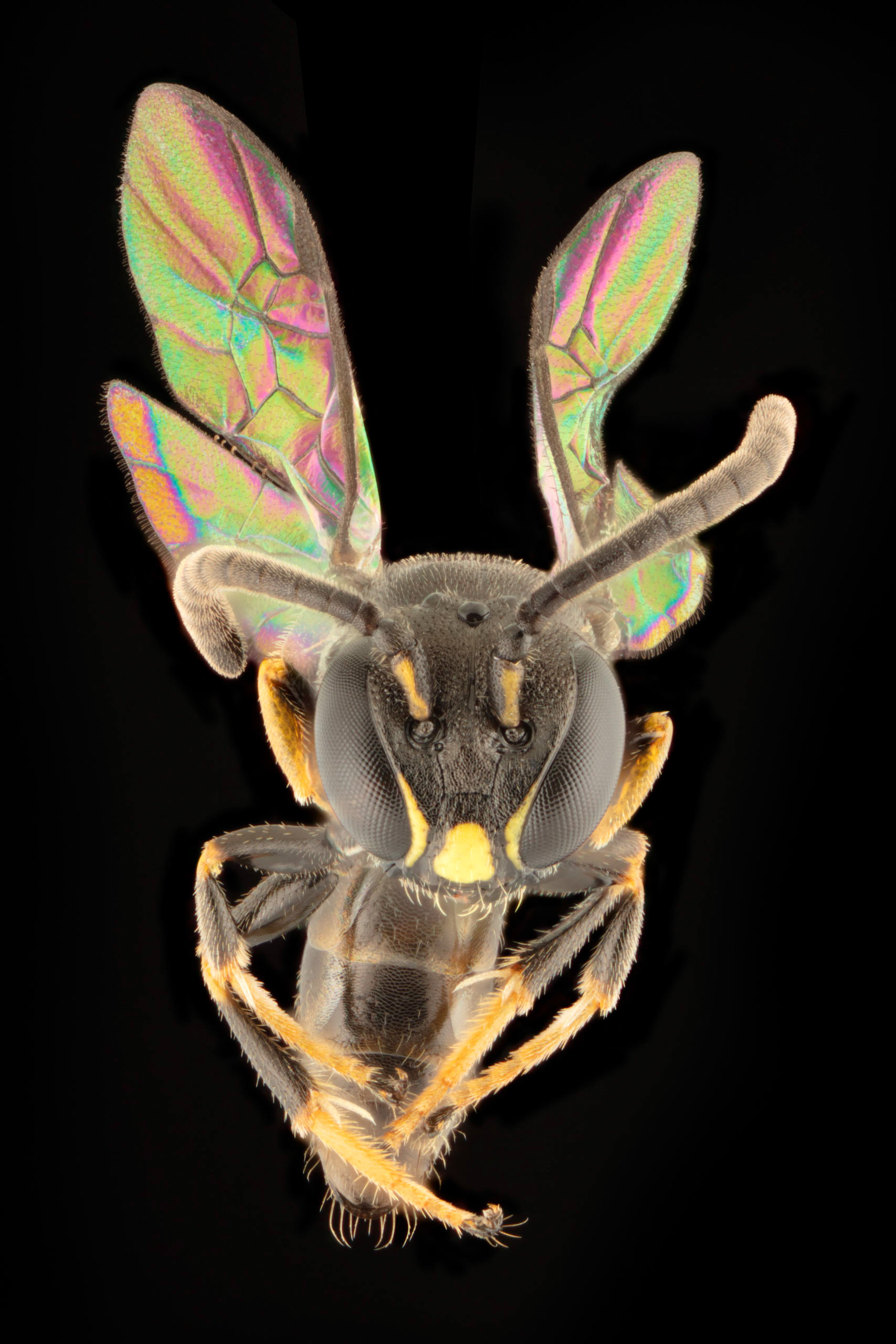
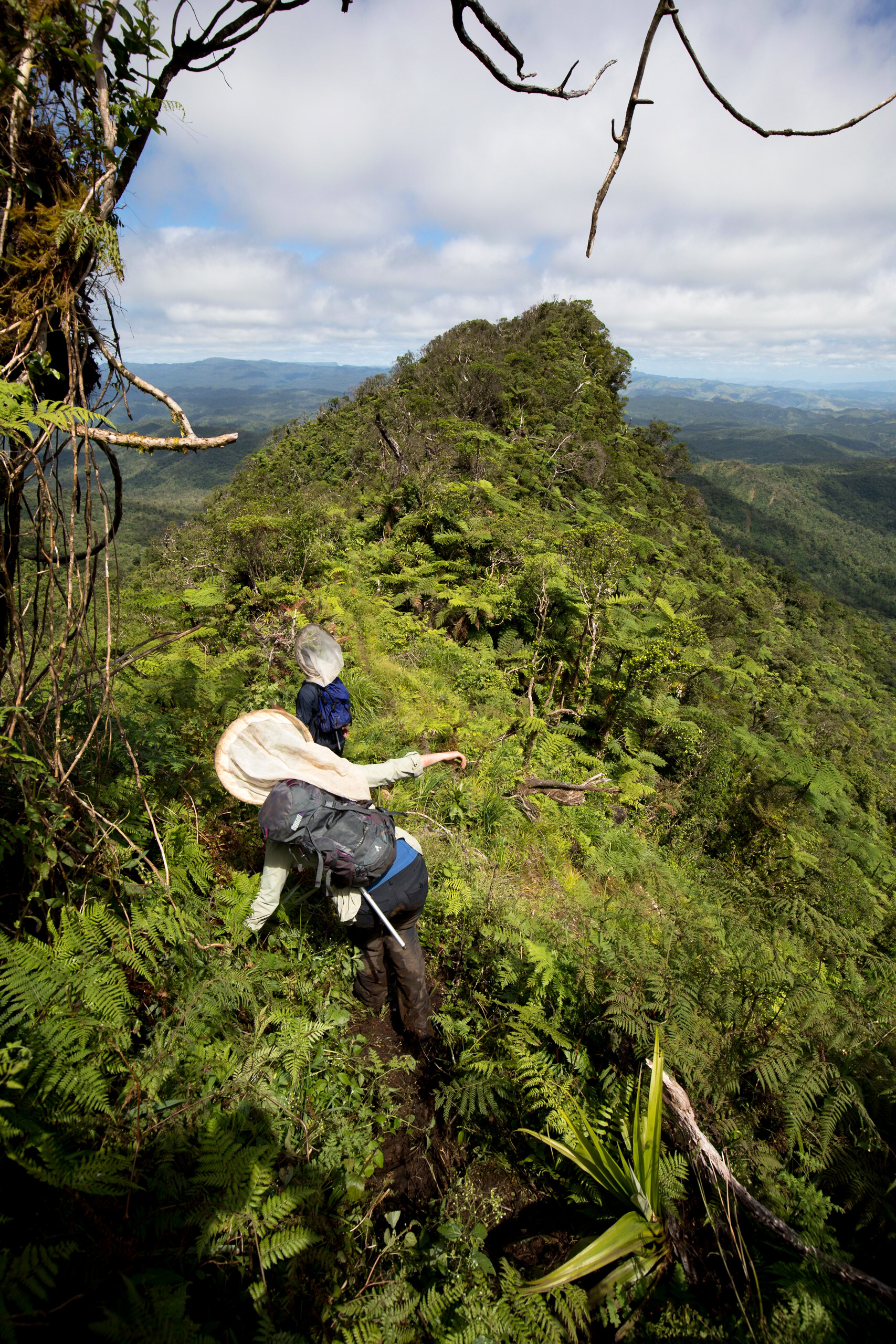
The team was only able to discover the new species by sampling from the tree canopy on these islands. Previous sampling efforts had focused on flowering plants at ground level, which the new species seem to avoid. Also surprising was that the new species seem to prefer red flowers, as the sensitivity of most bees to red light is poor.
“It wasn’t until we brought very long nets to Fiji and started collecting from the trees that we started to find our mysterious little bees. Maybe we should not be surprised when the etymology of Hylaeus might mean ‘belonging to the forest’,” said Dorey.
More discoveries expected soon
Hundreds of islands lie between Fiji and French Polynesia, for example, Tonga, Samoa, the Cook Islands, and Wallis and Futuna. Now that the scientists know to look for them in the canopy, they expect to discover many more Hylaeus species on those islands.
But how did the bees hop between islands? Their typical flight range is unknown, but likely only a few kilometers.
“Because most masked bees nest in wood, it’s likely that they rafted between islands, especially when tropical cyclones wash masses of plant materials down rivers and out to sea. It is also possible that they were blown by high winds, but that would have been a much more perilous journey for our little bees,” said Dorey.
Guardians of the forests
How long ago these dispersal events happened can’t be resolved yet from the available DNA data. Nor do the authors know how common the new species are on the islands to which they appear to be endemic.
“[We named veli’s Hylaeus] for the veli of Fijian folklore who are powerful little people associated with forests. Accounts of the veli are varied and they were often seen in a positive light, but they could also be dangerous, for example, if you chopped down their favorite trees. Hence, the name is meant to invoke a sense of responsibility for protecting these new forest-specialist species and their trees,” reminded the authors.
Reference: “Canopy specialist Hylaeus bees highlight sampling biases and resolve Michener’s mystery” by James B. Dorey, Olivia K. Davies, Karl N. Magnacca, Michael P. Schwarz, Amy-Marie Gilpin, Thibault Ramage, Marika Tuiwawa, Scott V. C. Groom, Mark I. Stevens and Ben A. Parslow, 26 January 2024, Frontiers in Ecology and Evolution.
DOI: 10.3389/fevo.2024.1339446
Never miss a breakthrough: Join the SciTechDaily newsletter.
Follow us on Google and Google News.