

Close Menu
    Facebook X (Twitter) Instagram
    SciTechDaily
    • Biology
    • Chemistry
    • Earth
    • Health
    • Physics
    • Science
    • Space
    • Technology
    Facebook X (Twitter) Pinterest YouTube RSS
    SciTechDaily
    Home»Chemistry»Biochemical Reactions Act Differently When Subjected to Intracellular Crowding
    Chemistry

    Biochemical Reactions Act Differently When Subjected to Intracellular Crowding

    By SciTechDailyOctober 16, 2012No Comments2 Mins Read
    Facebook Twitter Pinterest Telegram LinkedIn WhatsApp Email Reddit
    Share
    Facebook Twitter LinkedIn Pinterest Telegram Email Reddit
    crowds-intracellular-crowding
    Biochemical reactions behave differently when subjected to intracellular crowding. Credit: James Cridland/Flickr

    Molecular crowding inside cells is a critical factor that is sometimes overlooked in the lab. Biochemical reactions are drastically different in tighter spaces, resulting in significant physical and chemical consequences.

    The reductive approach to chemical reactions is attractive to scientists, as it’s convenient when interpreting results and easier to work with. However, if a more simplistic experimental framework is adopted, these tests may overlook the critical aspect of intracellular crowding.
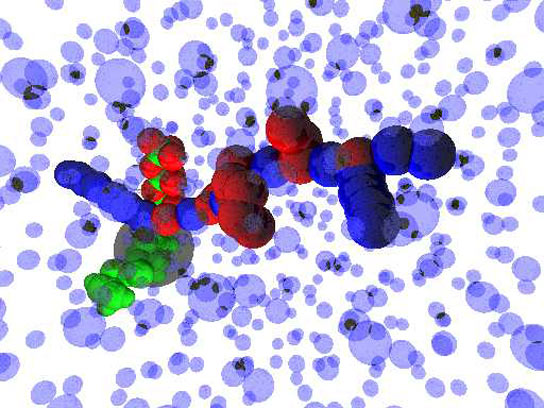
    intracellular-crowding-t-cell
    Molecular Crowding Effects in the T-cell Signaling Pathway. Credit: Jonathan Eide

    If there is less space available for each molecule, the resulting effective concentration is boosted, increasing the chemical potential. When more molecules are crammed together, there is also the possibility that reactants will link up, causing the chemical potential to respond drastically.

    There is also a slowdown of molecular diffusion, particularly for larger molecules. Lower rates of diffusion imply that diffusion-limited reactions happen slower, especially those involving larger constituents. These two consequences, higher chemical potentials and lower diffusion rates, counteract each other when it comes to intermolecular reactions, making the resulting reaction rate difficult to predict. However, there usually is an optimal spot with enough coziness to encourage reactivity, but not too much to gum up the works.

    The effects on thermodynamics and kinetics are so far-ranging that estimates of reaction rates and equilibria made in uncrowded solutions differ by orders of magnitude from those of the same reactions operating under crowded conditions.

    Never miss a breakthrough: Join the SciTechDaily newsletter.
    Follow us on Google and Google News.

    Intracellular Microbiology
    Share. Facebook Twitter Pinterest LinkedIn Email Reddit

    Related Articles

    MIT Advances Toward “Living Biotherapeutics” To Treat Gastrointestinal Diseases

    Modern-Day Alchemy: Transforming Sugar Into Hydrocarbons To Power Future Cars

    Synthetic Mucus Can Mimic the Real Thing – Including Unique Antimicrobial Properties

    Copper Foam Is Highly Efficient, Durable as a Filter for Reusable Masks and Air Cleaners

    Sulfur-Scavenging Bacteria Could Be Key to Biomanufacturing Common Component of Plastic

    Unusual Bacterial Enzyme Discovered That Could Become a New Target for Antibiotics

    New Pesticide Compounds Discovered in Traditional Chinese Medicinal Plant

    Researchers Reveal How Bacteria Can Produce Gold by Digesting Toxic Metals

    Artificial System Models Light-Capturing Method Used by Deep-Sea Bacteria

    Leave A Reply Cancel Reply

    • Facebook
    • Twitter
    • Pinterest
    • YouTube

    Don't Miss a Discovery

    Subscribe for the Latest in Science & Tech!

    Trending News

    This Alien Planet Has Rock Clouds That Vaporize Before Sunset

    The Simple Habit That Could Lower Your Cancer Risk

    146,000-Year-Old Discovery Rewrites the Story of Human Creativity

    The Type of Alcohol You Drink Could Affect How Long You Live

    This Common Vitamin May Help Stop Prediabetes From Turning Into Diabetes

    Scientists Finally Solve the Mystery of “Clockwork” Earthquakes

    Breakthrough Parkinson’s Drug Targets Disease at Its Genetic Roots

    Just 4 Weeks of Simple Diet Changes Reversed Signs of Aging in Older Adults

    Follow SciTechDaily
    • Facebook
    • Twitter
    • YouTube
    • Pinterest
    • Newsletter
    • RSS
    SciTech News
    • Biology News
    • Chemistry News
    • Earth News
    • Health News
    • Physics News
    • Science News
    • Space News
    • Technology News
    Recent Posts
    • Scientists Discover Common Medications May Secretly Alter Your Gut for Years
    • New Vitamin B12-Based Therapy Could Change How Brain Cancer Is Treated
    • This Common Fat Could Be Fueling Type 2 Diabetes, Researchers Warn
    • Scientists Discover Low-Cost Route To Clean Hydrogen Production
    • Scientists Crack Key Mystery Behind High-Temperature Superconductors
    Copyright © 1998 - 2026 SciTechDaily. All Rights Reserved.
    • Science News
    • About
    • Contact
    • Editorial Board
    • Privacy Policy
    • Terms of Use

    Type above and press Enter to search. Press Esc to cancel.