
Close Menu
    Facebook X (Twitter) Instagram
    SciTechDaily
    • Biology
    • Chemistry
    • Earth
    • Health
    • Physics
    • Science
    • Space
    • Technology
    Facebook X (Twitter) Pinterest YouTube RSS
    SciTechDaily
    Home»Earth»Black Fire Blows Up in New Mexico – Produces Pyrocumulonimbus Cloud and Crosses Continental Divide
    Earth

    Black Fire Blows Up in New Mexico – Produces Pyrocumulonimbus Cloud and Crosses Continental Divide

    By Sara E. Pratt, NASA Earth ObservatoryMay 24, 2022No Comments3 Mins Read
    Facebook Twitter Pinterest Telegram LinkedIn WhatsApp Email Reddit
    Share
    Facebook Twitter LinkedIn Pinterest Telegram Email Reddit
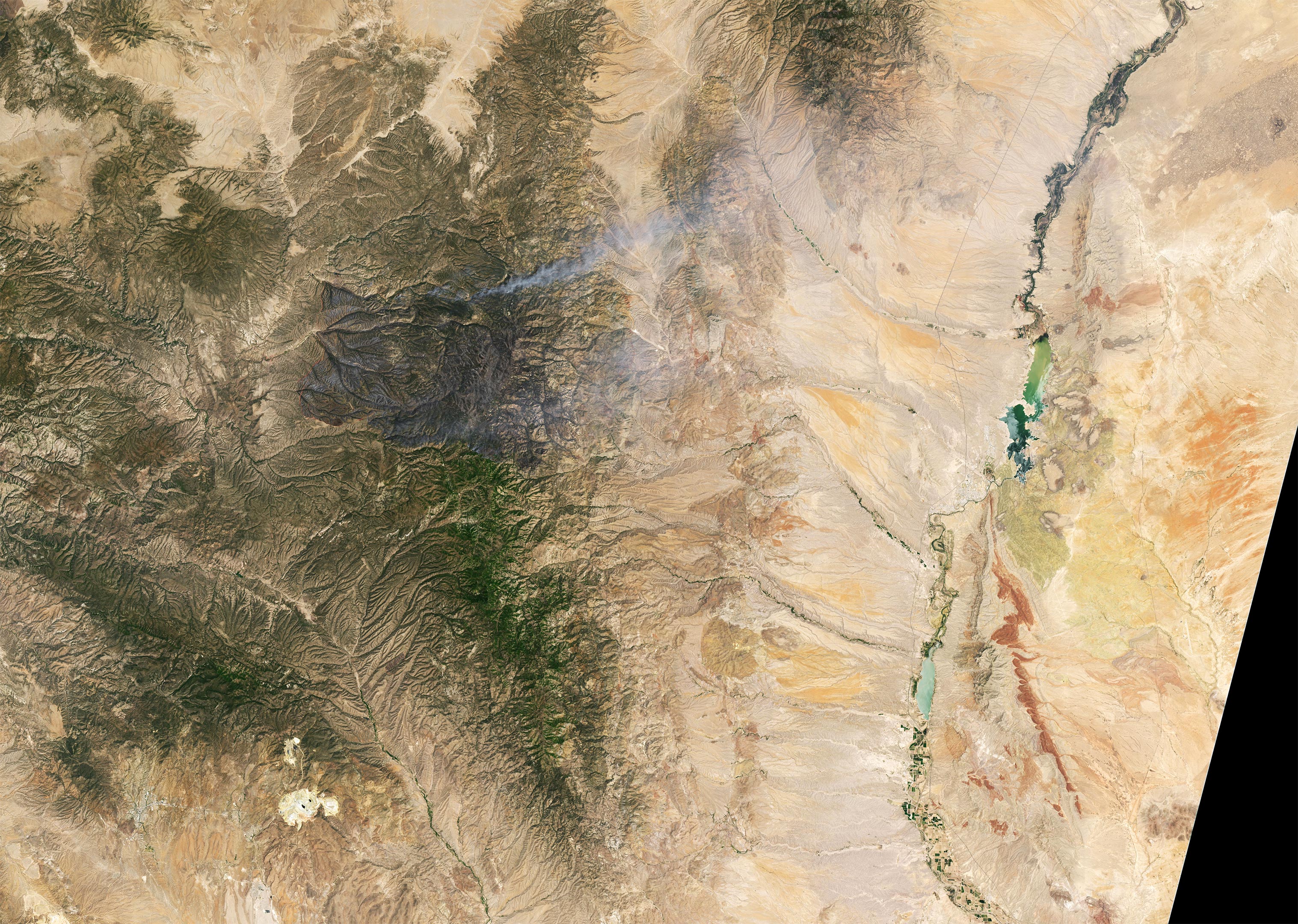
    Black Fire New Mexico May 2022 Annotated
    Black Fire New Mexico May 21, 2022. Natural color. (Click image for wide, high-resolution view.)

    The speed and intensity of the Black fire grew quickly, producing a pyrocumulonimbus cloud and crossing the Continental Divide, to become the second-largest fire in the state of New Mexico.

    A raging new wildfire erupted in the Gila National Forest in southwest New Mexico on May 13, 2022. The state has seen more than half a million acres burned this year in early season wildland fires, and forecasters predicted conditions could worsen through the end of the month.

    The Black fire began burning in the Aldo Leopold Wilderness Area in the Black Range, about 30 miles (48 km) northwest of the city of Truth or Consequences, New Mexico. On May 16, the fire blew up, tripling in size from 18,000 acres (70 square km) to more than 56,000 acres (230 square km). A blow-up is a sudden increase in fire intensity or rate of spread. The blow-up of the Black fire on May 16 produced a small pyrocumulonimbus cloud as the fire ran east and crossed the Continental Divide.
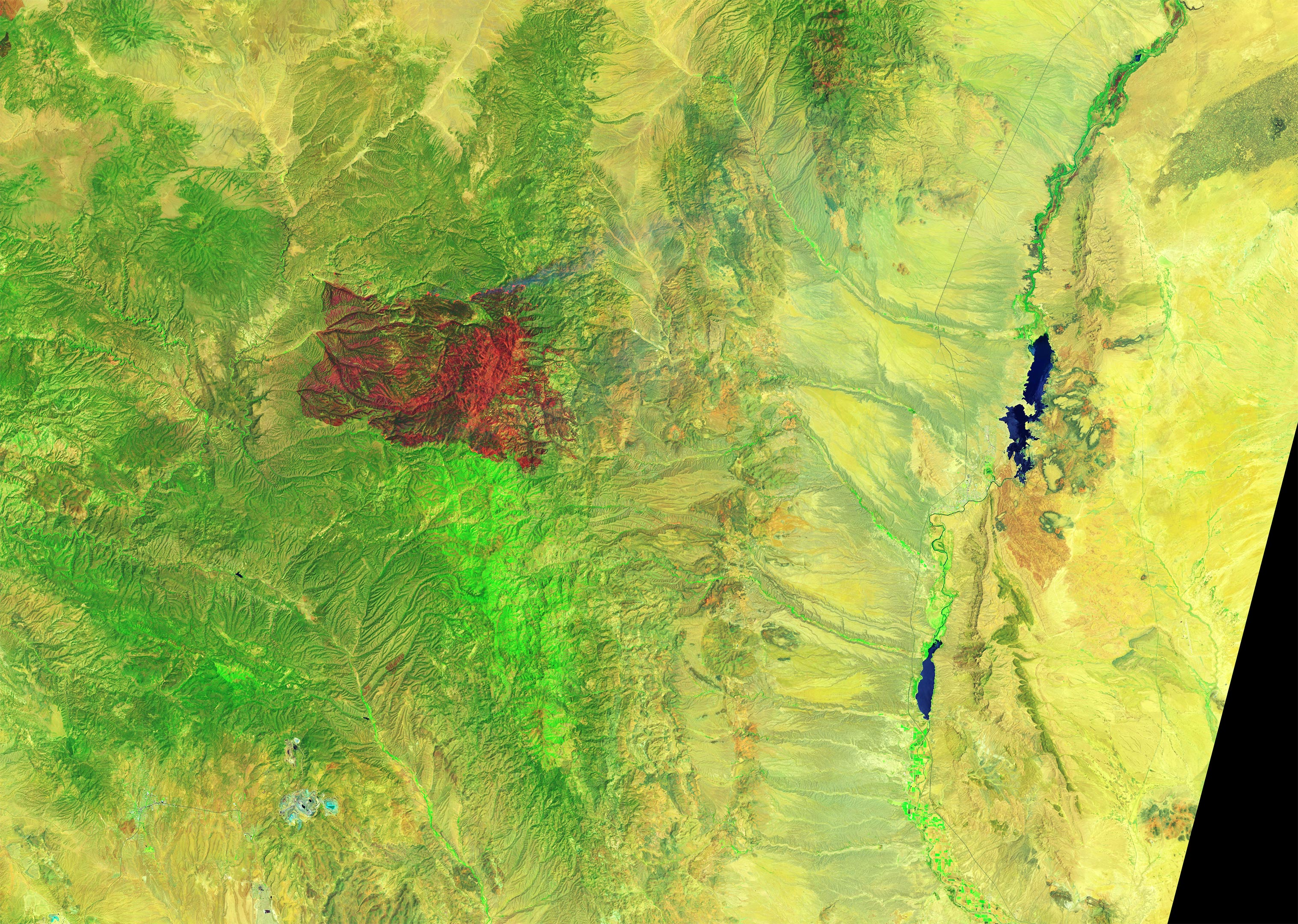
    Black Fire New Mexico May 2022 False Color Annotated
    May 21, 2022. False color. (Click image for wide, high-resolution view.)

    As of May 22, the Black fire had burned more than 130,000 acres (530 square km), becoming the second-largest fire burning in the state. The perimeter was 8 percent contained, with more than 600 firefighters working the blaze.

    These images, acquired on May 21, 2022, by the Operational Land Imager (OLI) on Landsat 8, show the area burned by the Black fire in both natural and false color. The false-color image combines shortwave infrared, near infrared, and visible light (OLI bands 7-5-2). Near and shortwave infrared help penetrate clouds and smoke (gray-white) to reveal the hotspots associated with active fires (red). With this combination, burned areas appear reddish-brown.

    The Black fire is one of several large uncontained fires burning in New Mexico, including the Calf Canyon-Hermits Peak Fire. As of May 23, 2022, that fire had exceeded 300,000 acres (1,200 square km)—the largest in state history—and was 40 percent contained. New Mexico has had more than 300 fires so far in 2022, burning more than 580,000 acres (2,300 square km), according to the National Interagency Fire Center (NIFC). That is nearly five times as much acreage as was burned in all of 2021.

    The Southwest is in the midst of a two-decade megadrought. According to the U.S. Drought Monitor, on May 19, at least 85 percent of New Mexico was experiencing extreme to exceptional drought.

    According to a Fuels and Fire Behavior Advisory released by NIFC on May 18, “expanding drought conditions coupled with very hot and dry weather, extreme wind events, and unstable atmospheric conditions have led to explosive fire behavior in the region.” In parts of Arizona and New Mexico, “conditions like this have not been seen since the mid-1950s.”

    NASA Earth Observatory images by Lauren Dauphin, using Landsat data from the U.S. Geological Survey.

    Never miss a breakthrough: Join the SciTechDaily newsletter.
    Follow us on Google and Google News.

    NASA NASA Earth Observatory
    Share. Facebook Twitter Pinterest LinkedIn Email Reddit

    Related Articles

    NASA Satellite Watches as Bush Fire Scorches Land Near Phoenix

    “Wedge Failure” Landslide in Alaska

    Muddy Flooding After Catastrophic Dam Failures in Michigan Seen From Space

    Scientists Concerned As Denman Glacier Retreats Both Above and Below the Water Line

    NASA Scientists Collect Moon-Like Rocks From Site in Montana

    NASA Satellites Spot Several Wildfires Near Chernobyl Exclusion Zone

    Shocking Disappearance of Ecuador’s Tallest Waterfall

    Heading Off a Locust Invasion Using NASA Satellites

    Plankton-Fueled Agulhas Current Ocean Eddy Is 93 Miles Wide

    Leave A Reply Cancel Reply

    • Facebook
    • Twitter
    • Pinterest
    • YouTube

    Don't Miss a Discovery

    Subscribe for the Latest in Science & Tech!

    Trending News

    Largest-Ever Study Finds Medicinal Cannabis Ineffective for Anxiety, Depression, PTSD

    250-Million-Year-Old Egg Solves One of Evolution’s Biggest Mysteries

    Living With Roommates Might Be Changing Your Gut Microbiome Without You Knowing

    Century-Old Cleaning Chemical Linked to 500% Increased Risk of Parkinson’s Disease

    What if Your Memories Never Happened? Physicists Take a New Look at the Boltzmann Brain Paradox

    One of the Universe’s Largest Stars May Be Getting Ready To Explode

    Scientists Discover Enzyme That Could Supercharge Ozempic-Like Weight Loss Drugs

    Popular Sweetener Linked to DNA Damage – “It’s Something You Should Not Be Eating”

    Follow SciTechDaily
    • Facebook
    • Twitter
    • YouTube
    • Pinterest
    • Newsletter
    • RSS
    SciTech News
    • Biology News
    • Chemistry News
    • Earth News
    • Health News
    • Physics News
    • Science News
    • Space News
    • Technology News
    Recent Posts
    • This Simple Blood Test Could Outperform “Bad Cholesterol” in Preventing Heart Disease
    • Scientists Uncover Potential Brain Risks of Popular Fish Oil Supplements
    • Scientists Prove There Are Just Six Degrees of Separation in a Social Network
    • Bee Bacteria Could Fix a Major Flaw in Plant-Based Milk
    • Scientists Discover a Surprising Way To Make Bread Healthier and More Nutritious
    Copyright © 1998 - 2026 SciTechDaily. All Rights Reserved.
    • Science News
    • About
    • Contact
    • Editorial Board
    • Privacy Policy
    • Terms of Use

    Type above and press Enter to search. Press Esc to cancel.